

Shōbōji Travel Guide
Free Guide: Discover tranquility at Shōbōji Temple in Higashimatsuyama, a historic Buddhist sanctuary with a magnificent 700-year-old ginkgo tree.


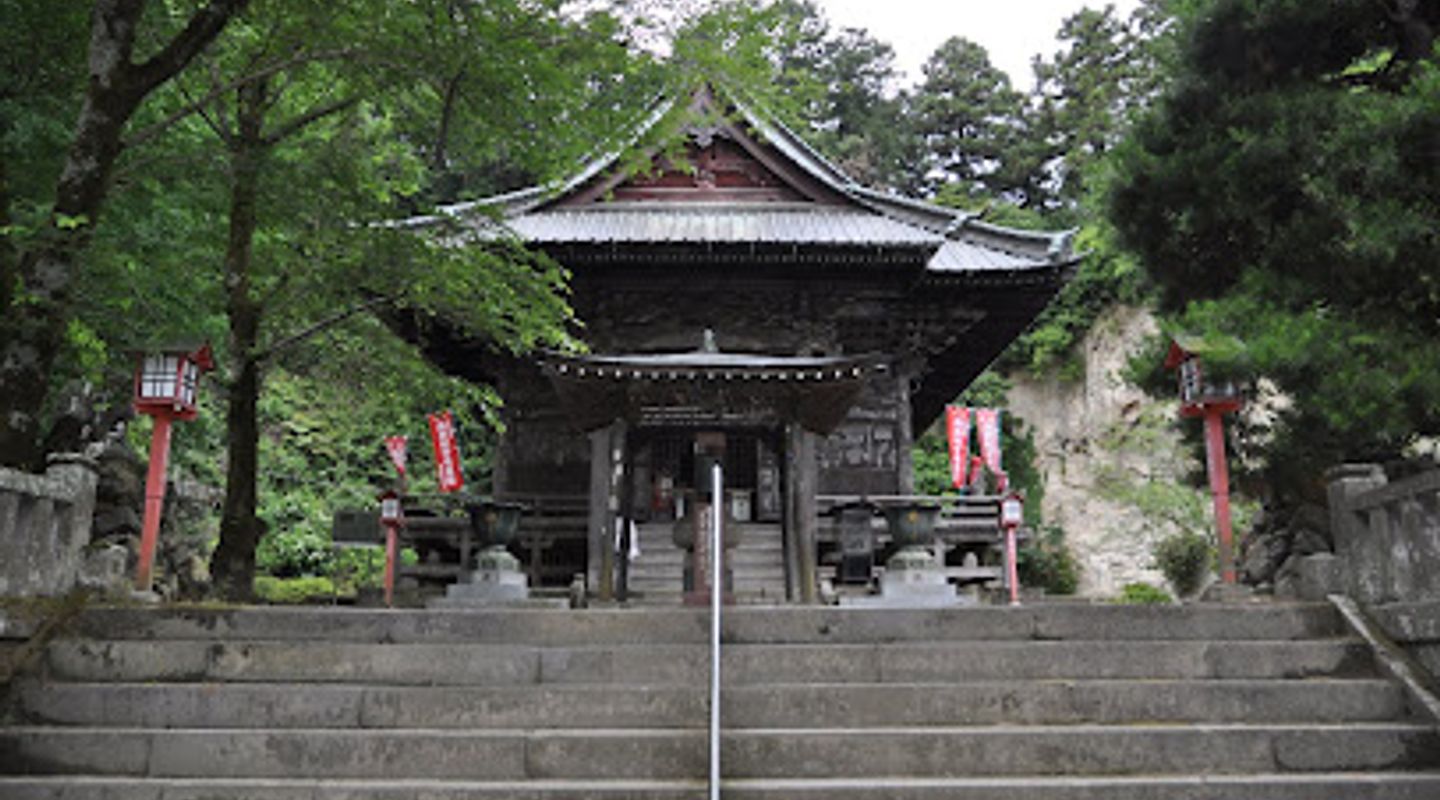
A brief summary of Shōbōji
Discover tranquility at Shōbōji Temple in Higashimatsuyama, a historic Buddhist sanctuary with a magnificent 700-year-old ginkgo tree.
Shōbōji, also known as Iwadono Kannon, is a serene Buddhist temple nestled in Higashimatsuyama, Saitama. As the tenth temple of the Bando 33 Kannon pilgrimage, it offers visitors a tranquil escape with its historic buildings and natural beauty, including a giant 700-year-old ginkgo tree.
- Address
- 1229 Iwadono, Higashimatsuyama, Saitama 355-0065
- Phone
- Website
Getting there
Public Transport
Taxi
Walking
Discover more about Shōbōji
Overview
Shōbōji Temple, cradled in the Iwadono area of Higashimatsuyama, is a captivating destination for those seeking spiritual solace and natural splendor. Officially named Shōbōji, but also known as Iwadono Kannon, this temple is a revered site on the Bando 33 Kannon pilgrimage route.According to temple lore, Shōbōji's origins trace back to 718, when a prayer site was established on the slopes of Mt. Iwadono. In 796, by order of Emperor Kammu, it was developed into a temple complex. The temple was later revived in the 12th century by Hiki Yoshikazu at the direction of Minamoto no Yoritomo. During the Muromachi period, it flourished, boasting 66 sub-temples. Although it faced destruction over time, it has been carefully preserved, offering a glimpse into its storied past.Visitors are greeted by the imposing Niō Gate, guarded by fierce Niō statues. A climb up a long staircase leads to the main temple grounds, where the Kannon Hall, originally from Hidaka, stands surrounded by rock walls and 88 small Buddha figures representing the Shikoku pilgrimage. The temple also features a bell tower with a historic bell from 1322, a hall dedicated to a hundred Jizo statues, a Yakushi pavilion, and an Ema hall for votive tablets.One of Shōbōji's most remarkable features is its ancient ginkgo tree, estimated to be around 700 years old. With a trunk circumference of approximately 11 meters and a height of 31 meters, the tree is a designated municipal natural monument and attracts visitors year-round, especially during the autumn when its leaves turn a brilliant gold.
Evendo Review Centre
 Google
Guest reviews
Explore Shōbōji on the map
A handpicked selection of must-see spots near Shōbōji, mapped for you.
Get your free copy of our complete guide to Shōbōji, delivered straight to you.
Everything on this page, from opening hours and how to get there to Eve’s tips and the best time to go, in one PDF you can read offline, print or share.
Already have an account? Sign in
Your Shōbōji guide is ready.
We'll send it to · Not you? Sign out

Getting your guide ready…
We are putting together a fresh copy of the Shōbōji guide. This can take up to a minute.
This can take a few moments. If your browser asks, choose Allow so the download can start. You'll find the guide in your Downloads folder.
Nothing happened? Download it again
Sorry, the guide is taking longer than usual. Please try again in a minute, or get it by email instead.
Other nearby places you may find interesting
The closest places of the same kind, if this one is not quite what you had in mind.
-
-
-
-
-


Swipe for more places
More to explore near Shōbōji

 Best experiences near Shōbōji
 Best hotels near Shōbōji
 Best landmarks near Shōbōji
 Best attractions near Shōbōji
 Best shops near Shōbōji
 Best restaurants near Shōbōji
 Best bars near Shōbōji
Do you manage this location?
Take control to get all the benefits, like improved information, better appearance, and stronger visibility across AI-powered discovery.
Explore more

Explore more of Higo
Discover Higo, Japan – a tranquil destination rich in history, natural beauty, and culinary delights, perfect for those seeking a serene and cultural escape.
Explore Higo
Explore more of Japan
Discover the harmony of tradition and modernity in Japan, where ancient temples and cutting-edge technology coexist in perfect balance.
Explore Japan
