

Free St. Lawrence Travel Guide & Mobile App
Plan your St. Lawrence trip with Evendo. Get free guides to top attractions, restaurants, hotels, and bars. Web access or download the mobile app.


St Lawrence, Jersey, combines rural lanes, wartime history, parish heritage and peaceful valleys with easy access to the island’s coast and St Helier.
Rural Jersey in a Central Parish
St Lawrence occupies a largely inland part of Jersey, where narrow green lanes, wooded valleys and open fields create a quieter counterpoint to the island’s busy south coast. The parish lies close to St Helier and is well placed for exploring central Jersey, yet its character is distinctly rural, shaped by farms, granite walls, reservoirs and winding roads that rise and dip through the landscape. Traditional Jersey houses and farm buildings appear among modern homes, while the parish church provides an enduring focal point for local life.Read more about St. Lawrence
History in the Landscape
A Base for Island Exploration
When is the best time to visit St. Lawrence?
Best: June–August · 20–22°C| Month | High (°C) | Rainfall (mm) |
|---|---|---|
| January | 11 | 95 |
| February | 11 | 73 |
| March | 12 | 64 |
| April | 13 | 54 |
| May | 17 | 47 |
| June (best) | 20 | 37 |
| July (best) | 22 | 32 |
| August (best) | 22 | 36 |
| September | 20 | 43 |
| October | 17 | 57 |
| November | 15 | 77 |
| December | 13 | 90 |
Getting to and around St. Lawrence
How to get there
Transportation
Best attractions in St. Lawrence
St Lawrence’s principal attractions reveal different sides of Jersey’s inland character. Jersey War Tunnels is the parish’s most substantial visitor site, using a long German-engineered underground complex to explain the Occupation of 1940–45 and the experiences of islanders and forced labourers. At Hamptonne Country Life Museum, historic buildings, gardens and domestic collections explore rural life and the farming economy that shaped the island. St Matthew’s Church, near Millbrook, is known as the Glass Church for its striking Art Deco glass fittings and provides a distinctive architectural visit. The parish church adds an older ecclesiastical focus, while the Waterworks Valley offers wooded scenery, reservoirs and quiet walking routes. Green lanes, granite walls and scattered farmsteads are attractions in their own right, showing a living landscape rather than a formal museum setting. St Lawrence also makes a practical starting point for excursions to St Helier and Jersey’s coastal parishes.
-
Tourist attraction
Jersey War Tunnels
Uncover the rich and poignant history of Jersey during World War II at the Jersey War Tunnels, a remarkable historical museum.
12 min walk · 1.0 km from city centre
-
History museum
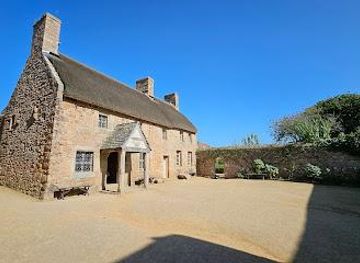
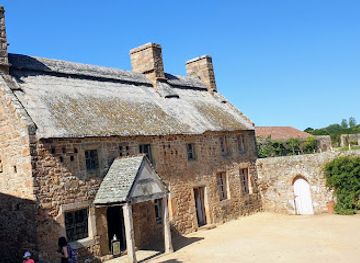
Hamptonne Country Life Museum
Discover the rich rural heritage of Jersey at the Hamptonne Country Life Museum, where history comes alive through immersive exhibits and beautiful gardens.
14 min walk · 1.1 km from city centre
-
Garden
Moignard Liberation Garden
Explore the tranquil Moignard Liberation Garden in Jersey, where history meets natural beauty in a serene setting perfect for relaxation.
4 min walk · 0.3 km from city centre

Best landmarks in St. Lawrence
St Lawrence’s landmarks are closely tied to parish identity, farming and the twentieth-century history of Jersey. St Lawrence Parish Church forms a traditional ecclesiastical centre within the rural landscape, while Hamptonne Country Life Museum preserves the buildings and spatial arrangement of an historic Jersey farmstead. St Matthew’s Church at Millbrook is especially distinctive for its Art Deco interior glass, created by René Lalique, and is widely known as the Glass Church. Jersey War Tunnels is a landmark of a different kind: its subterranean scale records the engineering and human cost of German Occupation. Away from individual buildings, the parish’s granite walls, green lanes and valley roads are part of its cultural character, showing how settlement, agriculture and water management have shaped the landscape over generations.
-
History museum
Hamptonne Country Life Museum
Explore the historical heart of Jersey at Hamptonne Country Life Museum, where rural heritage meets engaging exhibits and beautiful gardens.
14 min walk · 1.1 km from city centre
-
Protestant church
St Matthew's Church
Explore the majestic St Matthew's Church in Jersey, a beautiful blend of history, architecture, and tranquility, perfect for tourists and history enthusiasts alike.
6 min drive · 2.0 km from city centre
-
Tourist attraction
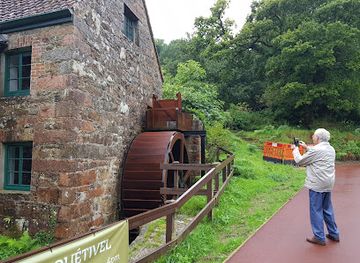
Le Moulin de Quétivel
Explore Jersey's heritage at Le Moulin de Quétivel, where history meets nature in a stunning water mill setting.
5 min drive · 1.6 km from city centre
-
National park
Waterworks Valley
Experience the natural beauty and tranquility of Waterworks Valley, a peaceful national park perfect for outdoor adventures and family outings in Jersey.
14 min walk · 1.1 km from city centre


Explore St. Lawrence on the map
Plan your St. Lawrence trip on one map. See where the top attractions, landmarks, restaurants, bars and hotels are, find what's near where you're staying, and book hotels and experiences in a few clicks.
Best hotels in St. Lawrence
Best restaurants in St. Lawrence
Dining in St Lawrence reflects the parish’s rural setting rather than a concentrated restaurant quarter. Visitors are more likely to find food at country pubs, cafés, farm-related businesses and accommodation venues, while the broadest choice of restaurants lies in nearby St Helier. Jersey’s culinary identity is shaped by the surrounding sea and fields: local seafood, dairy products, Jersey Royals when in season, cream, butter and produce from small farms all feature in island cooking. Traditional tastes include bean crock, a slow-cooked bean and pork dish, and apple-based preparations linked to Jersey’s farming heritage. Farm shops and markets elsewhere on the island can provide local cheese, preserves, vegetables and baked goods for picnics. Menus vary with season and availability, but the parish is well suited to relaxed meals following visits to its museums, valleys and historic sites rather than late-night dining.
-
Takeout restaurant
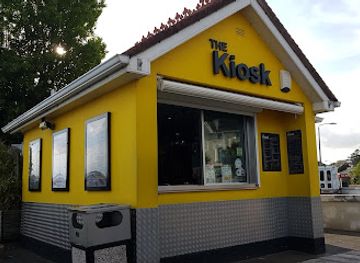
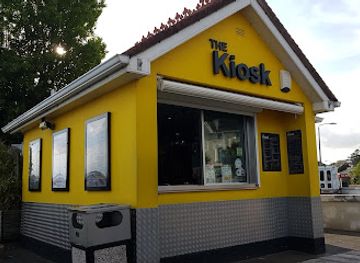
The Kiosk
Experience the flavors of Jersey at The Kiosk - your go-to spot for delicious takeout including burgers, coffee, and ice cream.
6 min drive · 2.1 km from city centre
-
Restaurant
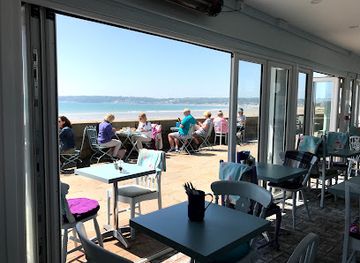
The Lookout Beach Cafe & Restaurant
Discover coastal dining at The Lookout Beach Cafe & Restaurant in Jersey – where fresh flavors meet breathtaking views.
8 min drive · 2.7 km from city centre
-
British
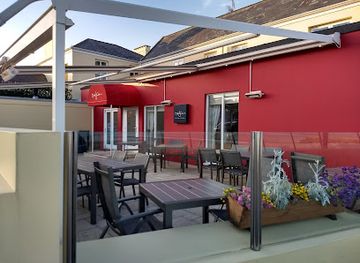
Mark Jordan at the Beach
Savor exquisite British seafood cuisine with breathtaking ocean views at Mark Jordan at the Beach in Jersey.
7 min drive · 2.5 km from city centre
-
Restaurant
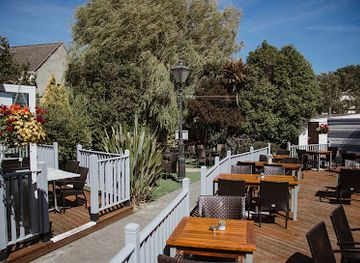
The Goose - Randalls Pubs
Discover The Goose in Jersey: A vibrant pub offering delicious cuisine and refreshing drinks amidst a warm and welcoming atmosphere.
7 min drive · 2.4 km from city centre
Best bars in St. Lawrence
St Lawrence has a subdued evening scene centred on country pubs, hotel bars and occasional community or cultural events rather than dedicated nightclubs. The rural lanes become quiet after dark, making the parish suitable for a relaxed drink or an early meal, but visitors should arrange transport carefully because evening bus services may be less frequent outside the main routes. St Helier provides Jersey’s broadest choice of cocktail bars, traditional pubs, live music and late-evening entertainment, with a short road journey linking the capital to the parish. Seasonal events, performances and local gatherings may add interest, although programmes change. The evening atmosphere in St Lawrence is shaped more by countryside, parish sociability and nearby heritage than by a concentrated entertainment district.
-
Pub
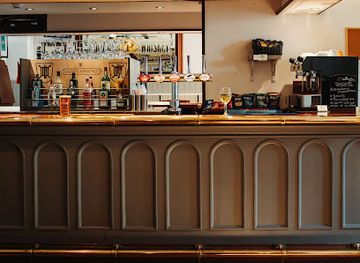
Saint Lawrence Pub
Discover the charm of Jersey at Saint Lawrence Pub, where local flavors and warm hospitality create an inviting escape.
3 min walk · 0.2 km from city centre
Best nightclubs in St. Lawrence
St Lawrence has a subdued evening scene centred on country pubs, hotel bars and occasional community or cultural events rather than dedicated nightclubs. The rural lanes become quiet after dark, making the parish suitable for a relaxed drink or an early meal, but visitors should arrange transport carefully because evening bus services may be less frequent outside the main routes. St Helier provides Jersey’s broadest choice of cocktail bars, traditional pubs, live music and late-evening entertainment, with a short road journey linking the capital to the parish. Seasonal events, performances and local gatherings may add interest, although programmes change. The evening atmosphere in St Lawrence is shaped more by countryside, parish sociability and nearby heritage than by a concentrated entertainment district.
-
Pub
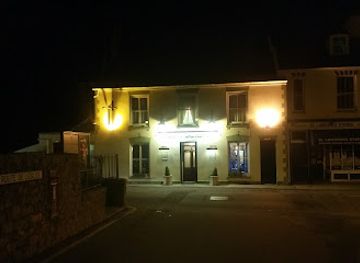
Saint Lawrence Pub
Discover a local gem at Saint Lawrence Pub in Jersey, where traditional dishes and a friendly atmosphere await every visitor.
3 min walk · 0.2 km from city centre
-
Disco club
Ce Soir
Dive into the electrifying nightlife of Ce Soir in Jersey, the ultimate disco club for an unforgettable dance experience.
7 min walk · 0.6 km from city centre

Best shops in St. Lawrence
Shopping in St Lawrence is primarily local and practical, reflecting its rural character rather than a formal retail centre. Farm shops and small food businesses may offer Jersey produce, preserves, baked goods, dairy items and seasonal vegetables, while nearby parish roads provide opportunities to find island-made products outside the main town. For independent boutiques, department stores, galleries and a wider choice of souvenirs, visitors generally travel to St Helier, where central streets and the Central Market provide a more concentrated shopping experience. Jersey-themed gifts often include local food, crafts and maritime or Occupation-related items, although selection varies by retailer. The island’s agricultural traditions are best represented by items connected with its dairy heritage, potatoes, apples and preserves, while specialist shops elsewhere in Jersey provide more extensive artisan and food retail.
-
Takeout restaurant
The Kiosk
Discover The Kiosk: Jersey’s go-to takeout destination for delicious burgers, refreshing coffee, and delightful ice creams along Victoria Avenue.
6 min drive · 2.1 km from city centre
-
Florist
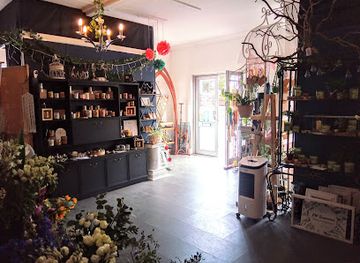
JM Emporium Florist & Stained Glass
Explore the exquisite floral arrangements and stunning stained glass creations at JM Emporium Florist & Stained Glass in Jersey.
8 min drive · 2.6 km from city centre
-
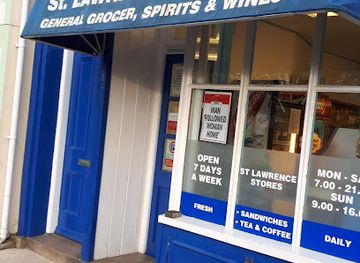
General store
St. Lawrence Stores
Experience the charm of local shopping at St. Lawrence Stores, a delightful general store in Jersey offering unique products and friendly service.
3 min walk · 0.3 km from city centre
-
Antique store
Stephen Cohu Antiques
Explore Stephen Cohu Antiques in Jersey for exquisite antique furniture and collectibles that tell timeless stories.
5 min walk · 0.4 km from city centre

Get your free copy of our complete guide to St. Lawrence, delivered straight to you.
Everything on this page, from attractions and restaurants to essentials and local phrases, in one PDF you can read offline, print or share.
Already have an account? Sign in
Your St. Lawrence guide is ready.
We'll send it to · Not you? Sign out

Getting your guide ready…
We are putting together a fresh copy of the St. Lawrence guide. This can take up to a minute.
This can take a few moments. If your browser asks, choose Allow so the download can start. You'll find the guide in your Downloads folder.
Nothing happened? Download it again
Sorry, the guide is taking longer than usual. Please try again in a minute, or get it by email instead.
St. Lawrence essentials
Currency and Payment
Safety
Emergency Situations
Do's and Don'ts
Local Tips
From Eve
Local phrases worth knowing
You don't need to get them perfect. A few words go a long way, and locals appreciate the effort.
Basics
| English | Local | Say it |
|---|---|---|
| Hello | Bonjour | [Bon-zhoor] |
| Goodbye | Au revoir | [O re-vwar] |
| Yes | Oui | [Wee] |
| No | Non | [Non] |
| Please/You're welcome | S'il vous plaît / De rien | [Seel voo pleh / De ree-an] |
| Thank you | Merci | [Mehr-see] |
| Excuse me/Sorry | Excusez-moi / Désolé | [Ex-kew-zay mwah / Deh-zo-lay] |
| How are you? | Comment ça va? | [Koh-mohn sah vah?] |
| Fine. And you? | Bien. Et vous? | [Byen. Eh voo] |
| Do you speak English? | Parlez-vous anglais? | [Par-lay voo ahn-glay] |
| I don't understand | Je ne comprends pas | [Zhuh nuh kohm-prahn pah] |
Eating & Drinking
| English | Local | Say it |
|---|---|---|
| I'd like to see the menu, please | Je voudrais voir le menu, s'il vous plaît | [Zhuh voo-dray vwahr luh meh-noo, seel voo pleh] |
| I don't eat meat | Je ne mange pas de viande | [Zhuh nuh mahnj pah deh vee-and] |
| Cheers! | Santé! | [Sahn-tay] |
| I would like to pay, please | Je voudrais payer, s'il vous plaît | [Zhuh voo-dray pay-ay, seel voo pleh] |
Emergencies
| English | Local | Say it |
|---|---|---|
| Help! | Au secours! | [O se-coor] |
| Go away! | Allez-vous en! | [Al-lay voo ahn] |
| Call the Police! | Appelez la police! | [Ah-pell-ay lah poh-lees] |
| Call a doctor! | Appelez un médecin! | [Ah-pell-ay un meh-deh-sahn] |
| I'm lost | Je suis perdu | [Zhuh swee pehr-doo] |
| I'm ill | Je suis malade | [Zhuh swee mah-lahd] |
Shopping
| English | Local | Say it |
|---|---|---|
| I'd like to buy... | Je voudrais acheter... | [Zhuh voo-dray ash-tay] |
| I'm just looking | Je regarde juste | [Zhuh ruh-gard zhew-st] |
| How much is it? | Combien ça coûte? | [Kohm-byen sah koot] |
| That's too expensive | C'est trop cher | [Say troh shair] |
| Can you lower the price? | Pouvez-vous baisser le prix? | [Poo-vez voo beh-say luh pree] |
Time & Numbers
| English | Local | Say it |
|---|---|---|
| What time is it? | Quelle heure est-il? | [Kell er ay eel] |
| It's one o'clock | Il est une heure | [Eel ay oon er] |
| Half past (10) | Dix et demi | [Dee ay dem-ee] |
| Morning | Matin | [Mah-tan] |
| Afternoon | Après-midi | [Ah-preh mee-dee] |
| Evening | Soir | [Swahr] |
| Yesterday | Hier | [Yehr] |
| Today | Aujourd'hui | [Oh-zhoor-dwee] |
| Tomorrow | Demain | [Deh-man] |
| 1 | Un | [Oon] |
| 2 | Deux | [Duh] |
| 3 | Trois | [Twa] |
| 4 | Quatre | [Kat-ruh] |
| 5 | Cinq | [Sank] |
| 6 | Six | [Sees] |
| 7 | Sept | [Set] |
| 8 | Huit | [Wheat] |
| 9 | Neuf | [Nerf] |
| 10 | Dix | [Dee] |
Transport & Directions
| English | Local | Say it |
|---|---|---|
| Where's a/the...? | Où est...? | [Oo ay...] |
| What's the address? | Quelle est l'adresse? | [Kell ay lad-res] |
| Can you show me (on the map)? | Pouvez-vous me montrer (sur la carte)? | [Poo-vez voo muh mon-tray (soor lah kart)] |
| When's the next (bus)? | Quand est le prochain (bus)? | [Kond ay luh pro-shan (bus)] |
| A ticket (to ....) | Un billet (pour ....) | [Oon bee-yay (poor)] |
History of St. Lawrence
Early Settlement and the Parish Landscape
St Lawrence forms one of Jersey’s twelve historic parishes, an ecclesiastical and administrative division whose boundaries developed over many centuries. The wider island has evidence of prehistoric settlement, while St Lawrence’s inland terrain provided fields, watercourses and sheltered valleys suited to farming. Its history is therefore less a story of a single urban foundation than of scattered settlements, estate holdings and agricultural communities linked by lanes. The parish church and older farmsteads reflect the gradual organisation of local society around parish institutions, landholding and cultivation. Jersey’s position between France and England also meant that even rural communities existed within a wider landscape of maritime trade, military risk and cultural exchange.
Manors, Farms and Medieval Society
During the medieval period, land in St Lawrence was worked through farms, estates and manorial arrangements that connected local production with Jersey’s broader economy. Hamptonne, one of the island’s important historic farm complexes, preserves the architectural and social character of this farming world. Its buildings illustrate how domestic life, storage, livestock and agricultural work were closely combined. Jersey’s agricultural traditions later developed around dairy cattle, cider orchards, potatoes and mixed farming, but their foundations lay in older patterns of land use. The parish’s dispersed settlement, granite buildings and winding lanes still reveal the relationship between household, farm and field that shaped central Jersey.
Parish Life and Jersey’s Rural Economy
From the early modern period into the nineteenth century, St Lawrence remained predominantly agricultural while Jersey’s ports, trade and population expanded elsewhere. Parish institutions helped organise worship, local administration and community responsibilities, with the church acting as both a religious centre and a marker of communal identity. Improvements in farming, transport and drainage gradually altered the countryside, while the growth of Jersey’s export economy brought greater importance to produce such as potatoes and dairy goods. Granite houses, farmsteads and enclosed fields belonged to this changing rural economy. The parish’s inland position kept it separate from the commercial concentration of St Helier, although roads increasingly connected its farms and villages with the rest of the island.
The German Occupation, 1940–1945
German forces occupied Jersey from 1940 until the island’s liberation in May 1945, bringing restrictions, requisitioning, forced labour and extensive military construction. St Lawrence is closely associated with Jersey War Tunnels, a vast underground complex excavated during the Occupation for use as a military hospital and later adapted for other purposes. The site also conveys the experiences of islanders and the labourers brought to Jersey under coercive conditions. Occupation structures, roads and defensive works across the island transformed the landscape, while shortages and controls affected everyday parish life. The surviving tunnels provide particularly direct evidence of this difficult period and its lasting place in Jersey’s collective memory.
Post-war Change and Heritage Preservation
After liberation in 1945, St Lawrence gradually moved from an overwhelmingly agricultural parish towards a mixed rural-residential community. Farming remained important, but improved roads, changing employment patterns and Jersey’s growing population brought new houses and services into the countryside. Historic sites acquired a second role as places of interpretation and public memory: Hamptonne presents the island’s farming heritage, while Jersey War Tunnels preserves evidence of the Occupation. St Matthew’s Church and the parish church continue to express local religious and architectural identity. Today, St Lawrence’s character lies in the coexistence of working landscapes, protected heritage, modern homes and the green lanes that connect them.
St. Lawrence in Photos
Browse through our photo collection highlighting the charm and character of the destination.
Cities near St. Lawrence
The closest cities to St. Lawrence, if you have time for more than one stop.
-

-

-
-

-


Swipe for more cities
Explore more

Explore more of Jersey
Discover the charm of Jersey, the largest Channel Island, with its stunning landscapes, rich history, and a delightful blend of British and French cultures.
Explore Jersey