

Free St. Ouen Travel Guide & Mobile App
Plan your St. Ouen trip with Evendo. Get free guides to top attractions, restaurants, hotels, and bars. Web access or download the mobile app.


St Ouen, Jersey, pairs wild Atlantic landscapes with surf beaches, wartime history, country lanes and nature-rich walks across the island’s northwest.
Atlantic Coast and Open Country
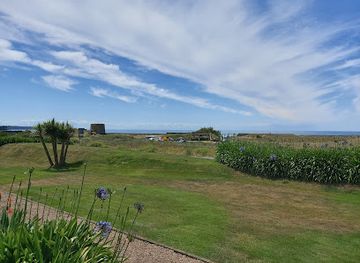
St Ouen occupies much of Jersey’s north-western peninsula, a broad rural parish shaped by Atlantic wind, long beaches and open heathland. Its defining landscape is St Ouen’s Bay, where a sweeping arc of sand meets dunes, salt marsh and a shoreline popular with surfers. Inland, narrow lanes pass granite farmhouses, fields and small clusters of settlement rather than a dense town centre, giving St Ouen a distinctly countryside character.Read more about St. Ouen
Heathland, Wetlands and War History
A Relaxed Jersey Base
When is the best time to visit St. Ouen?
Best: June–August · 20–23°C| Month | High (°C) | Rainfall (mm) |
|---|---|---|
| January | 10 | 80 |
| February | 10 | 70 |
| March | 11 | 70 |
| April | 14 | 60 |
| May | 16 | 50 |
| June (best) | 20 | 40 |
| July (best) | 23 | 40 |
| August (best) | 23 | 50 |
| September | 21 | 60 |
| October | 17 | 70 |
| November | 14 | 80 |
| December | 11 | 80 |
Getting to and around St. Ouen
How to get there
Transportation
Best attractions in St. Ouen
St Ouen’s Bay is the parish’s principal natural attraction, stretching along a broad Atlantic shore where dunes, surf and open sky create a markedly spacious landscape. The beach is associated with surfing and walking, while its western aspect makes it especially atmospheric in the evening. Inland, St Ouen’s Pond offers a quieter setting of reed beds, wet grassland and bird-rich habitats, with paths and viewpoints around Jersey’s largest freshwater pond. The Les Landes headland adds rough heathland, coastal tracks and far-reaching views towards the island’s offshore reefs. Visitors interested in twentieth-century history can find German bunkers and coastal defence remains integrated into the western landscape. St Ouen’s Parish Church provides a more settled architectural counterpoint, standing among fields and lanes that reveal the parish’s agricultural character. Seasonal beach cafés, surf facilities and rural farm businesses complete an attraction range centred on landscape, recreation and local heritage rather than museums or urban entertainment.
-
Tourist attraction
Jersey Pearl
Experience the charm of Jersey Pearl, a cultural gem offering exquisite jewelry, delicious dining, and engaging history in the heart of Jersey.
6 min drive · 1.9 km from city centre
-
Castle
Grosnez Castle
Discover the historic Grosnez Castle in Jersey, a stunning medieval fortress with breathtaking coastal views and rich heritage.
10 min drive · 3.5 km from city centre
-
Tourist attraction
Plemont Rock Pools
Explore the mesmerizing Plemont Rock Pools in Jersey, where stunning rock formations meet vibrant marine life in a captivating coastal setting.
8 min drive · 2.6 km from city centre
-
Garden
Birdsong Garden
Explore the serene beauty of Birdsong Garden in Jersey, a tranquil escape filled with vibrant flora and the soothing sounds of nature.
6 min drive · 1.9 km from city centre


Best landmarks in St. Ouen
St Ouen’s Parish Church is the parish’s principal historic building, its granite construction and rural churchyard embodying the island’s long ecclesiastical and agricultural traditions. Along the coast, German occupation remains form a different kind of landmark: bunkers, gun positions and observation structures survive as stark reminders of Jersey’s strategic role during the Second World War. The Les Landes headland is also significant for its distinctive prehistoric and geological landscape, including the dramatic rocky feature known as the Pinnacle, a long-recognised natural landmark on the north-western coast. St Ouen’s Pond, while primarily a habitat rather than a monument, is an important landscape landmark and a defining feature of the parish. Together these places show how St Ouen’s identity rests on the interaction of church, coast, military history and protected countryside rather than on a single urban centre.
-
Tourist attraction
Jersey Pearl
Explore the captivating fusion of pearl jewelry, local culture, and delightful cuisine at Jersey Pearl, a unique gem in the heart of Jersey.
6 min drive · 1.9 km from city centre
-
Castle
Grosnez Castle
Discover the enchanting ruins of Grosnez Castle, a historical gem offering stunning views and a glimpse into Jersey's medieval past.
10 min drive · 3.5 km from city centre
-
Museum
Channel Islands Military Museum
Uncover the compelling military history of Jersey at the Channel Islands Military Museum, a captivating tourist attraction for all ages.
6 min drive · 2.0 km from city centre
-
Miniature golf course
Rocco's Crazy, Mini & Adventure Golf Activity Centre
Experience the joy of miniature golfing at Rocco's Crazy Golf in St Ouen, Jersey, where fun meets creativity in every themed hole.
10 min drive · 3.3 km from city centre


Explore St. Ouen on the map
Plan your St. Ouen trip on one map. See where the top attractions, landmarks, restaurants, bars and hotels are, find what's near where you're staying, and book hotels and experiences in a few clicks.
Best hotels in St. Ouen
Best restaurants in St. Ouen
Dining in St Ouen is closely tied to the coast and countryside, with casual beach cafés, surf-oriented eateries, village pubs and small rural businesses forming the main scene rather than a concentrated restaurant quarter. Seafood and shellfish reflect Jersey’s maritime setting, while local dairy products, potatoes, vegetables and seasonal produce connect menus with the island’s farming tradition. The bay is a natural place for a simple lunch or coffee with views across the Atlantic, whereas inland establishments tend to offer a more traditional pub or country setting. Farm shops and roadside producers may provide Jersey goods for picnics, including local produce and dairy specialities, although opening patterns can be seasonal. For a wider choice of cuisines and evening dining, visitors usually travel towards St Helier or other larger island communities. Booking ahead can be sensible for small rural venues during busy periods.
-
Restaurant
El Tico
Experience exceptional dining at El Tico in Jersey—where fresh seafood meets stunning ocean views.
11 min drive · 3.8 km from city centre
-
Restaurant
Watersplash Beach Bar & Diner
Experience coastal dining at Watersplash Beach Bar & Diner with fresh seafood and stunning ocean views in Jersey.
9 min drive · 3.1 km from city centre
-
Restaurant
The Priory Inn Devils Hole
Discover local flavors at The Priory Inn Devils Hole - a delightful restaurant and bar in Jersey offering stunning views and exceptional cuisine.
10 min drive · 3.3 km from city centre
-
Pub
St. Mary’s Pub & Dining
Discover authentic British cuisine at St. Mary's Pub & Dining in Jersey – where tradition meets taste in a charming atmosphere.
8 min drive · 2.7 km from city centre


Best bars in St. Ouen
St Ouen has a quiet evening character rather than a dedicated nightlife district. After the beach businesses close, social life is concentrated in village pubs, country inns and relaxed restaurants, where locals and visitors gather for conversation, drinks and food. The bay may provide an atmospheric sunset setting, but the exposed coast is not a place for improvised late-night swimming or cliff walks. There are no major clusters of nightclubs in the parish; visitors seeking live entertainment, theatre, late bars or a broader choice of venues generally travel to St Helier. Evening events may also include seasonal music, community activities or performances elsewhere in Jersey, with details changing over the year. Rural roads can be dark and narrow, so anyone returning after an evening out should arrange a taxi, designated driver or suitable bus connection rather than relying on walking between scattered venues.
-
Restaurant
El Tico
Experience the flavors of Jersey at El Tico, a restaurant where fresh, local ingredients meet stunning coastal views.
11 min drive · 3.8 km from city centre
-
Restaurant
Watersplash Beach Bar & Diner
Experience the perfect blend of delicious cuisine and stunning coastal views at Watersplash Beach Bar & Diner in Jersey.
9 min drive · 3.1 km from city centre
-
Bar
The Priory Inn Devils Hole
Experience the perfect blend of local charm and delicious cuisine at The Priory Inn, Jersey's ultimate bar and restaurant destination.
10 min drive · 3.3 km from city centre
-
Pub
St. Mary’s Pub & Dining
Experience the warmth of Jersey hospitality at St. Mary’s Pub & Dining, where traditional British cuisine meets a cozy pub atmosphere.
8 min drive · 2.7 km from city centre


Best nightclubs in St. Ouen
St Ouen has a quiet evening character rather than a dedicated nightlife district. After the beach businesses close, social life is concentrated in village pubs, country inns and relaxed restaurants, where locals and visitors gather for conversation, drinks and food. The bay may provide an atmospheric sunset setting, but the exposed coast is not a place for improvised late-night swimming or cliff walks. There are no major clusters of nightclubs in the parish; visitors seeking live entertainment, theatre, late bars or a broader choice of venues generally travel to St Helier. Evening events may also include seasonal music, community activities or performances elsewhere in Jersey, with details changing over the year. Rural roads can be dark and narrow, so anyone returning after an evening out should arrange a taxi, designated driver or suitable bus connection rather than relying on walking between scattered venues.
-
Restaurant
Le Moulin de Lecq
Experience the perfect blend of rustic charm and modern cuisine at Le Moulin de Lecq, a must-visit restaurant and pub in Jersey.
14 min walk · 1.1 km from city centre
-
Bar
Rocco's Restaurant & Bar
Experience exquisite dining at Rocco's Restaurant & Bar, where culinary delights meet stunning views at Les Mielles Golf & Country Club.
9 min drive · 3.2 km from city centre
-
Community center
St. Ouens Youth Club
Experience the vibrant community spirit at St. Ouen's Youth Club, a hub for creativity and connection in Jersey.
10 min walk · 0.8 km from city centre


Best shops in St. Ouen
Shopping in St Ouen is small-scale and practical, reflecting its rural setting. Visitors are more likely to encounter farm shops, seasonal produce stalls, village convenience shops and surf-related businesses than department stores or a continuous retail street. Jersey potatoes, local dairy products, preserves, baked goods and other island produce make suitable food purchases, while craft items and locally made gifts may appear through seasonal outlets or island-wide makers’ markets. The coastal area can offer equipment and clothing associated with surfing and beach recreation, but stock and opening patterns vary. For antiques, independent boutiques, larger supermarkets and a broader selection of Jersey souvenirs, St Helier is the island’s principal shopping centre and is readily reached by road. Buying directly from rural producers provides a useful connection with St Ouen’s agricultural landscape, although visitors should respect farm access arrangements and avoid treating working premises as open shops unless clearly signposted.
-
Tourist attraction
Jersey Pearl
Discover the art of pearl jewelry and indulge in local flavors at Jersey Pearl, a unique cultural hub on the stunning island of Jersey.
6 min drive · 1.9 km from city centre
-
Charity
Jersey Hospice Care St Ouen Store
Explore unique treasures at Jersey Hospice Care St Ouen Store, where every purchase supports vital hospice care services in the community.
12 min walk · 1.0 km from city centre
-
Convenience store
Morrisons Daily
Explore Morrisons Daily in Jersey for a variety of groceries and essentials in a friendly convenience store setting.
9 min walk · 0.7 km from city centre
-
Farm shop
Manor Farm
Discover the delightful flavors of Jersey at Manor Farm, your go-to destination for fresh produce and local specialties in a charming countryside setting.
17 min walk · 1.4 km from city centre


Get your free copy of our complete guide to St. Ouen, delivered straight to you.
Everything on this page, from attractions and restaurants to essentials and local phrases, in one PDF you can read offline, print or share.
Already have an account? Sign in
Your St. Ouen guide is ready.
We'll send it to · Not you? Sign out

Getting your guide ready…
We are putting together a fresh copy of the St. Ouen guide. This can take up to a minute.
This can take a few moments. If your browser asks, choose Allow so the download can start. You'll find the guide in your Downloads folder.
Nothing happened? Download it again
Sorry, the guide is taking longer than usual. Please try again in a minute, or get it by email instead.
St. Ouen essentials
Currency and Payment
Safety
Emergency Situations
Do's and Don'ts
Local Tips
From Eve
Local phrases worth knowing
You don't need to get them perfect. A few words go a long way, and locals appreciate the effort.
Basics
| English | Local | Say it |
|---|---|---|
| Hello | Bonjour | [Bon-zhoor] |
| Goodbye | Au revoir | [Oh rev-wah] |
| Yes | Oui | [Wee] |
| No | Non | [Non] |
| Please/You're welcome | S'il vous plaît | [Seel voo play] |
| Thank you | Merci | [Mehr-see] |
| Excuse me/Sorry | Excusez-moi | [Ex-kew-zay mwah] |
| How are you? | Comment ça va? | [Koh-mon sah vah] |
| Fine. And you? | Bien. Et toi? | [Byen. Ay twah] |
| Do you speak English? | Parlez-vous anglais? | [Par-lay voo ahn-glay] |
| I don't understand | Je ne comprends pas | [Zhuh nuh kohm-prahn pah] |
Eating & Drinking
| English | Local | Say it |
|---|---|---|
| I'd like to see the menu, please | Je voudrais voir le menu, s'il vous plaît | [Zhuh voo-dray vwar luh men-oo, seel voo play] |
| I don't eat meat | Je ne mange pas de viande | [Zhuh nuh mahnj pah duh vyand] |
| Cheers! | Santé! | [San-tay] |
| I would like to pay, please | Je voudrais payer, s'il vous plaît | [Zhuh voo-dray pay-yay, seel voo play] |
Emergencies
| English | Local | Say it |
|---|---|---|
| Help! | Au secours! | [Oh se-cur] |
| Go away! | Allez-vous en! | [Ah-lay voo zahn] |
| Call the Police! | Appelez la police! | [Ah-peh-lay lah po-lees] |
| Call a doctor! | Appelez un médecin! | [Ah-peh-lay uh mayd-seen] |
| I'm lost | Je suis perdu | [Zhuh swee pair-doo] |
| I'm ill | Je suis malade | [Zhuh swee mah-lahd] |
Shopping
| English | Local | Say it |
|---|---|---|
| I'd like to buy... | Je voudrais acheter... | [Zhuh voo-dray zash-tay...] |
| I'm just looking | Je regarde juste | [Zhuh ruh-gard zhust] |
| How much is it? | Combien ça coûte? | [Kohm-byen sah koot] |
| That's too expensive | C'est trop cher | [Say troh shair] |
| Can you lower the price? | Pouvez-vous baisser le prix? | [Poo-vay voo bay-say luh pree] |
Time & Numbers
| English | Local | Say it |
|---|---|---|
| What time is it? | Quelle heure est-il? | [Kell ur eh-teel] |
| It's one o'clock | Il est une heure | [Eel eh zewn ur] |
| Half past (10) | Dix et demie | [Dee ay duh-mee] |
| Morning | Matin | [Mah-tan] |
| Afternoon | Après-midi | [Ah-pray-mee-dee] |
| Evening | Soir | [Swah] |
| Yesterday | Hier | [Yehr] |
| Today | Aujourd'hui | [Oh-zhoor-dwee] |
| Tomorrow | Demain | [Duh-man] |
| 1 | Un | [Ehn] |
| 2 | Deux | [Duh] |
| 3 | Trois | [Twa] |
| 4 | Quatre | [Kat-ruh] |
| 5 | Cinq | [Sank] |
| 6 | Six | [Seese] |
| 7 | Sept | [Set] |
| 8 | Huit | [Wee-eet] |
| 9 | Neuf | [Nuhf] |
| 10 | Dix | [Dee] |
Transport & Directions
| English | Local | Say it |
|---|---|---|
| Where's a/the...? | Où est... | [Oo eh...] |
| What's the address? | Quelle est l'adresse? | [Kell eh lah-dress] |
| Can you show me (on the map)? | Pouvez-vous me montrer (sur la carte)? | [Poo-vay voo muh mohn-tray (sur lah kart)] |
| When's the next (bus)? | Quand est le prochain (bus)? | [Kahnd eh luh pro-shan (bus)] |
| A ticket (to ....) | Un billet (pour ...) | [Ehn bee-yay (poor)] |
History of St. Ouen
A Parish Shaped by the Sea
St Ouen developed as one of Jersey’s large rural parishes, its settlement pattern influenced by fertile farmland, coastal grazing and access to the sea. The parish church is dedicated to Saint Ouen, a seventh-century bishop of Rouen, reflecting the Norman and wider Christian connections that shaped Jersey after the island’s incorporation into the Norman sphere. For centuries, life centred on farming, fishing, maritime work and the management of common land. The parish’s western and northern margins remained relatively open, while dispersed farms and lanes connected small communities inland. This agricultural landscape, interrupted by dunes, heath and wetlands, remains central to St Ouen’s identity.
Farms, Commons and Rural Society
Over the medieval and early modern periods, St Ouen’s economy was grounded in cultivation and livestock, with the parish’s broad land area supporting a substantial farming community. Like other parts of Jersey, it was influenced by manorial institutions, church life and the practical demands of an island exposed to trade and conflict. The open areas around Les Landes were used for grazing and other communal purposes, while enclosed fields supported crops and dairy farming. Granite farmhouses, boundary walls and winding lanes preserve elements of this rural history. The parish’s landscape also reflects Jersey’s long balance between private agriculture and shared coastal or heathland resources.
Coastal Defence and Atlantic Conflict
Jersey’s position close to the French coast made St Ouen’s exposed western shore strategically important. Defensive structures were built and adapted over several centuries, but the most extensive transformation came during the German Occupation from 1940 to 1945. German forces constructed bunkers, gun positions, observation posts and anti-landing obstacles along the bay and surrounding headlands as part of the Atlantic Wall. The remains are still visible in the landscape, particularly around the coast and Les Landes. They provide a physical record of the island’s wartime experience, when civilian life was controlled by occupation authorities and movement, food and communication were tightly restricted.
Post-war Change and Coastal Recreation
After Liberation in 1945, St Ouen gradually moved from an overwhelmingly agricultural parish towards a mixed rural and leisure economy. Farming remained important, while the bay became increasingly associated with swimming, surfing, walking and seasonal cafés. Wartime structures were left as part of the landscape, reused in some cases and interpreted as heritage in others. Improved roads and island-wide bus connections made the coast more accessible to residents and visitors, although the parish retained its dispersed character. The protection of dunes, heathland and St Ouen’s Pond also became increasingly important as awareness grew of the ecological value of Jersey’s western landscapes.
Conservation and Living Heritage
Contemporary St Ouen is shaped by the coexistence of agriculture, conservation and coastal recreation. St Ouen’s Pond and the Les Landes headland are valuable habitats within a wider landscape of dunes, wet grassland, heath and shore. Parish institutions, the church, farms and historic lanes continue to give the area a strong local identity, while surviving German fortifications connect the present with the occupation years. The parish is not an urban centre in the conventional sense; its history is read through land use and landscape as much as through buildings. This continuity makes St Ouen an important example of Jersey’s rural and maritime heritage.
St. Ouen in Photos
Browse through our photo collection highlighting the charm and character of the destination.
Cities near St. Ouen
The closest cities to St. Ouen, if you have time for more than one stop.
-

-
-

-

-


Swipe for more cities
Explore more

Explore more of Jersey
Discover the charm of Jersey, the largest Channel Island, with its stunning landscapes, rich history, and a delightful blend of British and French cultures.
Explore Jersey