

Al-Maghtas Travel Guide - Free Web & App
Your ultimate guide to Al-Maghtas. Discover top landmarks, proposed trips, and local tips. Free on the web or via the Evendo companion app.


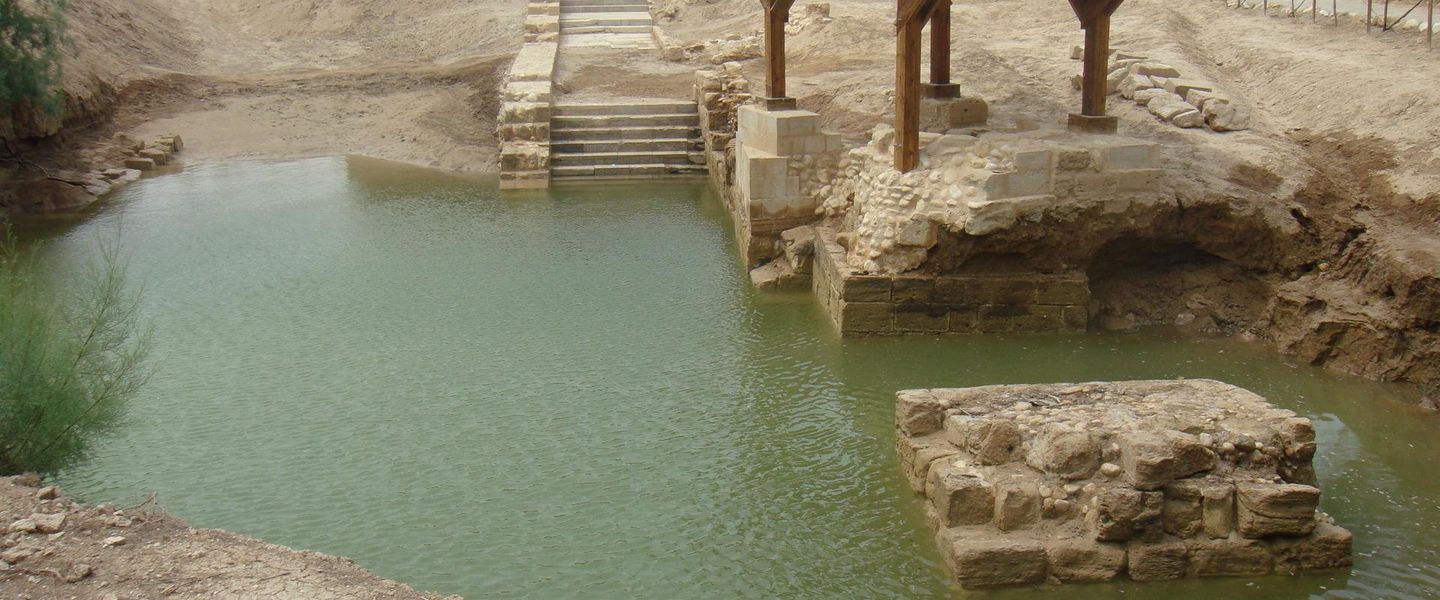


Al-Maghtas, Jordan’s baptism site on the Jordan River, offers sacred history, archaeological churches, desert landscapes and reflective visits near the Dead Sea.
The Baptism Site on the Jordan River
Al-Maghtas lies on the eastern bank of the Jordan River, north of the Dead Sea, in a dry valley landscape shaped by water, reeds and low desert hills. Known in Arabic as Al-Maghtas, meaning “immersion” or “baptism”, the site is traditionally identified with Bethany beyond the Jordan, where John the Baptist conducted baptisms and where Christian tradition associates Jesus with the river. It is one of Jordan’s most important religious destinations and has been recognised by UNESCO as a World Heritage Site.Read more about Al-Maghtas
Archaeology and Pilgrimage
Visiting from Jordan’s Central Region
When is the best time to visit Al-Maghtas?
Best: April, October–November · 25–31°C| Month | High (°C) | Rainfall (mm) |
|---|---|---|
| January | 18 | 76 |
| February | 19 | 68 |
| March | 23 | 60 |
| April (best) | 29 | 14 |
| May | 34 | 5 |
| June | 38 | 0 |
| July | 39 | 0 |
| August | 39 | 0 |
| September | 36 | 0 |
| October (best) | 31 | 0 |
| November (best) | 25 | 13 |
| December | 18 | 43 |
Getting to and around Al-Maghtas
How to get there
Transportation
Best attractions in Al-Maghtas
The central attraction at Al-Maghtas is the archaeological complex associated with the baptism of Jesus and the ministry of John the Baptist. Visitors follow the established route through the remains of Byzantine churches, chapels, monasteries, baptism pools and other structures that once supported Christian pilgrimage on the eastern bank of the Jordan. The river itself is the defining natural feature, bordered by a narrow corridor of vegetation that contrasts with the dry Jordan Valley beyond it. Interpretation along the site helps explain the religious and archaeological significance of the foundations, while the modest remains invite close observation rather than panoramic sightseeing. Al-Maghtas is commonly combined with the Dead Sea, Madaba or Mount Nebo, but those are separate destinations outside the archaeological site and should be planned as distinct stops. Its appeal lies in the meeting of scriptural tradition, excavated religious architecture and a living river landscape.
-
Tourist attraction
Qasr el Yahud
Discover Qasr el Yahud, a sacred site along the Jordan River, known for its spiritual significance and stunning natural beauty.
-
Tourist attraction
Russian Pilgrim Residence
Discover the serene beauty and rich spiritual heritage of the Russian Pilgrim Residence by the Jordan River, a unique cultural experience for every traveler.


Best landmarks in Al-Maghtas
The Jordan River is Al-Maghtas’s defining natural landmark, its narrow watercourse giving physical meaning to a place identified with Christian baptism and pilgrimage. The archaeological landmarks include the remains of Byzantine churches, chapels, monasteries and baptism pools spread across the eastern riverbank, together forming evidence of an organised religious settlement rather than a single monument. The site’s low stone foundations and reconstructed or conserved elements are significant because they reveal how worship and pilgrimage were arranged around the river. The contrast between the green river corridor and the dry Jordan Valley is also central to the landscape’s character. Al-Maghtas should not be confused with the Dead Sea, Mount Nebo or Madaba, which are important nearby landmarks but lie outside the baptism site itself.
-
Historical landmark
The Baptismal Site of Jesus Christ
Explore the profound history and spiritual significance at the Baptismal Site of Jesus Christ in Juwafat al-Kafrayn, a must-visit pilgrimage destination.
-
Historical landmark
Bethany beyond the Jordan
Explore the sacred site of Jesus' baptism at Bethany Beyond the Jordan, a serene historical landmark filled with biblical heritage and stunning landscapes.
-
Shopping mall
Baptism souvenir shop
Explore the Baptism Souvenir Shop in Juwafat al-Kafrayn for unique religious artifacts and local crafts that embody Jordan's rich heritage.
-
Visitor center
Entrance to The Authentic Baptism Site of Jesus Christ - Visitor Center
Explore the Authentic Baptism Site of Jesus Christ, a historical and spiritual landmark in Juwafat al-Kafrayn, where faith meets profound history.


Explore Al-Maghtas on the map
Plan your trip on one map. See where the top attractions, landmarks, restaurants and hotels are, and book hotels and experiences in a few clicks.
Best hotels in Al-Maghtas
Best shops in Al-Maghtas
Shopping at Al-Maghtas is limited and centred on the needs of visitors and pilgrims rather than a permanent commercial district. Souvenirs connected with Christian pilgrimage may be available through authorised outlets or organised visitor facilities, but travellers should not expect a large range of shops at the river. More substantial retail opportunities are found in Madaba, the Dead Sea resort area and Amman, where visitors can look for Jordanian food products, dates, olive-oil goods, embroidered textiles, ceramics, artwork and religious souvenirs. Madaba is particularly associated with Christian heritage and mosaic traditions, although individual workshops and shops vary. Buy from legitimate sellers, avoid removing archaeological material and remember that product availability changes between establishments and seasons.
-
Shopping mall
Baptism souvenir shop
Explore the Baptism Souvenir Shop in Juwafat al-Kafrayn for unique keepsakes celebrating local culture and craftsmanship.
-
Souvenir store
St . John the Baptist Store
Explore unique Jordanian souvenirs at St. John the Baptist Store, where every item tells a story and captures the essence of your journey.


Get your free copy of our complete guide to Al-Maghtas, delivered straight to you.
Everything on this page, from attractions and restaurants to essentials and local phrases, in one PDF you can read offline, print or share.
Already have an account? Sign in
Your Al-Maghtas guide is ready.
We'll send it to · Not you? Sign out

Getting your guide ready…
We are putting together a fresh copy of the Al-Maghtas guide. This can take up to a minute.
This can take a few moments. If your browser asks, choose Allow so the download can start. You'll find the guide in your Downloads folder.
Nothing happened? Download it again
Sorry, the guide is taking longer than usual. Please try again in a minute, or get it by email instead.
Al-Maghtas essentials
Currency and Payment
Safety
Emergency Situations
Do's and Don'ts
Local Tips
From Eve
Local phrases worth knowing
You don't need to get them perfect. A few words go a long way, and locals appreciate the effort.
Basics
| English | Local | Say it |
|---|---|---|
| Hello | مرحبا | [marhaba] |
| Goodbye | وداعا | [wada'an] |
| Yes | نعم | [naam] |
| No | لا | [laa] |
| Please/You're welcome | من فضلك | [min fadlik] |
| Thank you | شكرا | [shukran] |
| Excuse me/Sorry | عذرا | ['udhran] |
| How are you? | كيف حالك؟ | [kayfa halak?] |
| Fine. And you? | بخير. وأنت؟ | [bikhair. wa'ant?] |
| Do you speak English? | هل تتحدث الإنجليزية؟ | [hal tatakallam al'injlizia?] |
| I don't understand | لا أفهم | [la afham] |
Eating & Drinking
| English | Local | Say it |
|---|---|---|
| I'd like to see the menu, please | أريد أن أرى القائمة، من فضلك | [urid an ara alqaimah, min fadlik] |
| I don't eat meat | أنا لا آكل اللحم | [ana la akl allahm] |
| Cheers! | في صحتك! | [fi sahtak!] |
| I would like to pay, please | أرغب في الدفع، من فضلك | [urghab fi aldaf', min fadlik] |
Emergencies
| English | Local | Say it |
|---|---|---|
| Help! | النجدة! | [alnajdah!] |
| Go away! | انصرف! | [ansarif!] |
| Call the Police! | اتصل بالشرطة! | [atsil bilshurtah!] |
| Call a doctor! | اتصل بطبيب! | [atsil bitabib!] |
| I'm lost | لقد ضللت الطريق | [laqad dalalt altariq] |
| I'm ill | أنا مريض | [ana mareed] |
Shopping
| English | Local | Say it |
|---|---|---|
| I'd like to buy... | أود أن أشتري... | [awad an ashtari...] |
| I'm just looking | أنا فقط أتطلع | [ana faqat atatallu'] |
| How much is it? | بكم هذا؟ | [bikam hatha?] |
| That's too expensive | هذا غالي جدا | [hatha ghali jiddan] |
| Can you lower the price? | هل يمكنك خفض السعر؟ | [hal yumkinuk khafd als'ar?] |
Time & Numbers
| English | Local | Say it |
|---|---|---|
| What time is it? | كم الساعة؟ | [kam alsaa'ah?] |
| It's one o'clock | الساعة الواحدة | [alsaa'ah alwahidah] |
| Half past (10) | العاشرة والنصف | [al'ashirah walnisf] |
| Morning | الصباح | [assabah] |
| Afternoon | المساء | [almasa'] |
| Evening | المساء | [almasa'] |
| Yesterday | الأمس | [al'ams] |
| Today | اليوم | [alyawm] |
| Tomorrow | غدا | [ghadan] |
| 1 | واحد | [wahid] |
| 2 | اثنان | [ithnaan] |
| 3 | ثلاثة | [thalatha] |
| 4 | أربعة | [arba'ah] |
| 5 | خمسة | [khamsah] |
| 6 | ستة | [sittah] |
| 7 | سبعة | [saba'ah] |
| 8 | ثمانية | [thamania] |
| 9 | تسعة | [tisa'ah] |
| 10 | عشرة | ['asharah] |
Transport & Directions
| English | Local | Say it |
|---|---|---|
| Where's a/the...? | أين ...؟ | [ayna...?] |
| What's the address? | ما هو العنوان؟ | [ma huwa al'anaan?] |
| Can you show me (on the map)? | هل يمكنك أن تريني (على الخريطة)؟ | [hal yumkinuk an tureeni (ala alkhareetah)?] |
| When's the next (bus)? | متى القادم (الحافلة)؟ | [mata alqadim (alhafilah)?] |
| A ticket (to ....) | تذكرة (إلى ...) | [tadhkirah (ila ...)] |
History of Al-Maghtas
The Jordan Valley Landscape
Al-Maghtas occupies a historically important stretch of the Jordan Valley, a low-lying corridor between the central Jordanian plateau and the Dead Sea. The river and its associated springs, reeds and floodplain created a narrow zone of water and vegetation within an otherwise arid environment. Changes in the river’s course, water levels and surrounding land use have altered the appearance of the setting over time, but the relationship between water, desert and pilgrimage remains central to the site’s identity. Its significance is therefore both geographical and religious: the river provided the physical setting for ritual immersion and helped sustain movement through a demanding landscape.
Early Christian Pilgrimage
Al-Maghtas became associated with the ministry of John the Baptist and the baptism of Jesus in Christian tradition. By the Byzantine period, the Jordan River was an established destination for pilgrims travelling through the Holy Land, and religious buildings were constructed on the eastern bank. The archaeological remains include churches, chapels, monasteries, baptism pools and related structures, reflecting a permanent Christian presence rather than a single isolated shrine. Pilgrims were drawn to the river for its scriptural associations, while monastic communities developed the institutions needed to support worship and visitors.
A Changing Frontier
For long periods, the eastern bank of the Jordan was connected to wider pilgrimage routes across the region, but political change and the shifting control of the river corridor affected access. In the twentieth century, the area became part of a sensitive frontier zone, and mines and military restrictions limited ordinary visits to the archaeological remains. These conditions contributed to the site’s relative physical isolation and helped preserve parts of its archaeological landscape, although they also made systematic study and public access more difficult.
Rediscovery and World Heritage Recognition
Following the Jordan-Israel peace treaty of 1994, demining and archaeological work enabled Al-Maghtas to be opened progressively to visitors. Excavations and conservation clarified the extent of the Byzantine religious complex and renewed the site’s role as a Christian pilgrimage destination. Churches and communities from several traditions have since supported worship and baptismal observance in the area. UNESCO inscribed Baptism Site “Bethany Beyond the Jordan” on the World Heritage List in 2015, recognising its archaeological remains, religious importance and continuing relationship with Christian pilgrimage.
Al-Maghtas in Photos
Browse through our photo collection highlighting the charm and character of the destination.
Neighbouring destination travel guides
The closest destinations to Al-Maghtas, if you have time for more than one.
-

-

-

-
-


Swipe for more destinations
Explore more
Explore more of Balqa Highlands
Discover the Balqa Highlands in Jordan, a haven of natural beauty, historical treasures, and thrilling adventures, perfect for any traveler looking for a unique experience.
Explore Balqa Highlands
Explore more of Jordan
Discover Jordan: A land of ancient cities, breathtaking deserts, and therapeutic seas. Experience the blend of history and modernity in this Middle Eastern gem.
Explore Jordan