

Free Alai Valley Travel Guide & Mobile App
Explore Alai Valley with free travel guides. Discover regional history, expert tips, proposed trips, and audio guides on web or mobile app.


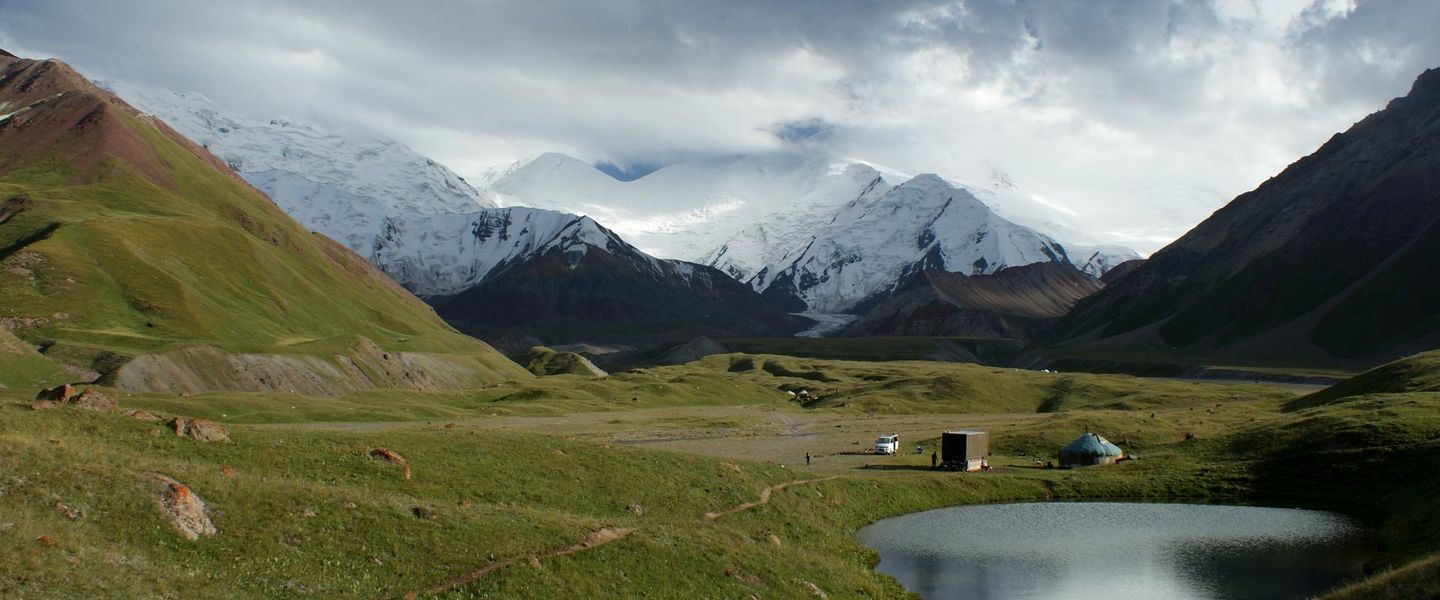


Explore Kyrgyzstan’s Alai Valley for high pastures, yurt stays, trekking, Pamir views and the mountain communities of Sary-Mogul and Sary-Tash.
Read more about Alai Valley
When is the best time to visit Alai Valley?
Best: June–August · 20–22°C| Month | High (°C) | Rainfall (mm) |
|---|---|---|
| January | 1 | 20 |
| February | 2 | 25 |
| March | 7 | 30 |
| April | 12 | 35 |
| May | 17 | 40 |
| June (best) | 20 | 45 |
| July (best) | 22 | 40 |
| August (best) | 21 | 35 |
| September | 17 | 30 |
| October | 11 | 25 |
| November | 5 | 20 |
| December | 1 | 15 |
Getting to and around Alai Valley
How to get there
Transportation
Explore Alai Valley on the map
Plan your trip on one map. See where the top cities, national parks and sights are, and book hotels and experiences in a few clicks.
Best hotels in Alai Valley
Best restaurants in Alai Valley
Dining in Alai Valley is closely tied to homestays, guesthouses and yurt camps rather than a formal restaurant scene. Meals commonly reflect southern Kyrgyz and wider Central Asian cooking, with lagman, plov, noodle soups, bread, dumplings, potatoes and tea appearing more often than elaborate à la carte dishes. In pastoral areas, hosts may offer ayran, kurut, fresh or dried dairy products and meat from locally raised livestock, although availability varies by season and household. Sary-Mogul and Sary-Tash have small cafés and simple eateries, but opening arrangements and menus can be limited, particularly outside the summer travel period. Travellers with dietary requirements should explain them clearly in advance and carry supplementary food for remote journeys. Tea and shared meals are important elements of Kyrgyz hospitality; accepting a modest offering and expressing thanks is usually appreciated. Osh is the better place to seek wider culinary choice and stock up before travelling into the valley.
-
Asian
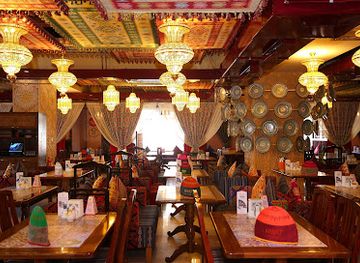
Чайхана NAVAT
Discover the vibrant flavors of Kyrgyz cuisine at Чайхана NAVAT – where tradition meets taste in Bishkek.
-
Restaurant
Arzu Restaurant
Savor the rich flavors of traditional Kyrgyz cuisine at Arzu Restaurant in Bishkek – an essential stop for every traveler.
-
Restaurant
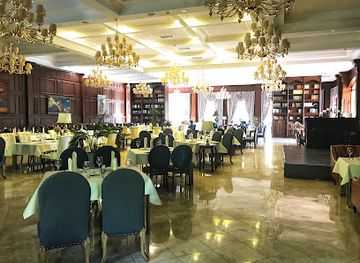
Frunze restaurant
Experience the authentic taste of Kyrgyz cuisine at Frunze Restaurant in Bishkek – where tradition meets elegance.
-
Grill
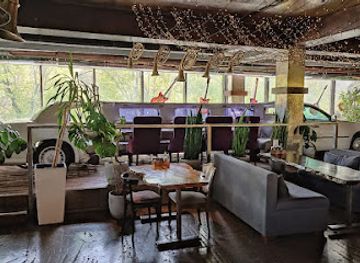
Torro Grill & Bar
Experience the best grilled delicacies at Torro Grill & Bar in Bishkek – where local flavors meet international flair.

Best bars in Alai Valley
Alai Valley has little conventional nightlife, and neither Sary-Mogul nor Sary-Tash should be approached as a clubbing destination. Evenings generally centre on homestays, yurt camps and guesthouses, where visitors may share tea, conversation and sometimes music with hosts or other travellers. Small cafés and roadside eateries provide informal places to eat, but services can be seasonal and may finish early. Alcohol is not necessary for socialising, and visitors should follow the preferences of their hosts, particularly in family homes and rural communities. The most distinctive evening activity is often simply watching the light fade across the Trans-Alay range, listening to the quiet of the pastureland or discussing the next day’s route with a guide. Travellers seeking a broader choice of bars, live music and late-night venues should spend time in Osh before or after their journey into the valley.
-
Bar
Sky-bar Osh
Experience Osh from above at Sky-bar Osh, where stunning views meet a vibrant atmosphere and delightful cocktails.
-
Bar
Arabica Lounge Bar
Experience the lively nightlife and exquisite drinks at Arabica Lounge Bar in Osh, a perfect blend of local spirit and modern ambiance.
-
Pub
Bavaria Pub
Discover the local charm at Bavaria Pub in Osh, where delicious food and a lively atmosphere await every visitor.
-
Bar
Lime bar
Experience the vibrant nightlife of Osh at Lime Bar, where refreshing drinks and a lively atmosphere await every visitor.


Best nightclubs in Alai Valley
Alai Valley has little conventional nightlife, and neither Sary-Mogul nor Sary-Tash should be approached as a clubbing destination. Evenings generally centre on homestays, yurt camps and guesthouses, where visitors may share tea, conversation and sometimes music with hosts or other travellers. Small cafés and roadside eateries provide informal places to eat, but services can be seasonal and may finish early. Alcohol is not necessary for socialising, and visitors should follow the preferences of their hosts, particularly in family homes and rural communities. The most distinctive evening activity is often simply watching the light fade across the Trans-Alay range, listening to the quiet of the pastureland or discussing the next day’s route with a guide. Travellers seeking a broader choice of bars, live music and late-night venues should spend time in Osh before or after their journey into the valley.
-
Night club
Promzona Club
Experience the dynamic nightlife at Promzona Club, Bishkek's top destination for dancing, drinks, and unforgettable memories.
-
Bar
Metro Pub
Discover the vibrant nightlife of Bishkek at Metro Pub, where friendly vibes and a diverse drink selection await every visitor.
-
Night club
Suzie Wong
Discover the electrifying nightlife at Suzie Wong, Bishkek's premier night club offering vibrant music and exquisite cocktails for an unforgettable experience.
-
Disco club
Keanu
Discover the electrifying nightlife at Keanu, Bishkek's premier disco club, where music and dance come alive in an unforgettable experience.




Best shops in Alai Valley
Shopping in Alai Valley is practical and small-scale, with provisions, tea, bread, snacks and basic travel supplies more readily available than specialist retail. Sary-Mogul and Sary-Tash have modest shops, but visitors should buy substantial supplies, medicines and outdoor essentials in Osh before travelling south. Homestays and yurt camps may offer locally made felt items, simple handicrafts, dried dairy products or other pastoral goods, although stock is seasonal and varies between households. Kurut, a dried yoghurt product, can be an interesting regional food purchase when sold hygienically and clearly labelled. Visitors may also encounter hand-felted shyrdaks or small textile items connected with wider Kyrgyz craft traditions; buying directly from makers or community tourism projects can provide more transparent local support than bargaining aggressively. There are no major shopping centres or extensive souvenir districts in the valley, and travellers should not expect dependable card payment. For a broader selection of textiles, crafts, food products and gifts, Osh is the appropriate place to shop before or after the mountain journey.
-
Shopping mall
Asia Mall
Explore Asia Mall in Bishkek, the ultimate shopping destination featuring diverse shops, dining experiences, and entertainment for every traveler.
-
Market
Osh Bazaar
Explore the vibrant Osh Bazaar in Bishkek, a lively market filled with local spices, handicrafts, and a taste of Kyrgyz culture.
-
Market
Dordoi Bazaar
Experience the vibrant culture and dynamic atmosphere at Dordoi Bazaar, Bishkek's bustling market filled with unique goods and local flavors.
-
Shopping mall
ZUM Aichurok
Explore ZUM Aichurok in Bishkek: A shopping paradise with diverse stores, delectable dining options, and family-friendly entertainment.


Get your free copy of our complete guide to Alai Valley, delivered straight to you.
Everything on this page, from attractions and restaurants to essentials and local phrases, in one PDF you can read offline, print or share.
Already have an account? Sign in
Your Alai Valley guide is ready.
We'll send it to · Not you? Sign out

Getting your guide ready…
We are putting together a fresh copy of the Alai Valley guide. This can take up to a minute.
This can take a few moments. If your browser asks, choose Allow so the download can start. You'll find the guide in your Downloads folder.
Nothing happened? Download it again
Sorry, the guide is taking longer than usual. Please try again in a minute, or get it by email instead.
Alai Valley essentials
Currency and Payment
Safety
Emergency Situations
Do's and Don'ts
Local Tips
From Eve
Local phrases worth knowing
You don't need to get them perfect. A few words go a long way, and locals appreciate the effort.
Basics
| English | Local | Say it |
|---|---|---|
| Hello | Салам | [Salam] |
| Goodbye | Кош болуңуз | [Kosh boluñuz] |
| Yes | Ооба | [Ooba] |
| No | Жок | [Jok] |
| Please/You're welcome | Сураныч | [Suranych] |
| Thank you | Рахмат | [Rakhmat] |
| Excuse me/Sorry | Кечиресиз | [Kechiresiz] |
| How are you? | Сиздер кандайсыз? | [Sizder kandaysyz?] |
| Fine. And you? | Жакшы. Сиздер? | [Jakshy. Sizder?] |
| Do you speak English? | Сиз англисче сүйлөйсүзбү? | [Siz anglishe süylöysüzbü?] |
| I don't understand | Мен түшүнбөйм | [Men tüshünböyüm] |
Eating & Drinking
| English | Local | Say it |
|---|---|---|
| I'd like to see the menu, please | Мени менюну көрсөтүңүз, сураныч | [Meni menyunu körsötüñüz, suranych] |
| I don't eat meat | Мен эт жебейм | [Men et jebeym] |
| Cheers! | Чын дилимден! | [Chyn dilimden!] |
| I would like to pay, please | Мен төлөөнү каалайм, сураныч | [Men tölönü kaalaym, suranych] |
Emergencies
| English | Local | Say it |
|---|---|---|
| Help! | Жардам бериңиз! | [Jardam beriñiz!] |
| Go away! | Жоон! | [Joon!] |
| Call the Police! | Полицияны чакыр! | [Politsiyany chakyry!] |
| Call a doctor! | Докторду чакыр! | [Doktordu chakyry!] |
| I'm lost | Мен жоголуп калдым | [Men jogolup kaldym] |
| I'm ill | Мен ооруйм | [Men ooruym] |
Shopping
| English | Local | Say it |
|---|---|---|
| I'd like to buy... | Мен ... сатып алгым келет | [Men ... satyp algym kelet] |
| I'm just looking | Мен жөн гана карап жатам | [Men jön gana karap jatam] |
| How much is it? | Бул канча турат? | [Bul kancha turat?] |
| That's too expensive | Бул өтө кымбат | [Bul öttö kïmbat] |
| Can you lower the price? | Баасын түшүрсөңүз болобу? | [Baasını tüşürseñüz bolobu?] |
Time & Numbers
| English | Local | Say it |
|---|---|---|
| What time is it? | Саат канча? | [Saat kancha?] |
| It's one o'clock | Саат бир | [Saat bir] |
| Half past (10) | Он бирге жарым | [On birge zharım] |
| Morning | Эртең менен | [Erteñ menen] |
| Afternoon | Түштөн кийин | [Tüsh'tön kiyin] |
| Evening | Кечинде | [Keçinde] |
| Yesterday | Кечээ | [Kechée] |
| Today | Бүгүн | [Bügün] |
| Tomorrow | Эртең | [Erteñ] |
| 1 | Бир | [Bir] |
| 2 | Эки | [Eki] |
| 3 | Үч | [Üch] |
| 4 | Төрт | [Tört] |
| 5 | Беш | [Besh] |
| 6 | Алты | [Alty] |
| 7 | Жети | [Jeti] |
| 8 | Сегиз | [Segiz] |
| 9 | Тогуз | [Toguz] |
| 10 | Он | [On] |
Transport & Directions
| English | Local | Say it |
|---|---|---|
| Where's a/the...? | Кайда ...? | [Kaidä ...?] |
| What's the address? | Адреси кандай? | [Adresi kanday?] |
| Can you show me (on the map)? | Маалымат берүүңүздү суранам (картанын үстүндө)? | [Ma'lymat beruñüzdü suranam (kartanyn üstündö)?] |
| When's the next (bus)? | Кийинки (автобус) качан? | [Kiyinki (avtobus) kachan?] |
| A ticket (to ....) | Билет (.... үчүн) | [Bilet (.... üchün)] |
History of Alai Valley
Ancient Trans-Pamir Routes
For centuries, routes crossing the Alay and Trans-Alay region connected the Fergana basin with the Pamirs, Kashgar and other parts of Central Asia. The valley was not simply a fixed urban corridor but a difficult highland passage used by traders, messengers, pilgrims and pastoral communities. Movement followed seasonal conditions and available passes, while pack animals and local knowledge were essential. The wider Silk Roads brought goods and ideas through southern Kyrgyzstan, although the Alai landscape remained comparatively sparsely settled. Its historical importance lies in its role as a meeting ground between settled valleys, mountain pastoralists and trans-Pamir trade routes.
Kyrgyz Pastoral Society
The Alai Valley developed within the pastoral culture of the Kyrgyz, whose economy and social organisation were closely connected with seasonal movement between winter settlements and summer jailoo. Families traditionally managed horses, sheep, cattle and yaks across a demanding sequence of pastures and high passes. Yurts, felt-making, oral traditions and hospitality were practical and cultural expressions of this mobile way of life. Modern roads, schools and permanent settlements have changed the pattern of movement, but summer grazing and the use of yurts remain visible in the valley and continue to shape its cultural landscape.
Kokand and the Fergana Frontier
During the eighteenth and nineteenth centuries, much of southern Kyrgyzstan came under the influence of the Kokand Khanate, whose authority extended from the Fergana basin towards important mountain routes. Control in high valleys such as Alai was often less direct than in settled agricultural areas, but the region mattered strategically because of its passes, pasturelands and links towards Kashgar and the Pamirs. Forts, taxation, political alliances and military expeditions affected local communities. The Kokand period forms an important part of the historical background to the valley’s later incorporation into the Russian imperial and Soviet systems.
Russian Imperial Expansion
Russian imperial power expanded into the wider Kyrgyz and Fergana region during the nineteenth century, following conflict with Kokand and the establishment of new administrative and military structures. Mountain routes were surveyed and increasingly tied to imperial frontier policy, while settled agriculture, trade and administration grew in the surrounding lowlands. The Alai remained remote, but its proximity to Afghanistan, Chinese Turkestan and the Pamirs gave it strategic significance. This period began the process by which older patterns of political allegiance and seasonal mobility were increasingly regulated by external administrations.
Soviet Transformation
The Soviet period brought major changes to Alai Valley society. Collectivisation reorganised livestock ownership and pastoral production, while permanent settlements, schools, roads and state services altered the relationship between communities and the high pastures. Traditional practices did not disappear, but they were incorporated into collective and later state-controlled economic systems. The valley also acquired greater importance as part of the Soviet borderland and transport network. Many of the roads and settlement patterns encountered by visitors today reflect this twentieth-century transformation, even where the surrounding landscape still appears largely pastoral.
Independent Kyrgyzstan and Mountain Tourism
Since Kyrgyzstan became independent in 1991, livestock raising has remained central to the Alai economy, while community-based tourism and mountaineering have provided additional opportunities. Sary-Mogul and nearby settlements have become recognised starting points for trekking, horse journeys and expeditions towards the Trans-Alay, including the northern approaches to Lenin Peak. Tourism remains small-scale and seasonal rather than resort-based. Its development has increased the value of local guiding, homestays and yurt camps, while also making responsible waste management, fair payment and respect for pasture use increasingly important.
Alai Valley in Photos
Browse through our photo collection highlighting the charm and character of the destination.
Neighbouring regions of Alai Valley
The closest regions to Alai Valley, if you have time for more than one.
-

-

-

-

-


Swipe for more regions
Explore more
Explore more of Kyrgyzstan
Discover Kyrgyzstan: A land of majestic mountains, nomadic traditions, and rich history in the heart of Central Asia.
Explore Kyrgyzstan