

Free Lofa County Travel Guide & Mobile App
Explore Lofa County with free travel guides. Discover regional history, expert tips, proposed trips, and audio guides on web or mobile app.


Explore Lofa County in northern Liberia for Mount Wuteve, forested highlands, rural markets, cross-border culture and thoughtful community-based travel.
Read more about Lofa County
When is the best time to visit Lofa County?
Best: December–February · 29–31°C| Month | High (°C) | Rainfall (mm) |
|---|---|---|
| January (best) | 30 | 10 |
| February (best) | 31 | 17 |
| March | 31 | 63 |
| April | 32 | 129 |
| May | 31 | 219 |
| June | 30 | 317 |
| July | 29 | 406 |
| August | 29 | 412 |
| September | 29 | 344 |
| October | 30 | 266 |
| November | 30 | 148 |
| December (best) | 29 | 45 |
Getting to and around Lofa County
How to get there
Transportation
Top city travel guides in Lofa County
The cities of Lofa County, and the easiest places to base yourself.

Swipe for more cities
Best attractions in Lofa County
Lofa County’s attractions are primarily landscape-based and cultural rather than built for mass tourism. The Wologizi mountain area, including Mount Wuteve, offers Liberia’s most important highland scenery and opportunities for demanding guided walks, with forest, grassland, steep slopes and wide rural views. These are not fully serviced hiking destinations, so visitors need local arrangements, supplies and realistic expectations. Elsewhere, the county’s broad agricultural landscapes, rivers, roadside settlements and forest margins reveal the relationship between farming and the remaining natural environment. Voinjama and Foya provide the most accessible introductions to local markets, food and everyday commerce, while smaller towns and villages offer opportunities for respectful community visits arranged through local contacts. Religious buildings, schools, trading places and remnants of post-war reconstruction are of interest within their living communities, but should not be approached as unstaffed museums. Birdwatching, landscape photography and cultural interpretation are possible, although specialist equipment and guides may be difficult to find. Lofa is best experienced slowly, with time for conversations, changing scenery and the practical realities of travelling through Liberia’s interior.
-
 Garden
Франклин Фрам
Discover tranquility at Franklin Fram Garden in Zorzor, Liberia – a serene escape into nature's beauty and peaceful ambiance.
Best landmarks in Lofa County
Mount Wuteve is Lofa County’s most recognisable natural landmark and is generally regarded as Liberia’s highest summit, rising within the Wologizi mountain landscape. Its significance is geographical as well as visual: the mountain marks the county’s highland character and contrasts with the surrounding cultivated plains, forest margins and valleys. The broader Wologizi range is important as a landscape of ecological and cultural value, although access is difficult and there is no assumption of extensive visitor infrastructure. Voinjama’s civic and religious buildings, roads and market areas represent the county’s main urban centre and its post-war reconstruction, rather than a concentrated historic quarter. Foya’s position near Liberia’s northern frontier gives its streets and trading spaces a distinctive borderland significance, shaped by movement towards Guinea and Sierra Leone. Across the county, mosques, churches, schools, bridges and market structures are living landmarks within their communities. Their importance is social and regional, so visitors should seek permission before photographing or entering them.
-
Tourist attraction
Kpatawee Waterfall
Discover the breathtaking beauty of Kpatawee Waterfall, a serene escape in Lawe, Liberia, perfect for nature lovers and adventure seekers.
Explore Lofa County on the map
Plan your trip on one map. See where the top cities, national parks and sights are, and book hotels and experiences in a few clicks.
Best hotels in Lofa County
Best restaurants in Lofa County
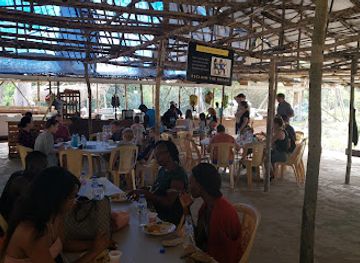
Dining in Lofa County is centred on home cooking, market stalls, small local restaurants and roadside food rather than a formal restaurant scene. Rice is a foundation of meals and is commonly served with spicy sauces, greens, beans, cassava, plantain, chicken, fish or meat; preparations vary between households and communities. Cassava leaves, potato greens and other leafy sauces are familiar parts of Liberian cooking, while palm oil and chilli contribute much of the region’s flavour. Voinjama and Foya offer the widest choice of cooked food, provisions and drinks, with smaller settlements relying more heavily on family kitchens and market vendors. Seasonal produce may include bananas, mangoes, pineapples and vegetables, while locally produced palm products and rice are important to the agricultural economy. Visitors should eat food that is freshly cooked and served hot, use treated or sealed water, and carry snacks for long road journeys. It is courteous to ask before photographing food preparation or entering a household dining space.
-
Restaurant
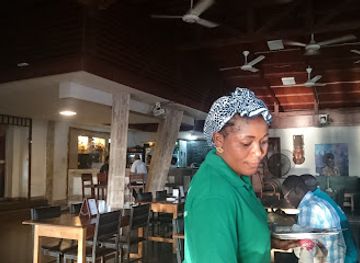
FuZion D'Afrique Restaurant
Experience the vibrant flavors of Africa at FuZion D'Afrique Restaurant in Monrovia - where every meal tells a story.
-
Restaurant
Diana Restaurant
Discover authentic Liberian flavors at Diana Restaurant in Monrovia—where every meal tells a story.
-
Restaurant
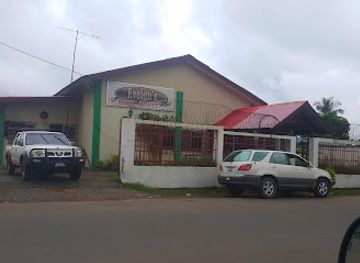
Evelyn's Cuisine
Discover authentic Liberian flavors at Evelyn's Cuisine in Monrovia - a culinary delight awaits you!
-
Restaurant
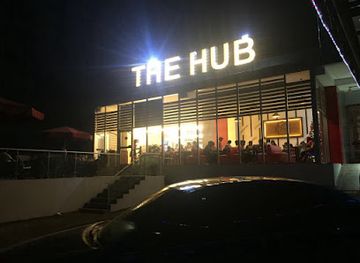
The Hub Diner
Experience authentic Liberian flavors at The Hub Diner in Monrovia – your go-to spot for delicious meals and warm hospitality.

Best bars in Lofa County
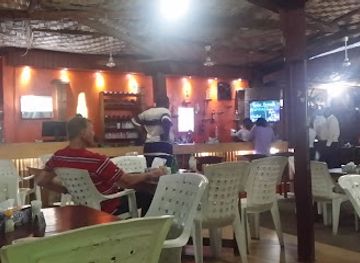
Evening life in Lofa County is concentrated in the larger towns, especially Voinjama and Foya, and is more likely to involve cafés, informal drinking places, restaurants, music and social gatherings than a dedicated nightclub circuit. Small bars may serve Liberian beer, soft drinks and spirits, while football broadcasts and conversation are common features of town evenings. In rural areas, night-time activity is quieter and often centred on family compounds, community occasions or local events rather than commercial entertainment. Visitors should ask trusted local contacts which places are operating, avoid walking unfamiliar roads after dark and remember that opening arrangements can change. Alcohol is not necessary to engage with local culture, and respectful behaviour is especially important in small communities where visitors are readily noticed.
-
Bar
FuZion D'Afrique Restaurant
Experience the best of African cuisine at FuZion D'Afrique Restaurant in Monrovia, where vibrant flavors meet a lively bar atmosphere.
-
Restaurant
Sajj House
Discover authentic Lebanese cuisine at Sajj House in Monrovia, where every dish tells a story of flavor and tradition.
-
Tourist attraction
Kpatawee Waterfall
Experience the breathtaking beauty of Kpatawee Waterfall, a hidden gem in Liberia perfect for nature lovers and adventure seekers.
-
Restaurant
Mama Susu's Restaurant
Discover the rich flavors of Liberia at Mama Susu's Restaurant, a culinary gem in Monrovia offering authentic dishes in a vibrant atmosphere.
Best nightclubs in Lofa County
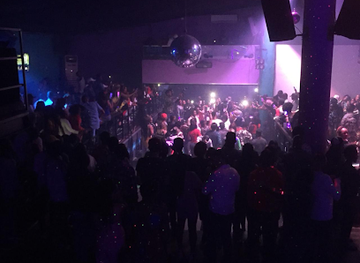
Evening life in Lofa County is concentrated in the larger towns, especially Voinjama and Foya, and is more likely to involve cafés, informal drinking places, restaurants, music and social gatherings than a dedicated nightclub circuit. Small bars may serve Liberian beer, soft drinks and spirits, while football broadcasts and conversation are common features of town evenings. In rural areas, night-time activity is quieter and often centred on family compounds, community occasions or local events rather than commercial entertainment. Visitors should ask trusted local contacts which places are operating, avoid walking unfamiliar roads after dark and remember that opening arrangements can change. Alcohol is not necessary to engage with local culture, and respectful behaviour is especially important in small communities where visitors are readily noticed.
-
Night club
Club Wanwosu
Dive into the electrifying nightlife at Club Wanwosu, Lou King’s premier night club featuring live DJs, great drinks, and unforgettable experiences.
-
Night club
Celavi nightclub
Experience the vibrant heart of Monrovia's nightlife at Celavi Nightclub, where electrifying music and an energetic atmosphere await you.
-
Night club
Candel Light Night Club
Experience the vibrant nightlife of Harper at Candle Light Night Club, where music and dance create unforgettable memories.
-
Night club
New Creation Entertainment Center
Explore Monrovia's nightlife at New Creation Entertainment Center, a vibrant night club offering live music, dance, and an unforgettable atmosphere.



Best shops in Lofa County
Shopping in Lofa County is practical and market-based, with Voinjama and Foya offering the broadest selection of food, clothing, household goods, mobile-phone credit and transport-linked trade. Smaller towns provide weekly or periodic markets where farmers and traders sell rice, cassava, plantain, vegetables, fruit, palm products and other everyday supplies. Visitors may find locally made baskets, woven items, carved objects or fabrics, although availability and quality vary and purchases should be made directly and respectfully rather than assumed to be standard souvenirs. The county’s cross-border position gives some markets a wider regional character, but goods and prices change with transport conditions and agricultural seasons. Carry Liberian dollars in small denominations, bargain politely only where bargaining is customary, and check that any plant, animal, archaeological or forest product can legally be taken out of the country. For a meaningful purchase, locally produced food, crafts and services are generally more appropriate than imported trinkets.
-
Supermarket
Ma Bendu's Shop
Experience the vibrant local culture at Ma Bendu's Shop, a top supermarket in Voinjama, Liberia, offering a diverse range of goods and community charm.
-
Electronics store
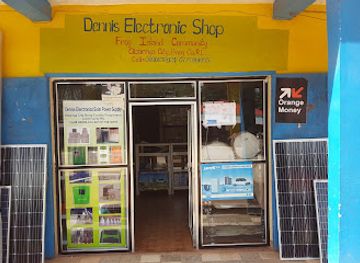
Dennis Electronic Shop
Explore the vibrant electronics scene at Dennis Electronic Shop in Gbarnga, Liberia, where quality meets affordability.
-
Electronics store
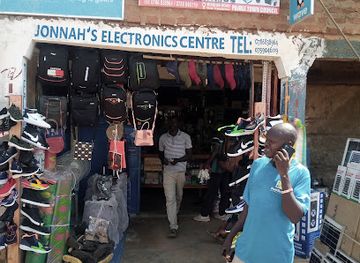
JONAH's Electronics Business CENTER
Discover cutting-edge electronics and exceptional service at JONAH's Electronics Business CENTER in Zorzor, Liberia.
-
Clothing store
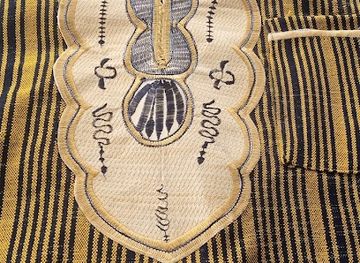
Vision Brothers Taylor Shop
Discover a blend of traditional Liberian craftsmanship and contemporary fashion at Vision Brothers Taylor Shop in Zorzor.
Get your free copy of our complete guide to Lofa County, delivered straight to you.
Everything on this page, from attractions and restaurants to essentials and local phrases, in one PDF you can read offline, print or share.
Already have an account? Sign in
Your Lofa County guide is ready.
We'll send it to · Not you? Sign out

Getting your guide ready…
We are putting together a fresh copy of the Lofa County guide. This can take up to a minute.
This can take a few moments. If your browser asks, choose Allow so the download can start. You'll find the guide in your Downloads folder.
Nothing happened? Download it again
Sorry, the guide is taking longer than usual. Please try again in a minute, or get it by email instead.
Lofa County essentials
Currency and Payment
Safety
Emergency Situations
Do's and Don'ts
Local Tips
From Eve
Local phrases worth knowing
You don't need to get them perfect. A few words go a long way, and locals appreciate the effort.
Basics
| English | Local | Say it |
|---|---|---|
| Hello | Salone | [sah-loh-neh] |
| Goodbye | Nyo | [nyoh] |
| Yes | Yea | [yeh] |
| No | No | [noh] |
| Please/You're welcome | Bawdo | [bah-doh] |
| Thank you | Tenki | [tehn-kee] |
| Excuse me/Sorry | Fongbe | [fong-beh] |
| How are you? | Kpala wo? | [kpah-lah woh] |
| Fine. And you? | Iya. Awo? | [ee-yah. ah-woh] |
| Do you speak English? | You sabi English? | [yoo sah-bee in-glish] |
| I don't understand | Mi no sabi | [mee noh sah-bee] |
Eating & Drinking
| English | Local | Say it |
|---|---|---|
| I'd like to see the menu, please | Mi wan si di menu, bawdo | [mee wahn see dee meh-noo, bah-doh] |
| I don't eat meat | Mi no chop meat | [mee noh chop meet] |
| Cheers! | Salute! | [sah-loo-teh] |
| I would like to pay, please | Mi wan pay, bawdo | [mee wahn pay, bah-doh] |
Emergencies
| English | Local | Say it |
|---|---|---|
| Help! | Help! | [help] |
| Go away! | Go way! | [goh weh] |
| Call the Police! | Call di Police! | [kahl dee poh-lees] |
| Call a doctor! | Call a doctor! | [kahl ah dok-tah] |
| I'm lost | Mi don lost | [mee don lost] |
| I'm ill | Mi sick | [mee sik] |
Shopping
| English | Local | Say it |
|---|---|---|
| I'd like to buy... | Mi wan buy... | [mee wahn bye] |
| I'm just looking | Mi just dey look | [mee juhst dey look] |
| How much is it? | How much e be? | [how muhtch eh beh] |
| That's too expensive | Dat too much money | [daht too muhtch muhn-ee] |
| Can you lower the price? | You fit lower di price? | [yoo fit loh-er dee pryce] |
Time & Numbers
| English | Local | Say it |
|---|---|---|
| What time is it? | Wetin time be? | [weh-tin tahym beh] |
| It's one o'clock | E be one o'clock | [eh beh wahn oh-clock] |
| Half past (10) | Half past ten | [haf pahst ten] |
| Morning | Mornin | [mor-ning] |
| Afternoon | Afternoon | [af-ter-noon] |
| Evening | Evenin | [ee-ven-ing] |
| Yesterday | Yestaday | [yeh-stah-day] |
| Today | Toda | [toh-dah] |
| Tomorrow | Tomorow | [toh-mor-oh] |
| 1 | One | [wuhn] |
| 2 | Two | [too] |
| 3 | Three | [three] |
| 4 | Four | [fohr] |
| 5 | Five | [fahiv] |
| 6 | Six | [siks] |
| 7 | Seven | [seh-vuhn] |
| 8 | Eight | [ayt] |
| 9 | Nine | [nayn] |
| 10 | Ten | [ten] |
Transport & Directions
| English | Local | Say it |
|---|---|---|
| Where's a/the...? | Where di...? | [weher dee] |
| What's the address? | Wetin di address? | [weh-tin dee ah-dress] |
| Can you show me (on the map)? | You fit show me (for di map)? | [yoo fit shoh mee (for dee map)] |
| When's the next (bus)? | When di next (bus)? | [when dee neks (bus)] |
| A ticket (to ....) | One ticket (to ...) | [wuhn ti-ket (to ...)] |
History of Lofa County
Early settlement and Loma cultural history
Lofa’s history predates the creation of Liberia and is rooted in the movements, settlements and trading relationships of peoples including the Loma, Kissi, Gbandi and Mandingo. The county’s uplands and river valleys formed part of wider inland networks linking present-day Liberia with Guinea and Sierra Leone. Oral traditions remain important sources of historical memory, particularly where written records are limited. Political authority was often organised through local communities and regional networks rather than through a single state corresponding to the modern county.
Mande-speaking trade networks
For centuries, northern Liberia was connected to the wider Upper Guinea trade world. Muslim merchants and other traders moved through routes linking forest products, agricultural goods, cloth, salt and manufactured items between the interior and settlements farther north and west. Mandingo communities became significant participants in these commercial and religious networks, especially around market centres and routes towards Guinea. The legacy of these connections can still be seen in the county’s ethnic diversity, languages, religious life and continuing cross-border commerce.
Liberia’s nineteenth-century expansion
The modern Liberian state developed along the coast after the establishment of settlements associated with the American Colonization Society, but its authority expanded gradually into the interior. During the nineteenth and early twentieth centuries, officials, traders and missionaries became increasingly active in northern regions such as Lofa. Incorporation into the republic brought new administrative boundaries and taxation systems, while local societies retained their own institutions and authority. The county’s modern political geography therefore reflects an interaction between older communities and a state formed first on the coast.
Colonial-era administration and regional commerce
Although Liberia was not formally colonised by a European power, the twentieth century brought stronger central administration, road building, schools, churches and commercial links. Voinjama and other settlements grew as administrative and market centres, while farming remained the foundation of most local livelihoods. Rice, cassava, palm products and other crops moved through regional trading networks. Mission education and Christianity expanded alongside Islam and longstanding local religious traditions, producing a layered cultural landscape rather than a single uniform identity.
The Liberian civil wars and displacement
Lofa County was deeply affected by Liberia’s civil wars, particularly because its northern position made it a zone of military movement and cross-border instability. Communities experienced displacement, destruction of property, disrupted education and the breakdown of transport and health services. Many residents sought refuge in neighbouring countries or elsewhere in Liberia before returning after the wars. The effects remain part of family and community memory, and post-war reconstruction has shaped roads, schools, public institutions and local expectations of government.
Recovery, Ebola and contemporary Lofa
After the civil wars, Lofa entered a period of reconstruction based largely on farming, local trade and the gradual restoration of public services. The county was among the Liberian areas affected by the 2014–2016 Ebola epidemic, which caused severe loss and placed enormous pressure on communities and health workers. The crisis also demonstrated the importance of local leadership and cross-border public-health cooperation. Today, Lofa’s development is influenced by improved regional connections, agricultural needs, forest conservation concerns and the continuing challenge of providing services across a large, rural county.
Lofa County in Photos
Browse through our photo collection highlighting the charm and character of the destination.
Neighbouring regions of Lofa County
The closest regions to Lofa County, if you have time for more than one.
-

-

-

-

-


Swipe for more regions
Explore more

Explore more of Liberia
Discover Liberia: where pristine beaches meet lush rainforests, and vibrant culture blends with rich history in the heart of West Africa.
Explore Liberia