

Free Central Region Travel Guide & Mobile App
Explore Central Region with free travel guides. Discover regional history, expert tips, proposed trips, and audio guides on web or mobile app.


Central Liberia combines Buchanan's Atlantic coast with Bong's waterfalls, Margibi's plantation history and Nimba's forested mountain landscapes.
Read more about Central Region
When is the best time to visit Central Region?
Best: May–June, September · 23–29°C| Month | High (°C) | Rainfall (mm) |
|---|---|---|
| January | 5 | 40 |
| February | 6 | 45 |
| March | 13 | 50 |
| April | 18 | 55 |
| May (best) | 23 | 60 |
| June (best) | 29 | 65 |
| July | 32 | 70 |
| August | 30 | 75 |
| September (best) | 26 | 80 |
| October | 19 | 70 |
| November | 11 | 55 |
| December | 4 | 45 |
Getting to and around Central Region
How to get there
Transportation
Top city travel guides in Central Region
The cities of Central Region, and the easiest places to base yourself.
-

-

-

-

-

-


Swipe for more cities
Destinations in Central Region
Resorts, valleys and scenic spots worth a trip of their own.
-

-


Swipe for more destinations
Best attractions in Central Region
Central Liberia's attractions range from Atlantic beaches and port history to forest, wetlands, waterfalls and mountain landscapes. Buchanan provides access to coastal scenery and a working maritime environment, while the beaches and lagoons around Grand Bassa are best explored with local advice about tides and access. In Margibi, visitors can see the plantation and industrial heritage associated with Harbel and the Firestone rubber economy, alongside wetland environments near Marshall. Bong's principal nature attraction is Kpatawee Waterfall, where forest and rushing water create a popular rural excursion near Suakoko. Gbarnga and Kakata offer markets, everyday town life and access to surrounding farming communities rather than a concentration of formal museums. In Nimba, Ganta's busy commercial setting contrasts with the forested uplands around Yekepa, where access may be affected by conservation and mining controls. These experiences are widely dispersed, so the region rewards carefully planned road journeys more than a short sightseeing itinerary.
-
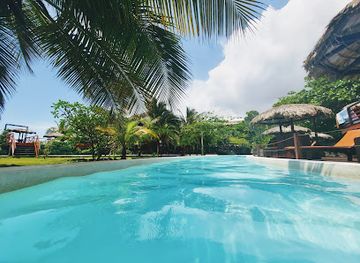
Resort hotel
Libassa Ecolodge
Discover Liberia's eco-friendly paradise: pristine beaches, lush forests, and a commitment to sustainability at Libassa Ecolodge.
-
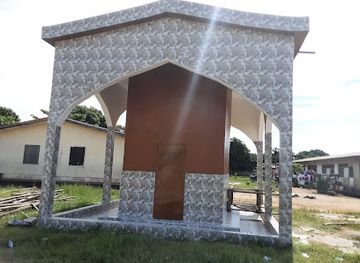
Tourist attraction
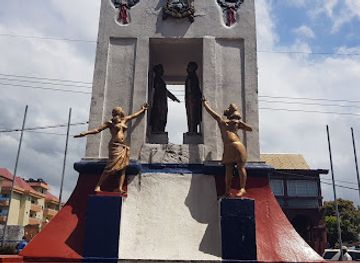
Monrovia Central Mosque
Discover the Monrovia Central Mosque: A serene oasis of Islamic culture and stunning architecture in the heart of Liberia's capital.
-
 Garden
SUAH FARM
Discover tranquility at SUAH FARM in Mole Gbinyata, Liberia – a serene garden escape into the heart of nature's beauty.
Best landmarks in Central Region
Buchanan's port and surviving railway-related infrastructure are among Central Liberia's clearest industrial landmarks, representing the era when iron ore from inland concessions was exported through the Atlantic coast. In Margibi, Harbel's plantation landscape and company-built facilities express the scale of the Firestone rubber enterprise and its influence on twentieth-century Liberia, although access to operational sites may be restricted. Kpatawee Waterfall in Bong is a natural landmark rather than a monumental structure, with its rapids and forest setting giving it strong local recognition. The Nimba highlands around Yekepa form the region's most dramatic geographical landmark, rising above the surrounding forest and associated with a transboundary ecosystem of international conservation importance. Gbarnga and Ganta are less defined by individual monuments than by their roles as historic routes, market centres and meeting points between coastal Liberia and the interior. Together, these places reflect the region's maritime, industrial, ecological and commercial identities.
-
Hotel
Mamba Point Hotel
Experience luxury and comfort at Mamba Point Hotel in Monrovia, a perfect blend of modern amenities and local charm for every traveler.
-
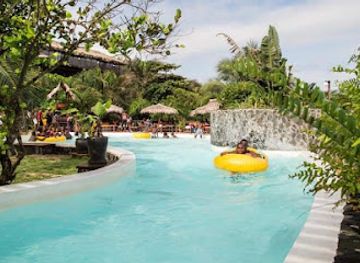
Resort hotel
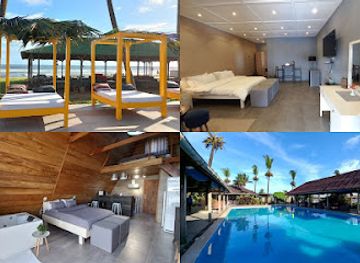
Libassa Ecolodge
Discover the beauty of Liberia at Libassa Ecolodge, where eco-friendly comforts meet nature's serenity in a unique resort hotel experience.
-
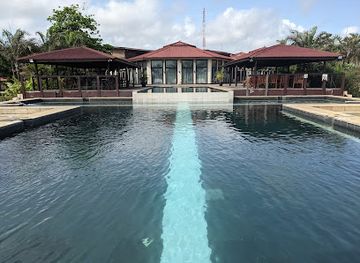
Hotel
RLJ Kendeja Resort & Villas
Experience luxury and tranquility at RLJ Kendeja Resort & Villas, your perfect getaway in Mills Center, Liberia.
-
Museum
National Museum of Liberia
Explore Liberia's vibrant history at the National Museum, where culture and heritage intertwine through captivating exhibits and artifacts.
Explore Central Region on the map
Plan your trip on one map. See where the top cities, national parks and sights are, and book hotels and experiences in a few clicks.
Best hotels in Central Region
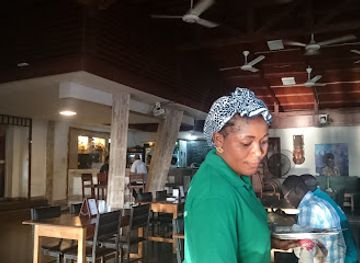
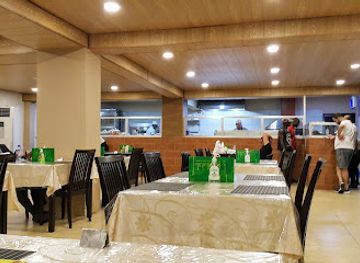
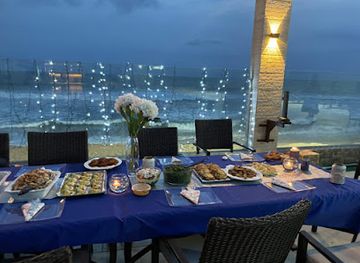
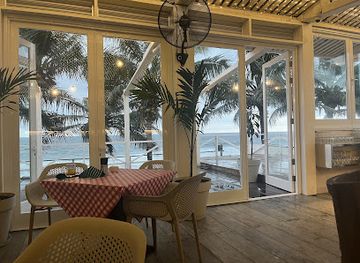
Best restaurants in Central Region
Dining in Central Liberia is rooted in rice-based meals, cassava, plantain, greens, fish, chicken and sauces prepared with palm oil, chilli, groundnuts or other locally available ingredients. Buchanan's coastal position makes fish and other seafood particularly prominent, while inland markets in Gbarnga, Ganta, Kakata and smaller towns supply seasonal produce, smoked fish and cooked street food. Local eateries and roadside kitchens commonly serve generous plates of rice with stew or soup, and Liberian specialities such as dumboy, a pounded cassava dish, may appear alongside other West African foods. In larger towns, simple restaurants, guesthouse dining rooms and cafés provide the most reliable choice for visitors, while rural meals usually require more advance planning. Coffee, imported soft drinks and locally made palm-based products are encountered, although selection varies considerably outside the main commercial centres.
-
Hotel
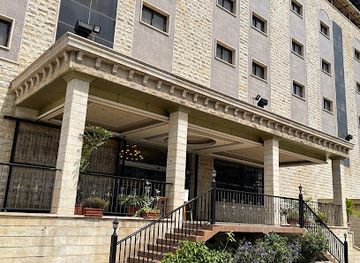
The Royal Grand Hotel
Discover unparalleled luxury and exceptional service at The Royal Grand Hotel in Monrovia, Liberia's premier destination for discerning travelers.
-
Restaurant
Boulevard Palace Hotel
Discover luxury dining and unparalleled hospitality at Boulevard Palace Hotel in Monrovia, Liberia - where every meal is an unforgettable experience.
-
Hotel
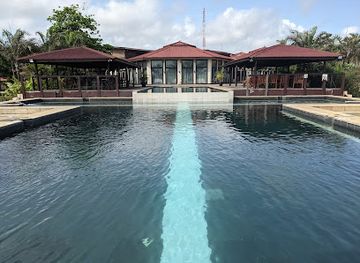
RLJ Kendeja Resort & Villas
Experience unmatched luxury and tranquility at RLJ Kendeja Resort & Villas in Mills Center, Liberia – your ideal retreat for relaxation.
-
Restaurant
Tropicana Beach
Discover the beauty of Tropicana Beach in Paynesville - a perfect blend of relaxation and vibrant local culture awaits you!
Best bars in Central Region
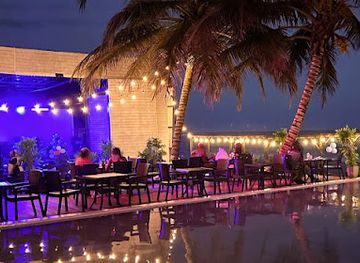
Evening life in Central Liberia is generally centred on neighbourhood bars, small restaurants, guesthouses, music, football broadcasts and social gatherings rather than a large formal nightclub circuit. Buchanan, Gbarnga, Ganta and Kakata have the broadest choice of places to eat, listen to music or meet friends, while evenings in smaller communities tend to be quieter and more local. Cold beer, soft drinks and spirits are commonly available, and some venues play Liberian, West African and international popular music. Nightlife can be seasonal and changeable, so visitors should ask locally about current venues rather than rely on old listings. In rural areas, return to accommodation before late night, arrange transport in advance and avoid walking unfamiliar roads after dark.
-
Restaurant
FuZion D'Afrique Restaurant
Savor the unique blend of local and international flavors at FuZion D'Afrique Restaurant in Monrovia, Liberia, a culinary haven for food lovers.
-
Restaurant
Diana Restaurant
Experience a culinary journey at Diana Restaurant in Monrovia, offering a unique blend of European and Lebanese flavors in a welcoming setting.
-
Restaurant
Ocean Eleven
Discover Ocean Eleven in Monrovia - a vibrant restaurant and recreational complex perfect for families and sports lovers seeking fun and relaxation.
-
Restaurant
Club Montserrado
Experience the rich flavors of Liberia at Club Montserrado, a must-visit restaurant in Monrovia for authentic local cuisine.
Best nightclubs in Central Region
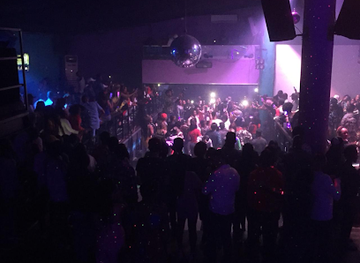
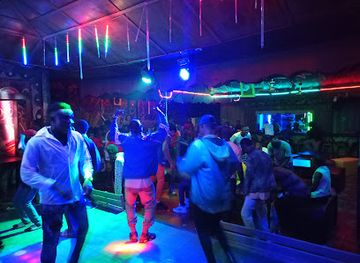
Evening life in Central Liberia is generally centred on neighbourhood bars, small restaurants, guesthouses, music, football broadcasts and social gatherings rather than a large formal nightclub circuit. Buchanan, Gbarnga, Ganta and Kakata have the broadest choice of places to eat, listen to music or meet friends, while evenings in smaller communities tend to be quieter and more local. Cold beer, soft drinks and spirits are commonly available, and some venues play Liberian, West African and international popular music. Nightlife can be seasonal and changeable, so visitors should ask locally about current venues rather than rely on old listings. In rural areas, return to accommodation before late night, arrange transport in advance and avoid walking unfamiliar roads after dark.
-
Night club
Club Wanwosu
Dive into the energetic nightlife of Lou King at Club Wanwosu, where music and fun come together for an unforgettable experience.
-
Night club
Celavi nightclub
Celavi Nightclub in Monrovia: Your ultimate nightlife destination for dancing, cocktails, and unforgettable memories.
-
Night club
Summer Beach
Discover the energetic nightlife of Monrovia at Summer Beach, a popular night club offering music, dance, and local culture.
-
Night club
Candel Light Night Club
Experience the electrifying nightlife at Candel Light Night Club in Harper, where vibrant music and dance create unforgettable memories.

Best shops in Central Region
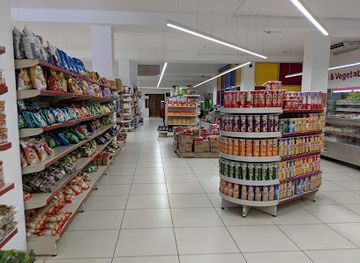
Shopping in Central Liberia is primarily market-based, with Gbarnga, Ganta, Kakata and Buchanan offering the widest range of everyday goods, clothing, household items, phone services and local produce. Open markets and roadside stalls are useful for buying plantains, cassava, rice, fruit, smoked fish, palm products and prepared snacks, although availability changes with the season and transport conditions. Visitors may also find locally made woven items, carved objects, clothing and simple craftwork, but quality and provenance vary, so purchases should be made directly and respectfully where possible. Buchanan has a coastal trading character, while Ganta is an important commercial crossroads near the Guinean frontier. Central Liberia is not a destination for extensive luxury retail; its most meaningful souvenirs are often regional foods, textiles and small handmade items bought from market traders or community-based producers.
-
Supermarket
ERA Supermarket
Discover the heart of Monrovia at ERA Supermarket, where local culture meets everyday shopping in a vibrant atmosphere.
-
Shopping mall
TM MALL
Discover shopping, dining, and local culture at TM Mall, Monrovia's top destination for tourists seeking a vibrant retail experience.
-
Restaurant
Nicecream
Discover the sweetest destination in Monrovia with artisanal ice creams and a cheerful atmosphere at Nicecream.
-
Supermarket
Exclusive Supermarket
Explore the Exclusive Supermarket in Liberia for fresh local products and a unique shopping experience, blending culture and convenience in one stop.
Get your free copy of our complete guide to Central Region, delivered straight to you.
Everything on this page, from attractions and restaurants to essentials and local phrases, in one PDF you can read offline, print or share.
Already have an account? Sign in
Your Central Region guide is ready.
We'll send it to · Not you? Sign out

Getting your guide ready…
We are putting together a fresh copy of the Central Region guide. This can take up to a minute.
This can take a few moments. If your browser asks, choose Allow so the download can start. You'll find the guide in your Downloads folder.
Nothing happened? Download it again
Sorry, the guide is taking longer than usual. Please try again in a minute, or get it by email instead.
Central Region essentials
Currency and Payment
Safety
Emergency Situations
Do's and Don'ts
Local Tips
From Eve
Local phrases worth knowing
You don't need to get them perfect. A few words go a long way, and locals appreciate the effort.
Basics
| English | Local | Say it |
|---|---|---|
| Hello | Hello | [Heh-loh] |
| Goodbye | Goodbye | [Good-bye] |
| Yes | Yes | [Yes] |
| No | No | [No] |
| Please/You're welcome | Please/You're welcome | [Pleez/Yuhr wel-kum] |
| Thank you | Thank you | [Thangk yoo] |
| Excuse me/Sorry | Excuse me/Sorry | [Ex-kyoos mee/Sor-ree] |
| How are you? | How are you? | [How ar yoo?] |
| Fine. And you? | Fine. And you? | [Fine. And yoo?] |
| Do you speak English? | Do you speak English? | [Do yoo speek Ing-lish?] |
| I don't understand | I don't understand | [I dont un-der-stand] |
Eating & Drinking
| English | Local | Say it |
|---|---|---|
| I'd like to see the menu, please | I'd like to see the menu, please | [I'd laik to see the men-yoo, pleez] |
| I don't eat meat | I don't eat meat | [I dont eet meet] |
| Cheers! | Cheers! | [Cheerz] |
| I would like to pay, please | I would like to pay, please | [I wood laik to pay, pleez] |
Emergencies
| English | Local | Say it |
|---|---|---|
| Help! | Help! | [Help] |
| Go away! | Go away! | [Go away] |
| Call the Police! | Call the Police! | [Call the Po-lees] |
| Call a doctor! | Call a doctor! | [Call a doc-tor] |
| I'm lost | I'm lost | [I'm lost] |
| I'm ill | I'm ill | [I'm il] |
Shopping
| English | Local | Say it |
|---|---|---|
| I'd like to buy... | I'd like to buy... | [I'd laik to bai...] |
| I'm just looking | I'm just looking | [I'm just look-ing] |
| How much is it? | How much is it? | [How much is it?] |
| That's too expensive | That's too expensive | [That's too ex-pen-siv] |
| Can you lower the price? | Can you lower the price? | [Can yoo loh-er the prys?] |
Time & Numbers
| English | Local | Say it |
|---|---|---|
| What time is it? | What time is it? | [What time is it?] |
| It's one o'clock | It's one o'clock | [It's wun o-clock] |
| Half past (10) | Half past (10) | [Half past (ten)] |
| Morning | Morning | [Morn-ing] |
| Afternoon | Afternoon | [Af-ter-noon] |
| Evening | Evening | [Eve-ning] |
| Yesterday | Yesterday | [Yes-ter-day] |
| Today | Today | [To-day] |
| Tomorrow | Tomorrow | [To-mor-row] |
| 1 | 1 | [Wun] |
| 2 | 2 | [Too] |
| 3 | 3 | [Three] |
| 4 | 4 | [For] |
| 5 | 5 | [Fiv] |
| 6 | 6 | [Siks] |
| 7 | 7 | [Seven] |
| 8 | 8 | [Ait] |
| 9 | 9 | [Nain] |
| 10 | 10 | [Ten] |
Transport & Directions
| English | Local | Say it |
|---|---|---|
| Where's a/the...? | Where's a/the...? | [Whehr's a/the...?] |
| What's the address? | What's the address? | [What's the ad-dress?] |
| Can you show me (on the map)? | Can you show me (on the map)? | [Can yoo sho mee (on the map)?] |
| When's the next (bus)? | When's the next (bus)? | [When's the next (bus)?] |
| A ticket (to ....) | A ticket (to ....) | [A tik-et (to ....)] |
History of Central Region
Early societies and regional trade
Long before the creation of Liberia, the forests, savannahs and river corridors of the central interior supported settled farming communities and networks of exchange. Peoples including the Kpelle in much of Bong and Margibi, the Bassa in the coastal and lower St John area, and the Mano and Dan in parts of Nimba maintained distinct languages, institutions and artistic traditions. Trade routes connected the interior with the coast and with settlements across present-day Guinea and Côte d’Ivoire. Rice cultivation, palm products, kola, ironworking and other forms of production shaped local economies, while migration and marriage created continuing links across modern national borders.
The Atlantic coast and nineteenth-century Liberia
The coast around Grand Bassa became increasingly connected to Atlantic commerce during the nineteenth century. In 1834, the Bassa Cove settlement was established by the New York and Liberia-based movement associated with the resettlement of African Americans, although its political relationship with local communities was complex and contested. Grand Bassa later became part of the expanding Liberian republic, whose coastal settlements developed through trade, agriculture and administration. The interaction between settlers, indigenous authorities and European merchants helped shape the region's early political geography and left a legacy still visible in Buchanan and other coastal communities.
Bong's administrative and commercial growth
During the twentieth century, towns in Bong developed as administrative, market and transport centres linking the coast with Liberia's north-central interior. Gbarnga grew in importance because of its position on routes between Monrovia, central counties and the Guinean border. Mission activity, schools, government institutions and commercial agriculture added new layers to older Kpelle cultural landscapes. The region remained predominantly rural, but the expansion of roads and public services encouraged movement of people and goods between farms, market towns and larger national centres.
Firestone and the rubber economy
A major transformation began in 1926 when the Firestone Tire and Rubber Company obtained a large concession in Liberia and established its principal Liberian operations in what is now Margibi County. Harbel became the centre of an extensive rubber plantation and processing system, with roads, housing and industrial facilities built around the enterprise. Rubber brought employment and export revenue but also produced long-running debates about concessionary land, labour conditions and the distribution of economic benefits. The plantation landscape remains an important part of Margibi's modern identity.
Iron ore, railways and Buchanan
Liberia's iron-ore industry expanded after the Second World War, bringing large-scale mining and transport infrastructure to several parts of the country. The Bong Mining Company developed mines and a railway system in central Liberia, while the Liberia-American-Swedish Minerals Company operated in the Nimba area. Buchanan became a major export port for iron ore, connected to inland mining districts by rail. The industry altered settlement patterns and national finances, but operations were severely disrupted by the civil wars. Rail corridors, port installations and former mining landscapes remain visible reminders of this industrial period.
Civil wars and displacement
Liberia's civil wars, from 1989 to 1996 and again from 1999 to 2003, profoundly affected Central Region. Roads, schools, businesses and industrial facilities were damaged, while many families were displaced within Liberia or across the borders of Guinea and Côte d'Ivoire. Gbarnga and other central towns became important locations for humanitarian activity and, during parts of the conflict, political and military administration. The post-war period has brought reconstruction, renewed commercial activity and the gradual rebuilding of transport and public institutions, though development remains uneven.
Conservation and contemporary regional development
In the north-east, the ecological importance of the Nimba mountains has increasingly been considered alongside mining and infrastructure pressures. The Liberian portion of the Mount Nimba landscape forms part of a transboundary highland ecosystem extending into Guinea and Côte d'Ivoire, with rare habitats and species adapted to its iron-rich geology. Across the wider region, contemporary development combines agriculture, rubber, trade, education, transport and conservation. Central Liberia therefore illustrates the continuing negotiation between natural resources, local livelihoods, national economic ambitions and the protection of distinctive landscapes.
Central Region in Photos
Browse through our photo collection highlighting the charm and character of the destination.
Neighbouring regions of Central Region
The closest regions to Central Region, if you have time for more than one.
-

-

-

-

-


Swipe for more regions
Explore more

Explore more of Liberia
Discover Liberia: where pristine beaches meet lush rainforests, and vibrant culture blends with rich history in the heart of West Africa.
Explore Liberia