

Free Bong County Travel Guide & Mobile App
Explore Bong County with free travel guides. Discover regional history, expert tips, proposed trips, and audio guides on web or mobile app.


Explore Bong County for Gbarnga’s inland energy, Kpelle heritage, Kpatawee Waterfall, forested landscapes and Liberia’s former iron-ore country.
Read more about Bong County
When is the best time to visit Bong County?
Best: December–February · 31°C| Month | High (°C) | Rainfall (mm) |
|---|---|---|
| January (best) | 31 | 5 |
| February (best) | 31 | 10 |
| March | 32 | 20 |
| April | 33 | 50 |
| May | 33 | 100 |
| June | 33 | 200 |
| July | 32 | 250 |
| August | 32 | 200 |
| September | 31 | 100 |
| October | 32 | 50 |
| November | 31 | 20 |
| December (best) | 31 | 10 |
Getting to and around Bong County
How to get there
Transportation
Top city travel guides in Bong County
The cities of Bong County, and the easiest places to base yourself.
-

-


Swipe for more cities
Best attractions in Bong County
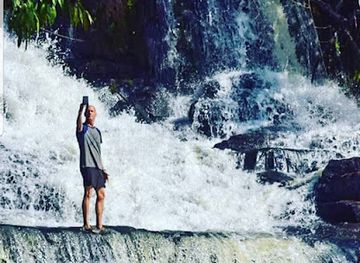
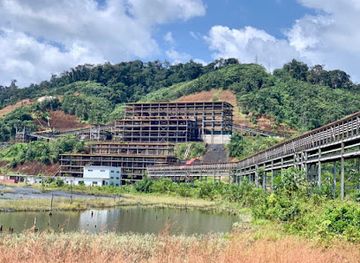
Bong County’s attractions are dispersed and largely connected to nature, local life and history rather than purpose-built tourism infrastructure. Kpatawee Waterfall near Suakoko is the county’s best-known natural outing, with cascades, forest surroundings and places suited to a short picnic or swim when water conditions are safe. The journey itself passes through cultivated countryside and settlements that reveal the importance of rice, cassava, plantain and other smallholder crops. Gbarnga provides the county’s main urban experience, with markets, transport activity, churches, mosques and everyday commercial life. Suakoko adds educational and medical interest through Cuttington University and Phebe Hospital, though both should be treated as working institutions rather than conventional sightseeing venues. The Bong Range and former mining areas offer insight into Liberia’s iron-ore era, but access can be restricted, infrastructure may be deteriorated and arrangements should be made locally. For visitors interested in culture, guided conversations, markets, rural walks and community-based visits are generally more rewarding than searching for a long list of formal attractions.
-
Tourist attraction
Kpatawee Waterfall
Discover Kpatawee Waterfall: A breathtaking natural escape in Liberia's Bong County with eco-friendly lodging and unforgettable rainforest adventures.
-
Tourist attraction
Kpatawee Waterfalls
Discover Kpatawee Waterfalls: A Liberian paradise offering cascading beauty, eco-friendly adventures, and tranquil rainforest escapes in Bong County.
-
 Tourist attraction
Bong County
Discover Bong County, Liberia: A blend of lush landscapes, rich culture, and warm hospitality awaits in this undiscovered gem.
-
Park
Fassu Avenue
Experience the serene beauty of Fassu Avenue, a tranquil park in Liberia, perfect for relaxation and leisure amidst lush greenery.


Best landmarks in Bong County
Kpatawee Waterfall is Bong County’s most recognisable natural landmark, where water moves through a wooded setting near Suakoko and gives the county a focal point for local recreation. The Bong Range is an important geographical and historical landmark: its iron-bearing hills shaped the development of the Bong Mining Company and the associated railway and settlement system during the twentieth century. The former mining landscape is not a polished heritage attraction, but its abandoned or altered infrastructure helps explain the county’s industrial past and should be visited only with local knowledge and permission. In Gbarnga, the town’s roads, market area and public institutions are more significant as markers of contemporary regional life than as monumental architecture. Suakoko’s Cuttington University and Phebe Hospital are prominent institutional landmarks whose influence extends across central Liberia. Together, these places express Bong’s distinctive combination of forested inland geography, Kpelle cultural history, education, healthcare and mining-era transformation.
-
Tourist attraction
Kpatawee Waterfall
Explore the stunning beauty of Kpatawee Waterfall in Lawe, Liberia, where nature's tranquility awaits amidst lush landscapes and breathtaking cascades.
-
Tourist attraction
Kpatawee Waterfalls
Explore Kpatawee Waterfalls: A hidden gem of natural beauty in Liberia, perfect for adventure seekers and tranquility lovers alike.
-
Mine
Bong Mines
Bong Mines: A hidden gem in Liberia offering a glimpse into mining history amidst breathtaking landscapes.
-
Mountain peak
Bong Range
Discover the breathtaking Bong Range in Liberia, a mountain peak rich with natural beauty, diverse wildlife, and vibrant local culture for an unforgettable adventure.

Explore Bong County on the map
Plan your trip on one map. See where the top cities, national parks and sights are, and book hotels and experiences in a few clicks.
Best hotels in Bong County
Best restaurants in Bong County
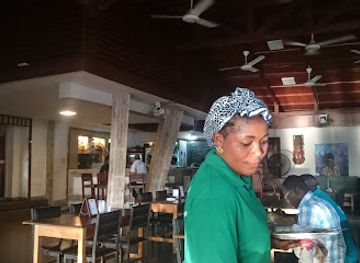
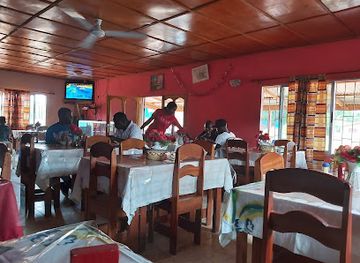
Dining in Bong County is centred on Liberian home-style cooking, market stalls, modest restaurants and informal roadside food rather than a large formal restaurant scene. Rice is the everyday foundation, often served with sauces containing greens, cassava leaves, palm oil, fish, chicken or meat; cassava, plantain and sweet potato are also common. Gbarnga offers the broadest selection of cafés, small eateries and restaurants, while food choices become simpler in rural districts. Travellers may encounter jollof-style rice and other dishes shared across West Africa, but the county’s most characteristic meals are those built around local crops and richly seasoned sauces. Palm products, fresh fruit and produce from surrounding farms appear in markets according to season. Ask about ingredients when buying prepared food, choose busy stalls with good turnover and carry drinking water on longer journeys. Dining is generally informal, and meals may be prepared to order, so patience is part of the experience.
-
Restaurant
FuZion D'Afrique Restaurant
Experience the rich flavors of Liberia at FuZion D'Afrique Restaurant – where local cuisine meets global taste in Monrovia.
-
Hotel
Passion Hotel 2
Experience comfort and local charm at Passion Hotel 2 in Gbarnga, Liberia—your gateway to exploring vibrant Liberian culture.
-
Hotel
BEER GARDEN HOTEL, BAR & RESTAURANT
Discover comfort and local flavors at Beer Garden Hotel, Bar & Restaurant in Ganta - your perfect getaway in Liberia.
-
Grill
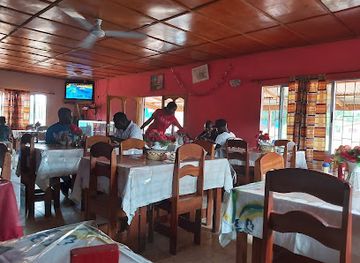
Geeta's Bar & Restaurant
Discover the vibrant flavors of Liberia at Geeta's Bar & Restaurant, where authentic cuisine meets warm hospitality in Gbarnga.
Best bars in Bong County
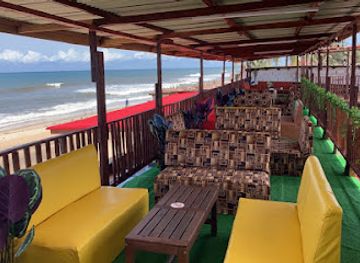
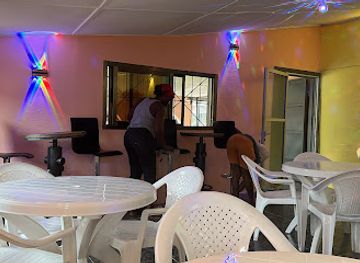
Nightlife in Bong County is concentrated mainly in Gbarnga and is modest compared with Monrovia’s entertainment districts. Small bars, restaurants, roadside drinking spots and football-viewing venues form the principal evening scene, with music often providing the background rather than a dedicated club programme. Some establishments cater to students, transport workers, local professionals and visitors, while outside Gbarnga evening activity is more likely to centre on family compounds, community gatherings or a local bar. Suakoko has an evening population shaped partly by Cuttington University, but its atmosphere remains that of a small inland community rather than a major nightlife centre. Opening arrangements and venue status can change, so ask locally and return to accommodation by a reliable means of transport. Alcohol is available, but visitors can equally experience the county through food, conversation, music and early-morning markets.
-
Hotel
BEER GARDEN HOTEL, BAR & RESTAURANT
Experience the vibrant atmosphere of Ganta at Beer Garden Hotel, Bar & Restaurant, where comfort meets local charm and culinary delights await.
-
Grill
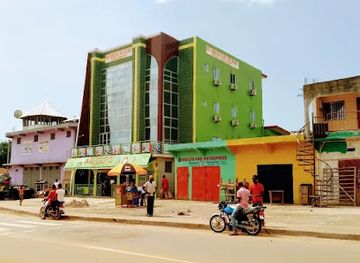
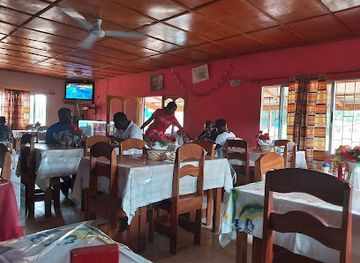
Geeta's Bar & Restaurant
Discover the rich flavors of Liberia at Geeta's Bar & Restaurant in Gbarnga, the perfect place for grilling enthusiasts and cultural explorers.
-
Lounge
Shooters Sports Bar & Lounge
Discover the lively atmosphere of Shooters Sports Bar & Lounge, where sports, local cuisine, and vibrant nightlife meet in Monrovia.
-
Bar
Vibes Lounge &Grill
Discover the vibrant nightlife at Vibes Lounge & Grill, Monrovia’s premier bar offering delicious food and a lively atmosphere for every traveler.
Best nightclubs in Bong County
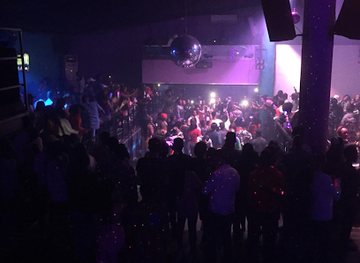
Nightlife in Bong County is concentrated mainly in Gbarnga and is modest compared with Monrovia’s entertainment districts. Small bars, restaurants, roadside drinking spots and football-viewing venues form the principal evening scene, with music often providing the background rather than a dedicated club programme. Some establishments cater to students, transport workers, local professionals and visitors, while outside Gbarnga evening activity is more likely to centre on family compounds, community gatherings or a local bar. Suakoko has an evening population shaped partly by Cuttington University, but its atmosphere remains that of a small inland community rather than a major nightlife centre. Opening arrangements and venue status can change, so ask locally and return to accommodation by a reliable means of transport. Alcohol is available, but visitors can equally experience the county through food, conversation, music and early-morning markets.
-
Grill
Geeta's Bar & Restaurant
Experience authentic Liberian cuisine at Geeta's Bar & Restaurant in Gbarnga, where delicious flavors and a welcoming atmosphere await.
-
Night club
Club Wanwosu
Discover the vibrant nightlife of Liberia at Club Wanwosu, where music, dance, and culture come alive in an unforgettable experience.
-
Night club
Celavi nightclub
Discover Monrovia's nightlife at Celavi Nightclub, where rhythm meets energy in an unforgettable experience.
-
Bar
Club Musu
Experience the vibrant nightlife of Harbel at Club Musu, where delicious drinks and local culture come together in a lively atmosphere.
Best shops in Bong County
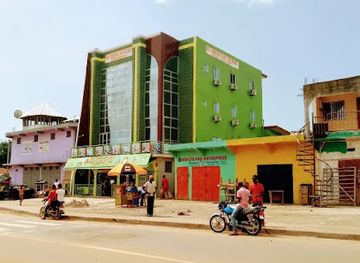
Shopping in Bong County is primarily practical and market-based, with Gbarnga offering the greatest concentration of stalls, small shops and informal trading. Visitors can find locally grown produce, rice, cassava products, plantains, fruit, palm-related goods, household necessities and prepared food, while smaller towns and roadside markets serve surrounding farming communities. Shopping is less about dedicated souvenir retail than about observing how agricultural goods move through the county’s commercial networks. Handmade items, textiles and simple craft goods may be available through personal contacts or local markets, but selection and quality vary. Travellers seeking regional gifts can consider packaged food products or locally made crafts where their origin and safe transport are clear. Carry Liberian dollars in smaller notes, check quantities and prices before completing a purchase, and remember that market goods are often seasonal. Bargaining may occur in informal settings, but it should be conducted courteously rather than aggressively.
-
Grocery store
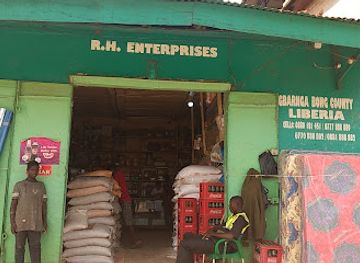
R.H Enterprises
Experience the flavors of Liberia at R.H Enterprises, a local grocery store in Gbarnga offering fresh produce and everyday essentials.
-
Electronics store
Dennis Electronic Shop
Explore cutting-edge electronics at Dennis Electronic Shop in Gbarnga, Liberia - your one-stop destination for technology and gadgets.
-
Clothing store
Sinoe County
Discover the unique fashion and rich culture of Sinoe County, Liberia, where local craftsmanship meets vibrant community spirit.
-
Electronics store
B&J Luxury Limited
Explore B&J Luxury Limited in Liberia for top-notch electronics, exceptional service, and unbeatable deals on the latest gadgets.


Get your free copy of our complete guide to Bong County, delivered straight to you.
Everything on this page, from attractions and restaurants to essentials and local phrases, in one PDF you can read offline, print or share.
Already have an account? Sign in
Your Bong County guide is ready.
We'll send it to · Not you? Sign out

Getting your guide ready…
We are putting together a fresh copy of the Bong County guide. This can take up to a minute.
This can take a few moments. If your browser asks, choose Allow so the download can start. You'll find the guide in your Downloads folder.
Nothing happened? Download it again
Sorry, the guide is taking longer than usual. Please try again in a minute, or get it by email instead.
Bong County essentials
Currency and Payment
Safety
Emergency Situations
Do's and Don'ts
Local Tips
From Eve
Local phrases worth knowing
You don't need to get them perfect. A few words go a long way, and locals appreciate the effort.
Basics
| English | Local | Say it |
|---|---|---|
| Hello | Salone | [sah-loh-neh] |
| Goodbye | Nya | [nyah] |
| Yes | Ehn | [ehn] |
| No | No | [noh] |
| Please/You're welcome | Please | [pleez] |
| Thank you | Tenki | [ten-kee] |
| Excuse me/Sorry | Pardon | [par-don] |
| How are you? | How you dey? | [how you day?] |
| Fine. And you? | I fine. And you? | [I fain. And you?] |
| Do you speak English? | You sabi English? | [you sah-bee English?] |
| I don't understand | I no sabi | [I noh sah-bee] |
Eating & Drinking
| English | Local | Say it |
|---|---|---|
| I'd like to see the menu, please | I wan see di menu, please | [I wan see dee menu, pleez] |
| I don't eat meat | I no eat meat | [I noh eet meet] |
| Cheers! | Cheers! | [cheers] |
| I would like to pay, please | I wan pay, please | [I wan pay, pleez] |
Emergencies
| English | Local | Say it |
|---|---|---|
| Help! | Help! | [help] |
| Go away! | Go away! | [go away] |
| Call the Police! | Call di Police! | [call dee po-lees] |
| Call a doctor! | Call one doctor! | [call one doc-tah] |
| I'm lost | I don lost | [I don lost] |
| I'm ill | I dey sick | [I dey sik] |
Shopping
| English | Local | Say it |
|---|---|---|
| I'd like to buy... | I wan buy... | [I wan buy...] |
| I'm just looking | I just dey look | [I just dey luk] |
| How much is it? | How much e be? | [how much eh bee?] |
| That's too expensive | Dat too expensive | [dat too expen-siv] |
| Can you lower the price? | You fit reduce di price? | [you fit re-doos dee price?] |
Time & Numbers
| English | Local | Say it |
|---|---|---|
| What time is it? | Wetin time be? | [weh-tin time bee?] |
| It's one o'clock | Na one o'clock | [na one oh-clock] |
| Half past (10) | Half past ten | [half past ten] |
| Morning | Mornin | [mor-ning] |
| Afternoon | Afternoon | [af-teh-noon] |
| Evening | Evenin | [ee-ven-ing] |
| Yesterday | Yesterday | [yes-teh-day] |
| Today | Today | [to-day] |
| Tomorrow | Tomorrow | [to-morrow] |
| 1 | One | [one] |
| 2 | Two | [two] |
| 3 | Three | [three] |
| 4 | Four | [four] |
| 5 | Five | [five] |
| 6 | Six | [six] |
| 7 | Seven | [seven] |
| 8 | Eight | [eight] |
| 9 | Nine | [nine] |
| 10 | Ten | [ten] |
Transport & Directions
| English | Local | Say it |
|---|---|---|
| Where's a/the...? | Where di...? | [where dee...?] |
| What's the address? | Wetin di address? | [weh-tin dee ad-dress?] |
| Can you show me (on the map)? | You fit show me (for di map)? | [you fit show me (for dee map)?] |
| When's the next (bus)? | When di next (bus)? | [when dee next (bus)?] |
| A ticket (to ....) | One ticket (to ....) | [one tick-it (to ....)] |
History of Bong County
Kpelle societies before the Liberian state
Before Liberia’s modern borders were established, the region was home chiefly to Kpelle communities organised through towns, villages, farming networks and political relationships rather than a single centralised kingdom. Rice cultivation, hunting, fishing, craft production and forest knowledge supported life across the interior. Authority was exercised through families, elders and local institutions, while trade connected communities with wider networks in present-day Liberia and neighbouring Guinea. Kpelle language and cultural practices remain central to Bong County’s identity, although contemporary life is also shaped by migration, Christianity, Islam, education and national commerce.
The expansion of Liberia into the interior
The Republic of Liberia was founded in 1847 along the coast, but its effective political reach into the interior developed gradually. During the late nineteenth and early twentieth centuries, the Liberian government extended administrative control through treaties, officials, taxation and new transport links. This process brought interior communities into the institutions of the Liberian state, often unevenly and under considerable pressure. Bong County’s present administrative identity belongs to this longer history of incorporation, in which established Kpelle societies encountered coastal political authority, Christian missions, commercial traders and changing systems of labour.
Mission education and the growth of public institutions
Education and medical work became important forces in central Liberia during the twentieth century. Schools, churches and health facilities helped connect rural communities to national institutions and introduced new professional pathways. Cuttington University, founded in 1889 and later established at Suakoko, became one of Liberia’s best-known centres of higher education. Phebe Hospital also developed into a significant regional medical institution. Together, these organisations gave Suakoko and the surrounding area an influence extending well beyond Bong County, particularly in teaching, medicine and public service.
The Bong Mining Company and the iron-ore era
Iron ore transformed parts of Bong County during the mid-twentieth century. The Bong Mining Company developed operations in the Bong Range from the late 1950s, with mining expanding during the 1960s and associated rail and road infrastructure linking the interior to Monrovia. The project created employment, settlements and services while tying the county to international markets and foreign investment. Mining also altered the landscape and local economy. Operations were eventually disrupted by Liberia’s civil wars, and the former mine infrastructure remains a significant part of Bong’s industrial and social memory.
Civil war, displacement and damaged infrastructure
Liberia’s civil wars, from 1989 to 1996 and again from 1999 to 2003, brought severe disruption to Bong County. Communities experienced displacement, insecurity and the breakdown of public services, while roads, schools, medical facilities and mining infrastructure suffered damage or neglect. Gbarnga became an important humanitarian and administrative centre during the conflicts, and the county hosted many displaced people. The post-war period has involved rebuilding institutions, restoring transport links and re-establishing agriculture and commerce, though infrastructure and public services remain uneven outside the main towns.
Post-war recovery and contemporary Bong
Since the end of the civil wars, Bong County has developed through a combination of public reconstruction, international assistance, education, health services, agriculture and road improvement. Gbarnga has grown as a commercial and transport centre, while Suakoko’s university and hospital continue to shape the county’s regional importance. Smallholder farming remains fundamental, with rice, cassava, plantain and other crops supporting households and markets. The legacy of mining has not disappeared, but contemporary Bong is better understood as a diverse inland county balancing agricultural livelihoods, education, public services and growing urban activity.
Bong County in Photos
Browse through our photo collection highlighting the charm and character of the destination.
Neighbouring regions of Bong County
The closest regions to Bong County, if you have time for more than one.
-

-

-

-

-


Swipe for more regions
Explore more

Explore more of Liberia
Discover Liberia: where pristine beaches meet lush rainforests, and vibrant culture blends with rich history in the heart of West Africa.
Explore Liberia