

Free Al-Haruj Travel Guide & Mobile App
Explore Al-Haruj with free travel guides. Discover regional history, expert tips, proposed trips, and audio guides on web or mobile app.


Explore Al-Haruj in Libya for ancient volcanic cones, black basalt plains and demanding but rewarding Sahara expedition landscapes.
Read more about Al-Haruj
When is the best time to visit Al-Haruj?
Best: March–April, November · 21–29°C| Month | High (°C) | Rainfall (mm) |
|---|---|---|
| January | 16 | 5 |
| February | 18 | 4 |
| March (best) | 24 | 3 |
| April (best) | 29 | 2 |
| May | 34 | 1 |
| June | 38 | 1 |
| July | 41 | 1 |
| August | 40 | 1 |
| September | 37 | 1 |
| October | 31 | 2 |
| November (best) | 21 | 3 |
| December | 16 | 4 |
Getting to and around Al-Haruj
How to get there
Transportation
Best attractions in Al-Haruj
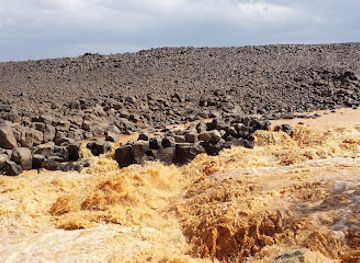
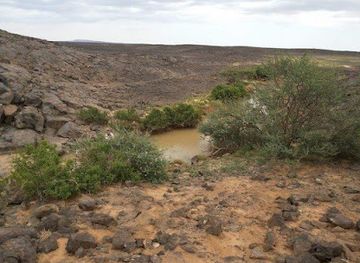
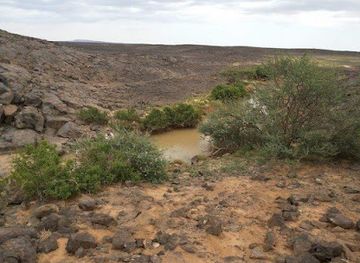
Al-Haruj’s attractions are geological rather than conventional: broad black-basalt expanses, ancient lava flows, volcanic cones, scoria slopes, eroded gullies and isolated ridges form the central experience. The scale and variety of the volcanic field reward slow overland exploration, with changing light revealing different textures in the rock. Some routes offer walking opportunities around cones and lava margins, but the terrain is rough, exposed and unsuitable for casual hiking without navigation and support. The wider desert setting adds pale gravel plains, dunes and distant horizons, creating strong contrasts with the dark volcanic surfaces. Wildlife is sparse and often difficult to observe, while archaeological traces in the wider central Sahara require specialist interpretation and careful protection rather than casual searching. There are no established museums, visitor centres, marked trails or family attractions in the field itself. Al-Haruj is therefore best understood as an expedition landscape for travellers interested in geology, photography, desert ecology and physical remoteness, reached through a fully supported and security-cleared journey.
-
Mountain peak
Haruj
Explore Libya's largest volcanic field: a landscape of black basalt, scoria cones, and ancient geological history in the heart of the Sahara.

Best landmarks in Al-Haruj
Al-Haruj’s principal landmarks are natural formations rather than buildings. The most characteristic are its dark basalt plateaux, ancient lava-flow margins and scattered volcanic cones, whose profiles rise above the surrounding gravel desert. Individual formations are important as parts of the field’s geological story rather than as named monuments with visitor infrastructure. The contrast between black volcanic rock and pale Saharan surfaces is particularly distinctive, while eroded channels and rough lava pavements show how wind and occasional water have modified the terrain over time. The wider setting of central Libya provides long, open horizons and an unusually strong sense of geological isolation. Archaeological material may occur in the broader desert, but undocumented sites should not be treated as sightseeing landmarks or searched for casually. The significance of Al-Haruj lies in the collective scale of its volcanic landscape: a remote record of past eruptions preserved across a huge, sparsely inhabited interior.
-
Mountain peak
Haruj
Experience the breathtaking beauty and adventure of Haruj, a stunning mountain peak in Libya, perfect for outdoor enthusiasts and nature lovers alike.
Explore Al-Haruj on the map
Plan your trip on one map. See where the top cities, national parks and sights are, and book hotels and experiences in a few clicks.
Best hotels in Al-Haruj
Best restaurants in Al-Haruj
There is no restaurant scene within Al-Haruj and no dependable opportunity to buy food on the volcanic field. Expedition groups must carry food, drinking water, cooking equipment and waste containers from their departure point, with meal planning suited to heat, dust and long periods away from services. In settled parts of Libya, visitors may encounter North African and Libyan cooking based on bread, couscous, rice, vegetables, pulses and meat, while tea is an important part of hospitality. Menus and availability vary considerably between towns, and provisioning should be arranged locally rather than assumed. A desert camp meal can be practical and sociable, but it should not be presented as a restaurant or as an established regional cuisine specific to Al-Haruj. Bottled or properly treated water is essential, and food must be stored securely against heat and contamination. Travellers should follow local dietary customs and confirm arrangements with their guide before entering the field.
-
Mountain peak
Haruj
Explore the breathtaking heights of Haruj Mountain in Libya - where adventure meets serenity amidst stunning natural beauty.
Best bars in Al-Haruj
Al-Haruj has no bars, nightclubs, breweries or organised evening entertainment. In this remote and predominantly Muslim desert setting, evenings centre on camp routines, tea, conversation, navigation planning and observation of the exceptionally open night sky, subject to security and weather conditions. Alcohol should not be carried or consumed contrary to Libyan law, local rules or the requirements of an expedition operator. Any nightlife encountered before or after the journey belongs to the settled towns used as staging points, not to the volcanic region itself, and its availability can change with local conditions. Because darkness makes lava fields, wadis and vehicle recovery especially hazardous, outdoor movement after nightfall should be limited to carefully managed camp activities and should never become an improvised walk away from the vehicles.
-
Lebanese
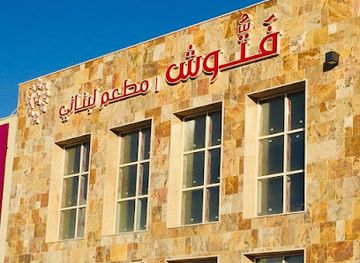
Fattoush Lebanese Restaurant
Experience the vibrant flavors and authentic dishes of Lebanese cuisine at Fattoush Restaurant in Tripoli, a culinary must-visit for tourists seeking a unique dining experience.
-
Cafe
Cafe Haj Fathi
Experience the authentic flavors of Libyan cuisine at Cafe Haj Fathi, a beloved Tripoli cafe offering a warm atmosphere and delicious local dishes.
-
Cafe
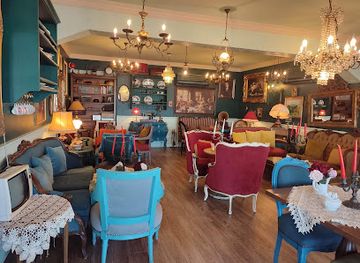
At Home Cafe
Discover the cozy charm of At Home Cafe in Tripoli, where delicious breakfast meets a welcoming atmosphere for every traveler.
-
Cafe
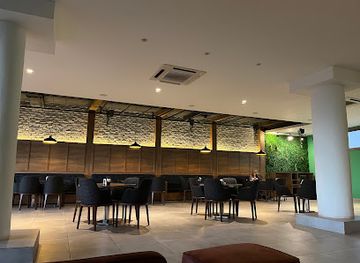
Mood Café and Restaurant
Discover the inviting atmosphere and diverse menu at Mood Café and Restaurant in Benghazi, a perfect dining spot for all travelers.
Best nightclubs in Al-Haruj
Al-Haruj has no bars, nightclubs, breweries or organised evening entertainment. In this remote and predominantly Muslim desert setting, evenings centre on camp routines, tea, conversation, navigation planning and observation of the exceptionally open night sky, subject to security and weather conditions. Alcohol should not be carried or consumed contrary to Libyan law, local rules or the requirements of an expedition operator. Any nightlife encountered before or after the journey belongs to the settled towns used as staging points, not to the volcanic region itself, and its availability can change with local conditions. Because darkness makes lava fields, wadis and vehicle recovery especially hazardous, outdoor movement after nightfall should be limited to carefully managed camp activities and should never become an improvised walk away from the vehicles.
-
Mountain peak
Haruj
Explore the breathtaking beauty and adventure of Haruj Mountain Peak, a stunning natural wonder in Libya, perfect for outdoor enthusiasts and nature lovers.
-
 Night club
قصار خيار
Experience the vibrant Libyan nightlife at قصار خيار, where music and culture come alive in an unforgettable night club setting.
Best shops in Al-Haruj
There is no shopping infrastructure in Al-Haruj. Visitors must purchase fuel, water, food, batteries, camping supplies and vehicle spares before entering the field, usually through arrangements made in the nearest practical town. Travellers may find ordinary Libyan goods, dates, tea, textiles or locally made items in settled communities used as staging points, but availability varies and should not be confused with a formal Al-Haruj craft tradition. Avoid buying antiquities, fossils, archaeological objects or unusual stones from informal sellers, since their provenance may be uncertain and removal of cultural material can be illegal. A responsible souvenir is therefore more likely to be a photograph or a locally purchased food product than a piece of volcanic rock. Provisioning is the central shopping concern: once the expedition begins, there are no markets, high streets, galleries or dependable retail services to replace forgotten equipment.
-
Shopping mall
Tripoli Mall
Experience the lively atmosphere of Tripoli Mall, a shopping paradise in Tajoura with diverse shops, dining, and entertainment options.
-
Shopping mall
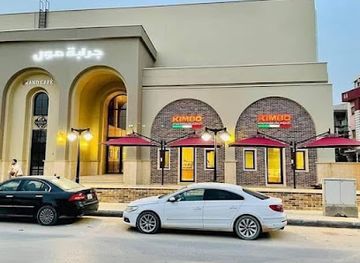
Al-Jaraba Mall
Experience the vibrant shopping and dining scene at Al-Jaraba Mall, Tripoli's premier destination for retail therapy and culinary delights.
-
Shopping mall
WAMA SPORT CENTER
Explore WAMA Sport Center in Tripoli for a unique blend of shopping, dining, and entertainment, showcasing the vibrant culture of Libya.
-
Sportswear store
Alriqa Sport
Discover the best of sportswear at Alriqa Sport in Tripoli, where fashion meets functionality for every athlete.

Get your free copy of our complete guide to Al-Haruj, delivered straight to you.
Everything on this page, from attractions and restaurants to essentials and local phrases, in one PDF you can read offline, print or share.
Already have an account? Sign in
Your Al-Haruj guide is ready.
We'll send it to · Not you? Sign out

Getting your guide ready…
We are putting together a fresh copy of the Al-Haruj guide. This can take up to a minute.
This can take a few moments. If your browser asks, choose Allow so the download can start. You'll find the guide in your Downloads folder.
Nothing happened? Download it again
Sorry, the guide is taking longer than usual. Please try again in a minute, or get it by email instead.
Al-Haruj essentials
Currency and Payment
Safety
Emergency Situations
Do's and Don'ts
Local Tips
From Eve
Local phrases worth knowing
You don't need to get them perfect. A few words go a long way, and locals appreciate the effort.
Basics
| English | Local | Say it |
|---|---|---|
| Hello | مرحبا | [Marhaban] |
| Goodbye | وداعا | [Wadā'an] |
| Yes | نعم | [Na'am] |
| No | لا | [Lā] |
| Please/You're welcome | من فضلك | [Min faḍlik] |
| Thank you | شكرا | [Shukran] |
| Excuse me/Sorry | عفوا | [ʿAfwan] |
| How are you? | كيف حالك؟ | [Kayfa ḥāluka?] |
| Fine. And you? | بخير. وأنت؟ | [Bi-khayr. Wa anta?] |
| Do you speak English? | هل تتحدث الإنجليزية؟ | [Hal tataḥaddath al-inglīziyyah?] |
| I don't understand | لا أفهم | [Lā afham] |
Eating & Drinking
| English | Local | Say it |
|---|---|---|
| I'd like to see the menu, please | أود أن أرى القائمة، من فضلك | [Awaddu an arā al-qā’imah, min faḍlik] |
| I don't eat meat | لا أكل اللحم | [Lā akul al-laḥm] |
| Cheers! | في صحتك! | [Fī ṣiḥṭik!] |
| I would like to pay, please | أود أن أدفع، من فضلك | [Awaddu an adfaʿ, min faḍlik] |
Emergencies
| English | Local | Say it |
|---|---|---|
| Help! | نجدة! | [Najdah!] |
| Go away! | اذهب بعيدا! | [Izhab baʿīdā!] |
| Call the Police! | اتصل بالشرطة! | [Ittasil bil-shurṭah!] |
| Call a doctor! | اتصل بالطبيب! | [Ittasil bil-ṭabīb!] |
| I'm lost | أنا ضائع | [Anā ḍā'iʿ] |
| I'm ill | أنا مريض | [Anā marīḍ] |
Shopping
| English | Local | Say it |
|---|---|---|
| I'd like to buy... | أود أن أشتري... | [Awaddu an ashtarī...] |
| I'm just looking | أنا فقط أبحث | [Anā faqaṭ abḥath] |
| How much is it? | كم سعره؟ | [Kam siʿruhu?] |
| That's too expensive | هذا مكلف جدا | [Hādhā mukallaf jiddan] |
| Can you lower the price? | هل يمكنك تخفيض السعر؟ | [Hal yumkinuka takhfīḍ al-siʿr?] |
Time & Numbers
| English | Local | Say it |
|---|---|---|
| What time is it? | ما الوقت؟ | [Mā al-waqt?] |
| It's one o'clock | إنه الساعة الواحدة | [Innahu al-sāʿah al-wāḥidah] |
| Half past (10) | نصف الساعة (10) | [Niṣf al-sāʿah (10)] |
| Morning | صباحا | [Ṣabāḥan] |
| Afternoon | بعد الظهر | [Baʿda al-ẓuhr] |
| Evening | مساءا | [Masā'an] |
| Yesterday | أمس | [Ams] |
| Today | اليوم | [Al-yawm] |
| Tomorrow | غدا | [Ghadā] |
| 1 | 1 | [1] |
| 2 | 2 | [2] |
| 3 | 3 | [3] |
| 4 | 4 | [4] |
| 5 | 5 | [5] |
| 6 | 6 | [6] |
| 7 | 7 | [7] |
| 8 | 8 | [8] |
| 9 | 9 | [9] |
| 10 | 10 | [10] |
Transport & Directions
| English | Local | Say it |
|---|---|---|
| Where's a/the...? | أين هو...؟ | [Ayn huwa...?] |
| What's the address? | ما هو العنوان؟ | [Mā huwa al-ʿunwān?] |
| Can you show me (on the map)? | هل يمكنك أن تُريني (على الخريطة)؟ | [Hal yumkinuka an turīnī (ʿalā al-kharīṭah)?] |
| When's the next (bus)? | متى يأتي (الحافلة) التالية؟ | [Matā ya'tī (al-ḥāfilah) al-tāliyah?] |
| A ticket (to ....) | تذكرة (إلى ....) | [Tadhkarah (ilā ....)] |
History of Al-Haruj
Formation of the Al-Haruj Volcanic Field
Al-Haruj was created by repeated volcanic activity over a long geological period, producing basaltic lava flows, scoria cones, volcanic ridges and broad fields of dark rock. The region is not a single volcano but an extensive volcanic landscape containing many separate vents and formations. Weathering, wind erosion and occasional runoff have subsequently shaped the lava into rough pavements, shallow valleys and isolated hills. These geological processes are the foundation of Al-Haruj’s identity and explain its strong contrast with the pale gravel and sand deserts around it.
The Formerly Wetter Sahara
During wetter phases of the Sahara, especially in the early and middle Holocene, grasslands, seasonal water sources and wildlife supported mobile pastoral communities across areas that are now extremely arid. The wider central Libyan desert preserves evidence of these changing environments through archaeological remains and rock art, although the most accessible and frequently visited concentrations lie elsewhere in the Sahara. Al-Haruj belongs to this broader environmental history: its present barrenness is the result of climatic change rather than a landscape that has always been entirely dry.
Pastoral Mobility and Desert Exchange
As central Libya became drier, human movement increasingly depended on wells, seasonal grazing and oasis networks. Communities travelled across the interior rather than creating large permanent settlements in the volcanic field. The wider region formed part of the geographical world linking Fezzan, the central Sahara and the northern Libyan plains, although routes varied with water, political conditions and seasonal needs. Al-Haruj’s sparse settlement pattern reflects the difficulty of sustaining people and animals across lava terrain with few reliable natural resources.
Fezzan, Garamantian and Later Saharan Networks
The ancient Garamantian civilisation was centred in the Fezzan, particularly around its oasis landscapes, where agriculture, trade and political organisation developed in the first millennium BC and the early centuries AD. The Al-Haruj field was not its principal urban core, but its position within central Libya places it in the wider geographic setting of Saharan movement and exchange. Later trans-Saharan systems likewise connected oasis communities and desert routes without turning the volcanic upland into a densely populated settlement zone.
Ottoman and Italian-Era Administration
Libya’s interior was gradually drawn into more formal systems of Ottoman administration, European mapping and Italian colonial control during the nineteenth and early twentieth centuries. In remote areas such as Al-Haruj, authority remained limited by distance, terrain and the difficulty of maintaining regular supply lines. Surveying and military movement nevertheless increased external knowledge of the central desert. The period also formed part of the broader political transformation that eventually brought the separate historical regions of Tripolitania, Cyrenaica and Fezzan into the modern Libyan state.
Modern Libya and the Remote Interior
After independence in 1951, the development of Libya’s oil economy, roads and state institutions strengthened connections between the coast and selected interior centres, but Al-Haruj remained largely outside ordinary settlement and tourism infrastructure. Its volcanic landscape has consequently retained a high degree of physical remoteness. Contemporary travel is shaped less by conventional tourism than by security conditions, access permissions, local partnerships and the logistics of desert exploration. Any visit should be understood within Libya’s modern political and security context rather than treated as an ordinary overland excursion.
Al-Haruj in Photos
Browse through our photo collection highlighting the charm and character of the destination.
Neighbouring regions of Al-Haruj
The closest regions to Al-Haruj, if you have time for more than one.
-

-

-

-

-


Swipe for more regions
Explore more

Explore more of Libya
Discover Libya: Ancient ruins, vast deserts, and Mediterranean charm await in this North African gem.
Explore Libya