

Free Kufra Travel Guide & Mobile App
Explore Kufra with free travel guides. Discover regional history, expert tips, proposed trips, and audio guides on web or mobile app.


Kufra, Libya’s remote south-eastern oasis, combines Saharan landscapes, Sanusi history, caravan heritage and striking desert agriculture.
Read more about Kufra
When is the best time to visit Kufra?
Best: February–March, November · 22–26°C| Month | High (°C) | Rainfall (mm) |
|---|---|---|
| January | 20 | 1 |
| February (best) | 22 | 0 |
| March (best) | 26 | 0 |
| April | 31 | 0 |
| May | 35 | 0 |
| June | 40 | 0 |
| July | 42 | 0 |
| August | 41 | 0 |
| September | 38 | 0 |
| October | 33 | 0 |
| November (best) | 26 | 0 |
| December | 21 | 1 |
Getting to and around Kufra
How to get there
Transportation
Explore Kufra on the map
Plan your trip on one map. See where the top cities, national parks and sights are, and book hotels and experiences in a few clicks.
Best hotels in Kufra
Best restaurants in Kufra
Dining in Kufra is shaped by household cooking, local cafés and simple restaurants rather than a developed international dining scene. Meals commonly draw on wider Libyan and Saharan traditions: couscous, rice dishes, soups, flatbreads, dates and grilled meat are more realistic expectations than specialised destination cuisine. Tea and coffee are important parts of hospitality, while dates and other oasis produce may appear in homes and local markets. The palm-growing environment supports small-scale cultivation, but food supplies in this remote region also depend heavily on long-distance transport from elsewhere in Libya. Visitors should arrange meals with accommodation providers or trusted local contacts, carry suitable provisions for road journeys and avoid assuming that restaurants will keep fixed hours. Alcohol is not part of ordinary public dining, and conservative dress and courteous behaviour are appropriate in cafés and family-oriented settings.
-
Italian
Kimbo Libya
Discover authentic Italian cuisine at Kimbo Libya in Tripoli – where every meal is a delicious journey through Italy's culinary heritage.
-
 French
Kufren
Experience authentic French cuisine at Kufren in Al-Jawf - where culinary excellence meets cultural charm.
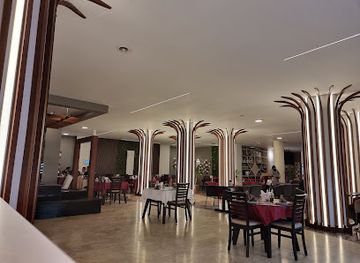
Best bars in Kufra
Kufra does not have a conventional bar or nightclub scene. Evening life centres on family visits, cafés, tea, conversation and informal gatherings, with activity concentrated in Al Jawf rather than in the desert settlements. Public alcohol-focused venues should not be expected, and visitors should not treat nightlife as a principal reason to travel here. After dark, the sparse settlement lights and open desert can create a powerful sense of isolation, but exploring outside town requires local approval, reliable transport and attention to security. Cafés and restaurants may operate according to local patterns rather than published timetables, while events and public gatherings can change quickly. Respect for religious observance, privacy and community norms is more important than seeking entertainment in a western-style nightlife district.
-
Bar
A kufran
Discover A Kufran, a cozy bar in Al-Jawf, where local flavors and friendly faces create an unforgettable experience.
Best nightclubs in Kufra
Kufra does not have a conventional bar or nightclub scene. Evening life centres on family visits, cafés, tea, conversation and informal gatherings, with activity concentrated in Al Jawf rather than in the desert settlements. Public alcohol-focused venues should not be expected, and visitors should not treat nightlife as a principal reason to travel here. After dark, the sparse settlement lights and open desert can create a powerful sense of isolation, but exploring outside town requires local approval, reliable transport and attention to security. Cafés and restaurants may operate according to local patterns rather than published timetables, while events and public gatherings can change quickly. Respect for religious observance, privacy and community norms is more important than seeking entertainment in a western-style nightlife district.
-
Children's club
DAF Creative Center
Explore creativity and imagination at DAF Creative Center, a vibrant children's club in Tripoli offering fun and educational activities for young minds.
Get your free copy of our complete guide to Kufra, delivered straight to you.
Everything on this page, from attractions and restaurants to essentials and local phrases, in one PDF you can read offline, print or share.
Already have an account? Sign in
Your Kufra guide is ready.
We'll send it to · Not you? Sign out

Getting your guide ready…
We are putting together a fresh copy of the Kufra guide. This can take up to a minute.
This can take a few moments. If your browser asks, choose Allow so the download can start. You'll find the guide in your Downloads folder.
Nothing happened? Download it again
Sorry, the guide is taking longer than usual. Please try again in a minute, or get it by email instead.
Kufra essentials
Currency and Payment
Safety
Emergency Situations
Do's and Don'ts
Local Tips
From Eve
Local phrases worth knowing
You don't need to get them perfect. A few words go a long way, and locals appreciate the effort.
Basics
| English | Local | Say it |
|---|---|---|
| Hello | مرحبا | [Marhaban] |
| Goodbye | وداعا | [Wadaa'an] |
| Yes | نعم | [Na'am] |
| No | لا | [Laa] |
| Please/You're welcome | من فضلك | [Min fadlik] |
| Thank you | شكرا | [Shukran] |
| Excuse me/Sorry | عذرًا | [Udhuran] |
| How are you? | كيف حالك؟ | [Kayfa halak?] |
| Fine. And you? | بخير. وأنت؟ | [Bikhayr. Wa anta?] |
| Do you speak English? | هل تتحدث الإنجليزية؟ | [Hal tatahadath al-ingliziyya?] |
| I don't understand | أنا لا أفهم | [Ana la afham] |
Eating & Drinking
| English | Local | Say it |
|---|---|---|
| I'd like to see the menu, please | أود رؤية القائمة، من فضلك | [Awad ru'yat al-qa'ima, min fadlik] |
| I don't eat meat | أنا لا آكل اللحم | [Ana la akul al-lahm] |
| Cheers! | في صحتك! | [Fi sihatak!] |
| I would like to pay, please | أود الدفع، من فضلك | [Awad al-daf', min fadlik] |
Emergencies
| English | Local | Say it |
|---|---|---|
| Help! | ساعدني! | [Sa'idni!] |
| Go away! | ابتعد! | [Ibt'id!] |
| Call the Police! | اتصل بالشرطة! | [Ittisil bil-shurta!] |
| Call a doctor! | اتصل بالطبيب! | [Ittisil bil-tabeeb!] |
| I'm lost | أنا ضائع | [Ana da'i'] |
| I'm ill | أنا مريض | [Ana marid] |
Shopping
| English | Local | Say it |
|---|---|---|
| I'd like to buy... | أود شراء... | [Awad shira'a...] |
| I'm just looking | أنا فقط أتفقد | [Ana faqat atafaqad] |
| How much is it? | كم ثمنه؟ | [Kam thamanuh?] |
| That's too expensive | هذا مكلف للغاية | [Hatha mukallif lilghaya] |
| Can you lower the price? | هل يمكنك خفض السعر؟ | [Hal yumkinuk khafd al-si'r?] |
Time & Numbers
| English | Local | Say it |
|---|---|---|
| What time is it? | كم الساعة؟ | [Kam al-sa'a?] |
| It's one o'clock | إنها الساعة الواحدة | [Innaha al-sa'a al-wahidah] |
| Half past (10) | نصف (10) | [Nisf (10)] |
| Morning | صباحا | [Sabahan] |
| Afternoon | بعد الظهر | [Ba'd al-zuhur] |
| Evening | مساء | [Masa'a] |
| Yesterday | أمس | [Ams] |
| Today | اليوم | [Al-yawm] |
| Tomorrow | غدا | [Ghadan] |
| 1 | واحد | [Wahid] |
| 2 | اثنان | [Ithnan] |
| 3 | ثلاثة | [Thalatha] |
| 4 | أربعة | [Arba'a] |
| 5 | خمسة | [Khamsa] |
| 6 | ستة | [Sitta] |
| 7 | سبعة | [Sab'a] |
| 8 | ثمانية | [Thamaniya] |
| 9 | تسعة | [Tis'a] |
| 10 | عشرة | [Ashara] |
Transport & Directions
| English | Local | Say it |
|---|---|---|
| Where's a/the...? | أين...؟ | [Ayna...?] |
| What's the address? | ما هو العنوان؟ | [Ma huwa al-'unwan?] |
| Can you show me (on the map)? | هل يمكنك أن تريني (على الخريطة)؟ | [Hal yumkinuk an turini (ala al-kharita)?] |
| When's the next (bus)? | متى يكون (الحافلة) التالية؟ | [Mata yakun (al-hafila) al-taliya?] |
| A ticket (to ....) | تذكرة (إلى...) | [Tadhkira (ila...)] |
History of Kufra
Ancient Saharan Routes and Oasis Settlement
Kufra’s oasis basin belongs to the long history of Saharan movement between the Nile Valley, the central Sahara and the lands south of the desert. Pastoralists, traders and guides used water sources to cross otherwise inhospitable terrain, while date palms and small-scale cultivation supported permanent settlement. The precise archaeological history of individual Kufra oases remains less familiar to visitors than the better-known monuments of northern Libya, but the region’s importance rests on this enduring relationship between underground water, caravan travel and desert survival.
Islamic Caravan Networks
After the spread of Islam across North Africa, routes through south-eastern Libya formed part of wider commercial and religious connections between Cyrenaica, Egypt, the Fezzan, Chad and Sudan. Kufra’s value lay not in a single monumental city but in its chain of water sources and its position within a difficult transit landscape. Merchants transported livestock, salt and other goods, while scholars, pilgrims and religious travellers followed established desert paths. These connections helped give the oases a significance well beyond their modest population.
The Sanusi Movement in the Nineteenth Century
Kufra became one of the principal strongholds of the Sanusi order, founded in the nineteenth century by Muhammad ibn Ali al-Sanusi. The movement combined religious teaching with a network of lodges, or zawiyas, that offered hospitality, education and authority across much of eastern and central Libya and into neighbouring Saharan regions. In Kufra, Sanusi influence was reinforced by the oasis’s strategic position and relative remoteness. The order later played an important role in resistance to European colonial expansion and in the political history of modern Libya.
Italian Conquest and the Fall of Kufra, 1931
Italian colonial forces captured Kufra in 1931 during the consolidation of Italian rule over Libya. The campaign followed years of resistance in Cyrenaica and the interior, with the Sanusi movement providing an important focus for opposition. The conquest brought military occupation and tighter control of desert routes, but it did not erase the region’s religious and communal importance. Memories of the fighting remain part of Kufra’s historical identity, although the surviving built heritage is less extensive than in Libya’s major northern cities.
Kufra in the Second World War
Kufra gained renewed strategic importance during the North African campaign. Its airfield and oasis position made it valuable for controlling movement across the south-eastern desert. In early 1941, Free French forces, supported by British Commonwealth units and long-range desert patrols, captured the Italian-held oasis after a difficult operation. The episode demonstrated how airfields, wells and tracks far from the Mediterranean could influence military logistics. Wartime stories of reconnaissance, navigation and supply remain among the best-known modern chapters in Kufra’s history.
Post-Independence Development and Desert Irrigation
Following Libya’s independence in 1951, Kufra remained remote but became increasingly connected to national development programmes. Roads, an airport, public buildings and agricultural schemes altered the oasis economy. Irrigated fields, including the circular patterns visible from the air, draw on deep groundwater and reflect Libya’s attempts to expand food production in the interior. These projects brought infrastructure and employment, while also highlighting the environmental limits of farming in a region where much of the water is effectively non-renewable.
Kufra in Contemporary Libya
Since the political upheavals that began in 2011, Kufra has remained important because of its location near Libya’s southern and south-eastern approaches. The area has experienced insecurity, armed competition and cross-border pressures, factors that affect movement and make ordinary tourism difficult. Contemporary Kufra is therefore shaped by two contrasting realities: an oasis community with long-standing commercial and religious connections, and a strategic frontier environment where transport, administration and personal security can change rapidly.
Kufra in Photos
Browse through our photo collection highlighting the charm and character of the destination.
Neighbouring regions of Kufra
The closest regions to Kufra, if you have time for more than one.
-

-
-

-

-


Swipe for more regions
Explore more

Explore more of Libya
Discover Libya: Ancient ruins, vast deserts, and Mediterranean charm await in this North African gem.
Explore Libya