

Free Manakara Travel Guide & Mobile App
Plan your Manakara trip with Evendo. Get free guides to top attractions, restaurants, hotels, and bars. Web access or download the mobile app.


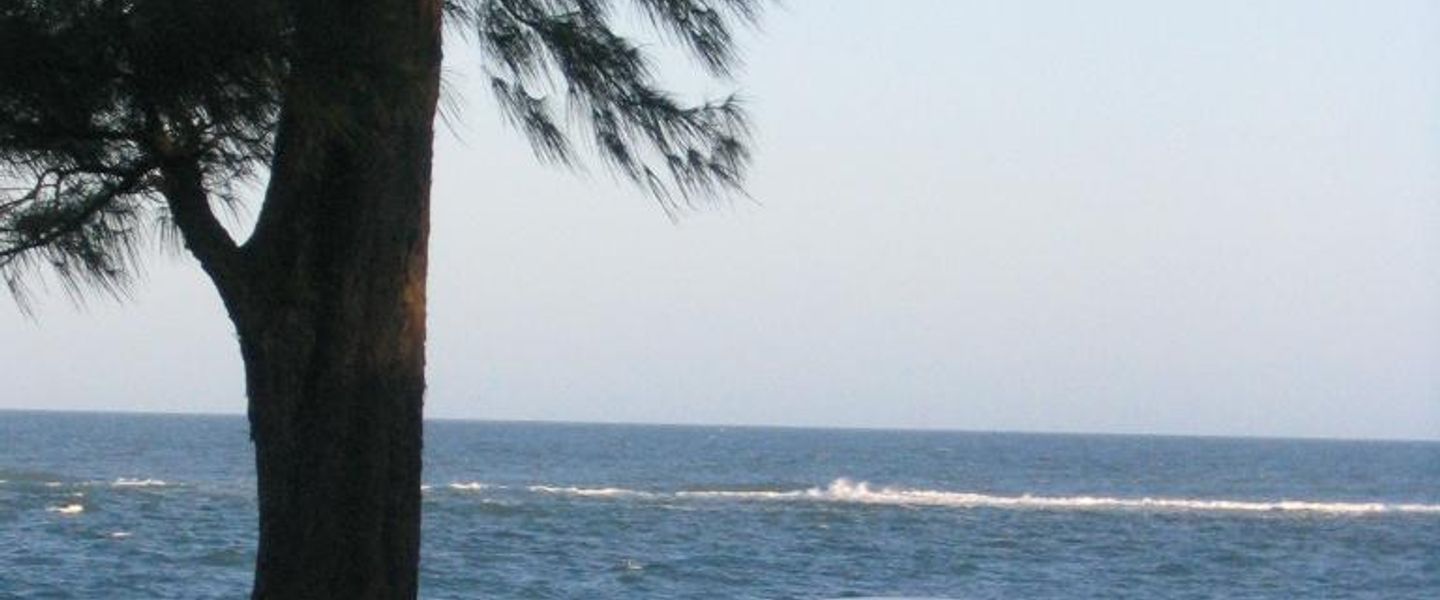


Manakara, Madagascar, pairs Indian Ocean beaches with the Pangalanes Canal, railway heritage, fishing culture and unhurried east-coast exploration.
Between Canal and Ocean
Manakara lies on Madagascar’s south-eastern coast, where the broad Indian Ocean meets the inland waterways of the Pangalanes Canal system. The town is divided between an inland centre and a coastal area, with sandy beaches, coconut palms and low-lying waterways shaping its relaxed character. Unlike Madagascar’s better-known highland destinations, Manakara offers a quieter introduction to the country’s eastern landscapes, where fishing boats, canoe transport and humid vegetation remain central to everyday life.Read more about Manakara
A Town Shaped by the Railway
Coastal Life and Local Culture
When is the best time to visit Manakara?
Best: June–August · 29–30°C| Month | High (°C) | Rainfall (mm) |
|---|---|---|
| January | 32 | 303 |
| February | 32 | 263 |
| March | 32 | 210 |
| April | 32 | 110 |
| May | 31 | 52 |
| June (best) | 30 | 25 |
| July (best) | 29 | 27 |
| August (best) | 30 | 36 |
| September | 30 | 58 |
| October | 31 | 104 |
| November | 32 | 169 |
| December | 32 | 256 |
Getting to and around Manakara
How to get there
Transportation
Best attractions in Manakara
Manakara’s principal attractions are closely tied to its waterways, coast and railway heritage. A boat journey on the Pangalanes Canal reveals a chain of channels, lakeside vegetation, fishing settlements and everyday transport scenes that are quite different from the open ocean. The town’s beach area provides a broad coastal setting for walking and watching local fishing activity, although swimming conditions should be assessed locally. The Fianarantsoa-Côte Est railway station is significant as the eastern terminus of one of Madagascar’s most dramatic rail routes, while the market offers a direct glimpse of regional produce, household commerce and coastal life. The town itself is worth exploring between the canal and shore, where modest streets, small businesses and local transport create a more authentic impression than a concentrated sightseeing district. Manakara is also a practical base for observing the landscapes and communities of Madagascar’s humid south-eastern coast.
-
Tourist attraction
Plage Manakara
Experience the serene beauty of Plage Manakara, a hidden gem on Madagascar's coastline, perfect for relaxation and cultural exploration.
6 min drive · 2.1 km from city centre
-
Tourist attraction
Digue de Manakara
Discover the serene beauty of Digue de Manakara, a picturesque coastal attraction in Madagascar perfect for relaxation and cultural immersion.
8 min drive · 2.7 km from city centre
-
 Park
Abbatoir Manakara
Explore the tranquil beauty of Abbatoir Manakara, a serene park in Manakara, Madagascar, perfect for relaxation and connecting with nature.
14 min walk · 1.1 km from city centre
-
Tourist attraction
village des pêcheurs manakara
Discover the vibrant culture and stunning beauty of the Village des Pêcheurs in Manakara, Madagascar, where tradition meets breathtaking coastal scenery.
9 min drive · 3.1 km from city centre


Best landmarks in Manakara
Manakara’s most meaningful landmarks are connected to transport, water and the town’s coastal setting rather than monumental architecture. The Fianarantsoa-Côte Est railway station marks the eastern end of the historic line that links the Indian Ocean with Madagascar’s central highlands, giving it both practical and symbolic importance. The Pangalanes Canal is a living landmark: its channels, boats and settlements express the role waterways have played in regional movement and trade. The town’s older civic and commercial fabric also retains traces of the colonial period, although Manakara is not defined by a large preserved monument quarter. Along the coast, the beach and fishing areas are important cultural landmarks because they show how the town’s economy and daily life remain tied to the sea. Together, these places chart Manakara’s development as a coastal transport and trading centre.
-
Tourist attraction
Plage Manakara
Experience the enchanting beauty of Plage Manakara, a serene beach destination in Madagascar, perfect for relaxation and cultural immersion.
6 min drive · 2.1 km from city centre
-
Tourist attraction
Digue de Manakara
Explore the breathtaking Digue de Manakara in Madagascar, where serene beaches, stunning views, and vibrant local culture create an unforgettable travel experience.
8 min drive · 2.7 km from city centre
-
Park
Abbatoir Manakara
Discover the natural beauty and tranquility of Abbatoir Manakara, a serene park in Manakara, Madagascar, perfect for relaxation and exploration.
14 min walk · 1.1 km from city centre
-
Tourist attraction
village des pêcheurs manakara
Explore the serene beauty and vibrant culture of Village des Pêcheurs Manakara, a hidden gem along Madagascar's stunning coastline.
9 min drive · 3.1 km from city centre


Explore Manakara on the map
Plan your Manakara trip on one map. See where the top attractions, landmarks, restaurants, bars and hotels are, find what's near where you're staying, and book hotels and experiences in a few clicks.
Best hotels in Manakara
Best restaurants in Manakara
Manakara’s dining scene reflects its coastal position and the produce of south-eastern Madagascar. Fish and seafood are prominent, often prepared simply with rice, vegetables and sauces influenced by local Malagasy cooking. Small restaurants and hotelys, the informal eateries found throughout Madagascar, provide filling dishes such as rice served with meat, fish, beans or greens, while cafés and guesthouses may offer French-influenced meals alongside local fare. Markets are useful for seeing the ingredients that shape everyday cooking, including seasonal fruit, vegetables and locally caught fish. The region’s humid climate supports abundant tropical produce, and meals may include coconut, bananas, litchis or other fruit when in season. Dining is generally informal, and menus can depend on the morning’s market supply, the fishing catch and available electricity rather than a fixed restaurant timetable.
-
Restaurant
La Guinguette
Experience authentic Malagasy cuisine at La Guinguette in Manakara—where every meal is a celebration of flavor and culture.
6 min drive · 2.2 km from city centre
-
Restaurant
Buvette Sharon
Discover authentic Malagasy flavors at Buvette Sharon in Manakara – a culinary delight waiting for you!
11 min walk · 0.9 km from city centre
-
Restaurant
La Maison du Poulet
Discover the flavors of Madagascar at La Maison du Poulet, where every dish tells a story.
9 min walk · 0.7 km from city centre
-
Restaurant
La Gourmandise
Experience authentic Malagasy cuisine in a charming setting at La Gourmandise in Manakara.
12 min walk · 1.0 km from city centre


Best bars in Manakara
Manakara has a modest evening scene rather than a concentrated nightlife district. Small bars, hotel terraces and local cafés provide places to share a THB beer, rum-based drink or soft drink, while music may become part of the atmosphere on busy evenings and at weekends. Entertainment is usually social and local in character, with conversation, recorded music and occasional dancing taking precedence over formal cocktail venues or large nightclubs. The coastal area can be pleasant at sunset, but visitors should return to their accommodation with trusted transport after dark rather than walking isolated stretches of beach. In smaller establishments, service and opening patterns follow local rhythms, so evenings may be quiet outside public holidays or community events.
-
Restaurant
La Guinguette
Discover the culinary treasures of Madagascar at La Guinguette in Manakara, where local flavors and warm hospitality await you.
6 min drive · 2.2 km from city centre
-
Hotel
Hotel H1 Manakara
Discover the charm of Manakara at Hotel H1, where comfort meets local culture in the heart of Madagascar.
18 min walk · 1.5 km from city centre
-
Restaurant
Buvette Sharon
Experience the flavors of Madagascar at Buvette Sharon, a delightful restaurant in the heart of Manakara offering authentic local cuisine and warm hospitality.
11 min walk · 0.9 km from city centre
-
Restaurant
La Gourmandise
Experience the authentic flavors of Madagascar at La Gourmandise, a culinary gem in the heart of Manakara, perfect for every food lover.
12 min walk · 1.0 km from city centre


Best nightclubs in Manakara
Manakara has a modest evening scene rather than a concentrated nightlife district. Small bars, hotel terraces and local cafés provide places to share a THB beer, rum-based drink or soft drink, while music may become part of the atmosphere on busy evenings and at weekends. Entertainment is usually social and local in character, with conversation, recorded music and occasional dancing taking precedence over formal cocktail venues or large nightclubs. The coastal area can be pleasant at sunset, but visitors should return to their accommodation with trusted transport after dark rather than walking isolated stretches of beach. In smaller establishments, service and opening patterns follow local rhythms, so evenings may be quiet outside public holidays or community events.
-
Hotel
Hotel Parthenay Club
Experience the charm of Manakara at Hotel Parthenay Club, your gateway to Madagascar’s coastal beauty and rich cultural heritage.
8 min drive · 2.5 km from city centre
-
Bar
Chez Paola
Experience the vibrant local culture and delightful drinks at Chez Paola, a charming bar in Manakara, Madagascar.
7 min drive · 2.3 km from city centre
-
Bar
Cabana beach Manakara
Experience the vibrant bar scene at Cabana Beach Manakara, where local culture meets stunning beachfront views in a lively atmosphere.
7 min drive · 2.5 km from city centre
-
Bar
Tsara tsaky
Experience the vibrant atmosphere and local flavors at Tsara Tsaky, the must-visit bar in Manakara, Madagascar.
6 min drive · 2.1 km from city centre


Best shops in Manakara
Shopping in Manakara is centred on everyday commerce rather than large retail complexes. The local market is the best place to encounter regional food products, seasonal fruit, vegetables, rice, spices and freshly caught fish, while small shops supply household goods and travel essentials. Informal stalls may offer woven articles, baskets, raffia goods or other locally made items, though selection and availability vary. Visitors should distinguish genuinely local handicrafts from mass-produced souvenirs and should ask before photographing market traders or craft makers. Malagasy textiles, carved objects and small handmade goods can sometimes be found through markets, guesthouses or local contacts, but Manakara is not primarily a specialist shopping destination. The most characteristic purchases are often modest: spices, dried produce, woven items and other goods that reflect the material culture of the south-eastern coast.
-
Train station
Manakara
Experience the vibrant charm of Manakara, a gateway to Madagascar's stunning landscapes and rich culture, perfect for unforgettable travel adventures.
5 min drive · 1.8 km from city centre
-
Restaurant
Chez RIJA
Experience the authentic flavors of Madagascar at Chez RIJA, a boutique restaurant in Manakara offering a delightful culinary journey.
5 min drive · 1.6 km from city centre
-
Pharmacy
Pharmacie Centrale De La Cost Est
Discover Pharmacie Centrale De La Cost Est in Manakara for reliable health services, from medications to personal care products, all in a welcoming atmosphere.
11 min walk · 0.9 km from city centre
-
Cell phone store
Agence Orange Manakara
Stay connected in Manakara at Agence Orange, your reliable source for mobile services and products in the heart of Madagascar's coastal gem.
17 min walk · 1.4 km from city centre


Get your free copy of our complete guide to Manakara, delivered straight to you.
Everything on this page, from attractions and restaurants to essentials and local phrases, in one PDF you can read offline, print or share.
Already have an account? Sign in
Your Manakara guide is ready.
We'll send it to · Not you? Sign out

Getting your guide ready…
We are putting together a fresh copy of the Manakara guide. This can take up to a minute.
This can take a few moments. If your browser asks, choose Allow so the download can start. You'll find the guide in your Downloads folder.
Nothing happened? Download it again
Sorry, the guide is taking longer than usual. Please try again in a minute, or get it by email instead.
Manakara essentials
Currency and Payment
Safety
Emergency Situations
Do's and Don'ts
Local Tips
From Eve
Local phrases worth knowing
You don't need to get them perfect. A few words go a long way, and locals appreciate the effort.
Basics
| English | Local | Say it |
|---|---|---|
| Hello | Salama | [sa-la-ma] |
| Goodbye | Veloma | [ve-lo-ma] |
| Yes | Eny | [en-y] |
| No | Tsia | [tsi-a] |
| Please/You're welcome | Azafady | [a-za-fa-dy] |
| Thank you | Misaotra | [mi-sa-ot-ra] |
| Excuse me/Sorry | Azafady | [a-za-fa-dy] |
| How are you? | Manao ahoana ianao? | [ma-nao a-ho-a-na ia-nao] |
| Fine. And you? | Tsara. Ary ianao? | [tsa-ra a-ry ia-nao] |
| Do you speak English? | Miteny anglisy ve ianao? | [mi-te-ny ang-li-sy ve ia-nao] |
| I don't understand | Tsy mahay | [tsi ma-hai] |
Eating & Drinking
| English | Local | Say it |
|---|---|---|
| I'd like to see the menu, please | Misaotra aho iza ny lisitry ny hao | [mi-sa-ot-ra a-ho i-za ny li-si-tri ny hao] |
| I don't eat meat | Tsy mihinam-bary aho | [tsi mi-hi-nam-ba-ry a-ho] |
| Cheers! | Mazotoa! | [ma-zo-to-a] |
| I would like to pay, please | Misaotra aho hanidy, azafady | [mi-sa-ot-ra a-ho ha-ni-dy a-za-fa-dy] |
Emergencies
| English | Local | Say it |
|---|---|---|
| Help! | Fanampiana! | [fa-nam-pia-na] |
| Go away! | Mandehana! | [man-de-ha-na] |
| Call the Police! | Mangataka ny polisy! | [man-ga-ta-ka ny po-li-sy] |
| Call a doctor! | Mangataka dokotera! | [man-ga-ta-ka do-ko-te-ra] |
| I'm lost | Tsy hitako | [tsi hi-ta-ko] |
| I'm ill | Mijanona aho | [mi-ja-no-na a-ho] |
Shopping
| English | Local | Say it |
|---|---|---|
| I'd like to buy... | Misaotra aho hanoka... | [mi-sa-ot-ra a-ho ha-no-ka] |
| I'm just looking | Mananao fahita tsara ihany | [ma-na-nao fa-hi-ta tsa-ra i-ha-ny] |
| How much is it? | Ohitra ny vola? | [o-hi-tra ny vo-la] |
| That's too expensive | Mahafinaritra be izany | [ma-ha-fi-na-ri-tra be i-za-ny] |
| Can you lower the price? | Afaka mandidy ny vidin'ny zavatra? | [a-fa-ka ma-ni-dy ny vi-din-ny za-va-tra] |
Time & Numbers
| English | Local | Say it |
|---|---|---|
| What time is it? | Inona no ora? | [i-no-na no o-ra] |
| It's one o'clock | Alina iray | [a-li-na i-ray] |
| Half past (10) | Efapolo sy sasany | [e-fa-po-lo sy sa-sa-ny] |
| Morning | Maraina | [ma-rai-na] |
| Afternoon | Antoandro | [an-to-an-dro] |
| Evening | Hariva | [ha-ri-va] |
| Yesterday | Omaly | [o-ma-ly] |
| Today | Anio | [a-ni-o] |
| Tomorrow | Reny | [re-ny] |
| 1 | Iray | [i-ray] |
| 2 | Roa | [ro-a] |
| 3 | Telo | [te-lo] |
| 4 | Efatra | [e-fa-tra] |
| 5 | Dimy | [di-my] |
| 6 | Enina | [e-ni-na] |
| 7 | Fito | [fi-to] |
| 8 | Valo | [va-lo] |
| 9 | Sivy | [si-vy] |
| 10 | Folo | [fo-lo] |
Transport & Directions
| English | Local | Say it |
|---|---|---|
| Where's a/the...? | Aiza ny... | [ai-za ny] |
| What's the address? | Inona ny adiresy? | [i-no-na ny a-di-re-sy] |
| Can you show me (on the map)? | Afaka manaraka ahy (amin'ny sarita)? | [a-fa-ka ma-na-ra-ka a-hy a-mi-n-ny sa-ri-ta] |
| When's the next (bus)? | Aiza no farany (bus)? | [ai-za no fa-ra-ny bus] |
| A ticket (to ....) | Fahazoan-dalana (ho ...) | [fa-ha-zoan-da-la-na ho] |
History of Manakara
Coastal Communities and Trade
The coast around Manakara has long been inhabited by Malagasy communities whose livelihoods were connected to fishing, farming, waterways and exchange along the south-eastern shore. The wider region is associated particularly with Antemoro cultural traditions, while neighbouring communities have also shaped the town’s language, commerce and social life. Before modern roads and railways, waterways and coastal routes were essential for moving people and goods. The lagoons and channels later known collectively as the Pangalanes Canal system provided a natural corridor between settlements, linking the coast with inland agricultural areas and helping establish the economic importance of Manakara.
The Colonial Coastal Settlement
Manakara developed further during the period of French colonial rule, when administrative links, export commerce and transport infrastructure reshaped the south-eastern coast. The town’s position beside navigable waterways and the ocean made it useful as a regional centre, although its growth remained closely tied to local agriculture, fishing and trade rather than heavy industry. French colonial influence survives most visibly in the town’s planning and older civic fabric, but Manakara’s identity has always remained predominantly Malagasy, formed by coastal communities and the region’s established commercial and cultural networks.
The Fianarantsoa-Côte Est Railway
The Fianarantsoa-Côte Est railway was constructed during the French colonial period to connect the highland city of Fianarantsoa with the eastern coast. Completed in the 1930s, the line descends through difficult terrain before reaching Manakara, crossing steep valleys, forested slopes and numerous bridges. Its purpose was commercial and administrative, but the railway also created a lasting relationship between the highlands and the coast. Today, the line is an important part of Manakara’s heritage and remains one of the clearest reminders of the infrastructure that connected formerly isolated regions.
Independence and Regional Life
Madagascar became independent from France in 1960, and Manakara continued as an important local centre for the south-eastern coast. Its economy remained connected to fishing, farming, small-scale trade and transport, while the nearby railway and waterways retained practical as well as historical importance. The town’s streets and markets reflect the interaction of coastal livelihoods with goods arriving from the interior. Rather than undergoing the scale of urban transformation seen in Antananarivo or Toamasina, Manakara preserved the feel of a regional town whose fortunes are closely linked to its surrounding communities.
Manakara in Contemporary Madagascar
In contemporary Madagascar, Manakara serves as a regional administrative and commercial centre and as a gateway to the Pangalanes Canal, the coast and the Fianarantsoa railway. Its visitor profile remains relatively small, which allows ordinary local life to remain central to the travel experience. The town’s heritage is therefore not concentrated in a single monumental district but is visible in the railway, waterways, fishing practices, markets and patterns of settlement. These elements together express the continuing relationship between Manakara, the Indian Ocean and the inland landscapes of south-eastern Madagascar.
Manakara in Photos
Browse through our photo collection highlighting the charm and character of the destination.
Cities near Manakara
The closest cities to Manakara, if you have time for more than one stop.
-

-
-

-

-


Swipe for more cities
Explore more

Explore more of Madagascar
Discover Madagascar: A unique island paradise with unparalleled wildlife, breathtaking landscapes, and a rich cultural heritage.
Explore Madagascar