

Weld Quay (George Town) Travel Guide - Free
Explore Weld Quay in George Town with Evendo's free guide. Find the best shops, historic streets, restaurants, and gems on web or mobile.


Weld Quay in George Town, Penang, combines clan jetties, ferry views, maritime history, waterfront walks and easy access to UNESCO heritage streets.
A Maritime Edge to George Town
Weld Quay follows the eastern waterfront of George Town, where the historic city meets the Penang Strait. Its character is shaped less by grand boulevards than by working transport links, harbour views, ferry movement and the timber walkways of the Clan Jetties. The shoreline faces Butterworth across the water, while the dense streets of the UNESCO-listed historic core begin immediately inland. This makes Weld Quay a useful threshold between George Town’s mercantile past and its present-day visitor life.Read more about Weld Quay
Clan Jetties and Coastal Communities
Markets, Ferries and Heritage Streets
Best attractions in Weld Quay
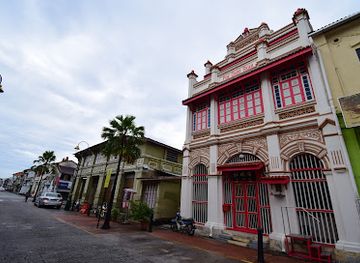
Weld Quay’s central attractions are concentrated along its meeting point with the Penang Strait. The Clan Jetties form the area’s most characteristic sight, with narrow timber piers, houses raised over the water and small shrines reflecting the history of Chinese waterfront communities. Chew Jetty is the most familiar entrance for visitors, while the neighbouring jetties offer a broader understanding of the settlement pattern when access allows. The ferry terminal provides a contrasting view of Penang’s continuing connection with the mainland, and the waterfront itself offers changing perspectives towards Butterworth, ships and harbour traffic. Inland, Weld Quay opens directly into George Town’s historic streets, making it easy to combine the jetties with shophouse architecture, temples and small museums nearby. The experience is primarily one of close observation: domestic spaces, working transport facilities and maritime views rather than a collection of formal attractions.
-
Tourist attraction
Penang Street Art
Explore the captivating street art of Penang, where vibrant murals and sculptures tell the rich stories of Georgetown's culture and history.
7 min walk · 0.6 km from neighbourhood centre
-
Tourist attraction
Penang 3D Trick Art Museum
Discover a world of optical illusions and interactive art at the Penang 3D Trick Art Museum, perfect for all ages and a unique experience in George Town.
2 min walk · 0.1 km from neighbourhood centre
-
Tourist attraction
Clan Jetties of Penang
Experience the rich cultural heritage of the Chinese immigrant community at the iconic Clan Jetties of Penang, a living testament to history and tradition.
9 min walk · 0.7 km from neighbourhood centre
-
 Tourist attraction
Leong San Tong Khoo Kongsi
Explore the majestic Leong San Tong Khoo Kongsi, an architectural marvel and cultural gem in George Town, Penang, showcasing the rich heritage of the Khoo clan.
8 min walk · 0.7 km from neighbourhood centre


Best landmarks in Weld Quay
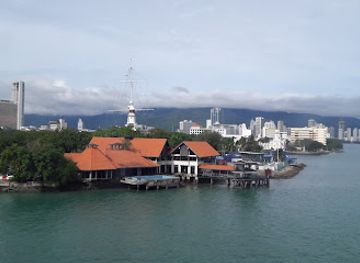
The Penang ferry terminal is Weld Quay’s clearest transport landmark, representing the historic and continuing relationship between George Town and the mainland across the Penang Strait. Alongside it, the Clan Jetties are significant cultural landmarks rather than single monumental buildings: their timber piers, houses, shrines and waterborne layout preserve a distinctive form of Chinese settlement associated with Penang’s port history. Chew Jetty is the most recognisable entrance, while the adjoining jetties convey the diversity of the wider waterfront community. The quay’s open views towards Butterworth and its working harbour infrastructure are also part of its identity, contrasting with the masonry shophouses immediately inland. Together these places show how transport, migration, commerce and domestic life occupied the same narrow edge of George Town.
-
Tourist attraction
Padang Kota Lama (Esplanade)
Explore the historic Padang Kota Lama (Esplanade) in George Town, Penang, where culture, cuisine, and stunning waterfront views await.
4 min walk · 0.3 km from neighbourhood centre
-
Tourist attraction
Georgetown UNESCO Historic Site
Explore the vibrant streets and rich multicultural heritage of Georgetown, a UNESCO World Heritage Site in Penang, Malaysia.
6 min walk · 0.4 km from neighbourhood centre
-
Tourist attraction
Chew Jetty
Discover Chew Jetty, a UNESCO World Heritage site in Penang, where traditional stilt houses and rich cultural heritage await your exploration.
9 min walk · 0.7 km from neighbourhood centre
-
Historical landmark
Clan Jetties of Penang
Explore the historic Clan Jetties of Penang, a unique cultural landmark showcasing traditional Chinese stilt houses and vibrant community life.
9 min walk · 0.7 km from neighbourhood centre



Explore Weld Quay on the map
A handpicked selection of must-see spots in Weld Quay, mapped for you.
Best hotels in Weld Quay
Best restaurants in Weld Quay
Weld Quay itself has a more functional food scene than a concentrated restaurant quarter, with casual stalls and simple eateries around the transport hub and the approaches to the Clan Jetties. The area is a useful place to begin exploring Penang’s hawker culture, but the fuller range of Chinese, Malay, Indian and Nyonya cooking lies in the surrounding George Town heritage streets, only a short walk inland. Visitors can pair a jetty visit with coffee, noodles, rice dishes, snacks or seafood-oriented meals in nearby commercial lanes, where opening patterns and individual businesses change over time. Small food outlets on or beside residential jetties should be approached as local businesses rather than staged attractions, and visitors should keep walkways clear. Weld Quay’s culinary importance is therefore its position between harbour traffic, community settlements and the dense food traditions of central George Town.
-
Cafe
Reggae Cafe Penang
Experience the vibrant flavors and rhythms at Reggae Cafe Penang – where Italian cuisine meets local charm in George Town.
7 min walk · 0.6 km from neighbourhood centre
-
Food court
The Jetty Food Court
Explore a world of flavors at The Jetty Food Court in George Town - where every bite tells a story.
8 min walk · 0.7 km from neighbourhood centre
-
Restaurant
Loong Fong Cafe 龍鳳茶室
Discover the flavors of Malaysia at Loong Fong Cafe in George Town – where tradition meets taste.
10 min walk · 0.8 km from neighbourhood centre
-
Pizza
The Loft - Love Lane
Discover the vibrant atmosphere and delicious Italian cuisine at The Loft - Love Lane in Georgetown, where every meal is a celebration.
7 min walk · 0.5 km from neighbourhood centre


Best bars in Weld Quay
Weld Quay is not one of George Town’s principal nightlife districts, and the immediate waterfront becomes quieter once transport activity declines. Evening interest centres on waterfront views, casual food and the atmosphere around the Clan Jetties rather than on a dense concentration of clubs. Visitors seeking bars, live music or late-night socialising can walk inland towards the adjoining heritage core, where shophouses and small hospitality venues create a more varied evening scene; those establishments should be understood as part of nearby George Town rather than Weld Quay proper. The jetties remain residential, so noise, drinking on walkways and intrusive photography are inappropriate after dark. A short evening stroll can be atmospheric, but the area is best treated as a working waterfront with limited dedicated nightlife.
-
Pub
The Pokok - All Day Bar
Experience the vibrant nightlife at The Pokok - All Day Bar in George Town, where refreshing drinks and a lively atmosphere await you.
8 min walk · 0.7 km from neighbourhood centre
-
Bar
Kara Kara
Discover Kara Kara in George Town, a vibrant bar and café offering eclectic drinks, lively atmosphere, and unforgettable nightlife experiences.
4 min walk · 0.4 km from neighbourhood centre
-
Bar
The Canteen at Chinahouse
Experience the vibrant atmosphere and diverse drink selection at The Canteen at Chinahouse, a must-visit bar in Georgetown, Penang.
7 min walk · 0.6 km from neighbourhood centre
-
Bar
Beso Rosado
Experience the vibrant nightlife of George Town at Beso Rosado, renowned for its unique cocktails and lively atmosphere perfect for every traveler.
2 min walk · 0.2 km from neighbourhood centre


Best nightclubs in Weld Quay
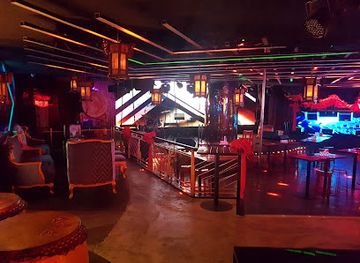
Weld Quay is not one of George Town’s principal nightlife districts, and the immediate waterfront becomes quieter once transport activity declines. Evening interest centres on waterfront views, casual food and the atmosphere around the Clan Jetties rather than on a dense concentration of clubs. Visitors seeking bars, live music or late-night socialising can walk inland towards the adjoining heritage core, where shophouses and small hospitality venues create a more varied evening scene; those establishments should be understood as part of nearby George Town rather than Weld Quay proper. The jetties remain residential, so noise, drinking on walkways and intrusive photography are inappropriate after dark. A short evening stroll can be atmospheric, but the area is best treated as a working waterfront with limited dedicated nightlife.
-
Disco club
Over and Above
Experience the vibrant nightlife of George Town at Over and Above, a disco club where unforgettable memories are made every night.
4 min walk · 0.3 km from neighbourhood centre
-
Disco club
PENDORA CLUB | 潘多拉俱乐部
Dive into the pulsating nightlife of Pendora Club, a premier disco destination in George Town, Penang, offering electrifying music and vibrant energy.
10 min walk · 0.8 km from neighbourhood centre
-
Night club
NiER LAB
Experience the electrifying nightlife at NiER LAB in George Town, where trendy cocktails and top DJs create an unforgettable atmosphere.
10 min walk · 0.8 km from neighbourhood centre
-
Night club
MIB Club Penang
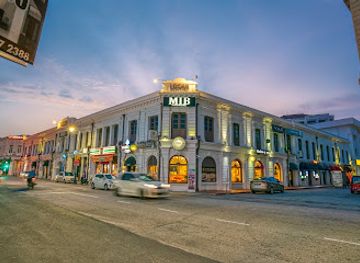
Discover the electrifying nightlife at MIB Club Penang, where vibrant beats and unforgettable moments await every night.
2 min walk · 0.2 km from neighbourhood centre


Best shops in Weld Quay
Shopping on Weld Quay is modest and practical, centred on small convenience outlets, casual stalls and businesses serving transport users and nearby residents rather than on a dedicated retail street. The Clan Jetties may have small visitor-facing stalls, but their primary identity is residential and visitors should not expect a conventional craft market. For a wider choice of food products, handicrafts, books, clothing and independent shops, walk inland to the surrounding heritage streets and traditional market areas of George Town. This proximity is part of Weld Quay’s value: a visitor can move from a maritime community to dense shophouse commerce within a short distance. Souvenirs associated with Penang are available nearby, but respectful shopping means supporting genuine local businesses without treating household spaces or religious sites as retail displays.
-
Souvenir store
TIMURA
Explore TIMURA, a vibrant souvenir store in George Town, where local craftsmanship meets cultural treasures in every corner.
7 min walk · 0.6 km from neighbourhood centre
-
Souvenir store
Shop Howard
Discover the essence of Penang's artistry at Shop Howard, where unique souvenirs and local craftsmanship come together in a vibrant shopping experience.
8 min walk · 0.6 km from neighbourhood centre
-
Souvenir store
14 Living Story
Explore 14 Living Story in George Town for unique souvenirs and local crafts that capture the essence of Penang’s rich cultural heritage.
7 min walk · 0.6 km from neighbourhood centre
-
Souvenir store
Chew Jetty Heritage
Discover the charm of Chew Jetty Heritage, where local artistry meets unique souvenirs in the heart of George Town, Penang.
8 min walk · 0.7 km from neighbourhood centre


Weld Quay essentials
Getting There
Getting Around
Safety
Emergency Situations
Do's and Don'ts
Local Tips

From Eve
Local phrases worth knowing
You don't need to get them perfect. A few words go a long way, and locals appreciate the effort.
Basics
| English | Local | Say it |
|---|---|---|
| Hello | Selamat sejahtera | [seh-lah-maht say-jah-ter-ah] |
| Goodbye | Selamat tinggal | [seh-lah-maht ting-gahl] |
| Yes | Ya | [yah] |
| No | Tidak | [tee-dahk] |
| Please/You're welcome | Sila | [see-lah] |
| Thank you | Terima kasih | [teh-ree-mah kah-seh] |
| Excuse me/Sorry | Maaf | [mah-ahf] |
| How are you? | Apa khabar? | [ah-pah kah-bahr] |
| Fine. And you? | Baik. Dan awak? | [bah-ek. dahn ah-wahk] |
| Do you speak English? | Boleh cakap Bahasa Inggeris? | [boh-leh chah-kahp bah-hah-sah eeng-geh-riss] |
| I don't understand | Saya tidak faham | [sah-yah tee-dahk fah-hahm] |
Eating & Drinking
| English | Local | Say it |
|---|---|---|
| I'd like to see the menu, please | Boleh saya lihat menu, sila? | [boh-leh sah-yah lee-haht meh-noo, see-lah] |
| I don't eat meat | Saya tidak makan daging | [sah-yah tee-dahk mah-kahn dah-yihng] |
| Cheers! | Sihat! | [see-haht] |
| I would like to pay, please | Boleh saya bayar, sila? | [boh-leh sah-yah bah-yahr, see-lah] |
Emergencies
| English | Local | Say it |
|---|---|---|
| Help! | Tolong! | [toh-lohng] |
| Go away! | Pergi jauh-jauh! | [pehr-gee jah-oo jah-oo] |
| Call the Police! | Panggil polis! | [pahng-geel poh-lees] |
| Call a doctor! | Panggil doktor! | [pahng-geel dohk-tohr] |
| I'm lost | Saya sesat | [sah-yah suh-saht] |
| I'm ill | Saya sakit | [sah-yah sah-keet] |
Shopping
| English | Local | Say it |
|---|---|---|
| I'd like to buy... | Saya ingin membeli... | [sah-yah een-geen muhm-buh-lee] |
| I'm just looking | Saya hanya tengok-tengok | [sah-yah hahn-yah tehn-gohk-tehn-gohk] |
| How much is it? | Berapa harganya? | [buh-rah-pah hahr-gahn-yah] |
| That's too expensive | Itu terlalu mahal | [ee-too teh-rah-lah mah-hahl] |
| Can you lower the price? | Boleh kurangkan harga? | [boh-leh koor-ahn-gahn hahr-gah] |
Time & Numbers
| English | Local | Say it |
|---|---|---|
| What time is it? | Pukul berapa sekarang? | [poo-kool buh-rah-pah suh-kah-rahn] |
| It's one o'clock | Pukul satu | [poo-kool sah-too] |
| Half past (10) | Pukul setengah sebelas | [poo-kool suh-tuhng-gah suh-buh-lahs] |
| Morning | Pagi | [pah-gee] |
| Afternoon | Petang | [puh-tahng] |
| Evening | Malam | [mah-lahm] |
| Yesterday | Semalam | [suh-mah-lahm] |
| Today | Hari ini | [hah-ree ee-nee] |
| Tomorrow | Esok | [eh-sohk] |
| 1 | Satu | [sah-too] |
| 2 | Dua | [doo-ah] |
| 3 | Tiga | [tee-gah] |
| 4 | Empat | [ehm-paht] |
| 5 | Lima | [lee-mah] |
| 6 | Enam | [eh-nahm] |
| 7 | Tujuh | [too-joo] |
| 8 | Lapan | [lah-pahn] |
| 9 | Sembilan | [sehm-bee-lahn] |
| 10 | Sepuluh | [suh-poo-looh] |
Transport & Directions
| English | Local | Say it |
|---|---|---|
| Where's a/the...? | Di mana... | [dee mah-nah] |
| What's the address? | Alamatnya di mana? | [ah-lah-mat-nyah dee mah-nah] |
| Can you show me (on the map)? | Boleh tunjukkan saya (pada peta)? | [boh-leh toon-jook-kahn sah-yah (pah-dah peh-tah)] |
| When's the next (bus)? | Bila bas seterusnya? | [bee-lah bahs suh-tuh-roos-nyah] |
| A ticket (to ....) | Satu tiket (ke ....) | [sah-too tee-keht (keh)] |
History of Weld Quay
A Quay Named for Colonial Administration
Weld Quay developed along George Town’s eastern waterfront during the period when Penang was part of the British-ruled Straits Settlements. Its name commemorates Frederick Weld, who served as Governor of the Straits Settlements in the late nineteenth century. The quay formed part of the port landscape that supported George Town’s commercial growth, linking warehouses, landing places, ferry movements and inland streets. Reclamation and the construction of more formal waterfront infrastructure gradually replaced sections of the original shoreline, creating a transport and trading edge rather than a purely residential coast. Its position also reinforced George Town’s role as a meeting point for maritime commerce connecting Penang with the Malay Peninsula, the wider archipelago and international shipping routes.
The Growth of the Clan Jetties
The timber communities extending from the waterfront took shape as Chinese migrants and their descendants established homes, shrines and small-scale working settlements over the water. The jetties were associated with different surname or clan groups, whose residents shared origins, mutual support networks and links to waterfront employment. Their development reflected the flexible social geography of port cities, where newcomers often lived close to the work and transport opportunities offered by the harbour. Wooden houses, plank walkways and communal religious spaces created an environment distinct from the shophouse streets inland. Although the settlements changed over time through rebuilding, family movement and modern regulation, the Clan Jetties preserve an important local expression of migration and community formation.
Ferries, Trade and the Modern Waterfront
For much of the modern era, Weld Quay remained one of George Town’s most important passenger and transport connections. Ferry services linked the island with Butterworth on the mainland, while the surrounding port handled the movement of people and goods that sustained Penang’s commercial life. The waterfront’s importance was practical as well as symbolic: travellers arriving by sea encountered George Town from the direction through which so many commodities, workers and communities had entered the city. Changes in port operations, road transport and urban planning later altered the shoreline’s working function, but ferry infrastructure and the Clan Jetties continue to make the maritime past legible.
Heritage Recognition and Changing Use
The designation of George Town as part of a UNESCO World Heritage Site in 2008 strengthened attention to Weld Quay’s historic waterfront and the Clan Jetties’ cultural value. Conservation brought more visitors, photography and heritage interpretation, while residents continued to use the jetties as homes rather than simply as attractions. The area therefore illustrates the tensions common to historic port districts: ageing structures require care, public access must coexist with domestic privacy, and tourism changes how familiar places are understood. Today Weld Quay connects a living waterfront, a working transport corridor and the adjacent heritage core, with its identity shaped by both preservation and ongoing urban change.
Weld Quay in Photos
Browse through our photo collection highlighting the charm and character of the destination.
Neighbourhoods near Weld Quay
The closest neighbourhoods to Weld Quay, if you have time for more than one stop.
-

-

-

-

-


Swipe for more neighbourhoods
Explore more

Explore more of George Town
George Town, Malaysia, blends UNESCO-listed streets, Peranakan heritage, hawker flavours, historic temples and street art on Penang Island today.
Explore George Town