

Free Penang Island Travel Guide & Mobile App
Explore Penang Island with free travel guides. Discover regional history, expert tips, proposed trips, and audio guides on web or mobile app.


Explore Penang Island for George Town heritage, celebrated hawker food, forested hills, tropical beaches and rural Balik Pulau landscapes.
Read more about Penang Island
When is the best time to visit Penang Island?
Best: January–March · 30–31°C| Month | High (°C) | Rainfall (mm) |
|---|---|---|
| January (best) | 30 | 105 |
| February (best) | 31 | 90 |
| March (best) | 31 | 140 |
| April | 32 | 180 |
| May | 32 | 210 |
| June | 31 | 190 |
| July | 31 | 190 |
| August | 31 | 200 |
| September | 31 | 230 |
| October | 31 | 320 |
| November | 31 | 300 |
| December | 30 | 180 |
Getting to and around Penang Island
How to get there
Transportation
Top city travel guides in Penang Island
The cities of Penang Island, and the easiest places to base yourself.
-

-


Swipe for more cities
Best attractions in Penang Island
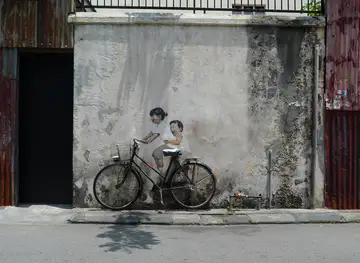
Penang Island’s attractions range from the conserved streets of George Town to forested hills, beaches and rural landscapes. The UNESCO-listed heritage area is best explored on foot, taking in shophouse streets, clan houses, religious buildings, small museums and waterfront communities such as the clan jetties. Air Itam combines everyday neighbourhood life with the large Buddhist complex of Kek Lok Si and access to the wooded slopes of Penang Hill. Around the northern coast, Batu Ferringhi offers a resort-oriented base, while nearby Teluk Bahang provides access to the Penang National Park, coastal recreation and forest trails. The park is notable for its varied habitats, including rainforest, beaches and mangrove areas. On the island’s western side, Balik Pulau presents a different experience, with villages, agricultural land, orchards and winding roads through the hills. Visitors interested in ecology, architecture, food or local history can build varied days without leaving the island, although distances and traffic make separate itineraries more practical than attempting everything at once.
-
Tourist attraction
Penang Little India
Explore the energetic streets of Penang's Little India, where vibrant culture meets delicious cuisine and unique shopping experiences.
-
Tourist attraction
Penang Hill
Explore the breathtaking views, rich history, and vibrant nature at Penang Hill, one of Malaysia's top tourist attractions.
-
Tourist attraction
Padang Kota Lama (Esplanade)
Explore the historic Padang Kota Lama Esplanade in George Town, where stunning views, rich culture, and mouthwatering cuisine await every traveler.
-
Tourist attraction
Georgetown UNESCO Historic Site
Explore the rich cultural heritage and stunning colonial architecture of Georgetown, a UNESCO World Heritage Site in Malaysia.


Best landmarks in Penang Island
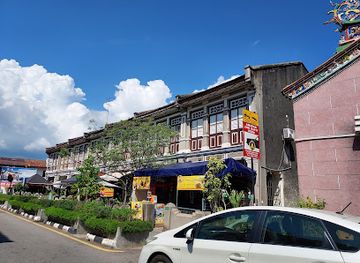
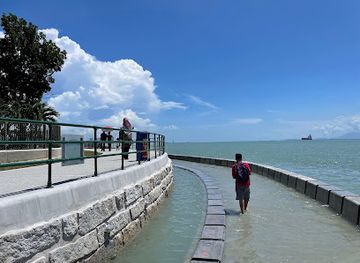
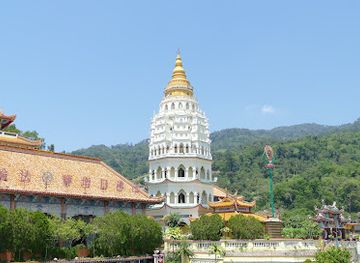
Fort Cornwallis stands beside George Town’s north-eastern waterfront and represents the island’s British colonial foundation, although the present structure reflects later phases of construction and adaptation. Nearby, the Esplanade and the colonial civic quarter form one of the city’s most recognisable urban sequences. The Kapitan Keling Mosque, St George’s Church and Sri Mahamariamman Temple illustrate the religious and architectural diversity of the historic centre, while Khoo Kongsi is a particularly elaborate expression of Chinese clan organisation and patronage. The clan jetties along the waterfront are living communities whose timber houses and projecting walkways preserve a distinctive settlement pattern shaped by maritime labour and kinship. Inland, Kek Lok Si’s temple complex rises above Air Itam, and Penang Hill forms a prominent natural landmark above the city. At the island’s western end, the forested headlands and beaches of Penang National Park provide a contrasting geographical marker, showing how quickly the dense historic city gives way to tropical terrain.
-
Tourist attraction
Penang Little India
Discover the vibrant culture, delicious cuisine, and colorful heritage of Penang Little India, a must-visit tourist attraction in George Town, Malaysia.
-
Tourist attraction
Padang Kota Lama (Esplanade)
Explore Padang Kota Lama (Esplanade) in George Town, Penang – a vibrant waterfront attraction with rich history and delectable local cuisine.
-
Tourist attraction
Georgetown UNESCO Historic Site
Discover the cultural tapestry of Georgetown, a UNESCO World Heritage Site, where history, architecture, and diversity come to life in every corner.
-
Buddhist temple
Kek Lok Si Temple
Discover the enchanting Kek Lok Si Temple in Penang, Malaysia – a breathtaking blend of spirituality, culture, and stunning architecture.


Explore Penang Island on the map
Plan your trip on one map. See where the top cities, national parks and sights are, and book hotels and experiences in a few clicks.
Best hotels in Penang Island
Best restaurants in Penang Island
Penang’s dining culture is one of its defining attractions, with eating woven into daily life at hawker centres, coffee shops, markets, cafés and restaurants. George Town is particularly associated with char kway teow, assam laksa, Hokkien mee, chee cheong fun, oyster omelettes, rojak and a wide variety of kuih. Nasi kandar reflects the island’s Indian Muslim culinary heritage, while Malay and Peranakan traditions add further depth through spiced dishes, curries and sweets. Food identities overlap across communities, so dishes should not be treated as belonging to only one neighbourhood. Seafood is available in coastal areas, while Balik Pulau adds a rural dimension through fruit, local snacks and Malay cooking. Busy stalls are often popular with residents, but visitors should expect shared seating, self-service arrangements and menus that may not be familiar. Vegetarian choices are widely available, though diners should clarify ingredients where religious or dietary requirements matter.
-
Restaurant
ChinaHouse
Experience culinary artistry at ChinaHouse in George Town – where flavor meets creativity in an enchanting atmosphere.
-
Restaurant
Teksen Restaurant
Experience authentic Chinese flavors at Teksen Restaurant in George Town - a culinary gem known for its vibrant atmosphere and delicious dishes.
-
Hawker center
Chulia Street Hawker Food
Penang's electrifying Chulia Street hawker haven: smoky char kway teow, wonton mee queues, lok lok skewers, and diverse street eats under buzzing night lights—authentic, affordable flavor explosion.
-
Food court
Northam Beach Cafe
Experience fresh seafood and local flavors at Northam Beach Cafe, a coastal gem in George Town perfect for relaxation and great food.


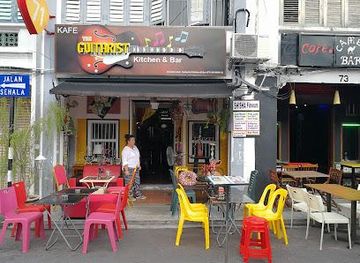

Best bars in Penang Island
Penang Island’s evening life is concentrated in George Town, where restored shophouses and streets around the heritage core contain traditional kopitiams, pubs, cocktail bars, wine bars and small live-music venues. Lebuh Chulia and adjoining areas have long been associated with casual evening drinking and backpacker-oriented nightlife, while other parts of the old city offer a quieter mix of restaurants and heritage settings. Batu Ferringhi has resort bars and seasonal evening activity, but it is not comparable to a major metropolitan club district. Across the island, many evenings centre on food courts, cafés, night markets and late meals rather than nightclubs. Dress is generally relaxed but neat, and venues may observe local licensing arrangements or change their opening patterns. Visitors should plan their return transport in advance when staying outside central George Town, especially after spending the evening in rural or coastal areas.
-
Bar
BoraBora @ Ferringhi
Experience the vibrant atmosphere and delicious cuisine at BoraBora @ Ferringhi, a tropical bar and restaurant on Penang's stunning coastline.
-
Pub
The Pokok - All Day Bar
Discover the lively vibe and delightful drinks at The Pokok - All Day Bar in George Town, a perfect retreat for tourists seeking local culture.
-
Bar
天下第一客棧 Magazine 63
Discover a cozy bar in George Town, 天下第一客棧 Magazine 63, offering unique cocktails and live music for an unforgettable night out in Penang.
-
Bar
Manchu Bar 满族酒吧
Discover the energetic nightlife of Manchu Bar in George Town, where unique cocktails and a vibrant atmosphere await your arrival.


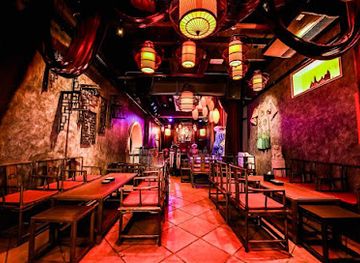
Best nightclubs in Penang Island
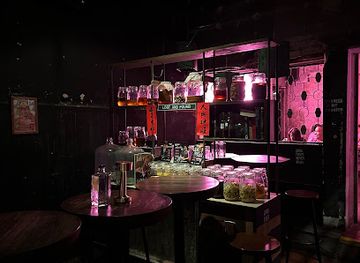
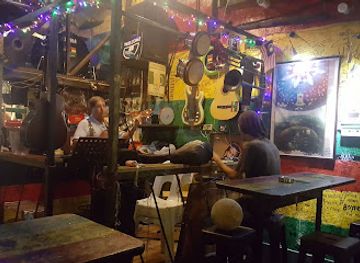
Penang Island’s evening life is concentrated in George Town, where restored shophouses and streets around the heritage core contain traditional kopitiams, pubs, cocktail bars, wine bars and small live-music venues. Lebuh Chulia and adjoining areas have long been associated with casual evening drinking and backpacker-oriented nightlife, while other parts of the old city offer a quieter mix of restaurants and heritage settings. Batu Ferringhi has resort bars and seasonal evening activity, but it is not comparable to a major metropolitan club district. Across the island, many evenings centre on food courts, cafés, night markets and late meals rather than nightclubs. Dress is generally relaxed but neat, and venues may observe local licensing arrangements or change their opening patterns. Visitors should plan their return transport in advance when staying outside central George Town, especially after spending the evening in rural or coastal areas.
-
Disco club
Peace Club Penang
Discover the ultimate nightlife experience at Peace Club Penang, where music, dancing, and vibrant energy come together in the heart of George Town.
-
Cocktail bar
Good Friends Club
Experience the vibrant nightlife of George Town at Good Friends Club, where innovative cocktails and a lively atmosphere await every visitor.
-
Bar
The Original Reggae Club
Discover the vibrant nightlife at The Original Reggae Club in Georgetown, where reggae beats and lively atmosphere create unforgettable experiences.
-
Night club
Midnight Black
Discover the electrifying nightlife at Midnight Black, George Town's premier nightclub, where unforgettable memories and vibrant energy await.


Best shops in Penang Island
Shopping on Penang Island ranges from the independent businesses and restored shophouses of George Town to neighbourhood markets, modern malls and roadside stalls. The heritage area is the best place to browse for old books, prints, design goods, handicrafts, textiles, jewellery and locally produced food items, although the character of individual streets changes as conservation and commercial activity develop. Little India is associated with Indian clothing, music, sweets, spices and religious goods, while markets and food shops provide opportunities to buy snacks, sauces, coffee and tea for gifts. Craft and gallery shopping is strongest around the historic centre, whereas Batu Ferringhi has a more tourist-oriented evening market atmosphere. Balik Pulau is better suited to regional produce and rural food products than extensive retail browsing. Bargaining may be appropriate in some informal markets, but prices in fixed shops and established stores are normally non-negotiable.
-
Shopping mall
Queensbay Mall
Discover a shopping and entertainment haven at Queensbay Mall, the largest shopping complex in Penang, Malaysia, offering endless retail and dining choices.
-
Shopping mall
Gurney Plaza
Discover Gurney Plaza, George Town's premier shopping mall, where shopping, dining, and entertainment come together for an unforgettable experience.
-
Shopping mall
Design Village Outlet Mall (DVOM)
Explore Design Village Outlet Mall in Penang for a unique shopping experience with unbeatable deals on top brands and delightful dining options.
-
Shopping mall
Gurney Paragon Mall
Experience the vibrant blend of shopping, dining, and entertainment at Gurney Paragon Mall in Penang, a must-visit destination for every tourist.



Get your free copy of our complete guide to Penang Island, delivered straight to you.
Everything on this page, from attractions and restaurants to essentials and local phrases, in one PDF you can read offline, print or share.
Already have an account? Sign in
Your Penang Island guide is ready.
We'll send it to · Not you? Sign out

Getting your guide ready…
We are putting together a fresh copy of the Penang Island guide. This can take up to a minute.
This can take a few moments. If your browser asks, choose Allow so the download can start. You'll find the guide in your Downloads folder.
Nothing happened? Download it again
Sorry, the guide is taking longer than usual. Please try again in a minute, or get it by email instead.
Penang Island essentials
Currency and Payment
Safety
Emergency Situations
Do's and Don'ts
Local Tips
From Eve
Local phrases worth knowing
You don't need to get them perfect. A few words go a long way, and locals appreciate the effort.
Basics
| English | Local | Say it |
|---|---|---|
| Hello | Halo | [ha-lo] |
| Goodbye | Selamat tinggal | [suh-lah-mat ting-gahl] |
| Yes | Ya | [yah] |
| No | Tidak | [tee-dahk] |
| Please/You're welcome | Sila | [see-lah] |
| Thank you | Terima kasih | [teh-ree-mah kah-see] |
| Excuse me/Sorry | Maaf | [mah-ahf] |
| How are you? | Apa khabar? | [ah-pah kah-bar] |
| Fine. And you? | Baik. Dan kamu? | [bye-k. dahn kah-moo] |
| Do you speak English? | Adakah kamu boleh bercakap Inggeris? | [ah-dah-kah kah-moo boh-leh ber-chah-kap in-guh-ris] |
| I don't understand | Saya tidak faham | [sah-yah tee-dahk fah-ham] |
Eating & Drinking
| English | Local | Say it |
|---|---|---|
| I'd like to see the menu, please | Saya nak tengok menu, sila | [sah-yah nak teng-ok meh-nu, see-lah] |
| I don't eat meat | Saya tidak makan daging | [sah-yah tee-dahk mah-kahn dah-gihng] |
| Cheers! | Bersulang! | [ber-soo-lahng] |
| I would like to pay, please | Saya nak bayar, sila | [sah-yah nak bah-yar, see-lah] |
Emergencies
| English | Local | Say it |
|---|---|---|
| Help! | Tolong! | [toh-long] |
| Go away! | Pergi jauh! | [per-gee jah-oo] |
| Call the Police! | Panggil polis! | [pahn-gil poh-lis] |
| Call a doctor! | Panggil doktor! | [pahn-gil dok-tor] |
| I'm lost | Saya sesat | [sah-yah seh-sat] |
| I'm ill | Saya sakit | [sah-yah sah-kit] |
Shopping
| English | Local | Say it |
|---|---|---|
| I'd like to buy... | Saya nak beli... | [sah-yah nak beh-lee] |
| I'm just looking | Saya cuma tengok | [sah-yah choo-mah teng-ok] |
| How much is it? | Berapa harganya? | [beh-rah-pah har-gah-nya] |
| That's too expensive | Itu terlalu mahal | [ee-too ter-lah-loo mah-hal] |
| Can you lower the price? | Boleh turunkan harga? | [boh-leh too-run-kahn har-gah] |
Time & Numbers
| English | Local | Say it |
|---|---|---|
| What time is it? | Pukul berapa? | [poo-kool beh-rah-pah] |
| It's one o'clock | Pukul satu | [poo-kool sah-too] |
| Half past (10) | Setengah (10) | [seh-teng-ah] |
| Morning | Pagi | [pah-gee] |
| Afternoon | Petang | [peh-tahng] |
| Evening | Malam | [mah-lahm] |
| Yesterday | Semalam | [seh-mah-lahm] |
| Today | Hari ini | [hah-ree ee-nee] |
| Tomorrow | Esok | [eh-sok] |
| 1 | Satu | [sah-too] |
| 2 | Dua | [doo-ah] |
| 3 | Tiga | [tee-gah] |
| 4 | Empat | [em-pah-t] |
| 5 | Lima | [lee-mah] |
| 6 | Enam | [eh-nahm] |
| 7 | Tujuh | [too-joo] |
| 8 | Lapan | [lah-pahn] |
| 9 | Sembilan | [sem-bee-lahn] |
| 10 | Sepuluh | [seh-poo-loo] |
Transport & Directions
| English | Local | Say it |
|---|---|---|
| Where's a/the...? | Di mana ...? | [dee mah-nah] |
| What's the address? | Apa alamatnya? | [ah-pah ah-lah-maht-nya] |
| Can you show me (on the map)? | Boleh tunjukkan saya (di peta)? | [boh-leh toon-jook-kahn sah-yah] |
| When's the next (bus)? | Bila bas seterusnya? | [bee-lah bahs seh-too-rus-nya] |
| A ticket (to ....) | Tiket (ke ...) | [tee-ket keh] |
History of Penang Island
Early Malay Settlement and Maritime Trade
Before British rule, Penang Island was known in Malay as Pulau Pinang and formed part of the maritime world of the Malay Peninsula. Fishing communities, small settlements and traders used the island’s sheltered position in the northern Strait of Malacca. Its importance grew because ships moving between the Bay of Bengal, Sumatra, the Malay Peninsula and the South China Sea could reach the island’s anchorage. This commercial geography laid the foundation for the port city that developed around the island’s north-eastern shore.
British Settlement and the Founding of George Town
The British East India Company established a settlement on Penang Island in 1786 under Francis Light, who negotiated the island’s transfer from the Sultanate of Kedah. The new port was named Prince of Wales Island, while its main town became George Town. The settlement was intended to support British commercial and naval interests in the region. Its early grid, waterfront and administrative buildings began the urban form that is still visible in the historic core.
A Free Port and a Cosmopolitan Trading City
Penang developed as a free port and attracted merchants, labourers and settlers from across Asia, as well as European commercial interests. Chinese communities established clan associations, temples and businesses; Indian Muslim traders became prominent in the port economy; and Malay, Arab, Armenian and other communities also shaped the town. The resulting mixture produced the shophouses, religious buildings, guild premises and domestic architecture that distinguish George Town. Trade in spices, textiles, tin and other goods connected the island to a much wider regional economy.
The Straits Settlements and Colonial Administration
In 1826, Penang was incorporated into the Straits Settlements with Malacca and Singapore, and the group later came under direct British colonial administration. George Town remained an important administrative and commercial centre, although Singapore increasingly dominated regional trade. Colonial institutions, municipal improvements and port activity expanded the town, while migration and commerce continued to transform its neighbourhoods. Fort Cornwallis, government buildings and the waterfront preserve aspects of this period, but the city’s historical character is the product of several communities rather than colonial rule alone.
War, Occupation and the Road to Independence
Japanese forces occupied Penang during the Second World War, beginning in 1941, bringing disruption, shortages and political uncertainty to the island. British rule returned after Japan’s surrender, but post-war changes accelerated demands for self-government. Penang became part of the Federation of Malaya in 1948 and joined the independent Federation of Malaya in 1957. The island’s political and commercial life then developed within the new Malaysian federation formed in 1963.
Industrialisation, Tourism and Heritage Conservation
After independence, Penang’s economy broadened from its historic port and trading base. Manufacturing, electronics and services became increasingly important, while George Town experienced periods of decline and later renewal. The inscription of George Town and Malacca as a joint UNESCO World Heritage Site in 2008 strengthened conservation efforts and encouraged interest in the island’s architecture, food and living cultural traditions. At the same time, Penang Island has faced pressures from traffic, development and tourism, making the balance between working communities, heritage protection and commercial change an ongoing part of its contemporary history.
Penang Island in Photos
Browse through our photo collection highlighting the charm and character of the destination.
Neighbouring regions of Penang Island
The closest regions to Penang Island, if you have time for more than one.
-

-

-

-
-


Swipe for more regions
Explore more
Explore more of Malaysia
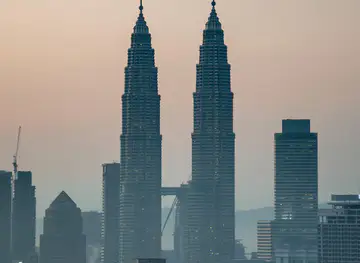
Discover Malaysia: A stunning blend of modernity and nature, where diverse cultures meet, and adventure awaits. From vibrant cities to serene beaches, Malaysia has it all.
Explore Malaysia