

Free Raa Atoll Travel Guide & Mobile App
Explore Raa Atoll with free travel guides. Discover regional history, expert tips, proposed trips, and audio guides on web or mobile app.


Explore Raa Atoll in the Maldives for clear lagoons, coral reefs, resort islands, local communities and rewarding northern-island escapes.
Read more about Raa Atoll
When is the best time to visit Raa Atoll?
Best: January–March · 30°C| Month | High (°C) | Rainfall (mm) |
|---|---|---|
| January (best) | 30 | 75 |
| February (best) | 30 | 65 |
| March (best) | 30 | 85 |
| April | 31 | 125 |
| May | 31 | 175 |
| June | 30 | 175 |
| July | 30 | 150 |
| August | 30 | 150 |
| September | 30 | 175 |
| October | 30 | 225 |
| November | 30 | 175 |
| December | 29 | 125 |
Getting to and around Raa Atoll
How to get there
Transportation
Best attractions in Raa Atoll
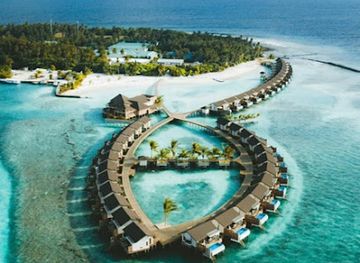
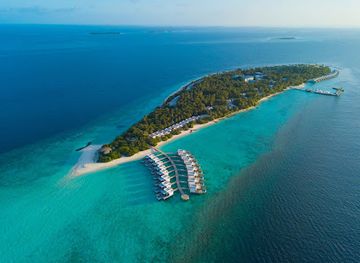
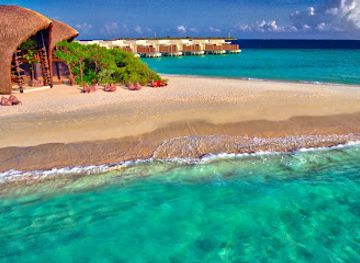
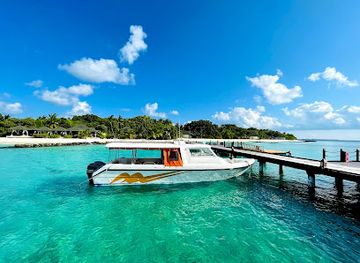
Raa Atoll's attractions are primarily marine, with clear lagoon water, coral reefs, sandbanks and channels offering snorkelling, diving, kayaking, paddleboarding, fishing and dolphin-spotting excursions where conditions permit. Resort islands such as Dhigali, Furaveri, Filaidhoo, Meedhupparu, Aarah, Muravandhoo and other developed islands provide different combinations of house reefs, beaches, water sports and guided marine activities, but access is normally limited to guests or pre-arranged visitors. The atoll's inhabited islands, including Ugoofaaru, Dhuvaafaru, Alifushi, Inguraidhoo and Meedhoo, offer a contrasting view of everyday Maldivian life, with mosques, harbours, homes, schools and fishing activity rather than purpose-built sightseeing attractions. A visit should be arranged respectfully through a local guide or accommodation. Wildlife encounters depend on season, location and weather, and no sighting should be treated as guaranteed. Above water, the broad horizon, changing light over the lagoon and quiet stretches of coral sand are attractions in themselves, while sunset cruises and traditional dhoni trips provide a slower way to understand the atoll's geography.
-
 Resort hotel
Emerald Maldives Resort & Spa
Discover the ultimate luxury at Emerald Maldives Resort & Spa, where pristine beaches meet exceptional service in a tropical paradise.
-
Resort hotel
Dhigufaru Island Resort
Discover the ultimate island escape at Dhigufaru Island Resort, where luxury meets the breathtaking beauty of the Maldives.
-
Island
Atmosphere Kanifushi Maldives
Discover the serene beauty and luxury of Atmosphere Kanifushi Maldives, an idyllic island paradise perfect for relaxation and adventure.
-
Island
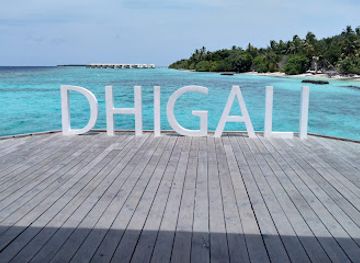
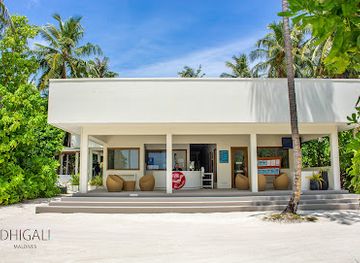
Dhigali
Experience the breathtaking beauty and tranquility of Dhigali Island, a true paradise in the Maldives with stunning beaches and vibrant marine life.
Best landmarks in Raa Atoll
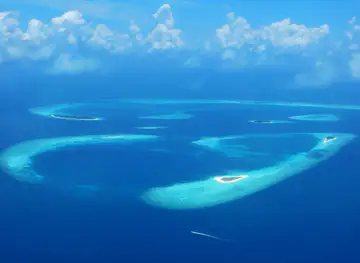
The defining landmarks of Raa Atoll are maritime rather than monumental. Ugoofaaru, the administrative capital, is recognisable for its settled harbour environment, mosque, homes and concentration of public services, while Dhuvaafaru represents the modern history of planned resettlement after the 2004 tsunami. On other inhabited islands, coral-stone mosques, densely built residential lanes, harbour walls and working jetties express the practical architecture of Maldivian community life. The atoll's most prominent natural landmarks are its reef rim, lagoon channels, shifting sandbanks and low coral islands, whose forms are best understood from the water or from the air. Resort islands including Muravandhoo, Aarah, Dhigali and Filaidhoo are visually distinctive private developments, but their beaches and buildings should not be mistaken for historic monuments. Traditional dhonis and fishing harbours also form part of the cultural landscape, reflecting the skills and livelihoods that connected Raa's islands long before tourism arrived. Because land is low and widely dispersed, there are few monumental structures; the relationship between settlement, reef and open ocean is the atoll's central physical identity.
-
Resort hotel
Siyam World Maldives
Discover the enchanting beauty and luxury of Siyam World Maldives, where pristine beaches and exceptional service create a dream vacation experience.
-
Resort hotel
Adaaran Prestige Water Villas with 24Hr Premium All Inclusive
Indulge in unparalleled luxury at Adaaran Prestige Water Villas: exclusive overwater retreats with premium all-inclusive service in the Maldives.
-
Resort hotel
Adaaran Select Meedhupparu with 24Hr Premium All-Inclusive
Experience a luxurious Maldivian getaway at Adaaran Select Meedhupparu, with all-inclusive amenities, stunning beaches, and vibrant marine life.
-
Resort hotel
Reethi Faru Resort
Experience a luxurious Maldivian escape at Reethi Faru Resort, where pristine beaches meet a vibrant house reef in a bio-luxury setting.
Explore Raa Atoll on the map
Plan your trip on one map. See where the top cities, national parks and sights are, and book hotels and experiences in a few clicks.
Best hotels in Raa Atoll
Best restaurants in Raa Atoll
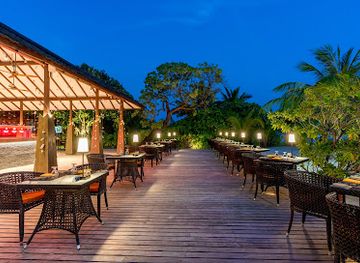
Dining in Raa Atoll is centred on resort restaurants, where international menus are combined with Maldivian dishes and seafood shaped by the Indian Ocean setting. Tuna is a staple and may appear grilled, curried, smoked or mixed with coconut, onion and chilli; visitors may also encounter fish broths, savoury snacks, rice, flatbreads and coconut-based accompaniments. Resort menus often include fresh fish, although availability and sourcing vary between properties, while vegetarian and international choices are widely offered. On inhabited islands, small cafés and local eateries provide a more informal setting, but options are limited and operating arrangements can change. Ugoofaaru and other community islands are suitable places to ask about local snacks or tea, provided visitors respect local customs and dress appropriately. Alcohol is generally available only within licensed resort environments. Guests interested in Maldivian food should request regional specialities directly, as buffet menus may otherwise favour familiar international cuisine.
-
Restaurant
FARU RESTAURANT
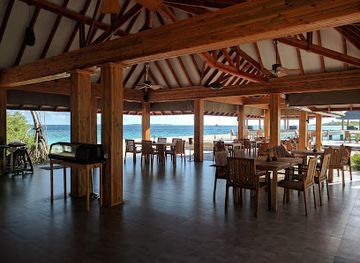
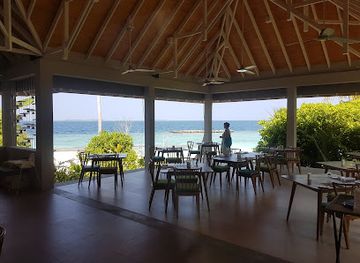
Experience exquisite dining at Faru Restaurant in Dhigali Maldives, where local flavors meet stunning ocean views for an unforgettable culinary adventure.
-
Seafood
SEA Edge de' Grill & Bar
Indulge in fresh seafood while enjoying breathtaking ocean views at SEA Edge de' Grill & Bar in Meedhoo.
-
Restaurant
Battuta Restaurant
Experience exquisite dining at Battuta Restaurant in Dhigali Maldives Resort - where local flavors meet international cuisine.
-
Restaurant
Rayvilla Restaurant
Experience authentic Maldivian cuisine at Rayvilla Restaurant in Furaveri – where every dish tells a story.
Best bars in Raa Atoll
Raa Atoll's evening culture is concentrated on private resort islands rather than urban nightlife districts. Resorts commonly provide lounges, beach bars, restaurants, sunset settings and occasional live music or entertainment, with the exact programme varying by property and season. Some offer cocktails, wine and beer alongside non-alcoholic drinks, while alcohol is generally unavailable on inhabited islands because of national restrictions. On community islands, evenings are more likely to revolve around cafés, family visits, mosque life and quiet harbour activity than clubs or late-night venues. There is no single nightlife centre serving the whole atoll, and travel between islands after dark is limited by boat safety and operating arrangements. Visitors seeking a more local evening should ask about cultural activities or community visits through an authorised host rather than expecting resort-style entertainment in residential areas. The atoll suits relaxed socialising, stargazing and post-dinner walks more than a conventional club itinerary.
-
Bar
Haali Bar (Sunset Bar)
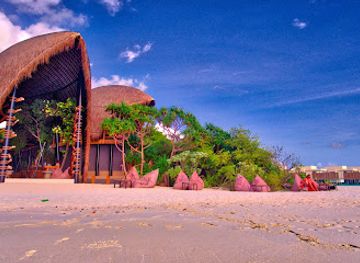
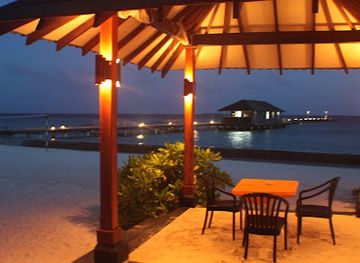
Experience the magic of sunset at Haali Bar in Dhigali Maldives, where stunning ocean views and exquisite cocktails await.
-
Bar
Café Mass
Discover the essence of relaxation at Café Mass, a vibrant bar in Meedhupparu, Maldives, offering refreshing drinks and stunning ocean views.
-
Seafood
SEA Edge de' Grill & Bar
Experience the finest seafood dining with stunning ocean views at SEA Edge de' Grill & Bar in Meedhoo, Maldives.
-
Bar
East Bar
Experience the vibrant atmosphere and stunning views at East Bar in Dhigali Maldives, your perfect tropical getaway for relaxation and socializing.
Best nightclubs in Raa Atoll
Raa Atoll's evening culture is concentrated on private resort islands rather than urban nightlife districts. Resorts commonly provide lounges, beach bars, restaurants, sunset settings and occasional live music or entertainment, with the exact programme varying by property and season. Some offer cocktails, wine and beer alongside non-alcoholic drinks, while alcohol is generally unavailable on inhabited islands because of national restrictions. On community islands, evenings are more likely to revolve around cafés, family visits, mosque life and quiet harbour activity than clubs or late-night venues. There is no single nightlife centre serving the whole atoll, and travel between islands after dark is limited by boat safety and operating arrangements. Visitors seeking a more local evening should ask about cultural activities or community visits through an authorised host rather than expecting resort-style entertainment in residential areas. The atoll suits relaxed socialising, stargazing and post-dinner walks more than a conventional club itinerary.
-
Bar
Haali Bar (Sunset Bar)
Experience stunning sunsets and refreshing cocktails at Haali Bar, the ultimate beachfront oasis in Dhigali Maldives.
-
Bar
Café Mass
Experience the vibrant atmosphere and stunning views at Café Mass, the perfect bar in the Maldives for relaxation and refreshment.
-
Resort hotel
Raaya by Atmosphere
Explore Raaya by Atmosphere: A Luxurious Resort on Kudakurathu Island Offering Serenity and Adventure in the Heart of the Maldives.
-
Lounge
Lounge
Discover tranquility and exquisite views at the Lounge, your ultimate relaxation spot in the Maldives for drinks and serene moments.
Best shops in Raa Atoll
Shopping in Raa Atoll is modest and divided between resort boutiques and small businesses on inhabited islands. Resort shops generally sell swimwear, toiletries, postcards, jewellery, handicrafts and branded holiday items, while larger properties may stock locally themed décor or gifts. Community islands offer a more practical selection of groceries, snacks, clothing, mobile-phone services and household goods rather than extensive souvenir streets. Visitors may find Maldivian handicrafts, woven items, simple woodwork or local food products, but availability varies and provenance should be discussed rather than assumed. Tuna-based snacks, coconut products and packaged treats can make useful edible gifts, subject to airline and customs rules. Ugoofaaru is the most natural place to look for everyday local shopping within the atoll, although it should not be compared with the specialist retail districts of Malé. Bargaining is not a universal expectation, and asking politely about prices is preferable. Do not buy coral, shells, turtle products or other items made from protected marine life.
-
Resort hotel
The Standard, Huruvalhi Maldives
Experience the ultimate luxury at The Standard, Huruvalhi Maldives - where pristine beaches and world-class service create unforgettable memories.
-
Shopping mall
The Marina CROSSROADS Maldives
Explore The Marina CROSSROADS Maldives: A vibrant shopping and dining destination in the heart of paradise, perfect for every tourist's retreat.
-
Boutique
Island Bazaar
Explore Island Bazaar in Malé for unique Maldivian crafts, gifts, and souvenirs that capture the essence of island life.
-
Dive shop
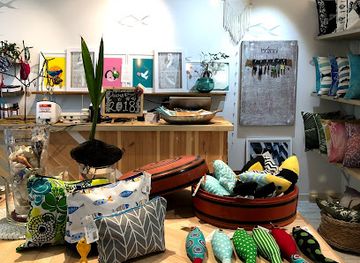
Euro-Divers Dhigali Maldives | Dive & Water Sports Centre
Experience the underwater wonders of the Maldives at Euro-Divers Dhigali, your ultimate diving and water sports destination.

Get your free copy of our complete guide to Raa Atoll, delivered straight to you.
Everything on this page, from attractions and restaurants to essentials and local phrases, in one PDF you can read offline, print or share.
Already have an account? Sign in
Your Raa Atoll guide is ready.
We'll send it to · Not you? Sign out

Getting your guide ready…
We are putting together a fresh copy of the Raa Atoll guide. This can take up to a minute.
This can take a few moments. If your browser asks, choose Allow so the download can start. You'll find the guide in your Downloads folder.
Nothing happened? Download it again
Sorry, the guide is taking longer than usual. Please try again in a minute, or get it by email instead.
Raa Atoll essentials
Currency and Payment
Safety
Emergency Situations
Do's and Don'ts
Local Tips
History of Raa Atoll
Early settlement and the Buddhist Maldives
The islands of Raa Atoll formed part of the wider Maldivian settlement world long before written records became common. Archaeological remains across the Maldives indicate periods of Buddhist worship before the islands adopted Islam, although surviving evidence is uneven and often fragmentary. Coral-stone building traditions, raised settlement sites and reused architectural material provide clues to earlier communities whose economies depended on fishing, coconut, seafaring and exchange between islands. Raa's position along routes through the northern atolls connected its settlements to the wider cultural and maritime history of the archipelago.
Conversion to Islam and island communities
The Maldives traditionally dates its conversion to Islam to 1153, during the reign of Sultan Mohamed al-Adil. The change reshaped political authority, religious practice and architecture throughout the islands, including Raa Atoll. Mosques and Muslim burial grounds became central features of settled islands, while communities continued older maritime occupations and social patterns. In Raa, as elsewhere in the Maldives, coral stone, timber and coconut materials were adapted to Islamic buildings and domestic life. The atoll's present-day island communities remain part of this long tradition of ocean-based settlement under Maldivian Islamic cultural influence.
The sultanate, seafaring and the northern atolls
For centuries Raa Atoll was governed within the Maldivian sultanate, whose authority rested on island administration, tribute, religious leadership and control of maritime routes. Atoll communities were not isolated: fishing boats, traders, religious scholars and officials moved between islands and across the channels separating the northern atolls. Dhoni boat technology, based on locally adapted timber construction and sail or engine power, was fundamental to this world. The atoll's reefs offered protection and resources but also demanded detailed knowledge of channels, currents and seasonal weather.
Colonial-era change and the modern state
The Maldives became a British protected state in 1887 while retaining its own sultanate and internal institutions, and later became an independent republic in 1965. These constitutional changes gradually brought wider administrative, educational and communications systems to distant atolls. Raa remained shaped primarily by fishing, coconut cultivation, inter-island trade and community institutions, but modern government services and motorised transport increasingly altered the relationship between settlements. The growth of Malé as the national centre also made air and sea connections increasingly important for northern island communities.
The 2004 tsunami and Dhuvaafaru
The Indian Ocean tsunami of 26 December 2004 affected many Maldivian islands, including communities in Raa Atoll. Damage to homes, harbours, infrastructure and livelihoods exposed the vulnerability of low-lying coral islands to ocean hazards. Dhuvaafaru was subsequently developed as a planned settlement for people relocated from Kandholhudhoo, an island severely affected by the disaster. Its creation is one of the most visible recent transformations in Raa Atoll, linking disaster recovery, population movement and the continuing challenge of providing secure modern services across a dispersed island nation.
Tourism and marine conservation in contemporary Raa
Maldives tourism began with resort development near Malé in the 1970s and expanded gradually into more distant atolls. Raa Atoll became a prominent northern resort area as air links, seaplanes and marine transfers made its islands more accessible. Tourism brought new employment, construction and international connections while living alongside established fishing communities. Today the atoll's economy and identity reflect both sectors. Coral reefs, beaches and lagoons are central to the visitor experience, making reef health, responsible diving, careful waste management and protection from coastal erosion important concerns for the region's future.
Raa Atoll in Photos
Browse through our photo collection highlighting the charm and character of the destination.
Neighbouring regions of Raa Atoll
The closest regions to Raa Atoll, if you have time for more than one.
-

-

-
-

-


Swipe for more regions
Explore more

Explore more of Maldives
Experience the unparalleled beauty of the Maldives, where pristine beaches, luxurious resorts, and vibrant marine life create the perfect tropical getaway.
Explore Maldives