

Free Shaviyani Atoll Travel Guide & Mobile App
Explore Shaviyani Atoll with free travel guides. Discover regional history, expert tips, proposed trips, and audio guides on web or mobile app.


Explore Shaviyani Atoll in the northern Maldives for coral reefs, island communities, historic mosques and quiet lagoon landscapes.
Read more about Shaviyani Atoll
When is the best time to visit Shaviyani Atoll?
Best: January–March · 30–31°C| Month | High (°C) | Rainfall (mm) |
|---|---|---|
| January (best) | 30 | 120 |
| February (best) | 30 | 90 |
| March (best) | 31 | 100 |
| April | 31 | 160 |
| May | 32 | 240 |
| June | 31 | 190 |
| July | 31 | 180 |
| August | 31 | 200 |
| September | 31 | 200 |
| October | 30 | 230 |
| November | 30 | 190 |
| December | 30 | 160 |
Getting to and around Shaviyani Atoll
How to get there
Transportation
Best attractions in Shaviyani Atoll
Shaviyani Atoll's attractions are primarily marine, cultural and community-based. Resort islands such as Vagaru and Gaakoshibee provide access to house reefs, lagoons, sandbanks, snorkelling, diving and organised water sports, while independent visitors can arrange reef trips and island excursions through local guesthouses. Conditions vary from reef to reef, so guides should be allowed to select sites according to tides, currents and weather. Inhabited islands including Funadhoo, Foakaidhoo, Komandhoo, Kanditheemu, Maroshi and Miladhoo offer opportunities to observe everyday island life, visit local shops and mosques from the outside, and learn about fishing and coconut-based traditions. Historic coral-stone architecture gives Kanditheemu particular cultural interest. Walking is informal rather than trail-based, with beaches, vegetation and quiet lanes providing the setting for unstructured exploration. The atoll suits visitors who value marine time, small-community encounters and a slower pace more than a dense programme of ticketed attractions.
-
Island
Milandhoo
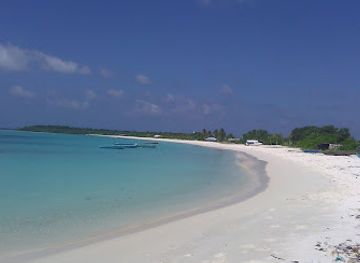
Explore the serene beauty of Milandhoo Island, a hidden gem in the Maldives offering stunning beaches, vibrant marine life, and a peaceful escape.
-
Tourist attraction
Sand Bank, Kuredu Island resort & Spa
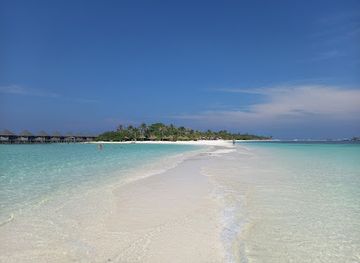
Explore the enchanting Sand Bank at Kuredu Island Resort & Spa, where stunning sunsets and crystal-clear waters await in the heart of the Maldives.
-
Tourist attraction
The Romantic Point
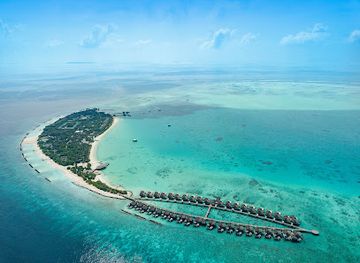
Discover the enchanting beauty of The Romantic Point in Bileffahi, where stunning sunsets and serene landscapes create unforgettable memories.
-
Park
Hinna Bridge
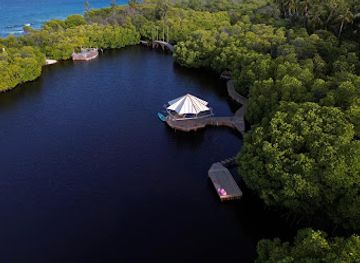
Explore Hinna Bridge, a tranquil park in Kendhikulhudhoo, Maldives, offering stunning views and a peaceful atmosphere for all visitors.
Best landmarks in Shaviyani Atoll
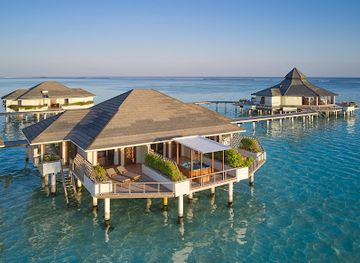
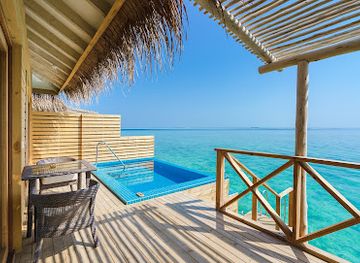
Shaviyani Atoll's most characteristic landmarks are small-scale and closely tied to its natural setting. The harbour approaches and jetties of inhabited islands such as Funadhoo reveal how communities remain connected across the lagoon, with fishing vessels, passenger boats and cargo craft moving through carefully navigated channels. Coral-stone mosques are the most important human landmarks, and Kanditheemu is noted for historic mosque architecture that reflects the Maldives' long Islamic tradition and skilled use of reef limestone. On resort islands, the defining features are not monumental buildings but the visual relationship between villas, white coral beaches, shallow lagoons and outer reefs. Around the atoll, reef edges, sandbanks and narrow channels form a shifting natural landmark system whose appearance changes with tide, light and monsoon conditions. These places are fragile as well as attractive: coral should never be touched or removed, and visitors should follow local guidance when approaching religious buildings, village spaces or working harbours.
-
Resort hotel
Villa Park, Maldives
Experience a luxurious tropical escape at Villa Park Maldives, offering pristine beaches, diverse activities, and world-class amenities in the heart of South Ari Atoll.
-
 Hotel
HotelMövenpick Resort Kuredhivaru Maldives
Experience serene seclusion and tropical tranquility at Mövenpick Resort Kuredhivaru Maldives, with luxurious villas, pristine beaches, and vibrant marine life.
-
Resort hotel
Siyam World Maldives
Experience the Maldives like never before at Siyam World: luxury accommodations, thrilling activities, and premium all-inclusive amenities on a stunning island paradise.
-
Resort hotel
You & Me Maldives
Escape to You & Me Maldives, an adults-only paradise in Raa Atoll, offering luxurious overwater villas, exquisite dining, and unforgettable romantic experiences.

Explore Shaviyani Atoll on the map
Plan your trip on one map. See where the top cities, national parks and sights are, and book hotels and experiences in a few clicks.
Best hotels in Shaviyani Atoll
Best restaurants in Shaviyani Atoll
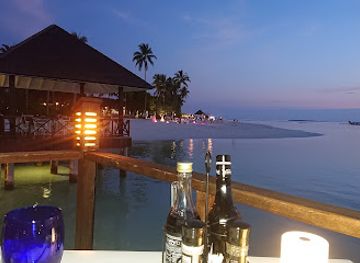
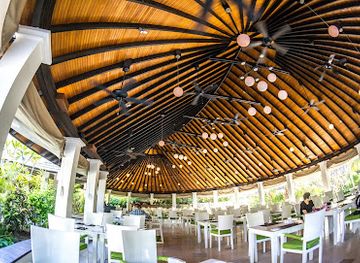
Dining in Shaviyani Atoll ranges from resort restaurants serving international menus to the simpler, more locally rooted food found in inhabited-island cafés and guesthouses. Maldivian meals commonly centre on rice, fish, coconut, chilli and lime, with preparations such as mas huni, fish curries, grilled reef fish and savoury snacks appearing in different forms across the country. Tuna is particularly important to Maldivian culinary culture, while sweet tea, roshi and coconut-based accompaniments are familiar features of local tables. Guesthouses may offer advance-booked home-style meals, and island cafés often serve short eats, noodles, rice dishes and fresh juices rather than an extensive à la carte selection. Resort dining can include seafood, Asian and Western cuisine, but menus and prices are shaped by the logistics of remote supply. Visitors should confirm meal arrangements when staying on inhabited islands, especially outside the main settlement or during religious holidays.
-
Restaurant
Sirru Fen Fushi Private Lagoon Resort
Experience luxury and tranquility at Sirru Fen Fushi Private Lagoon Resort in Maldives' stunning Shaviyani Atoll.
-
Italian
The Trio
Discover authentic Italian cuisine at The Trio in Maldives - where every meal is an unforgettable experience.
-
Restaurant
Iru Restaurant
Experience exquisite Maldivian flavors at Iru Restaurant in Magoodhoo – where every meal is a culinary adventure.
-
Restaurant
Mannam Cafe & Restaurant
Experience exquisite Maldivian cuisine at Mannam Cafe & Restaurant in Kulhudhuffushi - where style meets flavor.
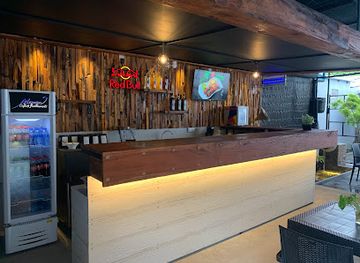
Best bars in Shaviyani Atoll
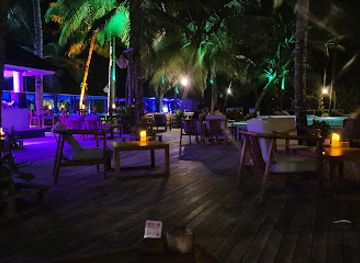
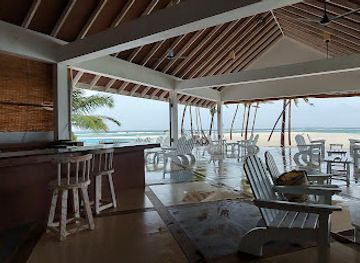
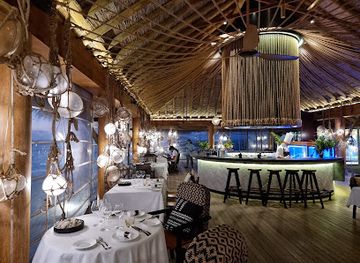
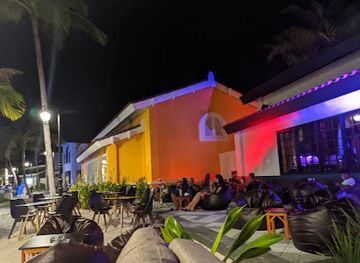
Nightlife in Shaviyani Atoll is concentrated in resorts rather than on inhabited islands. Resort properties may offer bars, sunset drinks, live music, themed evenings and occasional entertainment, although the scale and schedule vary by property and season. Alcohol is not generally available on ordinary inhabited islands, where evenings are more likely to centre on family visits, cafés, community activity and quiet walks near the harbour. Guesthouses can sometimes arrange evening fishing, stargazing or cultural programmes, but these should be booked locally and depend on weather. There is no broad nightclub circuit across the atoll, and visitors should not expect late-night venues between islands. The appeal after dark is usually the sea, the low level of artificial light and the social rhythm of the particular island or resort rather than a conventional urban entertainment scene.
-
Restaurant
Sirru Fen Fushi Private Lagoon Resort
Experience luxury and tranquility at Sirru Fen Fushi Private Lagoon Resort, a tropical paradise in the Maldives with exquisite dining and adventure.
-
Bar
Together
Experience the vibrant atmosphere and tropical delights at Together, the perfect bar in Dhigurah for relaxation and enjoyment.
-
Bar
Thila Bar
Experience the tropical charm of Thila Bar on Hondaafushi Island, where relaxation meets vibrant nightlife in paradise.
-
Seafood
Azure Restaurant
Experience the taste of the ocean at Azure Restaurant, a seafood haven in the Maldives that captivates with fresh flavors and stunning views.
Best nightclubs in Shaviyani Atoll
Nightlife in Shaviyani Atoll is concentrated in resorts rather than on inhabited islands. Resort properties may offer bars, sunset drinks, live music, themed evenings and occasional entertainment, although the scale and schedule vary by property and season. Alcohol is not generally available on ordinary inhabited islands, where evenings are more likely to centre on family visits, cafés, community activity and quiet walks near the harbour. Guesthouses can sometimes arrange evening fishing, stargazing or cultural programmes, but these should be booked locally and depend on weather. There is no broad nightclub circuit across the atoll, and visitors should not expect late-night venues between islands. The appeal after dark is usually the sea, the low level of artificial light and the social rhythm of the particular island or resort rather than a conventional urban entertainment scene.
-
Bar
Together
Experience the vibrant nightlife at Together in Dhigurah, where exquisite drinks and lively music create an unforgettable atmosphere.
-
Lounge
Lounge
Discover the perfect blend of relaxation and breathtaking views at the Lounge in the heart of the Maldives.
-
Lounge
Island Lounge Maldives
Experience the perfect blend of tranquility and vibrant nightlife at Island Lounge Maldives, where relaxation meets tropical paradise.
-
Lounge
Manta Lounge
Experience the serene beauty and exquisite flavors of Manta Lounge in Huraa, Maldives – a tropical paradise for relaxation and culinary delights.


Best shops in Shaviyani Atoll
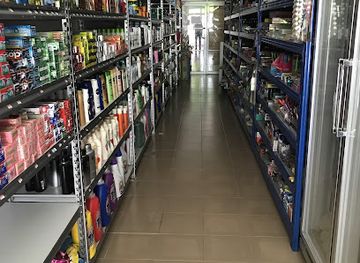
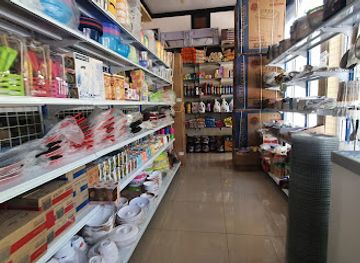
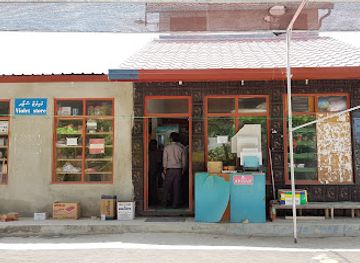
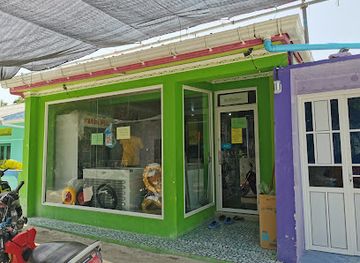
Shopping in Shaviyani Atoll is modest and practical rather than centred on large retail districts. In inhabited communities, small island shops sell drinks, groceries, toiletries, clothing and everyday household goods, while guesthouses can sometimes arrange locally made souvenirs or food products. Visitors may find woven items, coconut-based crafts, simple souvenirs and locally produced snacks, although selection varies considerably by island and supply shipments. Fresh fish and prepared foods are part of local commerce, but visitors should ask before photographing or purchasing goods in working areas. Resort boutiques generally offer a more predictable range of branded clothing, beachwear, jewellery and Maldives-themed gifts, usually at resort prices. Bring specialised equipment, medicines and particular toiletries from Malé or home, since remote-island shops cannot be expected to stock them. When buying crafts, choose items made from sustainable materials and avoid coral, shells or products taken from marine life.
-
Store
TMM Trade
Discover the heart of Milandhoo at TMM Trade, where local treasures and unique souvenirs await every traveler.
-
Store
Faiymini Corner
Experience the local charm at Faiymini Corner, a delightful store in Funadhoo offering a wide variety of goods for both residents and travelers.
-
Shopping mall
Violet Store
Discover a unique blend of local and international shopping at Violet Store in Lhaimagu, the heart of the Maldives' retail scene.
-
Store
R Shine Mart
Explore R Shine Mart in Feevah for unique local products, souvenirs, and everyday essentials in a welcoming setting.
Get your free copy of our complete guide to Shaviyani Atoll, delivered straight to you.
Everything on this page, from attractions and restaurants to essentials and local phrases, in one PDF you can read offline, print or share.
Already have an account? Sign in
Your Shaviyani Atoll guide is ready.
We'll send it to · Not you? Sign out

Getting your guide ready…
We are putting together a fresh copy of the Shaviyani Atoll guide. This can take up to a minute.
This can take a few moments. If your browser asks, choose Allow so the download can start. You'll find the guide in your Downloads folder.
Nothing happened? Download it again
Sorry, the guide is taking longer than usual. Please try again in a minute, or get it by email instead.
Shaviyani Atoll essentials
Currency and Payment
Safety
Emergency Situations
Do's and Don'ts
Local Tips
History of Shaviyani Atoll
Early settlement and Buddhist-era traces
The islands of the Maldives were settled long before written records, with communities shaped by fishing, coconut cultivation and movement between atolls. Archaeological remains across the archipelago indicate a Buddhist period before the islands adopted Islam, although the evidence in Shaviyani is less extensively presented to visitors than in some southern atolls. Ancient mounds, reused building material and local traditions point to successive layers of settlement rather than a single founding event. The atoll's position along northern sea routes helped connect its islands with wider maritime networks.
Conversion to Islam and the island mosque tradition
The Maldives became a Muslim sultanate in the twelfth century, beginning a transformation that shaped law, community organisation, architecture and daily life. In Shaviyani, as elsewhere in the country, island mosques became important civic as well as religious spaces. Coral stone, cut from reef limestone, was used for walls and decorative details because it was locally available and suited to the islands' environment. Historic mosque structures and the continuing prominence of mosques in inhabited communities preserve a visible link with this long Islamic tradition.
Northern atoll communities and the sultanate
For centuries Shaviyani's islands formed part of the political and commercial world of the Maldivian sultanate. Authority was centred in Malé, but practical life depended on island headmen, boat connections, fishing grounds and the seasonal movement of people and goods. Dried fish, coconuts, coir rope and other marine or palm products supported local exchange. The atoll's dispersed geography meant that allegiance to national rulers coexisted with strong island identities, a characteristic that remains evident in the distinct traditions and community networks of its inhabited islands.
European influence and the modern sultanate
Portuguese interference in the sixteenth century, followed by periods of Dutch and British influence over Maldivian affairs, affected the wider archipelago through changes in trade and diplomacy, but Shaviyani remained fundamentally a society of local island communities. The Maldives became a British protected state in the nineteenth century while retaining its sultanate and internal institutions. Northern atolls continued to rely primarily on fishing, coconut palms, inter-island sailing and small-scale commerce rather than large colonial infrastructure.
Independence and the republic
The Maldives became independent from Britain in 1965 and a republic in 1968. These changes brought a more centralised national administration and gradually expanded public services, education and transport links to distant atolls. In Shaviyani, island councils, schools, health facilities and improved jetties have altered the practical relationship between communities and Malé. Yet the atoll's economy still reflects the importance of fishing, maritime skills and family networks, alongside newer employment connected with tourism and public administration.
Tourism and contemporary atoll development
Maldives tourism began with a resort model concentrated near Malé, but later expansion reached more distant atolls, including Shaviyani. Resorts on separate island sites introduced international visitors to the atoll's reefs while leaving most inhabited islands outside conventional resort compounds. This has created a mixed regional economy: tourism provides hospitality, transport and service employment, while local communities retain fishing, small businesses and public-sector work. Modern development also brings challenges involving freshwater, waste, reef protection, climate change and the high cost of connecting remote islands.
Shaviyani Atoll in Photos
Browse through our photo collection highlighting the charm and character of the destination.
Neighbouring regions of Shaviyani Atoll
The closest regions to Shaviyani Atoll, if you have time for more than one.
-

-

-

-

-


Swipe for more regions
Explore more

Explore more of Maldives
Experience the unparalleled beauty of the Maldives, where pristine beaches, luxurious resorts, and vibrant marine life create the perfect tropical getaway.
Explore Maldives