

Dogon Country, Mali Travel Guide
Experience the timeless culture and breathtaking landscapes of Dogon Country in Mali, where ancient traditions and natural beauty converge.
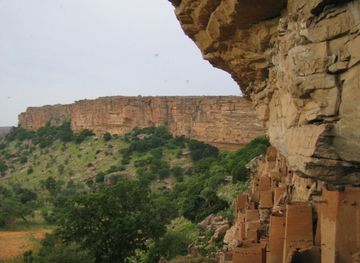
Dogon Country, located in the central plateau region of Mali, is a mesmerizing destination known for its rich cultural heritage and stunning landscapes. This area is home to the Dogon people, who have preserved their unique traditions, languages, and rituals for centuries. The dramatic cliffs of the Bandiagara Escarpment form the backdrop to this mystical region, offering breathtaking views and fascinating historical sites. Visitors to Dogon Country can explore ancient villages, some of which are carved into the cliffs. These villages showcase traditional Dogon architecture, including granaries, houses, and communal meeting places. The Dogon people are known for their intricate wood carvings and vibrant masks, often used in elaborate ceremonies and dances that depict their mythology and history. The natural beauty of Dogon Country is equally captivating. Hiking trails wind through the escarpment, leading to hidden waterfalls, lush valleys, and panoramic viewpoints. For those interested in anthropology, Dogon Country provides a unique opportunity to study a society that has maintained its cultural identity in the face of external influences. Whether you are an adventurer, a history buff, or simply a curious traveler, Dogon Country offers an unforgettable journey into the heart of Mali's cultural and natural wonders.

Know before you go
Hi, I'm Eve. Here are a few practical things to know before exploring Dogon Country.
- Hire a local guide to navigate the trails and learn about the Dogon culture from an insider's perspective.
- Visit during the dry season (November to February) for the best weather and easier travel conditions.
- Respect local customs and ask for permission before taking photographs of people or sacred sites.
- Bring sturdy hiking shoes for exploring the rugged terrain of the Bandiagara Escarpment.
- Stay hydrated and carry sufficient water, as facilities can be sparse in remote areas.
Destinations in Dogon Country
Resorts, valleys and scenic spots worth a trip of their own.

Explore Dogon Country: Things to Do, Places to Eat, Hotels & More
Handpicked recommendations for top attractions, local dining, accommodations, and more

Top Attractions & Sightseeing in Dogon Country
Top-rated picks
Best Attractions

Dogon Plateau
Experience the breathtaking beauty and rich cultural heritage of the Dogon Plateau, an unforgettable destination in Mali.

Boulevard de Oumar H Toure
Experience the tranquility of Boulevard de Oumar H Toure in Bankass, a perfect park for relaxation, picnic, and enjoying nature's beauty.

Le grand barrage de Doundioulou
Explore the stunning Le Grand Barrage de Doundioulou, a unique tourist attraction in Mali that combines breathtaking views with rich cultural heritage.

Best landmarks in Dogon Country
Top-rated picks
Best Landmarks

Bandiagara Escarpment
Explore the Bandiagara Escarpment: a stunning landscape of sandstone cliffs, ancient Dogon villages, and rich cultural traditions in the heart of Mali.

La Dune Rose
Discover La Dune Rose in Koïma, Mali: a stunning desert landscape with vibrant colors and rich cultural history, just a short trip from Gao.

Dogon Plateau
Explore the ancient culture and stunning landscapes of the Dogon Plateau, a UNESCO World Heritage Site in Mali.

Best restaurants in Dogon Country
Top-rated picks
Best Restaurants

Amandine by Sel & Miel
Experience the exquisite taste of French pastries at Amandine by Sel & Miel in Bamako—where culinary artistry meets local charm.

Relax
Discover authentic Malian cuisine at Relax Restaurant in Bamako - where flavors come alive in a warm and inviting atmosphere.

Bamako Kitchen
Discover authentic Malian flavors at Bamako Kitchen – a culinary treasure in the heart of Mali's capital.

Au bord de l'eau
Discover serenity at Au bord de l'eau in Sébénikoro, Bamako – where comfort meets exquisite dining by the water.

Best bars in Dogon Country
Top-rated picks
Best Bars

LE SAVANA
Discover the vibrant culinary scene at Le Savana, where Malian flavors meet a lively atmosphere in the heart of Bamako.

Chez Thierry
Discover the flavors of Mali at Chez Thierry, a top restaurant in Bamako offering authentic dishes in a warm and inviting setting.

Bla Bla Bar
Discover the vibrant atmosphere of Bla Bla Bar in Bamako, where locals and tourists unite over refreshing drinks and live music.

Appaloosa
Discover the vibrant culinary scene of Bamako at Appaloosa, where local flavors meet global delights in a lively atmosphere.

Best nightclubs in Dogon Country
Top-rated picks
Best Nightclubs

Le Byblos
Discover the vibrant nightlife of Bamako at Le Byblos, where delicious Lebanese cuisine meets exciting entertainment in a lively atmosphere.

IBIZA CLUB
Discover the electrifying nightlife at Ibiza Club, Bamako's premier destination for unforgettable music, dancing, and vibrant atmosphere.

Baramundi
Experience the vibrant nightlife of Bamako at Baramundi, where music and dance create unforgettable memories.

Diamant inter
Discover the pulsating nightlife at Diamant Inter, Bamako's premier disco club, where local culture meets electrifying music and dance.

Best shops in Dogon Country
Top-rated picks
Best Shops

ZOO NATIONAL DU MALI
Explore the vibrant wildlife of Zoo National du Mali in Bamako, a family-friendly destination that celebrates Africa's rich biodiversity.

CHINA MALL HOLDING
Explore the bustling China Mall in Bamako, a shopping paradise offering a mix of local culture, diverse shops, and delightful dining options.

Ngolonina Artisan Market
Discover the vibrant Ngolonina Artisan Market in Bamako, where local artisans showcase their crafts and the spirit of Mali comes alive.

Iba Design
Discover unique fashion at Iba Design in Bamako, a clothing store that offers a blend of traditional and contemporary styles for every taste.

Explore Dogon Country on the Map
A handpicked selection of must-see spots in Dogon Country, mapped for you.
Dogon Country Essentials
-
Dogon Country is situated in the central plateau region of Mali. The nearest international airport is Modibo Keita International Airport in Bamako. From Bamako, you can take a domestic flight to Mopti, the closest city to Dogon Country. Alternatively, you can travel by road; the journey from Bamako to Mopti takes approximately 10 hours by bus or private car. From Mopti, you can hire a 4x4 vehicle or take a local minibus (bush taxi) to reach the Dogon villages.
-
Within Dogon Country, the most common means of transportation are 4x4 vehicles and motorcycles, especially if you plan to visit multiple villages. Walking is also a popular way to explore the area, as many of the villages are interconnected by footpaths. Local guides are highly recommended for navigating the terrain and understanding the cultural significance of various sites.
-
The official currency in Mali is the West African CFA franc (XOF). Credit cards are rarely accepted in Dogon Country, so it is advisable to carry sufficient cash. ATMs are available in Mopti, but it is wise to withdraw enough money before heading into the more remote areas. Small denominations are useful for local transactions and tipping.
-
Dogon Country has experienced periods of instability, so it is essential to check the latest travel advisories before planning your trip. While most areas are generally safe for tourists, there have been instances of banditry and kidnapping, especially in remote regions. Always travel with a local guide and avoid isolated areas. Stay informed about security conditions and follow the advice of local authorities.
-
In case of emergency, contact local authorities immediately. The emergency number in Mali is 17 for police and 15 for medical assistance. It is crucial to have travel insurance that covers medical emergencies and evacuation. The closest medical facilities are in Mopti, so carrying a basic first-aid kit is advisable. For severe medical issues, evacuation to Bamako may be necessary.
-
Fashion: Do dress modestly to respect local customs. Men should avoid wearing shorts, and women should cover their shoulders and knees. Religion: Do respect local religious practices. Always ask for permission before entering mosques and avoid taking photos during religious ceremonies. Public Transport: Do be patient and respectful when using local transport. Don’t haggle aggressively with drivers. Greetings: Do greet people with a handshake or a nod. Using the local greeting 'Sannu' is appreciated. Eating & Drinking: Do try local dishes like millet porridge and tô. Don’t eat with your left hand, as it is considered impolite.
-
To experience Dogon Country like a local, consider staying in a homestay where you can learn about traditional Dogon lifestyles. Participate in local festivals and dances to immerse yourself in the culture. Engage with the artisans and purchase handmade crafts such as masks and carvings. Visit the weekly markets in villages like Sangha and Bandiagara to buy fresh produce and local goods.
When is the best time to visit Dogon Country?
Useful Local Phrases for Dogon Country
You don't need to speak the language perfectly. Even learning a few simple words can make conversations warmer—and locals usually appreciate the effort.
— Eve

Here are the phrases I use most often in Dogon Country. Try a few—you'll be surprised how far they go! 😊
❤️
-
- HelloN'yema
[N'yeh-ma] - GoodbyeN'da
[N'dah] - YesIye
[Ee-yeh] - NoAla
[Ah-lah] - Please/You're welcomeN'ka
[N'kah] - Thank youM'ba
[M'bah] - Excuse me/SorryFama
[Fah-mah] - How are you?N'di fanga?
[N'dee fan-gah?] - Fine. And you?N'di k'i kelen?
[N'dee kee keh-len?] - Do you speak English?I ye'n fanga English?
[Ee yeh'n fan-gah English?] - I don't understandN'ye fanga
[N'yeh fan-gah]
- HelloN'yema
-
- I'd like to see the menu, pleaseN'di n'a wuli menu, n'ka
[N'dee nah woo-lee men-oo, n'kah] - I don't eat meatN'ye fanga n'kono
[N'yeh fan-gah n'koh-no] - Cheers!N'ka, n'ka!
[N'kah, n'kah!] - I would like to pay, pleaseN'di n'a se, n'ka
[N'dee nah seh, n'kah]
- I'd like to see the menu, pleaseN'di n'a wuli menu, n'ka
-
- Help!Bola!
[Boh-lah!] - Go away!N'di n'ka!
[N'dee n'kah!] - Call the Police!N'di n'ka Police!
[N'dee n'kah Poe-leese!] - Call a doctor!N'di n'ka d'okta!
[N'dee n'kah doh-kta!] - I'm lostN'ye fanga n'ka
[N'yeh fan-gah n'kah] - I'm illN'ye fanga
[N'yeh fan-gah]
- Help!Bola!
-
- I'd like to buy...N'di n'a furu...
[N'dee nah foo-roo...] - I'm just lookingN'di fanga!
[N'dee fan-gah!] - How much is it?N'di k'i soro?
[N'dee kee soh-ro?] - That's too expensiveO ye fanga n'ka
[Oh yeh fan-gah n'kah] - Can you lower the price?I k'i fanga n'ka soro?
[Ee kee fan-gah n'kah soh-ro?]
- I'd like to buy...N'di n'a furu...
-
- What time is it?N'di k'i j'a?
[N'dee kee jah?] - It's one o'clockN'di j'a kelen
[N'dee jah keh-len] - Half past (10)N'di k'i j'a n'na
[N'dee kee jah nah] - MorningDoro
[Doh-ro] - AfternoonD'ye
[Dee-yeh] - EveningN'di
[N'dee] - YesterdayN'di j'ai
[N'dee jah-ee] - TodayN'di t'ye
[N'dee tee-yeh] - TomorrowN'di t'ye j'a
[N'dee tee-yeh jah] - 1Kelen
[Keh-len] - 2Furu
[Foo-roo] - 3Tati
[Tah-tee] - 4N'na
[Nah-nah] - 5J'na
[Jah-nah] - 6Wuru
[Woo-roo] - 7Saba
[Sah-bah] - 8Saba furu
[Sah-bah foo-roo] - 9Saba tati
[Sah-bah tah-tee] - 10Saba n'na
[Sah-bah nah-nah]
- What time is it?N'di k'i j'a?
-
- Where's a/the...?N'di k'i ...?
[N'dee kee ...?] - What's the address?N'di k'i j'na?
[N'dee kee jah-nah?] - Can you show me (on the map)?I k'i n'a wuli (n'ka j'a)?
[Ee kee nah woo-lee (n'kah jah)?] - When's the next (bus)?N'di k'i j'a n'na (bus)?
[N'dee kee jah nah (boos)?] - A ticket (to ....)N'di n'a ticket (t'ye ...)
[N'dee nah tee-ket (tee-ye ...)]
- Where's a/the...?N'di k'i ...?
History of Dogon Country
-
The Dogon people are believed to have settled in the Bandiagara Escarpment area of Mali around the 14th century. Their origins are somewhat shrouded in mystery, but oral traditions suggest that they migrated from the Mandé region, possibly to escape Islamic expansion and the pressures of surrounding empires. The cliffs and plateaus provided a natural fortress, safeguarding their unique cultural and spiritual practices.
-
The Bandiagara Escarpment is a sandstone cliff stretching over 150 kilometers and rising to heights of up to 500 meters. It is central to Dogon life, offering not just protection but also a unique landscape that has been adapted for agriculture, settlement, and spiritual practices. The escarpment is dotted with ancient cave dwellings, granaries, and sanctuaries, some of which date back to the 3rd century BC. This rugged terrain has helped preserve Dogon culture and traditions over centuries.
-
Dogon culture is deeply intertwined with their religious beliefs and cosmology. They practice animism, with a pantheon of deities and ancestral spirits that influence daily life. The Dogon are renowned for their elaborate masked dances and rituals, which are integral to their religious ceremonies. These include the Dama, a funeral ceremony designed to ensure the safe passage of the deceased to the afterlife, and the Sigui, a ritual held every 60 years to mark the rotation of the Sirius star system, which they have been tracking for generations.
-
The Dogon people came under French colonial rule in the late 19th century, following the Scramble for Africa. Although the French imposed taxes and attempted to introduce new administrative systems, the Dogon largely maintained their traditional ways of life. The colonial period also marked increased interactions with neighboring ethnic groups and the introduction of new agricultural techniques and crops. However, the Dogon managed to preserve much of their cultural heritage despite these external influences.
-
Mali gained independence from France in 1960, and Dogon Country became part of the newly formed nation. The Dogon have faced numerous challenges in the post-independence era, including economic hardship, environmental changes, and political instability. Recent years have seen a rise in tourism, which has brought both opportunities and challenges. While tourism provides economic benefits, it also poses threats to the preservation of cultural sites and traditions. The Dogon continue to navigate these complexities, striving to maintain their rich heritage in a rapidly changing world.
Neighbouring Regions of Dogon Country
The closest regions to Dogon Country, if you have time for more than one.


Your all‑in‑one travel companion app
Explore expert travel guides, compare and book tours, experiences, hotels, and more—all from the palm of your hand. Download now for seamless trip planning wherever your wanderlust takes you.


Explore More of Mali

Looking beyond Dogon Country? Discover Mali for broader travel guides, local hot-spots, and regional highlights.
Explore MaliDogon Country in Photos
Browse through our photo collection highlighting the charm and character of the destination.




Dogon Country: The Heart of Mali's Cultural Heritage
Dogon Country, located in the central plateau region of Mali, is a mesmerizing destination known for its rich cultural heritage and stunning landscapes. This area is home to the Dogon people, who have preserved their unique traditions, languages, and rituals for centuries. The dramatic cliffs of the Bandiagara Escarpment form the backdrop to this mystical region, offering breathtaking views and fascinating historical sites. Visitors to Dogon Country can explore ancient villages, some of which are carved into the cliffs. These villages showcase traditional Dogon architecture, including granaries, houses, and communal meeting places. The Dogon people are known for their intricate wood carvings and vibrant masks, often used in elaborate ceremonies and dances that depict their mythology and history. The natural beauty of Dogon Country is equally captivating. Hiking trails wind through the escarpment, leading to hidden waterfalls, lush valleys, and panoramic viewpoints. For those interested in anthropology, Dogon Country provides a unique opportunity to study a society that has maintained its cultural identity in the face of external influences. Whether you are an adventurer, a history buff, or simply a curious traveler, Dogon Country offers an unforgettable journey into the heart of Mali's cultural and natural wonders.