

Golden Bay Travel Guide - Free Web & App
Your ultimate guide to Golden Bay. Discover top landmarks, proposed trips, and local tips. Free on the web or via the Evendo companion app.


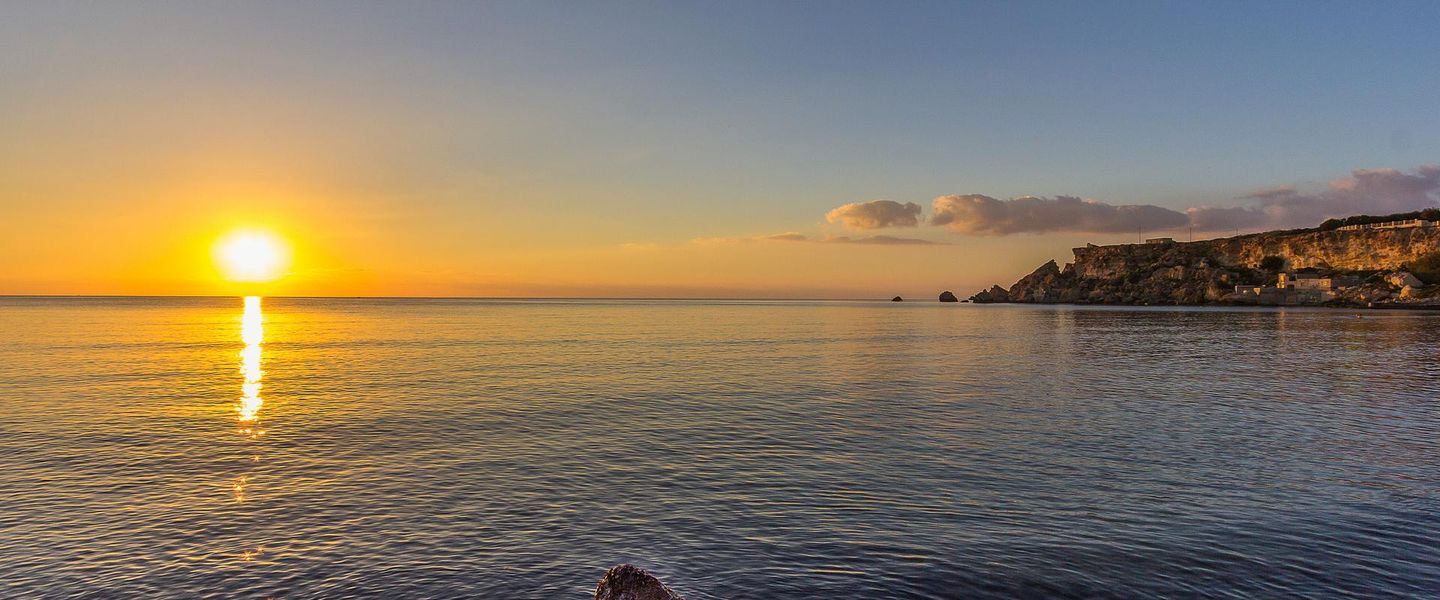


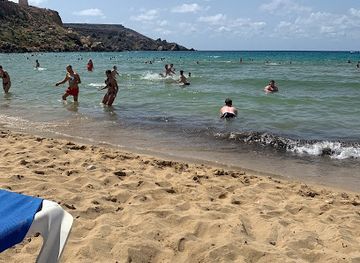
Golden Bay, Malta pairs a sandy Mediterranean beach with coastal walks, sunsets, nearby Manikata and Il-Majjistral Nature & History Park, and rural scenery.
Coastline and Landscape
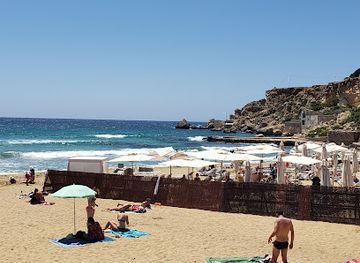
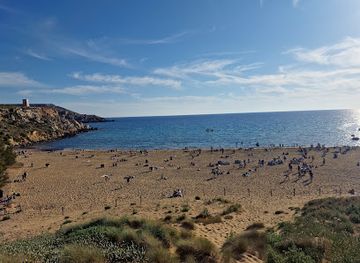
Golden Bay is one of Malta’s most recognisable sandy beaches, set on the island’s north-western coast below open limestone hills. Its broad crescent of ochre sand faces west, making the bay particularly atmospheric in the late afternoon when the low sun reaches across the water and surrounding cliffs. The beach is connected to neighbouring Għajn Tuffieħa by a headland and coastal paths, while the wider landscape opens into the Il-Majjistral Nature & History Park, Malta’s first national nature park. Dry-stone walls, exposed rock, terraced fields and low Mediterranean vegetation give the area a distinctly rural character beyond the developed beach frontage.Read more about Golden Bay
Villages and Heritage
Outdoor Experiences
When is the best time to visit Golden Bay?
Best: May–June, October · 24–27°C| Month | High (°C) | Rainfall (mm) |
|---|---|---|
| January | 20 | 85 |
| February | 20 | 75 |
| March | 21 | 65 |
| April | 22 | 45 |
| May (best) | 24 | 35 |
| June (best) | 27 | 25 |
| July | 30 | 15 |
| August | 31 | 15 |
| September | 29 | 25 |
| October (best) | 26 | 35 |
| November | 23 | 45 |
| December | 21 | 55 |
Getting to and around Golden Bay
How to get there
Transportation
Best attractions in Golden Bay
-
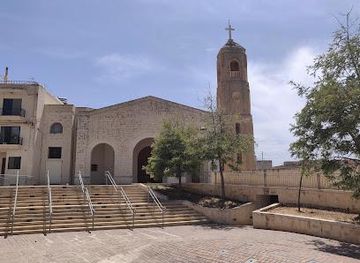
Church
Il-Kappella tal-Madonna tal-Anġli
Discover the tranquil beauty of Il-Kappella tal-Madonna tal-Anġli, a modern church in Naxxar, Malta, perfect for reflection and appreciation of art.
-
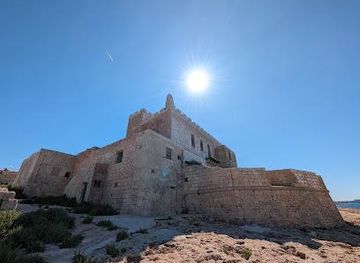
Historical landmark
Wied Musa Battery
Discover the historical charm and scenic beauty of Wied Musa Battery, a must-see landmark in Mellieħa, Malta, rich in military history and stunning coastal views.
Explore Golden Bay on the map
Plan your trip on one map. See where the top attractions, landmarks, restaurants and hotels are, and book hotels and experiences in a few clicks.
Best hotels in Golden Bay
Best restaurants in Golden Bay
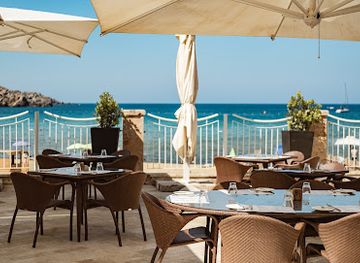
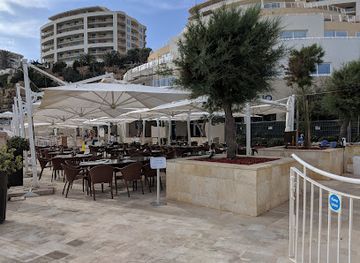
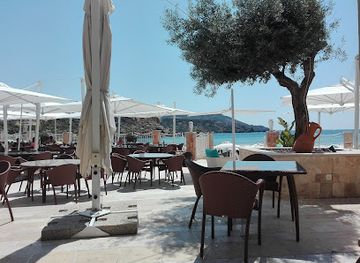
Dining at Golden Bay is concentrated around the beach and its resort accommodation rather than arranged as a village restaurant quarter. Visitors can find food and refreshments close to the shore, while a wider choice of cafés, restaurants, supermarkets and casual eateries is available in Mellieħa and other nearby settlements. Maltese cooking commonly draws on Mediterranean ingredients, with dishes such as pastizzi, ftira, rabbit preparations and seafood appearing in different forms across the island; menus and availability vary by establishment. Manikata and the surrounding countryside offer a quieter setting for eating than Malta’s larger resort centres, but options are more limited. Anyone walking through Il-Majjistral Nature & History Park should carry water and food rather than relying on facilities inside the protected landscape, where commercial provision is sparse.
-
Cafeteria
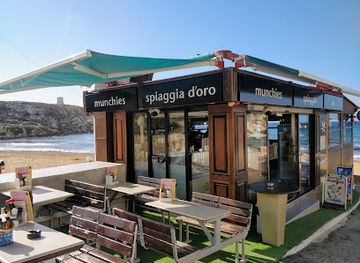
Munchies Golden Bay - Spiaggia D'Oro
Experience Mediterranean flavors at Munchies Golden Bay - Spiaggia D'Oro, where delicious food meets breathtaking beach views.
-
Restaurant
Agliolio Restaurant
Discover the essence of Italian dining at Agliolio Restaurant in Mellieħa - where exquisite flavors meet stunning views.
-
Grill
Pebbles Beach Bar
Experience unforgettable dining at Pebbles Beach Bar - where exquisite grill flavors meet breathtaking Mediterranean views.
Best bars in Golden Bay
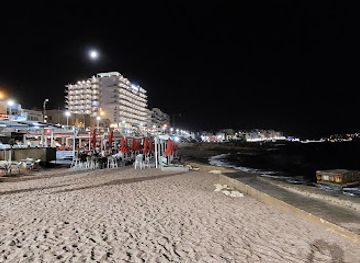
Golden Bay is not a major nightlife centre, and evenings are generally quieter than in Malta’s developed resort districts. The main beach and resort facilities may provide a place for a drink or a relaxed meal, particularly around sunset, but visitors should not expect a concentration of nightclubs or late-night venues. Traditional bars and local evening life are more characteristic of nearby villages such as Manikata and Mellieħa, where residents gather in community settings and seasonal village festivities may add a livelier atmosphere. St Julian’s and Paceville offer Malta’s most extensive nightlife, but they are outside the Golden Bay area and require a separate journey. In the immediate vicinity, the natural setting, open horizon and reduced development shape the evening experience more than organised entertainment.
-
Cafeteria
Munchies Golden Bay - Spiaggia D'Oro
Experience the essence of Mediterranean cuisine at Munchies Golden Bay, where stunning beach views meet delicious food and refreshing ice cream.
-
Restaurant
Agliolio Restaurant
Experience culinary excellence at Agliolio Restaurant, where Mediterranean flavors meet stunning sea views in the heart of Malta.
-
Grill
Pebbles Beach Bar
Experience the culinary delight and stunning views at Pebbles Beach Bar, the ultimate grill haven in Mellieħa, Malta.
Best nightclubs in Golden Bay
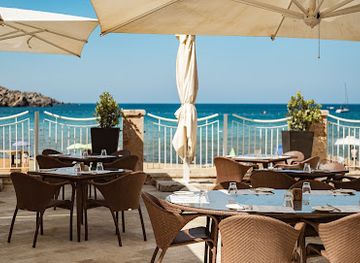
Golden Bay is not a major nightlife centre, and evenings are generally quieter than in Malta’s developed resort districts. The main beach and resort facilities may provide a place for a drink or a relaxed meal, particularly around sunset, but visitors should not expect a concentration of nightclubs or late-night venues. Traditional bars and local evening life are more characteristic of nearby villages such as Manikata and Mellieħa, where residents gather in community settings and seasonal village festivities may add a livelier atmosphere. St Julian’s and Paceville offer Malta’s most extensive nightlife, but they are outside the Golden Bay area and require a separate journey. In the immediate vicinity, the natural setting, open horizon and reduced development shape the evening experience more than organised entertainment.
-
Grill
Pebbles Beach Bar
Discover Pebbles Beach Bar in Mellieħa, Malta - where exquisite grill cuisine meets stunning views of the Mediterranean, perfect for relaxation and enjoyment.
Best shops in Golden Bay
Shopping at Golden Bay is limited and primarily serves beach visitors, with any immediate retail provision focused on refreshments and practical holiday needs. More substantial shopping is found in Mellieħa and other nearby towns, where visitors can look for groceries, beach supplies, local food products and everyday goods rather than a specialised shopping district. Malta’s regional products may include honey, olive oil, wine, preserves, lace, ceramics and locally made crafts, although availability varies between shops and markets. Manikata and the surrounding rural area are not large commercial centres, and Il-Majjistral Nature & History Park has no extensive retail scene. Visitors planning a long walk or a day on the coast should obtain water, food and other essentials before leaving the larger settlements.
-
Cafeteria
Munchies Golden Bay - Spiaggia D'Oro
Experience beachside dining at Munchies Golden Bay - Spiaggia D'Oro, where Mediterranean flavors meet stunning coastal views.
-
Ice Cream
Beach Pit
Experience the sweetness of Malta at Beach Pit, a charming ice cream shop in Mellieħa, offering delicious flavors and stunning coastal views.
-
Store
Sun Beds Rentals
Experience the ultimate beach relaxation at Sun Beds Rentals in Mellieħa, where comfort meets the stunning Maltese coastline.
Get your free copy of our complete guide to Golden Bay, delivered straight to you.
Everything on this page, from attractions and restaurants to essentials and local phrases, in one PDF you can read offline, print or share.
Already have an account? Sign in
Your Golden Bay guide is ready.
We'll send it to · Not you? Sign out

Getting your guide ready…
We are putting together a fresh copy of the Golden Bay guide. This can take up to a minute.
This can take a few moments. If your browser asks, choose Allow so the download can start. You'll find the guide in your Downloads folder.
Nothing happened? Download it again
Sorry, the guide is taking longer than usual. Please try again in a minute, or get it by email instead.
Golden Bay essentials
Currency and Payment
Safety
Emergency Situations
Do's and Don'ts
Local Tips
From Eve
Local phrases worth knowing
You don't need to get them perfect. A few words go a long way, and locals appreciate the effort.
Basics
| English | Local | Say it |
|---|---|---|
| Hello | Merħba | [Mer-hba] |
| Goodbye | Saħħa | [Sa-ha] |
| Yes | Iva | [Ee-va] |
| No | Le | [Le] |
| Please/You're welcome | Jekk jogħġbok | [Yekk yoj-bok] |
| Thank you | Grazzi | [Grat-see] |
| Excuse me/Sorry | Skuzani | [Skoo-za-nee] |
| How are you? | Kif int? | [Kif int?] |
| Fine. And you? | Tajjeb. U int? | [Tay-yeb. Oo int?] |
| Do you speak English? | Titkellem bl-Ingliz? | [Tit-kel-lem b'l-In-gleez] |
| I don't understand | Ma nifhimx | [Ma neef-heems] |
Eating & Drinking
| English | Local | Say it |
|---|---|---|
| I'd like to see the menu, please | Nixtieq inara l-menu, jekk jogħġbok | [Nis-teek in-ara l-meh-noo, yekk yoj-bok] |
| I don't eat meat | Ma nagħmilx laħam | [Ma na-ee-milx la-ham] |
| Cheers! | Sliem! | [Sleem!] |
| I would like to pay, please | Nixtieq inħallas, jekk jogħġbok | [Nis-teek in-hal-las, yekk yoj-bok] |
Emergencies
| English | Local | Say it |
|---|---|---|
| Help! | Għajni! | [Ayni!] |
| Go away! | Mur! | [Mur!] |
| Call the Police! | Ilħassar l-Pulizija! | [Il-has-sar l-Poo-lee-zee-ya!] |
| Call a doctor! | Ilħassar tabib! | [Il-has-sar ta-beeb!] |
| I'm lost | Inkejt | [In-keet] |
| I'm ill | Nixtieq inqatel | [Nis-teek in-ka-tel] |
Shopping
| English | Local | Say it |
|---|---|---|
| I'd like to buy... | Nixtieq inkun | [Nis-teek in-koon] |
| I'm just looking | Inħares biss | [In-ha-res beess] |
| How much is it? | Kemm huwa? | [Kemm hoo-wa?] |
| That's too expensive | Dan huwa wisq sħiħ | [Dan hoo-wa wees-sik se-eeh] |
| Can you lower the price? | Tista' tnaqqas il-prezz? | [Tis-ta tnak-kas eel-prezz?] |
Time & Numbers
| English | Local | Say it |
|---|---|---|
| What time is it? | Xi ħin huwa? | [She heen hoo-wa?] |
| It's one o'clock | Huwa waħda | [Hoo-wa wa-da] |
| Half past (10) | Nofsinhar (10) | [Nofs-in-har (10)] |
| Morning | Filgħodu | [Fil-goh-doo] |
| Afternoon | Waranofsinhar | [Wa-ranofs-in-har] |
| Evening | Waranħanin | [Wa-ran-ha-neen] |
| Yesterday | Ilbieraħ | [Il-bee-er-ah] |
| Today | Illum | [Il-lum] |
| Tomorrow | Għada | [A-da] |
| 1 | Waħda | [Wa-da] |
| 2 | Tnejn | [Tnejn] |
| 3 | Tlieta | [Tlee-ta] |
| 4 | Erba' | [Er-ba] |
| 5 | Ħamsa | [Hamsa] |
| 6 | Sitta | [Sit-ta] |
| 7 | Sebgħa | [Seb-gha] |
| 8 | Tmienja | [Tmi-en-ja] |
| 9 | Disgħa | [Dis-gha] |
| 10 | Għaxra | [A-kra] |
Transport & Directions
| English | Local | Say it |
|---|---|---|
| Where's a/the...? | Fejn hemm... | [Feyn hemm...] |
| What's the address? | X'inhu l-indirizz? | [Sheen-hoo l-indi-rezz?] |
| Can you show me (on the map)? | Tista' terġa' turi ni (fuq il-mappa)? | [Tis-ta ter-ga too-ree nee (fuq il-map-pa)?] |
| When's the next (bus)? | Meta jasal il-ġej? | [Me-ta ya-sal il-jay?] |
| A ticket (to ....) | Biljett (għal ....) | [Bil-yett (al ....)] |
History of Golden Bay
Limestone Coast and Agricultural Land
Golden Bay is shaped by Malta’s limestone geology, which forms the pale cliffs, shallow soils and gently elevated headlands characteristic of the north-west coast. Over many centuries, local communities adapted this difficult terrain for agriculture by clearing and terracing fields, building dry-stone walls and collecting limited fertile soil. The result is a landscape in which cultivated plots, exposed rock and coastal vegetation remain closely interwoven. The bay’s sandy shore is part of this wider coastal system, rather than an isolated urban beach, and its surrounding fields help explain the area’s continuing rural appearance.
Coastal Defence under the Knights
The coast around Golden Bay acquired strategic importance during the period of the Order of St John, when watchtowers were built to monitor approaches by sea and communicate warnings along Malta’s shores. Għajn Tuffieħa Tower, also known as Ta’ Għajn Tuffieħa Tower, dates from the seventeenth-century tower-building programme associated with Grand Master Giovanni Paolo Lascaris. Positioned near the bay rather than on the beach itself, it formed part of a defensive network intended to observe maritime movement and possible landings. Its presence adds a military dimension to an otherwise predominantly agricultural coastline.
Manikata and Modern Maltese Architecture
The nearby village of Manikata expanded as a rural community serving the surrounding agricultural district. Its parish church, completed in the 1970s to designs by Richard England, introduced an unconventional contemporary form inspired by local landscape and vernacular building traditions. The church reflects a period when Maltese architects were exploring ways to express national identity through modern design rather than reproducing historic ecclesiastical styles. Together with the old fields and coastal towers around Golden Bay, it demonstrates how the area combines recent architectural history with much older patterns of land use and defence.
Nature Protection and Recreation
As development increased elsewhere along Malta’s coast, the north-western headlands around Golden Bay, Għajn Tuffieħa and Anchor Bay retained wider areas of open countryside. Il-Majjistral Nature & History Park was established in 2007 as Malta’s first national nature park, bringing together coastal habitats, agricultural land and historic features across the area. Its creation recognised that the value of this coast lies not only in its beaches but also in its geological character, rural heritage and relatively open landscape. Modern visits therefore take place within a setting shaped by both recreation and landscape conservation.
Golden Bay in Photos
Browse through our photo collection highlighting the charm and character of the destination.
Neighbouring destination travel guides
The closest destinations to Golden Bay, if you have time for more than one.
-

-

-

-

-


Swipe for more destinations
Explore more

Explore more of Mellieha Bay Area
Discover Mellieha Bay, Malta's largest sandy beach with crystal-clear waters, rich history, and vibrant natural beauty—perfect for families, nature lovers, and adventure seekers.
Explore Mellieha Bay Area
Explore more of Malta
Discover Malta's crystal-clear waters, rich history, and vibrant culture. From ancient temples to modern nightlife, this Mediterranean gem offers something for everyone.
Explore Malta