

Mistra Bay Travel Guide - Free Web & App
Your ultimate guide to Mistra Bay. Discover top landmarks, proposed trips, and local tips. Free on the web or via the Evendo companion app.


Mistra Bay in Malta offers a quiet northern cove, clear Mediterranean water, coastal walks, historic fortifications and easy access from Mellieħa.
A Sheltered Bay on Malta’s Northern Coast
Mistra Bay is a small, relatively secluded coastal inlet on Malta’s north-western side, close to the settlements of Mellieħa and Xemxija. Set below the Selmun peninsula, the bay has a simple, natural character: a narrow strip of shore, shallow Mediterranean water and dry limestone slopes shaped by wind, sun and sparse vegetation. It is more peaceful and less developed than Malta’s principal resort beaches, although its quietness varies with the season and weather.Read more about Mistra Bay
Coast, Countryside and Heritage
Visiting Mistra Bay
When is the best time to visit Mistra Bay?
Best: May–June, October · 23–28°C| Month | High (°C) | Rainfall (mm) |
|---|---|---|
| January | 17 | 87 |
| February | 17 | 78 |
| March | 17 | 61 |
| April | 19 | 43 |
| May (best) | 23 | 21 |
| June (best) | 28 | 12 |
| July | 32 | 10 |
| August | 32 | 14 |
| September | 30 | 25 |
| October (best) | 27 | 47 |
| November | 22 | 66 |
| December | 18 | 78 |
Getting to and around Mistra Bay
How to get there
Transportation
Best attractions in Mistra Bay
Mistra Bay itself is the principal attraction: a small coastal inlet where visitors can enjoy the limestone shoreline, views across the northern Mediterranean and swimming when sea conditions are suitable. The surrounding Selmun countryside adds open rural scenery and walking opportunities, with dry-stone boundaries, exposed rock and broad skies replacing the built-up waterfront found at Malta’s larger resorts. Mistra Battery is the area’s most important historic sight, representing the defensive network established by the Order of St John along vulnerable stretches of coast. Nearby Selmun Palace gives the wider landscape an eighteenth-century architectural focus, although it is not part of the immediate beach facilities. Mellieħa and Xemxija act as practical gateways for exploring the area, while the wider north of Malta provides access to additional coastal viewpoints and beaches. Visitors should approach Mistra as a compact natural and heritage stop rather than a destination with a large concentration of attractions or visitor services.
-
Tourist attraction
Mistra Battery
Explore the historic Mistra Battery in St. Paul's Bay, Malta, and enjoy stunning coastal views and a glimpse into the island's military past.
Best landmarks in Mistra Bay
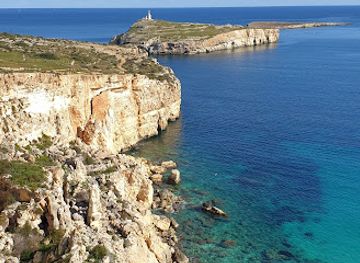
Mistra Bay’s defining landmark is its compact limestone cove, framed by dry coastal slopes and open views towards Malta’s northern waters. Mistra Battery, an early eighteenth-century coastal fortification built under the Order of St John, is the principal man-made heritage feature associated with the bay and illustrates the military importance once attached to Malta’s shoreline. Above the wider Selmun landscape, Selmun Palace provides a prominent architectural reference point and reflects the area’s history as a rural estate linked with the Order and charitable foundations. The relationship between elevated defensive positions, inland farmland and the sheltered inlet is more significant than any single monumental structure. Together, these features give Mistra Bay a distinctive identity as a meeting point of natural coast, rural landscape and early modern maritime defence.
-
Tourist attraction
Mistra Battery
Discover the rich history and stunning views of Mistra Battery, a 18th-century military site in St. Paul's Bay, Malta.
-
Tourist attraction
View Point
Discover the breathtaking views from the View Point in Mellieħa, a serene escape into Malta's stunning natural beauty.
-
Tourist attraction
Il-Hofra
Explore Il-Hofra in St. Paul's Bay, Malta – a breathtaking coastal gem perfect for relaxation, stunning views, and unforgettable memories.
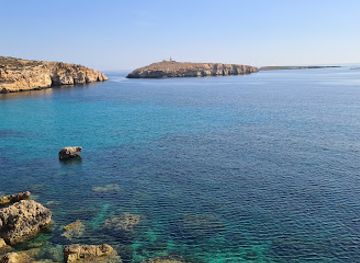
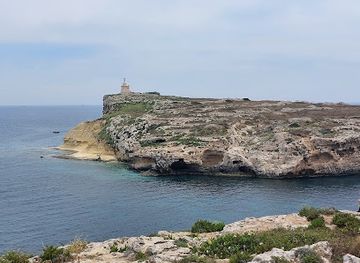
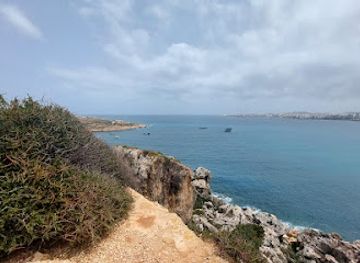
Explore Mistra Bay on the map
Plan your trip on one map. See where the top attractions, landmarks, restaurants and hotels are, and book hotels and experiences in a few clicks.
Best hotels in Mistra Bay
Best restaurants in Mistra Bay
There is no substantial restaurant district directly at Mistra Bay, so most visitors eat in nearby Mellieħa, Xemxija or other northern settlements. These areas provide the practical choice of cafés, casual restaurants, hotel dining rooms and traditional Maltese establishments, with menus commonly reflecting the island’s Mediterranean setting. Local specialities may include pastizzi, ftira, rabbit dishes, gbejna cheese, pasta, seasonal vegetables and fish, although exact offerings vary between venues. Mellieħa is particularly useful for arranging food before or after a coastal visit, while a picnic can be convenient for travellers spending time beside the bay, provided all waste is removed. The northern setting also makes it possible to combine Mistra with produce and seafood found elsewhere around Malta, but visitors should not expect cafés, kiosks or regular refreshment services on the shoreline itself.
-
Pizza
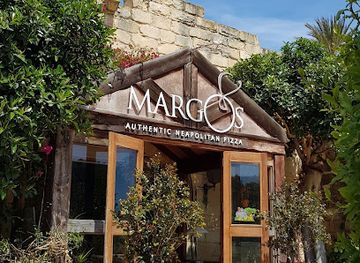
Margo's Mistra Bay
Experience the best pizzas in Malta at Margo's Mistra Bay – where authentic flavors meet local ingredients!
Best bars in Mistra Bay
Mistra Bay has no established nightlife scene and becomes a quiet coastal landscape after daylight hours. Evening drinks and dining are more realistically found in Mellieħa, Xemxija and the larger hotel areas nearby, where visitors can encounter local bars, hotel lounges and relaxed pub-style venues rather than a concentrated club district. The atmosphere in the surrounding countryside is rural and dark by Maltese standards, making it suitable for a quiet evening landscape experience only where access and conditions are appropriate. Visitors should avoid treating the shore as an all-night recreational venue, take care around uneven ground after dark and respect nearby homes and heritage structures. Those seeking late-night entertainment will generally need to travel beyond the immediate Mistra area to Malta’s more developed resort and urban centres.
-
Pizza
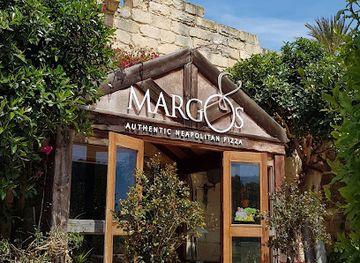
Margo's Mistra Bay
Discover the authentic taste of Italy at Margo's Mistra Bay, where every pizza is crafted with passion and quality in the heart of Mellieħa.
Get your free copy of our complete guide to Mistra Bay, delivered straight to you.
Everything on this page, from attractions and restaurants to essentials and local phrases, in one PDF you can read offline, print or share.
Already have an account? Sign in
Your Mistra Bay guide is ready.
We'll send it to · Not you? Sign out

Getting your guide ready…
We are putting together a fresh copy of the Mistra Bay guide. This can take up to a minute.
This can take a few moments. If your browser asks, choose Allow so the download can start. You'll find the guide in your Downloads folder.
Nothing happened? Download it again
Sorry, the guide is taking longer than usual. Please try again in a minute, or get it by email instead.
Mistra Bay essentials
Currency and Payment
Safety
Emergency Situations
Do's and Don'ts
Local Tips
From Eve
Local phrases worth knowing
You don't need to get them perfect. A few words go a long way, and locals appreciate the effort.
Basics
| English | Local | Say it |
|---|---|---|
| Hello | Merħba | [mer-hba] |
| Goodbye | Ċaw | [chaw] |
| Yes | Iva | [ee-va] |
| No | Le | [leh] |
| Please/You're welcome | Jekk jogħġbok | [yekk yoh-għbok] |
| Thank you | Grazzi | [grat-see] |
| Excuse me/Sorry | Skuzi | [skoo-zee] |
| How are you? | Kif int? | [kif int] |
| Fine. And you? | Ħelu. U int? | [hel-oo. oo int] |
| Do you speak English? | Titkellem bl-Ingliż? | [tit-kel-lem bl-ing-leez] |
| I don't understand | Ma nifhimx | [ma nee-feems] |
Eating & Drinking
| English | Local | Say it |
|---|---|---|
| I'd like to see the menu, please | Nixtieq inara l-menu, jekk jogħġbok | [nix-teek ee-nara l-men-oo, yekk yoh-għbok] |
| I don't eat meat | Ma niekolx laħam | [ma nee-ekols la-ham] |
| Cheers! | Saħħa! | [sa-ha] |
| I would like to pay, please | Nixtieq inħallas, jekk jogħġbok | [nix-teek in-hal-las, yekk yoh-għbok] |
Emergencies
| English | Local | Say it |
|---|---|---|
| Help! | Għajjat! | [ay-yat] |
| Go away! | Mur! | [mur] |
| Call the Police! | Illegi l-Pulizija! | [il-le-gi l-pu-lee-zee-ya] |
| Call a doctor! | Illegi tabib! | [il-le-gi ta-beeb] |
| I'm lost | Inħallit | [in-hal-lit] |
| I'm ill | Jien għandni ħsieb | [yien gan-dee ħsieb] |
Shopping
| English | Local | Say it |
|---|---|---|
| I'd like to buy... | Nixtieq inixtri... | [nix-teek ee-nix-tree] |
| I'm just looking | Jien biss qed nara | [yien beess kwehd na-ra] |
| How much is it? | Kemm jiswa? | [kem yis-wa] |
| That's too expensive | Dan huwa wisq għoli | [dan hoo-wa wees-għo go-lee] |
| Can you lower the price? | Tista' tgħallem il-prezz? | [tis-ta t-alle-em il-prezz] |
Time & Numbers
| English | Local | Say it |
|---|---|---|
| What time is it? | Xi ħin hu? | [shi heen hoo] |
| It's one o'clock | Huwa l-ewwel siegħa | [hoo-wa l-ew-wel sye-għa] |
| Half past (10) | Noqghod il-ġurnata (10) | [noq-od il-jur-na-ta (10)] |
| Morning | Filgħodu | [fil-oo-du] |
| Afternoon | Waranofsinhar | [wa-ra-no-fsi-nar] |
| Evening | Filgħaxija | [fil-a-ksee-ya] |
| Yesterday | Ilbieraħ | [il-bie-raħ] |
| Today | Illum | [il-lum] |
| Tomorrow | Għada | [a-da] |
| 1 | Wieħed | [wee-hed] |
| 2 | Tnejn | [t-neyn] |
| 3 | Tlieta | [t-lee-ta] |
| 4 | Erba' | [er-ba] |
| 5 | Ħamsa | [ħam-sa] |
| 6 | Sitta | [sit-ta] |
| 7 | Seb'a | [seb-a] |
| 8 | Tmenin | [t-me-neen] |
| 9 | Tmienja | [t-mee-nya] |
| 10 | Għaxra | [a-kshra] |
Transport & Directions
| English | Local | Say it |
|---|---|---|
| Where's a/the...? | Fejn hemm... | [feyn hemm] |
| What's the address? | X'inhu l-indirizz? | [sheen-hoo l-in-dee-rizz] |
| Can you show me (on the map)? | Tista' turi li (fuq il-mappa)? | [tis-ta tu-ree lee (fuq il-map-pa)] |
| When's the next (bus)? | Meta hu l-arkata li jmiss? | [me-ta hoo l-ar-ka-ta lee yem-iss] |
| A ticket (to ....) | Biljett (għal ....) | [bil-yett (al ....)] |
History of Mistra Bay
A Limestone Northern Coast
Mistra Bay forms part of Malta’s limestone coastline, a landscape created through geological processes long before human settlement. The shallow inlet, surrounding rocky slopes and exposed plateau reflect the island’s characteristic coastal geology, while the dry terrain has historically supported only limited agriculture and grazing. Its position on Malta’s northern side also gave the bay a practical significance beyond its small scale: sheltered coastal inlets and elevated ground could be used to observe movement by sea and connect inland rural areas with the shoreline.
The Order of St John and Coastal Defence
During the rule of the Order of St John, Malta’s coast was progressively strengthened against raids and maritime attack. Mistra Battery, constructed in the early eighteenth century, formed part of this network of coastal defences. Its position near the bay allowed the Order to control and monitor a vulnerable stretch of northern shoreline. The battery’s surviving form is a reminder that apparently quiet rural coves were once part of a carefully organised military landscape, linked to watchtowers, batteries and fortified settlements elsewhere on Malta.
Selmun’s Agricultural and Religious Estate
The wider Selmun area developed as a rural estate associated with the Order of St John and the charitable foundation known as the Monte della Redenzione degli Schiavi. Selmun Palace, built in the eighteenth century, served as a prominent country residence and is one of the area’s best-known historic structures. The estate’s presence shaped the surrounding countryside, where agricultural land, tracks and open limestone terrain formed a productive hinterland above the coast. The relationship between palace, estate and bay remains central to understanding Mistra’s historic setting.
A Quiet Coastal Recreation Area
In the modern period, Mistra Bay has remained comparatively lightly developed beside Malta’s busier beaches and resort waterfronts. Its appeal has centred on informal recreation, including swimming when conditions allow, coastal walking and visits to nearby historic features. Growth in Mellieħa and neighbouring northern settlements has made the bay more accessible to visitors, while its limited facilities and sensitive coastal environment have preserved a more rural character. Today, the shoreline is valued as part of Malta’s wider heritage and landscape rather than as a heavily built-up seaside resort.
Mistra Bay in Photos
Browse through our photo collection highlighting the charm and character of the destination.
Neighbouring destination travel guides
The closest destinations to Mistra Bay, if you have time for more than one.
-

-

-
-

-


Swipe for more destinations
Explore more
Explore more of St. Paul's Bay Area
Discover the charm of St. Paul's Bay Area in Malta, where history meets modernity along crystal-clear Mediterranean waters. Perfect for beach lovers and history enthusiasts alike.
Explore St. Paul's Bay Area
Explore more of Malta
Discover Malta's crystal-clear waters, rich history, and vibrant culture. From ancient temples to modern nightlife, this Mediterranean gem offers something for everyone.
Explore Malta