

Free Ailinglaplap Atoll Travel Guide & Mobile App
Explore Ailinglaplap Atoll with free travel guides. Discover regional history, expert tips, proposed trips, and audio guides on web or mobile app.


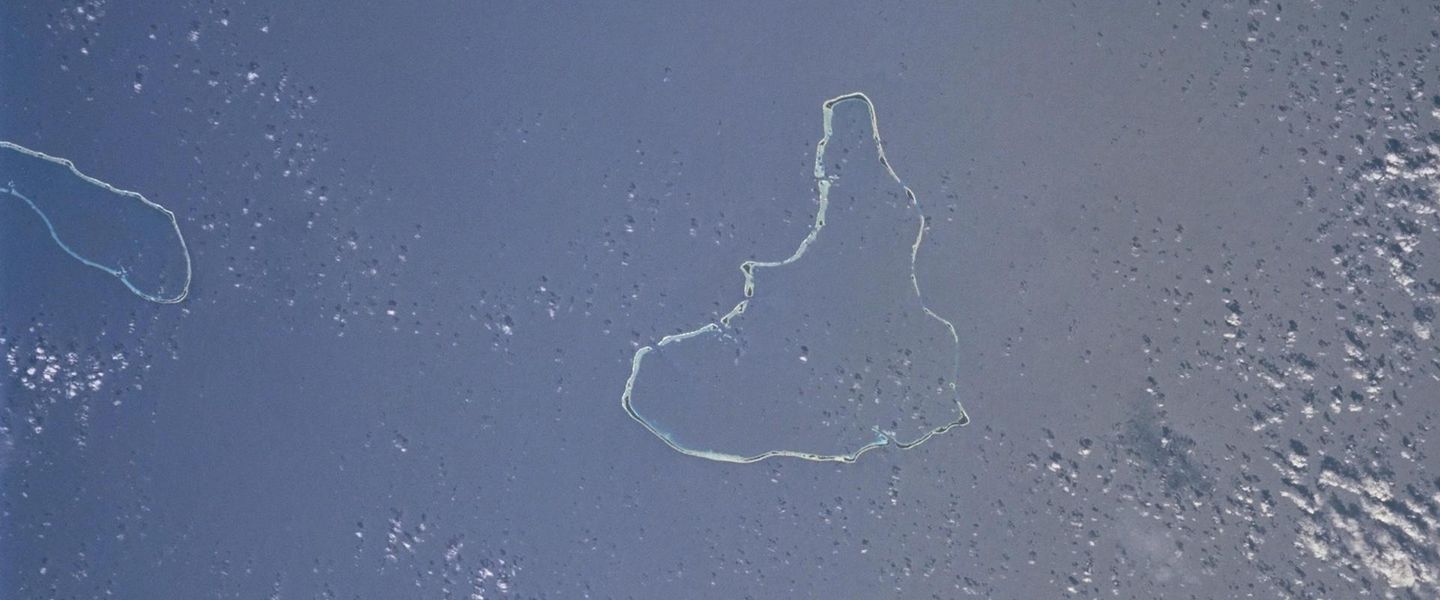


Ailinglaplap Atoll offers remote lagoon scenery, Marshallese heritage, village life and quiet island exploration in the Ralik Chain.
Read more about Ailinglaplap Atoll
When is the best time to visit Ailinglaplap Atoll?
Best: January–March · 29–30°C| Month | High (°C) | Rainfall (mm) |
|---|---|---|
| January (best) | 29 | 240 |
| February (best) | 29 | 220 |
| March (best) | 30 | 250 |
| April | 30 | 260 |
| May | 31 | 290 |
| June | 31 | 310 |
| July | 30 | 300 |
| August | 30 | 310 |
| September | 30 | 300 |
| October | 30 | 290 |
| November | 30 | 280 |
| December | 30 | 260 |
Getting to and around Ailinglaplap Atoll
How to get there
Transportation
Best landmarks in Ailinglaplap Atoll
Ailinglaplap’s most significant landmarks are dispersed across its low coral islets rather than concentrated in a historic town. The lagoon itself is the defining geographical feature: its channels, reef margins and changing colours demonstrate how the atoll’s communities depend on a narrow balance between land and ocean. Woja is important as a principal settlement and the location associated with the atoll’s air access, while Airok and other inhabited islets reveal the dispersed pattern of Marshallese community life. The atoll’s association with Amata Kabua gives its villages and chiefly landscapes national political significance, even where no monumental memorial dominates the view. Traditional outrigger canoes, community meeting places, churches, breadfruit groves and coconut plantations are modest landmarks whose meaning is social and cultural rather than architectural. Shorelines, reef flats and stands of pandanus also carry practical importance as places of fishing, food gathering and movement. Because land is frequently private or governed by customary relationships, visitors should view these places respectfully and seek permission before entering or photographing them.
-
Museum
Alele Museum and Public Library
Explore the Alele Museum and Public Library to discover the rich history and vibrant culture of the Marshall Islands.
-
Resort hotel
Beran Island Resort
Discover the serene beauty and rich culture of Beran Island Resort in the Marshall Islands, a perfect getaway for relaxation and adventure.
-
Park
Delap Park
Discover the beauty of Delap Park, a tranquil oasis in Majuro Atoll, perfect for relaxation, picnics, and immersing in local culture.
-
Island
Uliga
Experience the serene beauty and rich culture of Uliga Island in the Majuro Atoll, a tropical paradise for every traveler.


Explore Ailinglaplap Atoll on the map
Plan your trip on one map. See where the top cities, national parks and sights are, and book hotels and experiences in a few clicks.
Best hotels in Ailinglaplap Atoll
Best restaurants in Ailinglaplap Atoll
Ailinglaplap does not have a developed restaurant scene, and meals are more likely to be provided by a guesthouse, family host or small local shop than by a formal dining establishment. The local food culture reflects the resources of a coral atoll: fresh or preserved fish, coconut, breadfruit, pandanus, taro where cultivated, rice and imported tinned or packaged foods may all appear. Breadfruit can be boiled, baked or prepared in other household styles, while coconut is used for milk, cream and flavour. Availability varies with fishing, harvests, supply boats and weather, so visitors should not expect a fixed menu or constant access to fresh produce. Inform hosts about dietary requirements before arrival and bring suitable back-up provisions from Majuro. Sharing food is closely connected with family and community life; accept hospitality graciously while allowing the host to explain local customs. There is no need to seek luxury dining here: the interest lies in understanding how island households combine locally sourced staples with imported goods.
-
Restaurant
Tide Table Restaurant & Lounge
Discover culinary delights at Tide Table Restaurant & Lounge in Majuro - where fresh flavors meet stunning ocean views.

Best bars in Ailinglaplap Atoll
Ailinglaplap has no established nightclub district and should not be approached as a conventional nightlife destination. Evenings are generally quiet, centred on family homes, community interaction, church and social activities, or informal gatherings arranged locally. Small shops may sell drinks, but opening arrangements and stock cannot be assumed, while alcohol is not necessary for engaging with atoll life and should be handled discreetly and responsibly. After dark, the lagoon, stars and village paths create a strong sense of place, although visitors should carry a torch, stay with a host and avoid walking unfamiliar shoreline areas alone. If a community event or gathering is taking place, ask whether visitors are welcome and follow local expectations about dress, photography and behaviour. Bring reading material, offline maps and other simple entertainment because reliable evening services and internet access may be limited.
-
Hotel
Marshall Islands Resort
Experience the beauty of the Marshall Islands at Marshall Islands Resort, where relaxation meets adventure in a tropical paradise.
-
Restaurant
Tide Table Restaurant & Lounge
Discover the culinary delights at Tide Table Restaurant & Lounge, where local flavors meet stunning views in Majuro Atoll.
-
Hotel
Hotel Robert Reimers
Discover the comfort and charm of Hotel Robert Reimers in Majuro, Marshall Islands—a perfect getaway for travelers seeking relaxation and local culture.
-
International airport
Amata Kabua International Airport
Discover the charm of Amata Kabua International Airport, your gateway to the enchanting beauty of the Marshall Islands, rich culture, and stunning atolls.



Best nightclubs in Ailinglaplap Atoll
Ailinglaplap has no established nightclub district and should not be approached as a conventional nightlife destination. Evenings are generally quiet, centred on family homes, community interaction, church and social activities, or informal gatherings arranged locally. Small shops may sell drinks, but opening arrangements and stock cannot be assumed, while alcohol is not necessary for engaging with atoll life and should be handled discreetly and responsibly. After dark, the lagoon, stars and village paths create a strong sense of place, although visitors should carry a torch, stay with a host and avoid walking unfamiliar shoreline areas alone. If a community event or gathering is taking place, ask whether visitors are welcome and follow local expectations about dress, photography and behaviour. Bring reading material, offline maps and other simple entertainment because reliable evening services and internet access may be limited.
-
Night club
Marshall Islands Club
Discover the vibrant nightlife of the Marshall Islands at the Marshall Islands Club, where music and culture come alive in Majuro Atoll.
Best shops in Ailinglaplap Atoll
Shopping on Ailinglaplap is limited to small local stores and occasional community-based sales rather than a dedicated retail area. Supplies can include packaged food, drinks, household essentials and basic personal items, but selection and opening arrangements vary with resupply shipments and local demand. Visitors should purchase specialist medicines, toiletries, batteries, snacks and reliable drinking-water supplies in Majuro before travelling. The most appropriate souvenirs are locally made items obtained directly and respectfully, such as woven pandanus crafts or other small handicrafts when available; ask about prices, permission to photograph and whether an item is intended for sale. Fish, breadfruit, coconut and other foods may be shared or sold through informal household arrangements, but they should not be treated as guaranteed products. Avoid buying coral, shells, archaeological material or anything taken from reefs and beaches. Ailinglaplap is better suited to learning about local production and exchange than to conventional souvenir hunting, and the limited retail environment is part of the atoll’s remote character.
-
Hotel
Marshall Islands Resort
Discover the beauty of the Marshall Islands at the serene and captivating Marshall Islands Resort, your perfect getaway destination.
-
Park
Emon Beach
Experience the tranquility and beauty of Emon Beach, a tropical gem on Kwajalein Atoll, perfect for relaxation and underwater exploration.
-
Supermarket
K&K Island Pride Supermarket
Discover local flavors and international delights at K&K Island Pride Supermarket, your culinary destination in the Marshall Islands.
-
Hotel
Hotel Robert Reimers
Discover the tranquility and charm of Hotel Robert Reimers, your ideal retreat in the stunning Marshall Islands.


Get your free copy of our complete guide to Ailinglaplap Atoll, delivered straight to you.
Everything on this page, from attractions and restaurants to essentials and local phrases, in one PDF you can read offline, print or share.
Already have an account? Sign in
Your Ailinglaplap Atoll guide is ready.
We'll send it to · Not you? Sign out

Getting your guide ready…
We are putting together a fresh copy of the Ailinglaplap Atoll guide. This can take up to a minute.
This can take a few moments. If your browser asks, choose Allow so the download can start. You'll find the guide in your Downloads folder.
Nothing happened? Download it again
Sorry, the guide is taking longer than usual. Please try again in a minute, or get it by email instead.
Ailinglaplap Atoll essentials
Currency and Payment
Safety
Emergency Situations
Do's and Don'ts
Local Tips
From Eve
Local phrases worth knowing
You don't need to get them perfect. A few words go a long way, and locals appreciate the effort.
Basics
| English | Local | Say it |
|---|---|---|
| Hello | Yokwe | [yoh-kweh] |
| Goodbye | Yokwe | [yoh-kweh] |
| Yes | E | [eh] |
| No | Aolep | [ah-oh-lep] |
| Please/You're welcome | Iakwe | [ee-ah-kweh] |
| Thank you | Kommol tata | [kohm-mol tah-tah] |
| Excuse me/Sorry | Kommol | [kohm-mol] |
| How are you? | Bwe komal? | [bweh koh-mal] |
| Fine. And you? | Ij im jab? | [eej im yahb] |
| Do you speak English? | Eja ejin English? | [eh-jah eh-jin in-glish] |
| I don't understand | Aolep ej im jab | [ah-oh-lep ej im yahb] |
Eating & Drinking
| English | Local | Say it |
|---|---|---|
| I'd like to see the menu, please | Eja jela menu, iakwe | [eh-jah heh-lah meh-noo, ee-ah-kweh] |
| I don't eat meat | Aolep ej jela meat | [ah-oh-lep eh-j heh-lah meet] |
| Cheers! | Eja jela! | [eh-jah heh-lah!] |
| I would like to pay, please | Eja jela jek, iakwe | [eh-jah heh-lah jehk, ee-ah-kweh] |
Emergencies
| English | Local | Say it |
|---|---|---|
| Help! | Aolep! | [ah-oh-lep!] |
| Go away! | Jebwe! | [jeh-bweh!] |
| Call the Police! | Jela Police! | [heh-lah poh-lees!] |
| Call a doctor! | Jela dokta! | [heh-lah dok-tah!] |
| I'm lost | Eja ej im wot | [eh-jah eh-j im woht] |
| I'm ill | Eja ej im kake | [eh-jah eh-j im kah-keh] |
Shopping
| English | Local | Say it |
|---|---|---|
| I'd like to buy... | Eja jela jek... | [eh-jah heh-lah jehk...] |
| I'm just looking | Eja jela jek kom | [eh-jah heh-lah jehk kohm] |
| How much is it? | Eja jela nan jek? | [eh-jah heh-lah nahn jehk?] |
| That's too expensive | Ij atu eok jek | [eej ah-too eh-ok jehk] |
| Can you lower the price? | Eja jela ak jek? | [eh-jah heh-lah ahk jehk?] |
Time & Numbers
| English | Local | Say it |
|---|---|---|
| What time is it? | Eja jela an? | [eh-jah heh-lah ahn?] |
| It's one o'clock | Ij jela ak | [eej heh-lah ahk] |
| Half past (10) | Ij jela ak im jela (10) | [eej heh-lah ahk im heh-lah (ten)] |
| Morning | Bwe | [bweh] |
| Afternoon | Jebwe | [jeh-bweh] |
| Evening | Mwe | [mweh] |
| Yesterday | Jebwe | [jeh-bweh] |
| Today | Bwe | [bweh] |
| Tomorrow | Mwe | [mweh] |
| 1 | Ak | [ahk] |
| 2 | Jela | [heh-lah] |
| 3 | Jebwe | [jeh-bweh] |
| 4 | Mwe | [mweh] |
| 5 | Jek | [jehk] |
| 6 | Jebwe ak | [jeh-bweh ahk] |
| 7 | Mwe ak | [mweh ahk] |
| 8 | Jek ak | [jehk ahk] |
| 9 | Jebwe ak | [jeh-bweh ahk] |
| 10 | Ak jela | [ahk heh-lah] |
Transport & Directions
| English | Local | Say it |
|---|---|---|
| Where's a/the...? | Eja jela ...? | [eh-jah heh-lah ...?] |
| What's the address? | Eja jela jek address? | [eh-jah heh-lah jehk ad-dress?] |
| Can you show me (on the map)? | Eja jela ak jela (map)? | [eh-jah heh-lah ahk heh-lah (map)?] |
| When's the next (bus)? | Eja jela an next (bus)? | [eh-jah heh-lah ahn next (bus)?] |
| A ticket (to ....) | Eja jela ticket (to ...) | [eh-jah heh-lah tee-ket (to ...)] |
History of Ailinglaplap Atoll
Early Marshallese Settlement and Navigation
Ailinglaplap was settled within the wider Marshallese world of ocean-going navigation, matrilineal land relationships and chiefly authority. Communities developed ways of living on narrow coral islets by combining lagoon and reef fishing with breadfruit, coconut, pandanus and other cultivated or gathered foods. Traditional navigators read swells, stars, winds, birds and currents to travel between atolls. The atoll’s dispersed geography encouraged strong connections between individual islets and wider networks of kinship, exchange and political influence.
Chiefly Authority and Ralik Chain Politics
Before colonial administration, Ailinglaplap was governed through Marshallese customary systems in which iroij, or chiefs, held important authority over land, resources and social obligations. The atoll became associated with influential chiefly lineages in the Ralik Chain. These relationships did not function like a modern central government, but they shaped access to land, the organisation of communities and the settlement of disputes. Customary authority remains an important part of understanding local identity, even though the contemporary Republic of the Marshall Islands has constitutional and municipal institutions.
German and Japanese Colonial Rule
Germany established a protectorate over the Marshall Islands in 1885, incorporating the atolls into its wider Pacific colonial network and encouraging the expansion of commercial copra production. After the First World War, Japan administered the islands under a League of Nations mandate. Japanese rule brought new administrative structures and economic connections, while also placing the Marshall Islands within the strategic sphere that later became central to the Pacific War. These colonial layers remain part of the region’s modern history, although Ailinglaplap is better known for its customary and community heritage than for large surviving colonial monuments.
The Pacific War and American Administration
The Marshall Islands became a theatre of conflict during the Second World War as American forces moved through the central Pacific and displaced Japanese military control. The most destructive battles and later nuclear-testing history associated with the country were concentrated elsewhere, notably at Kwajalein and Bikini, rather than on Ailinglaplap itself. After the war, the United States administered the islands as part of the United Nations Trust Territory of the Pacific Islands. This period introduced new systems of education, public administration, transport and political organisation while also accelerating social change.
Amata Kabua and the Road to Independence
Ailinglaplap is closely linked with Amata Kabua, a paramount chief from the atoll who became the first president of the Republic of the Marshall Islands. He played a central role in negotiations that led to the Constitution of the Marshall Islands and the country’s emergence as a self-governing state in 1979, followed by the Compact of Free Association with the United States in 1986. His association with Ailinglaplap gives the atoll an importance that extends beyond its small population and remote geography.
Contemporary Atoll Life and Environmental Pressure
In recent decades, Ailinglaplap has experienced the pressures common to many low-lying Marshallese atolls: outward migration, limited employment, dependence on imported goods, fragile transport links and exposure to drought, storms, coastal erosion and sea-level rise. At the same time, village life continues to depend on family networks, fishing, cultivation, customary knowledge and the practical use of lagoon and land resources. Contemporary Ailinglaplap therefore reflects both continuity and adaptation, with climate resilience and reliable access to services becoming increasingly important.
Ailinglaplap Atoll in Photos
Browse through our photo collection highlighting the charm and character of the destination.
Neighbouring regions of Ailinglaplap Atoll
The closest regions to Ailinglaplap Atoll, if you have time for more than one.
-

-

-

-

-


Swipe for more regions
Explore more

Explore more of Marshall Islands
Discover the untouched beauty and rich cultural heritage of the Marshall Islands, a Pacific paradise offering pristine beaches, vibrant marine life, and historical treasures.
Explore Marshall Islands