

Kili Island, Marshall Islands Travel Guide
Discover Kili Island in the Marshall Islands, a secluded paradise with pristine beaches, vibrant coral reefs, and a rich cultural heritage waiting to be explored.
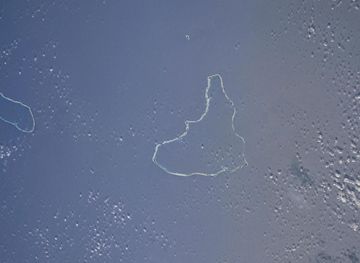
Kili Island, an untouched paradise located in the Marshall Islands, offers a serene escape from the hustle and bustle of modern life. Known for its pristine beaches and crystal-clear waters, Kili Island provides a perfect setting for relaxation and adventure. The island is surrounded by a vibrant coral reef, making it an ideal spot for snorkeling and diving enthusiasts. The underwater world here is teeming with colorful marine life, promising unforgettable experiences for all who explore it. The island's rich history adds another layer to its charm. Originally home to the displaced Bikini Islanders, Kili Island has a unique cultural heritage that visitors can learn about through local stories and traditions. The welcoming community is eager to share their way of life, offering a glimpse into a simpler, more connected existence. Don't miss the chance to participate in traditional dances and sample local delicacies made from fresh, locally sourced ingredients. Despite its remote location, Kili Island is accessible by boat or small aircraft from the capital, Majuro. The journey itself is an adventure, as you navigate through the stunning landscapes of the Marshall Islands. Once you arrive, the island's natural beauty will captivate you, making every moment spent here a cherished memory. Whether you're looking to unwind on a quiet beach or explore the vibrant marine ecosystem, Kili Island promises an enriching and rejuvenating experience.

Know before you go
Hi, I'm Eve. Here are a few practical things to know before exploring Kili Island.
- Bring snorkeling gear to fully enjoy the vibrant coral reefs.
- Learn about the island's history from locals to enhance your visit.
- Pack enough essentials, as amenities on the island are limited.
- Respect local customs and traditions during your stay.
- Plan your trip during the dry season for the best weather conditions.
Explore Kili Island: Things to Do, Places to Eat, Hotels & More
Handpicked recommendations for top attractions, local dining, accommodations, and more

Top Attractions & Sightseeing in Kili Island


Best restaurants in Kili Island
Top-rated picks
Best Restaurants

Marshall Islands Resort
Experience paradise at Marshall Islands Resort – where relaxation meets adventure in Majuro Atoll's stunning natural beauty.

Tide Table Restaurant & Lounge
Discover delicious local cuisine and stunning views at Tide Table Restaurant & Lounge in Majuro Atoll.

Toeak Bar and Grill
Discover authentic Marshallese cuisine at Toeak Bar and Grill, where fresh ingredients meet vibrant island flavors in a cozy atmosphere.

Kili
Experience tranquility at Kili Island – a hidden paradise in the Marshall Islands with pristine beaches and rich cultural experiences.

Best bars in Kili Island
Top-rated picks
Best Bars

Marshall Islands Resort
Discover the serenity and beauty of the Marshall Islands at the luxurious Marshall Islands Resort, your gateway to tropical paradise.

Tide Table Restaurant & Lounge
Experience the delightful fusion of local and international cuisine at Tide Table Restaurant & Lounge with breathtaking ocean views in Majuro.

Hotel Robert Reimers
Experience the warmth of Marshall Islands hospitality at Hotel Robert Reimers, your cozy retreat in Majuro Atoll.

Amata Kabua International Airport
Discover the enchanting gateway to the Marshall Islands at Amata Kabua International Airport, where warm hospitality meets breathtaking island beauty.


Best shops in Kili Island
Top-rated picks
Best Shops

Marshall Islands Resort
Discover the beauty of the Marshall Islands at the Marshall Islands Resort, your gateway to adventure and relaxation in a tropical paradise.

K&K Island Pride Supermarket
Discover the vibrant offerings of K&K Island Pride Supermarket in Majuro, where local culture meets convenience in a bustling marketplace.

Hotel Robert Reimers
Experience the serene beauty of Majuro Atoll at Hotel Robert Reimers, your peaceful retreat in the heart of the Marshall Islands.

Amata Kabua International Airport
Experience the warm welcome of the Marshall Islands at Amata Kabua International Airport, your gateway to tropical adventure and island paradise.

Explore Kili Island on the Map
A handpicked selection of must-see spots in Kili Island, mapped for you.
Kili Island Essentials
-
Kili Island is located in the Marshall Islands, a remote island nation in the Pacific Ocean. The primary route to Kili Island involves flying into the Marshall Islands' main international gateway, Amata Kabua International Airport (MAJ) in Majuro. From Majuro, you can take a domestic flight operated by Air Marshall Islands to Jaluit Atoll, which is the closest airstrip to Kili Island. From Jaluit, a boat transfer to Kili Island will be required. It is advisable to coordinate with local travel agencies or your accommodation for the boat transfer.
-
Transportation options on Kili Island are limited due to its small size and remote location. Walking is the most common mode of transportation, as the island can be easily navigated on foot. There are no formal public transport systems or taxi services on the island. For specific arrangements, such as guided tours or excursions, it is best to rely on local accommodations or community contacts.
-
The official currency of the Marshall Islands is the United States Dollar (USD). There are no ATMs or banks on Kili Island, so it is essential to bring enough cash for your entire stay. Credit cards are not accepted on the island. Ensure you withdraw sufficient funds while in Majuro or Jaluit Atoll before arriving on Kili Island.
-
Kili Island is generally a safe destination for tourists, with very low crime rates. However, it is advisable to take standard precautions. Avoid walking alone at night and keep an eye on your belongings. There are no specific areas with high crime rates targeting tourists, but it is always best to remain vigilant and aware of your surroundings.
-
In case of an emergency, you should contact local authorities or your accommodation provider for assistance. There is no formal emergency response service on the island, but the local community is supportive and will help in any way possible. It is highly recommended to have travel insurance that covers medical emergencies and evacuation, as the nearest full-fledged medical facilities are in Majuro.
-
Fashion: Do dress modestly, respecting local customs. Avoid wearing overly revealing clothing. Religion: Do be respectful of local customs and traditions. Public Transport: There is no formal public transport, so rely on walking or community arrangements. Greetings: Do greet people warmly with a smile and a handshake. Eating & Drinking: Do try local foods and accept food offerings graciously. Don’t waste food, as resources on the island are limited.
-
To experience Kili Island like a local, engage with the community and participate in local events and activities. Visit the local markets to buy fresh produce and traditional Marshallese crafts. Learn a few phrases in Marshallese to communicate with the locals better. Respect the island's natural environment by minimizing waste and supporting local conservation efforts. Take the time to learn about the island's unique history, especially its connection to the people displaced from Bikini Atoll.
When is the best time to visit Kili Island?
Useful Local Phrases for Kili Island
You don't need to speak the language perfectly. Even learning a few simple words can make conversations warmer—and locals usually appreciate the effort.
— Eve

Here are the phrases I use most often in Kili Island. Try a few—you'll be surprised how far they go! 😊
❤️
-
- HelloIakwe
[Iah-kweh] - GoodbyeAolep
[Ah-oh-lep] - YesEjjab
[Eh-jahb] - NoAen
[Aen] - Please/You're welcomeBweo
[Bweh-oh] - Thank youKommol tata
[Kohm-mol tah-tah] - Excuse me/SorryKommol
[Kohm-mol] - How are you?Ejjab ian?
[Eh-jahb ee-ahn] - Fine. And you?Ejja. Ian bwe?
[Eh-jah. Ee-ahn bweh?] - Do you speak English?Ejjab wōt in English?
[Eh-jahb woh-t in In-glish?] - I don't understandEjjab wōt in jikin
[Eh-jahb woh-t in jee-kin]
- HelloIakwe
-
- I'd like to see the menu, pleaseKommol bwe eok a menu
[Kohm-mol bweh eh-ok ah meh-new] - I don't eat meatEjjab wōt ak meat
[Eh-jahb woh-t ahk meet] - Cheers!Iakwe!
[Iah-kweh!] - I would like to pay, pleaseKommol bwe eok a pay
[Kohm-mol bweh eh-ok ah pay]
- I'd like to see the menu, pleaseKommol bwe eok a menu
-
- Help!Joñ!
[Hohnn!] - Go away!Jab aolep!
[Jahb ah-oh-lep!] - Call the Police!Kōll a Police!
[Koh-l a Poh-lees!] - Call a doctor!Kōll a doctor!
[Koh-l a dok-tor!] - I'm lostEjja eok aien
[Eh-jah eh-ok ah-ien] - I'm illEjja eok jikin
[Eh-jah eh-ok jee-kin]
- Help!Joñ!
-
- I'd like to buy...Kommol bwe eok an...
[Kohm-mol bweh eh-ok ahn...] - I'm just lookingEjja bwe eok an
[Eh-jah bweh eh-ok ahn] - How much is it?Ejjab an ael?
[Eh-jahb ahn ah-el?] - That's too expensiveEjjab an roñin
[Eh-jahb ahn roh-neen] - Can you lower the price?Ejjab bwe eok juon a price?
[Eh-jahb bweh eh-ok joo-ohn ah pryce?]
- I'd like to buy...Kommol bwe eok an...
-
- What time is it?Ejjab an aen?
[Eh-jahb ahn ah-en?] - It's one o'clockEjjab an juon a clock
[Eh-jahb ahn joo-on ah clock] - Half past (10)Half an (10)
[Half ahn (10)] - MorningMōrning
[Mōr-ning] - AfternoonAftanoon
[Aft-ah-noon] - EveningInevening
[Ih-ne-ven-ing] - YesterdayYestedei
[Yes-teh-dee] - TodayTudai
[Too-dye] - TomorrowTumoro
[Too-mor-oh] - 1Juon
[Joo-on] - 2Rā
[Rah] - 3Jeb
[Jeb] - 4Jab
[Jahb] - 5Iro
[Ee-roh] - 6Rū
[Roo] - 7Jebū
[Jeh-boo] - 8Rūn
[Roon] - 9Jebūn
[Jeh-boon] - 10Jebūn
[Jeh-boon]
- What time is it?Ejjab an aen?
-
- Where's a/the...?Ejjab an a ...?
[Eh-jahb ahn ah ...?] - What's the address?Ejjab an address?
[Eh-jahb ahn ah-dress?] - Can you show me (on the map)?Ejjab bwe eok aen (on the map)?
[Eh-jahb bweh eh-ok ahn (on the map)?] - When's the next (bus)?Ejjab an a next (bus)?
[Eh-jahb ahn ah next (bus)?] - A ticket (to ....)A ticket (to ...)
[Ah ti-ket (to ...)]
- Where's a/the...?Ejjab an a ...?
History of Kili Island
-
Kili Island, part of the Marshall Islands, is a small but historically rich island located in the central Pacific Ocean. It covers an area of approximately 0.93 square kilometers and is known for its unique history and resilient community. The island offers a fascinating glimpse into the struggles and triumphs of the Marshallese people, particularly the displaced inhabitants of Bikini Atoll.
-
In 1946, the United States conducted nuclear tests on Bikini Atoll, leading to the forced relocation of its inhabitants. After several temporary relocations, the Bikinians were moved to Kili Island in 1948. The transition was challenging due to Kili’s lack of a lagoon and limited resources, drastically different from the lush, resource-rich Bikini Atoll.
-
Adjusting to life on Kili Island was difficult for the Bikinians. The island's geography, characterized by its lack of a protective lagoon and limited agricultural potential, posed significant challenges. The community had to adapt to new ways of fishing, farming, and living in a more confined space, fostering a strong sense of resilience and community.
-
Despite the hardships, the Bikinians have managed to preserve their cultural heritage. Traditional practices, such as weaving, dance, and storytelling, continue to be an integral part of life on Kili Island. The community celebrates cultural events and maintains a strong connection to their ancestral homeland of Bikini Atoll through oral history and cultural practices.
-
Kili Island faces ongoing challenges, including limited economic opportunities, environmental threats, and the impact of climate change. Rising sea levels and increased storm activity pose significant risks to the island's infrastructure and the well-being of its inhabitants. Efforts are being made to address these challenges through local and international support.
-
International aid has played a crucial role in supporting Kili Island’s community. Various organizations and governments have provided financial assistance, infrastructure development, and educational programs. These efforts aim to improve living conditions, promote sustainability, and preserve the unique cultural heritage of the Bikinians on Kili Island.
-
Today, Kili Island stands as a testament to the resilience and strength of the Bikinians. While challenges remain, the community continues to adapt and thrive, maintaining their cultural identity and looking towards a sustainable future. Visitors to Kili Island can learn about this rich history and witness the enduring spirit of its people.
Neighbouring Regions of Kili Island
The closest regions to Kili Island, if you have time for more than one.




Your all‑in‑one travel companion app
Explore expert travel guides, compare and book tours, experiences, hotels, and more—all from the palm of your hand. Download now for seamless trip planning wherever your wanderlust takes you.


Explore More of Marshall Islands

Looking beyond Kili Island? Discover Marshall Islands for broader travel guides, local hot-spots, and regional highlights.
Explore Marshall IslandsKili Island in Photos
Browse through our photo collection highlighting the charm and character of the destination.


Kili Island: The Hidden Gem of the Marshall Islands
Kili Island, an untouched paradise located in the Marshall Islands, offers a serene escape from the hustle and bustle of modern life. Known for its pristine beaches and crystal-clear waters, Kili Island provides a perfect setting for relaxation and adventure. The island is surrounded by a vibrant coral reef, making it an ideal spot for snorkeling and diving enthusiasts. The underwater world here is teeming with colorful marine life, promising unforgettable experiences for all who explore it. The island's rich history adds another layer to its charm. Originally home to the displaced Bikini Islanders, Kili Island has a unique cultural heritage that visitors can learn about through local stories and traditions. The welcoming community is eager to share their way of life, offering a glimpse into a simpler, more connected existence. Don't miss the chance to participate in traditional dances and sample local delicacies made from fresh, locally sourced ingredients. Despite its remote location, Kili Island is accessible by boat or small aircraft from the capital, Majuro. The journey itself is an adventure, as you navigate through the stunning landscapes of the Marshall Islands. Once you arrive, the island's natural beauty will captivate you, making every moment spent here a cherished memory. Whether you're looking to unwind on a quiet beach or explore the vibrant marine ecosystem, Kili Island promises an enriching and rejuvenating experience.