

Free Bikini Atoll Travel Guide & Mobile App
Explore Bikini Atoll with free travel guides. Discover regional history, expert tips, proposed trips, and audio guides on web or mobile app.


Bikini Atoll combines Marshallese heritage, nuclear history and renowned wreck diving in a remote lagoon reached only through carefully organised expeditions.
Read more about Bikini Atoll
When is the best time to visit Bikini Atoll?
Best: February–April · 30°C| Month | High (°C) | Rainfall (mm) |
|---|---|---|
| January | 30 | 220 |
| February (best) | 30 | 190 |
| March (best) | 30 | 180 |
| April (best) | 30 | 170 |
| May | 30 | 190 |
| June | 30 | 210 |
| July | 30 | 220 |
| August | 30 | 250 |
| September | 30 | 260 |
| October | 30 | 250 |
| November | 30 | 230 |
| December | 30 | 220 |
Getting to and around Bikini Atoll
How to get there
Transportation
Explore Bikini Atoll on the map
Plan your trip on one map. See where the top cities, national parks and sights are, and book hotels and experiences in a few clicks.
Best hotels in Bikini Atoll
Best bars in Bikini Atoll
Bikini Atoll has no bars, nightclubs or organised nightlife. Evenings are normally spent aboard an expedition vessel or at the authorised base, with conversation, stargazing, equipment preparation and historical discussion replacing commercial entertainment. The remote setting can offer exceptionally dark skies, although cloud, humidity and vessel lighting affect visibility. Alcohol policies vary by operator and should never compromise diving, boating or emergency readiness. Visitors seeking restaurants, social venues or a broader evening culture will find those facilities in Majuro, which is outside Bikini Atoll and serves as the main practical gateway for many journeys. On the atoll itself, respectful quiet and careful preparation are more appropriate than treating the location as a party destination.
-
Atoll
Bikini Atoll
Discover the breathtaking beauty and historical significance of Bikini Atoll, a hidden gem in the Marshall Islands, perfect for adventure and reflection.
-
Hotel
Marshall Islands Resort
Discover the beauty of the Marshall Islands at the serene and welcoming Marshall Islands Resort, where adventure meets relaxation in paradise.
-
Restaurant
Tide Table Restaurant & Lounge
Experience the best of Pacific cuisine at Tide Table Restaurant & Lounge, where delicious food meets stunning ocean views in Majuro Atoll.
-
Bar
Jules On The Deck
Experience the vibrant ambiance and stunning views at Jules On The Deck, Nauru's premier bar for relaxation and socializing.


Best nightclubs in Bikini Atoll
Bikini Atoll has no bars, nightclubs or organised nightlife. Evenings are normally spent aboard an expedition vessel or at the authorised base, with conversation, stargazing, equipment preparation and historical discussion replacing commercial entertainment. The remote setting can offer exceptionally dark skies, although cloud, humidity and vessel lighting affect visibility. Alcohol policies vary by operator and should never compromise diving, boating or emergency readiness. Visitors seeking restaurants, social venues or a broader evening culture will find those facilities in Majuro, which is outside Bikini Atoll and serves as the main practical gateway for many journeys. On the atoll itself, respectful quiet and careful preparation are more appropriate than treating the location as a party destination.
-
 Airstrip
Bikini Atoll Airport
Explore the stunning Bikini Atoll Airport, a gateway to natural beauty and historical significance in the breathtaking Marshall Islands.
Best shops in Bikini Atoll
Bikini Atoll has no shops, market, craft centre or regular retail facilities. Visitors must obtain clothing, dive equipment, medicines, toiletries, food and technical supplies before departure, normally in Majuro or through an expedition operator. The most appropriate souvenirs are responsibly sourced items purchased in the wider Marshall Islands, such as locally made handicrafts, woven goods, books about Marshallese history and authorised educational material related to Bikini. Do not collect shells, coral, historical fragments, wreck material or other objects from the atoll, and be especially cautious about purchasing anything claimed to have been recovered from the test site. Shopping in Bikini is therefore primarily a matter of expedition provisioning, while meaningful gifts and locally produced goods should be bought through legitimate Marshallese sellers who can explain their origin.
-
Hotel
Marshall Islands Resort
Experience the serene beauty and rich culture of the Marshall Islands at the stunning Marshall Islands Resort, your ultimate getaway in paradise.
-
Supermarket
K&K Island Pride Supermarket
Discover local flavors and fresh produce at K&K Island Pride Supermarket in Majuro, your go-to destination for a unique shopping experience.
-
Atoll
Majuro
Discover the enchanting beauty of Majuro Atoll, a tropical paradise rich in culture and adventure in the heart of the Pacific.
-
International airport
Amata Kabua International Airport
Experience the beauty of the Marshall Islands through Amata Kabua International Airport, your gateway to tropical adventure and culture.


Get your free copy of our complete guide to Bikini Atoll, delivered straight to you.
Everything on this page, from attractions and restaurants to essentials and local phrases, in one PDF you can read offline, print or share.
Already have an account? Sign in
Your Bikini Atoll guide is ready.
We'll send it to · Not you? Sign out

Getting your guide ready…
We are putting together a fresh copy of the Bikini Atoll guide. This can take up to a minute.
This can take a few moments. If your browser asks, choose Allow so the download can start. You'll find the guide in your Downloads folder.
Nothing happened? Download it again
Sorry, the guide is taking longer than usual. Please try again in a minute, or get it by email instead.
Bikini Atoll essentials
Currency and Payment
Safety
Emergency Situations
Do's and Don'ts
Local Tips
From Eve
Local phrases worth knowing
You don't need to get them perfect. A few words go a long way, and locals appreciate the effort.
Basics
| English | Local | Say it |
|---|---|---|
| Hello | Yokwe | [Yoh-kweh] |
| Goodbye | Aolep | [Ah-oh-lep] |
| Yes | E | [Eh] |
| No | Aole | [Ah-oh-leh] |
| Please/You're welcome | Kommol tata | [Kohm-mol tah-tah] |
| Thank you | Kommol | [Kohm-mol] |
| Excuse me/Sorry | Ij jab | [Ee jhab] |
| How are you? | Ena an jou? | [Eh-nah ahn joh?] |
| Fine. And you? | Jab, ej an jou? | [Jhab, ehj ahn joh?] |
| Do you speak English? | Ij juon English? | [Ee joo-ohn English?] |
| I don't understand | Ij ej jab in kan | [Ee jh ej jhab in kahn] |
Eating & Drinking
| English | Local | Say it |
|---|---|---|
| I'd like to see the menu, please | Ij juon an jek, kommol | [Ee joo-ohn ahn jek, kohm-mol] |
| I don't eat meat | Ij ej jab jek | [Ee jh ej jhab jek] |
| Cheers! | Ika! | [Ee-kah] |
| I would like to pay, please | Ij juon an jek, kommol | [Ee joo-ohn ahn jek, kohm-mol] |
Emergencies
| English | Local | Say it |
|---|---|---|
| Help! | Jab! | [Jhab!] |
| Go away! | Joan an! | [Joh-ahn ahn!] |
| Call the Police! | Kōmo an Police! | [Koh-moh ahn Police!] |
| Call a doctor! | Kōmo an dokta! | [Koh-moh ahn dok-tah!] |
| I'm lost | Ij ej jab an wōt | [Ee jh ej jhab ahn woh-t] |
| I'm ill | Ij ej jab an jān | [Ee jh ej jhab ahn jahn] |
Shopping
| English | Local | Say it |
|---|---|---|
| I'd like to buy... | Ij juon an ioon... | [Ee joo-ohn ahn ee-oon...] |
| I'm just looking | Ij ej jek an | [Ee jh ej jek ahn] |
| How much is it? | Ena wāwō? | [Eh-nah wah-woh?] |
| That's too expensive | Ena ej pein jān | [Eh-nah eh-jh payn jahn] |
| Can you lower the price? | Jab an wōr jān? | [Jhab ahn woh-r jahn?] |
Time & Numbers
| English | Local | Say it |
|---|---|---|
| What time is it? | Ena wōt? | [Eh-nah woh-t?] |
| It's one o'clock | Ena juon wōt | [Eh-nah joo-ohn woh-t] |
| Half past (10) | Wōt jān (10) | [Woh-t jahn (10)] |
| Morning | Jāin | [Jah-een] |
| Afternoon | Wōt jān | [Woh-t jahn] |
| Evening | Wōt n̄an | [Woh-t nahn] |
| Yesterday | Jāin wōt | [Jah-een woh-t] |
| Today | Ena wōt | [Eh-nah woh-t] |
| Tomorrow | Jāin n̄an | [Jah-een nahn] |
| 1 | Juon | [Joo-ohn] |
| 2 | Jā | [Jah] |
| 3 | Jeb | [Jeb] |
| 4 | Jebū | [Jeb-oo] |
| 5 | Lōk | [Lohk] |
| 6 | Jebūl | [Jeb-ool] |
| 7 | Jebūl n̄an | [Jeb-ool nahn] |
| 8 | Jebūl n̄an n̄an | [Jeb-ool nahn nahn] |
| 9 | Jebūl n̄an n̄an n̄an | [Jeb-ool nahn nahn nahn] |
| 10 | Jebūl n̄an n̄an n̄an n̄an | [Jeb-ool nahn nahn nahn nahn] |
Transport & Directions
| English | Local | Say it |
|---|---|---|
| Where's a/the...? | Ena wōt an ...? | [Eh-nah woh-t ahn ...?] |
| What's the address? | Ena wōt an address? | [Eh-nah woh-t ahn address?] |
| Can you show me (on the map)? | Ij juon an wōt (an map)? | [Ee joo-ohn ahn woh-t (ahn map)?] |
| When's the next (bus)? | Ena wōt an next (bus)? | [Eh-nah woh-t ahn next (bus)?] |
| A ticket (to ....) | An ticket (to ...) | [Ahn ticket (to ...)] |
History of Bikini Atoll
Marshallese Settlement and Atoll Society
Bikini Atoll formed part of the traditional seascape of the Marshall Islands, where communities developed sophisticated systems of navigation, fishing, canoe building and reef management. Life on a remote atoll depended on intimate knowledge of lagoon passages, seasonal conditions and limited land resources. Bikini’s residents maintained social, cultural and territorial relationships with the atoll before the arrival of colonial administrations and military powers. This earlier history remains essential to understanding why the atoll is not an empty testing ground but an ancestral homeland whose people were displaced in the twentieth century.
German, Japanese and American Rule
The Marshall Islands came under German colonial administration in the late nineteenth century and were later administered by Japan under a League of Nations mandate after the First World War. Japanese control ended during the Pacific War, when the islands became a major theatre of conflict. After the United States captured the Marshall Islands, the territory entered an American-administered period under the United Nations Trust Territory of the Pacific Islands. These successive administrations strengthened the strategic importance of the atolls and set the stage for the nuclear testing programme.
Operation Crossroads and the 1946 Relocation
In 1946 the United States selected Bikini Atoll for Operation Crossroads, a pair of atomic bomb tests designed to examine the effects of nuclear weapons on naval vessels. Before the tests, Bikini’s residents were persuaded to leave their homeland, initially relocating to Rongerik Atoll. The community soon found that the new location could not provide adequate food and other necessities, leading to further movements among the Marshall Islands. The relocation became the starting point of a prolonged history of displacement, environmental uncertainty and contested promises of return.
The 1946 Lagoon Tests
Operation Crossroads consisted of the Able and Baker tests, conducted in Bikini’s lagoon in July 1946. A fleet of warships and support vessels was assembled as a target fleet, making the operation an important early experiment in nuclear warfare and naval vulnerability. The underwater Baker explosion generated radioactive contamination across the lagoon and its vessels, revealing hazards that were not fully understood or adequately controlled. Several of the wrecks remain beneath Bikini’s waters and now form a technically demanding underwater historical landscape.
The Thermonuclear Testing Era, 1954–1958
Further thermonuclear tests took place at Bikini during the 1950s, including Castle Bravo on 1 March 1954. The unexpectedly high yield produced widespread radioactive fallout, affecting Marshallese communities and other people in the region, as well as the Japanese fishing vessel Daigo Fukuryu Maru, commonly known in English as Lucky Dragon No. 5. Testing continued at Bikini until 1958, by which time the atoll had become a defining site in the history of nuclear weapons, Cold War strategy and the international debate over radiation exposure.
Displacement, Contamination and the Struggle to Return
Bikini residents were moved repeatedly after the tests, including periods on other atolls and on Kili Island, where conditions differed greatly from their original lagoon environment. Although some efforts were made to support a return, concerns about residual contamination prevented permanent resettlement. The Bikini community pursued compensation, recognition and restoration through Marshall Islands institutions, the United States and international forums. The atoll’s history therefore extends beyond the tests themselves to questions of land rights, environmental justice, health, cultural continuity and the meaning of home.
UNESCO World Heritage Recognition
Bikini Atoll Nuclear Test Site was inscribed on the UNESCO World Heritage List in 2010. The designation recognises the atoll as a place of outstanding significance for understanding the emergence of the nuclear age, while also acknowledging the human and environmental consequences of the tests. It does not turn Bikini into an ordinary tourist attraction or resolve all questions surrounding habitation and remediation. Instead, the listing places the atoll within a global framework of remembrance and encourages visitors to approach its landscape, waters and wrecks with historical responsibility.
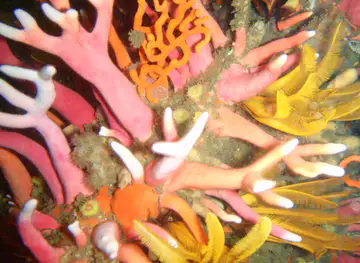
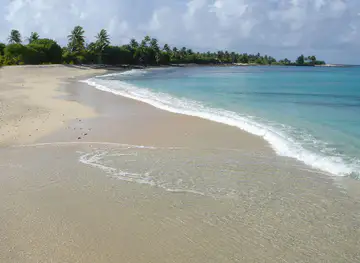
Bikini Atoll in Photos
Browse through our photo collection highlighting the charm and character of the destination.
Neighbouring regions of Bikini Atoll
The closest regions to Bikini Atoll, if you have time for more than one.
-
-

-

-
-


Swipe for more regions
Explore more

Explore more of Marshall Islands
Discover the untouched beauty and rich cultural heritage of the Marshall Islands, a Pacific paradise offering pristine beaches, vibrant marine life, and historical treasures.
Explore Marshall Islands