

Free Ujae Atoll Travel Guide & Mobile App
Explore Ujae Atoll with free travel guides. Discover regional history, expert tips, proposed trips, and audio guides on web or mobile app.


Ujae Atoll offers remote lagoon landscapes, Marshallese community life and a rare window into the quiet rhythms of the western Pacific.
Read more about Ujae Atoll
When is the best time to visit Ujae Atoll?
Best: July–September · 30°C| Month | High (°C) | Rainfall (mm) |
|---|---|---|
| January | 29 | 250 |
| February | 29 | 230 |
| March | 29 | 210 |
| April | 29 | 190 |
| May | 29 | 170 |
| June | 30 | 150 |
| July (best) | 30 | 130 |
| August (best) | 30 | 110 |
| September (best) | 30 | 130 |
| October | 30 | 150 |
| November | 30 | 170 |
| December | 30 | 190 |
Getting to and around Ujae Atoll
How to get there
Transportation
Best attractions in Ujae Atoll
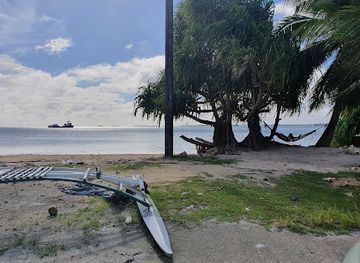
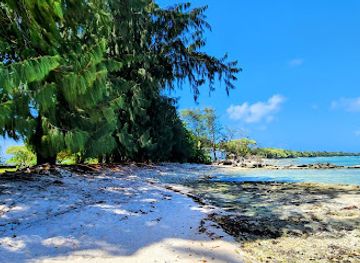
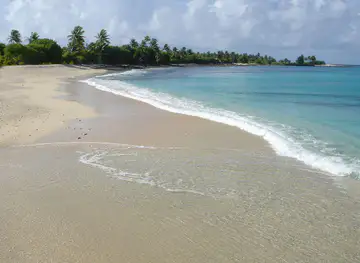
Ujae's attractions are primarily environmental and community-based rather than purpose-built for tourism. The atoll's lagoon, reef edge and coconut-lined islets provide opportunities for quiet walks, locally guided boating, fishing observation, birdwatching and swimming where conditions are considered suitable. The contrast between the calmer lagoon and the exposed ocean side illustrates the geography of a coral atoll, while narrow land strips show how closely homes, vegetation, shoreline and freshwater resources are connected. Visitors may also encounter traditional canoes, local food preparation, woven materials or everyday fishing activity, but these should be observed only with permission and never treated as staged entertainment. There are no large museums, commercial water-sports centres or extensive heritage attractions on the atoll, and informal exploration can be constrained by private land, tides, heat and limited paths. Ujae is therefore best understood as a destination for studying atoll landscapes and experiencing a remote Marshallese community with local guidance. Anyone hoping to snorkel, fish or travel across the lagoon should arrange equipment and a knowledgeable boat operator in advance rather than assuming that supplies will be available on arrival.
-
Park
Delap Park
Discover the tranquil beauty of Delap Park in Majuro Atoll, a perfect retreat for nature lovers and families seeking relaxation.
-
Memorial park
Majuro Peace Park
Discover Majuro Peace Park, a serene memorial park in the Marshall Islands, where history and tranquility converge in lush surroundings.
Best landmarks in Ujae Atoll
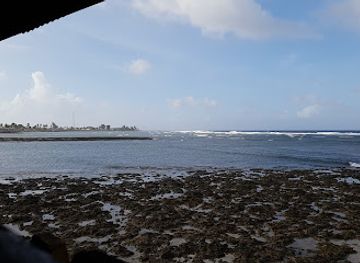
Ujae's most significant landmarks are geographical and communal rather than monumental. The encircling lagoon is the atoll's defining feature, a broad body of sheltered water bounded by reef and a chain of low islets whose channels are understood through local navigation knowledge. The ocean-facing reef edge provides a contrasting landmark: exposed to swell and weather, it demonstrates the narrow physical margin on which atoll communities live. Ujae Island, the principal inhabited islet, is important as the setting for homes, community life and local transport, while Ujae Airport represents the limited but essential connection between the atoll and the wider republic. Coconut palms, canoe landing places, rainwater facilities and shoreline paths may appear modest, but they express the practical relationship between people and an environment with little natural elevation or freshwater. These places should be viewed respectfully, since some are private or functional rather than public attractions. The atoll's visual character lies in its scale, openness and delicate balance between lagoon, reef, vegetation and settlement.
-
Museum
Alele Museum and Public Library
Explore the Alele Museum and Public Library, a cultural gem in Majuro Atoll showcasing the rich heritage of the Marshall Islands through engaging exhibits.
-
Memorial park
Majuro Peace Park
Explore the serene Majuro Peace Park, a memorial in the Marshall Islands that offers tranquility, beauty, and a glimpse into the island's rich cultural history.
-
 Historical landmark
Marshallese ship
Explore the historic Marshallese Shipwreck on Majuro Atoll, a captivating glimpse into the maritime history of the Marshall Islands.
Explore Ujae Atoll on the map
Plan your trip on one map. See where the top cities, national parks and sights are, and book hotels and experiences in a few clicks.
Best hotels in Ujae Atoll
Best restaurants in Ujae Atoll
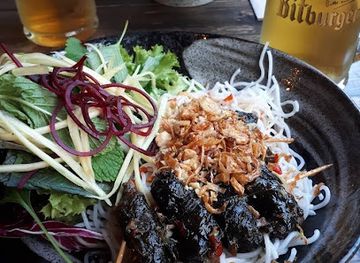
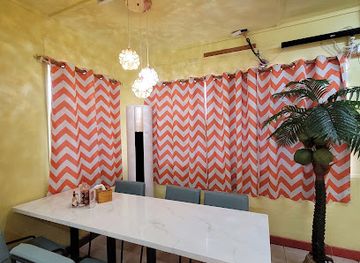
Ujae has no established restaurant district or dependable choice of visitor-oriented dining venues. Food is generally arranged through a host, household or local contact, with meals reflecting the ingredients that can be grown, caught or brought in by supply boat. Fish and other seafood may feature alongside rice, tinned or imported foods, coconut, breadfruit, pandanus and other staples of Marshallese island life, although availability varies with season, weather and household supply. Freshwater should be obtained from a source confirmed safe by local residents, and visitors should carry snacks and any dietary essentials. In larger Marshall Islands service centres, travellers will find more conventional cafés and restaurants, but those options should not be assumed to exist on Ujae. Sharing food can be an important part of social exchange, yet guests should ask about arrangements, costs and dietary restrictions in advance. A small contribution towards food provided by a host may be appropriate when agreed beforehand.
-
Restaurant
Tide Table Restaurant & Lounge
Discover exquisite dining at Tide Table Restaurant & Lounge in Majuro Atoll—where local flavors meet stunning ocean views.
-
Restaurant
Toeak Bar and Grill
Experience authentic Marshallese flavors at Toeak Bar and Grill in Majuro - where every meal tells a story.
-
Takeout Restaurant
Yummy
Experience delightful takeout at Yummy in Majuro Atoll – savor fresh local cuisine amidst stunning island scenery.
-
Restaurant
Island Star
Experience authentic Marshallese cuisine at Island Star in Majuro Atoll—where fresh flavors meet stunning island views.

Best bars in Ujae Atoll
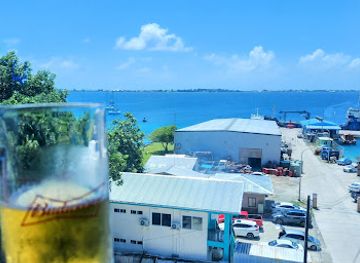
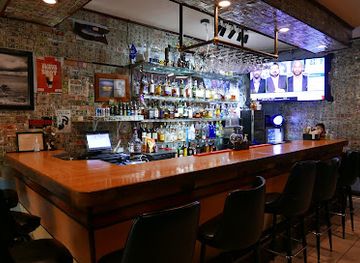
Ujae has no established nightclub scene and should not be approached as a destination for late-night entertainment. Evenings are more likely to centre on family and community life, conversation, informal gatherings and quiet time near the lagoon, with the exact pattern shaped by local custom and household arrangements. Any drinking should be discreet, moderate and guided by local expectations; visitors should never assume that alcohol is welcome at a community event or in a private home. There may be little or no dependable supply of beer, spirits or other drinks, and visitors should not arrive expecting a bar, live-music venue or late-opening shop. For a broader choice of restaurants, cafés and nightlife, Majuro is the country's main centre, but it is outside Ujae Atoll and requires a separate journey. On Ujae, respect for residents' privacy, noise levels and evening routines matters more than seeking entertainment venues.
-
Hotel
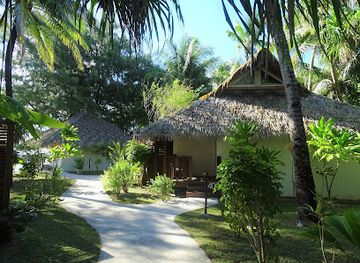
Marshall Islands Resort
Experience the luxury and natural beauty of Marshall Islands Resort, a perfect getaway in the heart of the Pacific.
-
Restaurant
Tide Table Restaurant & Lounge
Discover the culinary treasures of the Marshall Islands at Tide Table Restaurant & Lounge, where fresh local ingredients meet stunning ocean views.
-
Hotel
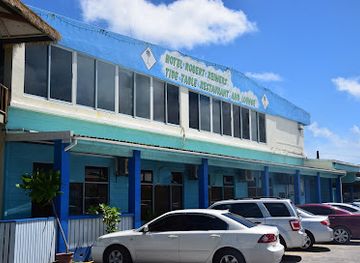
Hotel Robert Reimers
Discover comfort and local charm at Hotel Robert Reimers, your gateway to the beauty of the Marshall Islands.
-
International airport
Amata Kabua International Airport
Discover the charm and convenience of Amata Kabua International Airport, your gateway to the breathtaking beauty of the Marshall Islands.
Best nightclubs in Ujae Atoll
Ujae has no established nightclub scene and should not be approached as a destination for late-night entertainment. Evenings are more likely to centre on family and community life, conversation, informal gatherings and quiet time near the lagoon, with the exact pattern shaped by local custom and household arrangements. Any drinking should be discreet, moderate and guided by local expectations; visitors should never assume that alcohol is welcome at a community event or in a private home. There may be little or no dependable supply of beer, spirits or other drinks, and visitors should not arrive expecting a bar, live-music venue or late-opening shop. For a broader choice of restaurants, cafés and nightlife, Majuro is the country's main centre, but it is outside Ujae Atoll and requires a separate journey. On Ujae, respect for residents' privacy, noise levels and evening routines matters more than seeking entertainment venues.
-
Bar
Oceanview Club aka Snake Pit
Experience the vibrant atmosphere and stunning views at Oceanview Club, the ultimate bar destination in Kwajalein Atoll, Marshall Islands.
-
Night club
Marshall Islands Club
Discover the vibrant nightlife at Marshall Islands Club, where music, dance, and island spirit come together in Majuro Atoll.
Best shops in Ujae Atoll
Shopping on Ujae is extremely limited and is not a reason to expect a conventional retail experience. Small local stores or household sellers may have occasional basic provisions, but stock, opening arrangements and payment options can vary, particularly when boats or aircraft have been delayed. Visitors should bring essential toiletries, medicines, snacks, batteries and other supplies from Majuro or another larger service centre. Locally made woven items, food products or small handicrafts may sometimes be available through personal connections, although this depends on what residents are making and whether they wish to sell it. Ask permission and agree a price respectfully rather than bargaining aggressively. Do not remove shells, coral, archaeological material or other natural objects as souvenirs. For a wider selection of Marshallese handicrafts, books, clothing and imported goods, Majuro is the principal shopping centre in the country, but it lies outside Ujae Atoll and should be treated as the place to stock up before travelling onward.
-
Hotel
Marshall Islands Resort
Discover the enchanting Marshall Islands Resort, where breathtaking natural beauty meets authentic island hospitality for an unforgettable getaway.
-
Supermarket
K&K Island Pride Supermarket
Explore the vibrant offerings of K&K Island Pride Supermarket in Majuro Atoll, where local culture meets convenience.
-
Hotel
Hotel Robert Reimers
Discover the serene comfort of Hotel Robert Reimers - your perfect retreat in the stunning Majuro Atoll of the Marshall Islands.
-
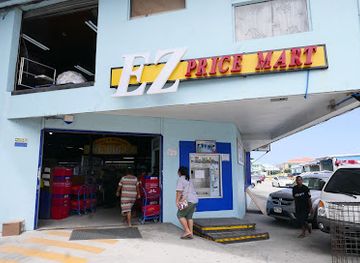
Supermarket
EZ Price Mart
Experience local life at EZ Price Mart, the bustling supermarket of Majuro Atoll, offering a diverse selection of goods and a vibrant community atmosphere.

Get your free copy of our complete guide to Ujae Atoll, delivered straight to you.
Everything on this page, from attractions and restaurants to essentials and local phrases, in one PDF you can read offline, print or share.
Already have an account? Sign in
Your Ujae Atoll guide is ready.
We'll send it to · Not you? Sign out

Getting your guide ready…
We are putting together a fresh copy of the Ujae Atoll guide. This can take up to a minute.
This can take a few moments. If your browser asks, choose Allow so the download can start. You'll find the guide in your Downloads folder.
Nothing happened? Download it again
Sorry, the guide is taking longer than usual. Please try again in a minute, or get it by email instead.
Ujae Atoll essentials
Currency and Payment
Safety
Emergency Situations
Do's and Don'ts
Local Tips
From Eve
Local phrases worth knowing
You don't need to get them perfect. A few words go a long way, and locals appreciate the effort.
Basics
| English | Local | Say it |
|---|---|---|
| Hello | Iọkwe | [ee-oh-kweh] |
| Goodbye | Iọkwe aolep | [ee-oh-kweh ah-oh-lep] |
| Yes | E | [eh] |
| No | Aolep | [ah-oh-lep] |
| Please/You’re welcome | Bwejei | [bweh-jeh-ee] |
| Thank you | Kommol tata | [kohm-mohl tah-tah] |
| Excuse me/Sorry | Kommol | [kohm-mohl] |
| How are you? | Eja in? | [eh-jah een] |
| Fine. And you? | Iọkwe. Eja in? | [ee-oh-kweh. eh-jah een] |
| Do you speak English? | Eja im jab in English? | [eh-jah eem jahb een English] |
| I don't understand | Ena ej kōmmani | [eh-nah ehj kohm-mah-nee] |
Eating & Drinking
| English | Local | Say it |
|---|---|---|
| I’d like to see the menu, please | Eja kōmmani im aōm in menu bwejei | [eh-jah kohm-mah-nee eem ah-ohm een meh-noo bweh-jeh-ee] |
| I don't eat meat | Ena ej jeje | [eh-nah ehj jeh-jeh] |
| Cheers! | Kommol! | [kohm-mohl] |
| I would like to pay, please | Eja kōmmani im kōm in bwejei | [eh-jah kohm-mah-nee eem kohm een bweh-jeh-ee] |
Emergencies
| English | Local | Say it |
|---|---|---|
| Help! | Ena eṭo! | [eh-nah eh-toh] |
| Go away! | Eja aolep! | [eh-jah ah-oh-lep] |
| Call the Police! | Eja kōmman in Police! | [eh-jah kohm-mah-nee een Police] |
| Call a doctor! | Eja kōmman in doktor! | [eh-jah kohm-mah-nee een dok-tor] |
| I’m lost | Ena ej jān | [eh-nah ehj jah-n] |
| I’m ill | Ena ej wōt | [eh-nah ehj woh-t] |
Shopping
| English | Local | Say it |
|---|---|---|
| I’d like to buy... | Eja kōmmani im bōk... | [eh-jah kohm-mah-nee eem boh-k] |
| I’m just looking | Ena ej kōmmani | [eh-nah ehj kohm-mah-nee] |
| How much is it? | Eja in an? | [eh-jah een ahn] |
| That’s too expensive | An ej bōk wōt | [ahn ehj boh-k woh-t] |
| Can you lower the price? | Eja im jānū an price? | [eh-jah eem jah-noo ahn price] |
Time & Numbers
| English | Local | Say it |
|---|---|---|
| What time is it? | Eja in jān? | [eh-jah een jah-n] |
| It’s one o’clock | Eja in jab iōn | [eh-jah een jahb ee-ohn] |
| Half past (10) | Eja in jān iōn an (10) | [eh-jah een jah-n ee-ohn ahn (10)] |
| Morning | Bōk | [bohk] |
| Afternoon | Jān | [jah-n] |
| Evening | Jān wōt | [jah-n woh-t] |
| Yesterday | Nān | [nahn] |
| Today | Jān iōn | [jah-n ee-ohn] |
| Tomorrow | Jān lā | [jah-n lah] |
| 1 | Iōn | [ee-ohn] |
| 2 | Lale | [lah-leh] |
| 3 | Tati | [tah-ti] |
| 4 | Nān | [nahn] |
| 5 | Jab | [jahb] |
| 6 | Jab lale | [jahb lah-leh] |
| 7 | Jab tati | [jahb tah-ti] |
| 8 | Jab nān | [jahb nahn] |
| 9 | Jab iōn | [jahb ee-ohn] |
| 10 | Jab lale | [jahb lah-leh] |
Transport & Directions
| English | Local | Say it |
|---|---|---|
| Where's a/the...? | Eja in a ...? | [eh-jah een ah ...?] |
| What's the address? | Eja in an address? | [eh-jah een ahn address] |
| Can you show me (on the map)? | Eja im jānū e ān (in the map)? | [eh-jah eem jah-noo eh ahn (in the map)] |
| When's the next (bus)? | Eja in jānū an (bus)? | [eh-jah een jah-noo ahn (bus)] |
| A ticket (to ....) | Eja in ticket (to ...) | [eh-jah een ti-ket (to ...)] |
History of Ujae Atoll
Settlement of the Marshall Islands
The Marshall Islands were settled by Austronesian voyagers many centuries ago, whose descendants developed an expert culture of ocean navigation and atoll living. Ujae formed part of this wider Marshallese world, in which communities moved between islands and atolls by canoe, maintained extensive kinship connections and relied on fishing, pandanus, coconut and other resources suited to narrow coral islands. Knowledge of currents, stars, winds and wave patterns was essential. Although written records about Ujae before foreign administration are limited, the atoll's modern community belongs to this much older history of seafaring, land stewardship and chiefly and family relationships.
European Contact and Foreign Claims
European navigators began recording the Marshall Islands during the age of Pacific exploration, although outside contact did not immediately replace local authority or ways of life. Spanish sightings and later visits by European and American ships brought the atolls into expanding networks of trade, whaling and missionary activity. These encounters introduced new goods, religious influences and diseases while also increasing foreign interest in the islands. Ujae's remoteness limited the intensity of outside settlement, but the atoll was affected by the wider political and commercial changes taking place across the Marshall Islands.
German Administration in the Late Nineteenth Century
Germany established a protectorate over the Marshall Islands in 1885 and later incorporated them into its colonial possessions. German administration concentrated on commercial regulation, maritime interests and the developing copra trade, in which dried coconut meat became an important export. Atolls such as Ujae were drawn into this colonial economy through coconut production and shipping connections, while local authority and social organisation continued to shape everyday life. The period also saw the spread of Christian missions and new forms of administration, changes that became part of the layered cultural history of the atoll.
Japanese Mandate and the Second World War
After the First World War, Japan administered the Marshall Islands under a League of Nations mandate. Japanese officials expanded administrative and commercial networks, and the islands became strategically important as tensions increased across the Pacific. The Second World War brought military activity and severe disruption to many Marshallese communities, especially around fortified bases and airfields elsewhere in the archipelago. Ujae was not one of the principal military centres usually associated with the Marshalls, but its residents experienced the wider consequences of wartime control, shortages, displacement and changing regional connections.
United States Administration and the Trust Territory
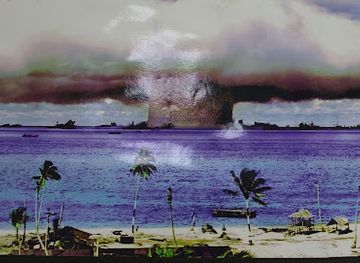
The United States took control of the Marshall Islands during the Second World War, after which the islands became part of the United Nations Trust Territory of the Pacific Islands administered by the United States. The period brought new schools, health services, political institutions and infrastructure, but also reinforced dependence on imported goods and external decision-making. The nuclear testing programme took place mainly in the northern atolls of Bikini and Enewetak rather than Ujae, yet its environmental, political and social consequences affected the Marshall Islands as a whole.
Self-Government and the Compact Era
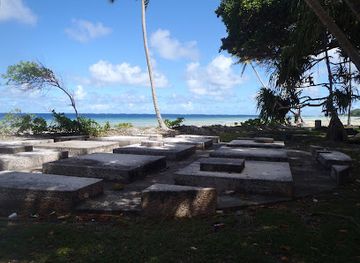
The Marshall Islands adopted a constitution and became self-governing in the 1970s before entering into free association with the United States under the Compact of Free Association, which took effect in 1986. The independent republic retained national responsibility for its remote atolls, including Ujae, while continuing to face the practical challenges of distance, limited transport, climate exposure and reliance on imported supplies. Today, Ujae's history is visible less through large monumental sites than through community continuity, land and lagoon use, family connections and the enduring importance of ocean knowledge.
Ujae Atoll in Photos
Browse through our photo collection highlighting the charm and character of the destination.
Neighbouring regions of Ujae Atoll
The closest regions to Ujae Atoll, if you have time for more than one.
-
-

-

-

-


Swipe for more regions
Explore more

Explore more of Marshall Islands
Discover the untouched beauty and rich cultural heritage of the Marshall Islands, a Pacific paradise offering pristine beaches, vibrant marine life, and historical treasures.
Explore Marshall Islands