

Enewetak Atoll, Marshall Islands Travel Guide
Discover Enewetak Atoll: A blend of serene landscapes, rich history, and vibrant marine life in the heart of the Marshall Islands.
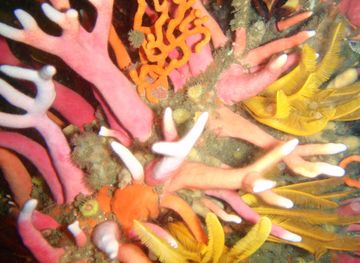
Enewetak Atoll, nestled in the Marshall Islands, is a captivating destination for travelers seeking a unique blend of natural beauty and historical significance. This remote atoll comprises 40 stunning islands surrounded by a brilliant turquoise lagoon. The pristine beaches, crystal-clear waters, and vibrant marine life make it a haven for snorkelers, divers, and nature enthusiasts. Beyond its natural allure, Enewetak Atoll holds a poignant history. It was a significant site for nuclear testing during the 20th century. Visitors can explore the remnants of these tests and learn about their impact on the local environment and community. The combination of serene landscapes and historical depth offers a profound experience for those keen to understand the past while enjoying the present. The local culture and hospitality add another layer to the charm of Enewetak Atoll. The islanders are known for their warm welcome and rich traditions. Engaging with them provides a unique insight into their way of life, which is closely tied to the sea. From savoring fresh seafood to participating in traditional crafts, there's much to discover about the local way of life.

Know before you go
Hi, I'm Eve. Here are a few practical things to know before exploring Enewetak Atoll.
- Plan your trip during the dry season from November to April for the best weather.
- Bring your own snorkeling and diving gear, as rental options are limited.
- Respect local customs and always ask for permission before taking photographs of people.
- Carry cash, as credit card facilities are not widely available.
- Learn a few basic phrases in Marshallese to enhance your interaction with locals.

Best bars in Enewetak Atoll
Top-rated picks
Best Bars

Bikini Atoll
Explore Bikini Atoll, a stunning UNESCO World Heritage Site in the Marshall Islands, renowned for its beautiful coral reefs and historical significance.

Marshall Islands Resort
Experience the beauty of the Marshall Islands at the luxurious Marshall Islands Resort, where paradise meets modern comfort.

Tide Table Restaurant & Lounge
Experience the vibrant flavors of the Pacific at Tide Table Restaurant & Lounge, a must-visit dining destination in Majuro Atoll.

Hotel Robert Reimers
Discover the beauty of Majuro Atoll while enjoying comfortable accommodations at Hotel Robert Reimers, a perfect blend of local culture and hospitality.


Best shops in Enewetak Atoll
Top-rated picks
Best Shops

Marshall Islands Resort
Discover paradise at Marshall Islands Resort, where stunning lagoon views and tropical tranquility await your arrival.

K&K Island Pride Supermarket
Discover local flavors and essential goods at K&K Island Pride Supermarket in Majuro Atoll, where island life meets convenience.

Hotel Robert Reimers
Discover the charm of Marshall Islands at Hotel Robert Reimers, where comfort meets adventure in the scenic Majuro Atoll.

Pohnpei International Airport
Pohnpei International Airport: Your gateway to Micronesia's breathtaking landscapes and rich cultural heritage.

Explore Enewetak Atoll on the Map
A handpicked selection of must-see spots in Enewetak Atoll, mapped for you.
Enewetak Atoll Essentials
-
Enewetak Atoll is located in the Marshall Islands, and the primary way to reach it is by air. The nearest major airport is in Kwajalein Atoll, from where you can take a chartered flight or a boat to Enewetak. It is advisable to arrange your travel through a specialized tour operator, as the logistics can be complex. Ensure you have the necessary travel permits, as Enewetak Atoll is a restricted area due to its history as a nuclear test site.
-
Once on Enewetak Atoll, transportation options are limited. The atoll is small enough to explore on foot or by bicycle. Some local boats can be hired for inter-island travel within the atoll. There are no public transportation services, so plan accordingly and make arrangements with local guides or your tour operator for any necessary transport.
-
The official currency in the Marshall Islands is the United States Dollar (USD). Credit cards are not widely accepted on Enewetak Atoll, so it is essential to carry enough cash for your expenses. There are no ATMs on the atoll, so ensure you withdraw sufficient funds before arriving. Some local vendors may accept electronic payments via mobile apps, but this should not be relied upon.
-
Enewetak Atoll is generally safe for tourists, but due to its remote location and historical significance, it is crucial to follow any guidelines provided by local authorities and tour operators. There are no high-crime areas specifically targeting tourists, but standard precautions should be observed. Avoid straying into restricted zones marked due to residual radiation from past nuclear tests.
-
In case of emergency, contact local authorities or your tour operator immediately. Medical facilities are limited on the atoll, so it is advisable to bring a well-stocked first aid kit and any necessary medications. For serious medical emergencies, evacuation to a larger facility in the Marshall Islands or even further afield may be required. Always have travel insurance that covers medical emergencies and evacuation.
-
Fashion: Do dress modestly, respecting local customs and the tropical climate. Lightweight, breathable clothing is recommended. Religion: Do respect local customs and traditions. Public Transport: There is no public transport, but do respect the local ways of getting around and always seek permission before using any local boats or vehicles. Greetings: Do greet locals with a friendly wave or a simple 'hello.' Eating & Drinking: Do try local foods if offered and be gracious. Don't waste food, as resources can be limited on the atoll.
-
To experience Enewetak Atoll like a local, take the time to engage with residents and learn about their way of life. Visit local landmarks and historical sites with a knowledgeable guide to fully appreciate the atoll's unique history. Participate in any community activities or local festivals if available, and always show respect for the environment and local customs.
When is the best time to visit Enewetak Atoll?
Useful Local Phrases for Enewetak Atoll
You don't need to speak the language perfectly. Even learning a few simple words can make conversations warmer—and locals usually appreciate the effort.
— Eve

Here are the phrases I use most often in Enewetak Atoll. Try a few—you'll be surprised how far they go! 😊
❤️
-
- HelloYokwe
[Yoh-kweh] - GoodbyeKommol
[Kohm-mohl] - YesE
[Eh] - NoAolep
[Ah-oh-lep] - Please/You're welcomeKomol tata
[Koh-mohl tah-tah] - Thank youKommol tata
[Kohm-mohl tah-tah] - Excuse me/SorryEjjab
[Eh-jahb] - How are you?Bwe pwe eok?
[Bweh pweh eh-awk?] - Fine. And you?Aolep. Ikij?
[Ah-oh-lep. Ee-keej?] - Do you speak English?Ejjab eok in English?
[Eh-jahb eh-awk in In-glish?] - I don't understandEjjab in ejjab
[Eh-jahb in eh-jahb]
- HelloYokwe
-
- I'd like to see the menu, pleaseEjjab eok komol menu, tata
[Eh-jahb eh-awk koh-mohl meh-noo, tah-tah] - I don't eat meatEjjab eok ejjab meit
[Eh-jahb eh-awk eh-jahb mayt] - Cheers!Kommol!
[Kohm-mohl!] - I would like to pay, pleaseEjjab eok komol rekk, tata
[Eh-jahb eh-awk koh-mohl rehkk, tah-tah]
- I'd like to see the menu, pleaseEjjab eok komol menu, tata
-
- Help!Kommol!
[Kohm-mohl!] - Go away!Jab eok!
[Jahb eh-awk!] - Call the Police!Kommol in Police!
[Kohm-mohl in Poh-lees!] - Call a doctor!Kommol in doctor!
[Kohm-mohl in dok-tor!] - I'm lostEjjab eok jikin am
[Eh-jahb eh-awk jee-kin ahm] - I'm illEjjab eok wot
[Eh-jahb eh-awk woht]
- Help!Kommol!
-
- I'd like to buy...Ejjab eok walok...
[Eh-jahb eh-awk wah-lok...] - I'm just lookingEjjab eok jikin
[Eh-jahb eh-awk jee-kin] - How much is it?Ejjab eok emman?
[Eh-jahb eh-awk ehm-mahn?] - That's too expensiveEjjab eok ejjab elap
[Eh-jahb eh-awk eh-jahb eh-lahp] - Can you lower the price?Ejjab eok tok in price?
[Eh-jahb eh-awk tohk in prahys?]
- I'd like to buy...Ejjab eok walok...
-
- What time is it?Ejjab eok emman?
[Eh-jahb eh-awk ehm-mahn?] - It's one o'clockEjjab eok juon emman
[Eh-jahb eh-awk joo-on ehm-mahn] - Half past (10)Half past (10)
[Half past (10)] - MorningJebar
[Jeh-bahr] - AfternoonJebar in kar
[Jeh-bahr in kar] - EveningJebar in jikin
[Jeh-bahr in jee-kin] - YesterdayJebar in jino
[Jeh-bahr in jee-noh] - TodayJebar in bwebwen
[Jeh-bahr in bweh-bwehn] - TomorrowJebar in bwet
[Jeh-bahr in bweht] - 1Juon
[Joo-on] - 2Ruo
[Roo-oh] - 3Jeb
[Jehb] - 4Jebjuon
[Jehb-joo-on] - 5Jebruo
[Jehb-roo-oh] - 6Jebjeb
[Jehb-jehb] - 7Jebjuon ru
[Jehb-joo-on roo] - 8Jebjuon jeb
[Jehb-joo-on jehb] - 9Jebjuon jeh
[Jehb-joo-on jeh] - 10Jebjuon jino
[Jehb-joo-on jee-noh]
- What time is it?Ejjab eok emman?
-
- Where's a/the...?Ejjab eok a/the...?
[Eh-jahb eh-awk ah/the...?] - What's the address?Ejjab eok address?
[Eh-jahb eh-awk ad-dress?] - Can you show me (on the map)?Ejjab eok jab in (map)?
[Eh-jahb eh-awk jahb in (map)?] - When's the next (bus)?Ejjab eok when in (bus)?
[Eh-jahb eh-awk when in (bus)?] - A ticket (to ....)Ejjab eok ticket (to ....)
[Eh-jahb eh-awk tee-ket (to ....)]
- Where's a/the...?Ejjab eok a/the...?
History of Enewetak Atoll
-
Enewetak Atoll, part of the Marshall Islands, was originally settled by Micronesians over 2,000 years ago. These early inhabitants developed a rich culture deeply connected to the ocean, relying on fishing and navigation skills that were passed down through generations. The atoll's strategic location and natural beauty made it an important center for trade and cultural exchange in the region.
-
The first recorded European contact with Enewetak Atoll came in 1794 when it was visited by the British merchant vessel Walpole, commanded by Captain John Marshall. The encounter marked the beginning of increased European interest in the Marshall Islands, as explorers and traders sought to map and exploit the resources of the Pacific Ocean.
-
During World War I, Japan took control of the Marshall Islands, including Enewetak Atoll, under a League of Nations mandate. The Japanese used the atoll primarily for fishing and light military activities. This period lasted until World War II, when the islands became a focal point of military strategy in the Pacific Theater.
-
In February 1944, Enewetak Atoll became the site of Operation Catchpole, a major U.S. military campaign to capture the atoll from Japanese forces. The battle was intense, with heavy bombardment and fierce fighting on the ground. After several days, U.S. forces successfully took control of the atoll, which then served as a staging area for further military operations in the Pacific.
-
From 1948 to 1958, Enewetak Atoll was one of the primary sites for U.S. nuclear testing in the Pacific. A total of 43 nuclear tests were conducted on the atoll, including the first hydrogen bomb test, codenamed 'Ivy Mike,' in 1952. These tests had profound environmental and health impacts on the atoll and its inhabitants, many of whom were relocated to other islands.
-
In the late 1970s, the U.S. government began efforts to clean up the radioactive contamination on Enewetak Atoll. The most visible result of this effort was the construction of the Runit Dome, a concrete structure built to contain radioactive debris. In 1980, the U.S. declared parts of the atoll safe for habitation, and some Enewetakese began returning to their ancestral lands. Despite these efforts, concerns about residual radiation remain.
-
Today, Enewetak Atoll is a place of resilience and recovery. The people of Enewetak have worked to rebuild their community and preserve their cultural heritage in the face of past adversities. The atoll's stunning natural beauty, including its pristine beaches and vibrant coral reefs, continues to attract visitors and researchers interested in studying its unique ecosystem and history.
Neighbouring Regions of Enewetak Atoll
The closest regions to Enewetak Atoll, if you have time for more than one.



Your all‑in‑one travel companion app
Explore expert travel guides, compare and book tours, experiences, hotels, and more—all from the palm of your hand. Download now for seamless trip planning wherever your wanderlust takes you.


Explore More of Marshall Islands

Looking beyond Enewetak Atoll? Discover Marshall Islands for broader travel guides, local hot-spots, and regional highlights.
Explore Marshall IslandsEnewetak Atoll in Photos
Browse through our photo collection highlighting the charm and character of the destination.


Enewetak Atoll: A Hidden Paradise in the Marshall Islands
Enewetak Atoll, nestled in the Marshall Islands, is a captivating destination for travelers seeking a unique blend of natural beauty and historical significance. This remote atoll comprises 40 stunning islands surrounded by a brilliant turquoise lagoon. The pristine beaches, crystal-clear waters, and vibrant marine life make it a haven for snorkelers, divers, and nature enthusiasts. Beyond its natural allure, Enewetak Atoll holds a poignant history. It was a significant site for nuclear testing during the 20th century. Visitors can explore the remnants of these tests and learn about their impact on the local environment and community. The combination of serene landscapes and historical depth offers a profound experience for those keen to understand the past while enjoying the present. The local culture and hospitality add another layer to the charm of Enewetak Atoll. The islanders are known for their warm welcome and rich traditions. Engaging with them provides a unique insight into their way of life, which is closely tied to the sea. From savoring fresh seafood to participating in traditional crafts, there's much to discover about the local way of life.