

Free Ebon Atoll Travel Guide & Mobile App
Explore Ebon Atoll with free travel guides. Discover regional history, expert tips, proposed trips, and audio guides on web or mobile app.


Ebon Atoll in the Marshall Islands offers remote lagoon scenery, Marshallese community life, traditional food and slow outer-island travel.
Read more about Ebon Atoll
When is the best time to visit Ebon Atoll?
Best: January–March · 31°C| Month | High (°C) | Rainfall (mm) |
|---|---|---|
| January (best) | 31 | 200 |
| February (best) | 31 | 200 |
| March (best) | 31 | 200 |
| April | 31 | 200 |
| May | 32 | 250 |
| June | 32 | 250 |
| July | 32 | 250 |
| August | 32 | 250 |
| September | 32 | 250 |
| October | 31 | 250 |
| November | 31 | 200 |
| December | 31 | 200 |
Getting to and around Ebon Atoll
How to get there
Transportation
Explore Ebon Atoll on the map
Plan your trip on one map. See where the top cities, national parks and sights are, and book hotels and experiences in a few clicks.
Best hotels in Ebon Atoll
Best restaurants in Ebon Atoll
Ebon has no established restaurant district or dependable range of tourist eateries. Food is more likely to be prepared in homes or shared through local arrangements, so visitors should agree in advance how meals will be provided. The everyday food culture of the atoll draws on fishing and home-grown or locally gathered ingredients, including fresh fish, coconut, breadfruit, pandanus and, where available, taro and other imported staples. Preparation may include roasting, boiling or cooking with coconut, with recipes varying between households and occasions. Imported rice, tinned foods and other provisions also form part of contemporary outer-island life. Travellers should bring suitable snacks for delays and clearly discuss allergies, medical diets and drinking water before arrival. A meal offered by a host is a social exchange as well as nourishment; accepting it with thanks and asking about ingredients is more appropriate than expecting hotel-style service.
-
Restaurant
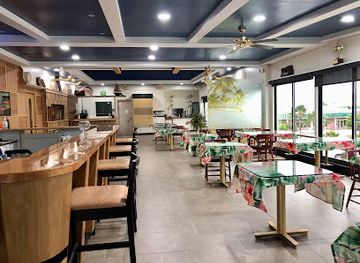
Tide Table Restaurant & Lounge
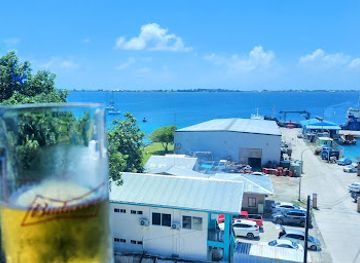
Experience exquisite local cuisine and breathtaking ocean views at Tide Table Restaurant & Lounge in Majuro.
-
Restaurant
Toeak Bar and Grill
Experience authentic Marshallese cuisine at Toeak Bar and Grill in Majuro Atoll – where local flavors meet tropical vibes.
-
Restaurant
Island Star
Discover Island Star: A culinary jewel in Majuro Atoll offering exquisite local and international dishes amidst an inviting ambiance.
-
Restaurant
Blue Lagoon Restaurant
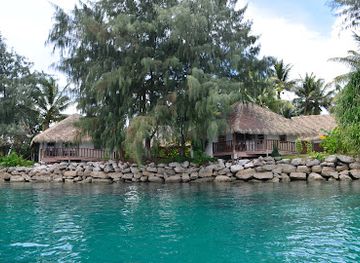
Discover authentic Marshallese cuisine with stunning lagoon views at Blue Lagoon Restaurant in Majuro Atoll.

Best bars in Ebon Atoll
Ebon has no established nightclub scene, cocktail district or dependable programme of commercial evening entertainment. Night-time social life is more likely to centre on households, church and community activities, conversation, music and informal gatherings, with the pace shaped by the daylight, weather and availability of electricity. Alcohol should not be treated as the focus of a visit, and public drunkenness would be discourteous in a small community where visitors are readily noticed. The absence of bars is part of Ebon’s remote character rather than a gap in a resort infrastructure. Bring reading material, a torch and offline entertainment, and ask hosts about appropriate evening activities. Travellers seeking restaurants, organised nightlife or late-opening shops will need to make those arrangements in Majuro before travelling to the atoll.
-
 Hotel
HotelMenen Hotel
Experience comfort and local charm at Menen Hotel in Ibwenape, your gateway to the stunning beauty of Nauru.
-
Hotel
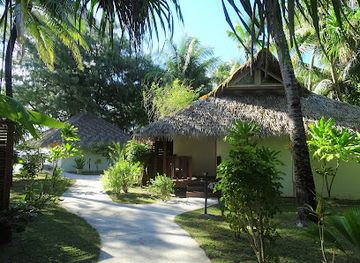
Marshall Islands Resort
Discover the enchanting beauty of the Marshall Islands Resort, a tropical paradise perfect for relaxation and adventure amidst stunning ocean views.
-
Restaurant
Tide Table Restaurant & Lounge
Experience the vibrant flavors and stunning views at Tide Table Restaurant & Lounge in Majuro Atoll, a must-visit destination for culinary delights.
-
Hotel
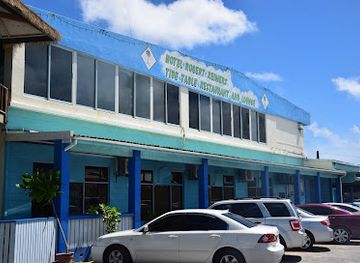
Hotel Robert Reimers
Experience the serene beauty of Majuro Atoll at Hotel Robert Reimers, your perfect retreat in the Marshall Islands.
Best nightclubs in Ebon Atoll
Ebon has no established nightclub scene, cocktail district or dependable programme of commercial evening entertainment. Night-time social life is more likely to centre on households, church and community activities, conversation, music and informal gatherings, with the pace shaped by the daylight, weather and availability of electricity. Alcohol should not be treated as the focus of a visit, and public drunkenness would be discourteous in a small community where visitors are readily noticed. The absence of bars is part of Ebon’s remote character rather than a gap in a resort infrastructure. Bring reading material, a torch and offline entertainment, and ask hosts about appropriate evening activities. Travellers seeking restaurants, organised nightlife or late-opening shops will need to make those arrangements in Majuro before travelling to the atoll.
-
Night club
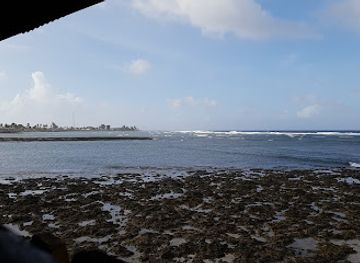
Marshall Islands Club
Discover the best of Majuro's nightlife at the Marshall Islands Club, a vibrant spot for dancing, drinks, and local culture.
Best shops in Ebon Atoll
Ebon is not a shopping destination and has no dependable retail quarter, supermarket network or specialist craft market for visitors. Small local stores or household sellers may have limited supplies, but stock can be irregular and payment is generally in United States dollars. Purchase provisions, toiletries, batteries, medicines and gifts before leaving Majuro rather than expecting to replace them on the atoll. If locally made items, woven articles, food products or other crafts are offered, buy directly and respectfully from the maker or through a trusted local introduction; do not bargain aggressively or remove materials from the reef or vegetation. Coconut, pandanus and fish are important parts of the local resource base, but not every product is available for sale. The most appropriate souvenirs are ethically obtained handmade items or photographs taken with consent, rather than shells, coral, archaeological objects or wartime fragments.
-
Hotel
Menen Hotel
Discover the warmth of Nauru at Menen Hotel, where comfort meets local charm in the heart of Ibwenape.
-
Hotel
Marshall Islands Resort
Discover the beauty and serenity of the Marshall Islands Resort, a tranquil haven in Majuro Atoll offering stunning lagoon views and island charm.
-
Supermarket
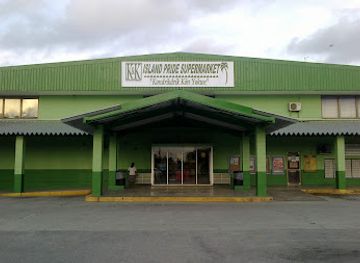
K&K Island Pride Supermarket
Explore the flavors of the Marshall Islands at K&K Island Pride Supermarket, a vibrant marketplace for local and international goods.
-
Restaurant
Tide Table Restaurant & Lounge
Experience the culinary delights and stunning ocean views at Tide Table Restaurant & Lounge in Majuro, a perfect dining spot for all visitors.
Get your free copy of our complete guide to Ebon Atoll, delivered straight to you.
Everything on this page, from attractions and restaurants to essentials and local phrases, in one PDF you can read offline, print or share.
Already have an account? Sign in
Your Ebon Atoll guide is ready.
We'll send it to · Not you? Sign out

Getting your guide ready…
We are putting together a fresh copy of the Ebon Atoll guide. This can take up to a minute.
This can take a few moments. If your browser asks, choose Allow so the download can start. You'll find the guide in your Downloads folder.
Nothing happened? Download it again
Sorry, the guide is taking longer than usual. Please try again in a minute, or get it by email instead.
Ebon Atoll essentials
Currency and Payment
Safety
Emergency Situations
Do's and Don'ts
Local Tips
History of Ebon Atoll
Marshallese Settlement and Navigation
Ebon Atoll was settled by Marshallese voyagers long before European ships reached the central Pacific. Communities developed detailed knowledge of ocean swells, stars, winds, currents and reef passages, enabling travel between widely separated atolls. Land and lagoon resources were managed through customary relationships involving kin groups and chiefs, while breadfruit, coconut, pandanus, fishing and inter-island exchange supported life on the narrow islets. This maritime heritage remains fundamental to understanding Ebon: the atoll is not simply a group of small islands, but part of a connected cultural and navigational world extending across the Marshall Islands.
European Contact and Missionary Change
European ships began recording the Marshall Islands in the sixteenth century, although sustained outside influence came much later. Traders, whalers and beachcombers visited the wider region during the nineteenth century, followed by Christian missionaries. Conversion reshaped religious practice, education and community institutions in many atolls, including Ebon, while local leaders and families negotiated how new beliefs fitted existing social structures. The legacy is visible in church life, burial customs, settlement patterns and the continued blending of Marshallese traditions with institutions introduced from overseas.
German Administration, 1885–1914
Germany established a formal colonial presence in the Marshall Islands in the late nineteenth century, following an earlier period in which commercial interests and competing foreign claims had increased outside involvement. German administration connected the atolls to wider trading networks centred on copra, the dried kernel of the coconut used to produce oil. Ebon’s economy and external links were consequently affected by changing demand, shipping and commercial regulation. The period formed part of a broader transformation from primarily inter-atoll exchange towards a colonial export economy, while customary land ownership and local authority continued to shape daily life.
Japanese Rule and the Pacific War
Japan took control of the Marshall Islands during the First World War and later administered them under a League of Nations mandate. Japanese officials, traders and workers expanded administrative and commercial connections, while Japanese became an additional language of government and commerce. During the Second World War the Marshalls became part of Japan’s Pacific defence system. Ebon was more remote from the main battle areas than atolls such as Kwajalein, but wartime shortages, military movements and the disruption of shipping affected outer-island communities. Reminders of this era are found in family memories and scattered wartime traces across the country.
United States Administration after 1944
United States forces captured the Marshall Islands in 1944, and the islands subsequently became part of the United States-administered Trust Territory of the Pacific Islands. The post-war period brought new political institutions, schooling, health services and transport links, but outer atolls such as Ebon remained difficult to serve because of distance and limited infrastructure. The nuclear testing programme conducted elsewhere in the Marshall Islands also shaped national politics, migration and environmental awareness, even though Ebon was not one of the principal testing sites.
The Republic of the Marshall Islands
The Marshall Islands became a sovereign republic in 1986 under the Compact of Free Association with the United States, with the constitutional settlement completed in 1986 and the United Nations recognising independence in 1990. Ebon is administered as a municipality within the republic, represented through national and local political structures. Modern challenges include limited transport, dependence on imported goods, freshwater vulnerability, coastal erosion and the effects of climate change. At the same time, customary relationships, Marshallese language and community networks remain central to life on the atoll.
Ebon Atoll in Photos
Browse through our photo collection highlighting the charm and character of the destination.
Neighbouring regions of Ebon Atoll
The closest regions to Ebon Atoll, if you have time for more than one.
-

-

-

-
-


Swipe for more regions
Explore more

Explore more of Marshall Islands
Discover the untouched beauty and rich cultural heritage of the Marshall Islands, a Pacific paradise offering pristine beaches, vibrant marine life, and historical treasures.
Explore Marshall Islands