
Ujelang Atoll, Marshall Islands Travel Guide
Discover Ujelang Atoll: A remote paradise in the Marshall Islands, where pristine beaches, vibrant coral reefs, and rich cultural heritage await adventurous travelers.
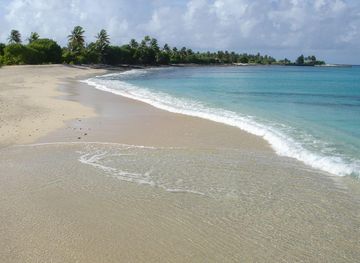
Ujelang Atoll is a serene and remote destination in the Marshall Islands. This atoll is known for its untouched beauty and clear blue waters, making it a perfect spot for those looking to escape the hustle and bustle of city life. The atoll consists of 30 small islands, each offering unique landscapes and experiences for visitors. The vibrant marine life around Ujelang Atoll is a major draw for snorkelers and divers. The coral reefs are home to a variety of fish and other sea creatures, providing a mesmerizing underwater world to explore. On land, the lush vegetation and coconut groves offer a tranquil setting for relaxation and nature walks. Ujelang Atoll has a rich cultural history, with its own unique traditions and customs. Visitors can learn about the local way of life by interacting with the residents and participating in traditional activities. The atoll’s isolation has helped preserve its cultural heritage, making it a fascinating destination for those interested in history and anthropology.

Know before you go
Hi, I'm Eve. Here are a few practical things to know before exploring Ujelang Atoll.
- Travel with a local guide to navigate the atoll and learn about its history.
- Bring all necessary supplies, as amenities on the atoll are limited.
- Respect local customs and traditions when interacting with residents.
- Pack eco-friendly products to help preserve the pristine environment.
- Check weather conditions before planning your trip, as the atoll is remote and weather can affect travel plans.
Explore Ujelang Atoll: Things to Do, Places to Eat, Hotels & More
Handpicked recommendations for top attractions, local dining, accommodations, and more

Top Attractions & Sightseeing in Ujelang Atoll
Top-rated picks
Best Attractions

Marshallese ship
Explore the historic Marshallese shipwreck in Majuro Atoll, a captivating destination for adventure lovers and history buffs alike.
Ujelang Lagoon
Explore the tranquil Ujelang Lagoon in the Marshall Islands, a paradise for snorkeling, relaxation, and cultural immersion amidst stunning natural beauty.

Best landmarks in Ujelang Atoll
Top-rated picks
Best Landmarks

Majuro
Discover the tranquil beauty of Majuro Atoll, where pristine beaches, vibrant culture, and adventure await in the heart of the Pacific.
Marshallese ship
Uncover the historical charm of the Marshallese shipwreck in Majuro Atoll, a captivating landmark that showcases the region's maritime heritage.

Ujelang
Experience the serene beauty and rich culture of Ujelang Island in the Marshall Islands - a hidden paradise for nature lovers and cultural enthusiasts.
Ujelang Lagoon
Experience the serene beauty of Ujelang Lagoon in the Marshall Islands, where turquoise waters meet lush landscapes for an unforgettable getaway.

Best restaurants in Ujelang Atoll
Top-rated picks
Best Restaurants

Tide Table Restaurant & Lounge
Discover an exquisite dining experience at Tide Table Restaurant & Lounge in Majuro with stunning ocean views and delectable cuisine.

Toeak Bar and Grill
Experience delicious local flavors at Toeak Bar and Grill in Majuro Atoll – where every meal is infused with island charm.

Island Star
Experience authentic Marshallese cuisine at Island Star—where local flavors meet international flair amidst breathtaking views.

Blue Lagoon Restaurant
Experience authentic Marshallese cuisine at Blue Lagoon Restaurant amidst breathtaking views of Majuro Atoll's tranquil waters.

Best bars in Ujelang Atoll
Top-rated picks
Best Bars

Marshall Islands Resort
Discover the beauty of the Marshall Islands at our luxurious resort, where relaxation meets adventure in a tropical paradise.

Tide Table Restaurant & Lounge
Experience the flavors of the Marshall Islands at Tide Table Restaurant & Lounge, where fresh seafood meets stunning ocean views.

Hotel Robert Reimers
Discover the tranquility of Hotel Robert Reimers, your home away from home in the heart of Majuro, Marshall Islands.

Amata Kabua International Airport
Experience the allure of the Marshall Islands as you arrive at Amata Kabua International Airport, your gateway to tropical adventures and cultural treasures.


Best shops in Ujelang Atoll
Top-rated picks
Best Shops

K&K Island Pride Supermarket
Explore the diverse culinary offerings of Majuro Atoll at K&K Island Pride Supermarket, your gateway to local flavors and island life.

Hotel Robert Reimers
Discover comfort and local culture at Hotel Robert Reimers, a serene stay in the heart of Majuro Atoll, Marshall Islands.

Amata Kabua International Airport
Discover the charm of the Marshall Islands at Amata Kabua International Airport, your gateway to paradise with local flair and essential travel services.

EZ Price Mart
Discover the vibrant offerings of EZ Price Mart, your essential supermarket in Majuro Atoll, Marshall Islands, for local and international products.

Explore Ujelang Atoll on the Map
A handpicked selection of must-see spots in Ujelang Atoll, mapped for you.
Ujelang Atoll Essentials
-
Ujelang Atoll is located in the Marshall Islands, a remote area in the central Pacific Ocean. The nearest international airport is Amata Kabua International Airport in Majuro, the capital of the Marshall Islands. From Majuro, you will need to take a chartered flight or a boat to reach Ujelang Atoll. Due to its remote location, it is advisable to arrange your transportation well in advance.
-
Transportation within Ujelang Atoll is limited. The atoll is small, and most places can be reached on foot. For exploring the surrounding waters, you can hire local boats. There are no public transport services or car rental options available on the atoll.
-
The official currency of the Marshall Islands is the United States Dollar (USD). There are no ATMs or banks on Ujelang Atoll, so it is essential to bring enough cash for your entire stay. Credit cards are not accepted, and there are limited opportunities for purchasing goods and services.
-
Ujelang Atoll is generally a safe destination for tourists. There are no specific high-crime areas targeting tourists. However, it is always advisable to take standard precautions, such as keeping an eye on your belongings and avoiding isolated areas after dark. The local community is small and close-knit, contributing to a safe environment.
-
In case of emergency, there are limited medical facilities on Ujelang Atoll. It is crucial to have comprehensive travel insurance that covers medical emergencies and evacuation. For medical assistance, you may need to be transported to Majuro or another location with better facilities. Familiarize yourself with emergency contact numbers before your trip.
-
Fashion: Do dress modestly. Lightweight, breathable clothing is recommended due to the tropical climate. Avoid overly revealing attire. Religion: Do respect local customs and traditions. If invited to local ceremonies, dress conservatively. Public Transport: There is no public transport on the atoll. Rely on walking or local boats. Greetings: Do greet people with a friendly wave or handshake. Learning a few basic Marshallese phrases can be appreciated. Eating & Drinking: Do try local foods if offered. Fresh seafood is a staple. Don’t waste food, as resources can be limited.
-
To experience Ujelang Atoll like a local, engage with the community and participate in local activities. Fishing and snorkeling are popular pastimes. Respect the natural environment and avoid littering. Freshwater is a precious resource, so use it sparingly. Take time to learn about the local history and culture from the residents, who are often eager to share their knowledge.
When is the best time to visit Ujelang Atoll?
Useful Local Phrases for Ujelang Atoll
You don't need to speak the language perfectly. Even learning a few simple words can make conversations warmer—and locals usually appreciate the effort.
— Eve

Here are the phrases I use most often in Ujelang Atoll. Try a few—you'll be surprised how far they go! 😊
❤️
-
- HelloYokwe
[yoh-kweh] - GoodbyeYokwe
[yoh-kweh] - YesE
[eh] - NoAolep
[ah-oh-lep] - Please/You're welcomeKommol tata
[kohm-mol tah-tah] - Thank youKommol
[kohm-mol] - Excuse me/SorryKommol tata
[kohm-mol tah-tah] - How are you?Ejjab in?
[eh-jahb in?] - Fine. And you?Ejjab. Ejjab in?
[eh-jahb. eh-jahb in?] - Do you speak English?Ejjab ejje ian English?
[eh-jahb eh-jje ee-ahn English?] - I don't understandEjjab in theej
[eh-jahb in theej]
- HelloYokwe
-
- I'd like to see the menu, pleaseEjjab dook in menu, kommol
[eh-jahb dook in meh-noo, kohm-mol] - I don't eat meatEjjab in eat meat
[eh-jahb in eet meet] - Cheers!Boo!
[boo] - I would like to pay, pleaseEjjab dook in jeb, kommol
[eh-jahb dook in jehb, kohm-mol]
- I'd like to see the menu, pleaseEjjab dook in menu, kommol
-
- Help!Jab!
[jahb] - Go away!Kio!
[kee-oh] - Call the Police!Ejjab in call Police!
[eh-jahb in kohl Poh-lees!] - Call a doctor!Ejjab in call doctor!
[eh-jahb in kohl dok-tor!] - I'm lostEjjab in ejje
[eh-jahb in eh-jje] - I'm illEjjab in wa je
[eh-jahb in wah jeh]
- Help!Jab!
-
- I'd like to buy...Ejjab dook in bar...
[eh-jahb dook in bar...] - I'm just lookingEjjab in look
[eh-jahb in luk] - How much is it?Ejjab bwebwen in?
[eh-jahb bweh-bwen in?] - That's too expensiveEjjab in roon
[eh-jahb in roon] - Can you lower the price?Ejjab in kiki theej price?
[eh-jahb in kee-kee theej prahys?]
- I'd like to buy...Ejjab dook in bar...
-
- What time is it?Ejjab in wa time?
[eh-jahb in wah tahym?] - It's one o'clockEjjab in aik
[eh-jahb in aik] - Half past (10)Ejjab in half past (10)
[eh-jahb in half past (10)] - MorningMorn
[morn] - AfternoonAfternoon
[af-ter-noon] - EveningEvening
[ee-ven-ing] - YesterdayYesterday
[yes-ter-day] - TodayToday
[to-day] - TomorrowTomorrow
[to-mor-row] - 1Aik
[aik] - 2Ruk
[ruk] - 3Jeb
[jeb] - 4Jat
[jaht] - 5Inj
[inj] - 6Jebinj
[je-bin-j] - 7Jebin
[je-bin] - 8Jebin in
[je-bin in] - 9Jebin in in
[je-bin in in] - 10Jebin in in in
[je-bin in in in]
- What time is it?Ejjab in wa time?
-
- Where's a/the...?Ejjab in weir a/the...?
[eh-jahb in weir a/the...?] - What's the address?Ejjab in wa address?
[eh-jahb in wah ah-dress?] - Can you show me (on the map)?Ejjab in show me (on the map)?
[eh-jahb in sho me (on the map)?] - When's the next (bus)?Ejjab in when the next (bus)?
[eh-jahb in wen the next (bus)?] - A ticket (to ....)Ejjab in a ticket (to ....)
[eh-jahb in a tik-it (to ....)]
- Where's a/the...?Ejjab in weir a/the...?
History of Ujelang Atoll
-
Ujelang Atoll, part of the Marshall Islands, was first settled by Micronesian navigators around 2000 BCE. These early settlers brought with them a rich culture and deep knowledge of the sea, which was crucial for survival on these isolated atolls. They established a community that thrived on fishing, agriculture, and inter-island trade.
-
The first recorded European contact with Ujelang Atoll occurred in the early 16th century when Spanish explorers navigated the Pacific Ocean. However, it wasn't until the 19th century that Europeans began to make more frequent visits to the Marshall Islands, including Ujelang. These visits were primarily for whaling, trading, and missionary work.
-
In the late 19th century, Ujelang Atoll, along with the rest of the Marshall Islands, became part of the German Empire. The German colonial administration focused on developing copra (dried coconut meat) production, which became a major economic activity on the atoll. The Germans also introduced new agricultural techniques and infrastructure improvements.
-
Following Germany's defeat in World War I, the League of Nations granted Japan a mandate over the Marshall Islands, including Ujelang Atoll. During the Japanese occupation, Ujelang saw increased militarization and fortification as Japan prepared for potential conflicts in the Pacific. The local population was subjected to strict control and cultural suppression.
-
Ujelang Atoll played a strategic role during World War II. The Japanese used it as a military outpost, and it became a target for Allied forces. The atoll witnessed several skirmishes and aerial bombardments, leading to significant disruption and hardship for the local inhabitants. After the war, Ujelang came under the administration of the United States as part of the Trust Territory of the Pacific Islands.
-
In the aftermath of World War II, Ujelang Atoll was used as a temporary resettlement location for the people of Enewetak Atoll, who had been displaced due to nuclear testing. The Ujelang community showed resilience and adaptability as they supported the resettled population. The Enewetak people remained on Ujelang until their home atoll was deemed safe for return in the early 1980s.
-
Today, Ujelang Atoll is a testament to the resilience and endurance of its people. Efforts have been made to preserve the unique cultural heritage of the atoll, including traditional navigation, fishing techniques, and folklore. The atoll remains a place of historical significance and cultural pride for the Marshallese people.
Neighbouring Regions of Ujelang Atoll
The closest regions to Ujelang Atoll, if you have time for more than one.



Your all‑in‑one travel companion app
Explore expert travel guides, compare and book tours, experiences, hotels, and more—all from the palm of your hand. Download now for seamless trip planning wherever your wanderlust takes you.


Explore More of Marshall Islands

Looking beyond Ujelang Atoll? Discover Marshall Islands for broader travel guides, local hot-spots, and regional highlights.
Explore Marshall Islands