

Free Brakna Travel Guide & Mobile App
Explore Brakna with free travel guides. Discover regional history, expert tips, proposed trips, and audio guides on web or mobile app.


Brakna offers southern Mauritania’s river landscapes, Sahelian towns, agricultural communities and cultural history between Aleg and the Senegal River.
Read more about Brakna
When is the best time to visit Brakna?
Best: November–January · 28–32°C| Month | High (°C) | Rainfall (mm) |
|---|---|---|
| January (best) | 30 | 1 |
| February | 32 | 1 |
| March | 36 | 1 |
| April | 40 | 1 |
| May | 43 | 3 |
| June | 45 | 10 |
| July | 45 | 50 |
| August | 44 | 80 |
| September | 40 | 60 |
| October | 36 | 10 |
| November (best) | 32 | 1 |
| December (best) | 28 | 1 |
Getting to and around Brakna
How to get there
Transportation
Best attractions in Brakna
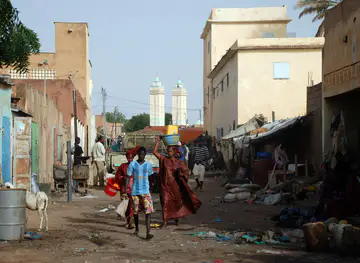
Brakna’s attractions are primarily landscapes, settlements and cultural encounters rather than formal tourist complexes. Aleg provides an introduction to regional administration, markets and everyday Sahelian commerce, while Boghé, Bababé and M’Bagne open onto the Senegal River valley. Along the river, cultivated fields, floodplain vegetation, fishing activity and village life create a marked contrast with the dry interior. Seasonal wetlands can interest birdwatchers and landscape photographers, although access, water levels and wildlife sightings vary and should be assessed locally. Rural excursions are best made with a driver or guide who understands tracks, land boundaries and local etiquette. Visitors interested in history can explore the living legacy of the Brakna Emirate through oral traditions, settlement patterns and religious architecture, rather than expecting a single preserved palace or archaeological park. Markets, mosques and agricultural areas are culturally significant but remain working places, so permission and respectful observation matter. The region is also useful for understanding Mauritania’s contemporary relationship with the Senegal River, including irrigation, pastoralism, migration and cross-border connections. Its appeal lies in the contrast between riverine cultivation and open Sahelian space, and in the opportunity to see a less commercialised part of southern Mauritania.
-
SINTHIOU BOUMACK
Experience the authentic beauty and culture of Sinthiou Boumack, a serene tourist attraction in the heart of Mauritania.

Explore Brakna on the map
Plan your trip on one map. See where the top cities, national parks and sights are, and book hotels and experiences in a few clicks.
Best hotels in Brakna
Best restaurants in Brakna
Dining in Brakna is informal and closely connected to household cooking, market trade and hospitality. Meals commonly draw on rice, millet, couscous, vegetables, pulses and meat, with fish more relevant in communities near the Senegal River. Tea is an important part of social hospitality, while bread, dates and sweet drinks are widely encountered. In Aleg and Boghé, visitors can find simple cafés and local eateries serving filling dishes suited to travellers, but choice is narrower than in Nouakchott and opening arrangements are not always predictable. Rural food may be arranged through accommodation, a guide or a local household rather than a conventional restaurant. Seasonal produce and river-valley agriculture influence what is available, while Mauritanian dishes share elements with wider western Sahelian and Maghrebi traditions. Visitors should carry snacks and drinking water for longer journeys, confirm prices before ordering and use bottled or otherwise reliably treated water. Alcohol is not part of the region’s public dining culture.
-
Hotel
Hotel Yasmine
Experience comfort and tradition at Hotel Yasmine in Aleg, Mauritania – where hospitality meets authentic Arab cuisine.

Best bars in Brakna
Brakna has little conventional nightclub culture. Evening social life is centred on family visits, tea, cafés, market areas and conversation, with activity strongest in Aleg and other larger towns. Simple restaurants and tea stalls may remain active after sunset, but hours, locations and availability change and should be confirmed locally. In smaller river settlements, evenings are quieter and revolve around community life rather than commercial entertainment. Visitors should not expect bars serving alcohol or a dedicated nightlife district; Mauritania is a predominantly Muslim country and public drinking is not part of ordinary regional life. The most rewarding evening experiences are often a shared tea, a local meal or an early walk through a town before the streets quieten. Because roads may be poorly lit and transport after dark can be difficult, travellers should arrange their return to accommodation in advance and avoid isolated areas at night.
-
Rotana Café
Discover the authentic flavors of Mauritania at Rotana Café in Nouakchott, where every meal is a celebration of local cuisine and hospitality.
-
Restaurant
Tafarit Restaurant
Experience the authentic tastes of Mauritania at Tafarit Restaurant, where vibrant flavors meet a warm, inviting atmosphere.
-
 Hotel
Monotel (Dar El Barka)
Experience the vibrant charm of Nouakchott at Monotel (Dar El Barka), your ideal hotel for comfort and convenience.
-
Bar
مطعم فنتازيا
Experience the flavors of Mauritania at مطعم فنتازيا, where traditional dishes meet modern culinary artistry in a vibrant setting.


Best shops in Brakna
Shopping in Brakna is practical and locally oriented, with markets in Aleg, Boghé and other larger settlements offering food, household goods, clothing, tea, spices and everyday supplies. The selection is more useful for observing regional commerce than for specialist souvenir hunting. Visitors may find locally made garments, leather goods, woven items and small craft products, but quality and availability vary, and purchasing directly from makers should be approached respectfully. River-valley produce and seasonal agricultural goods can appear in markets, while dates, tea and packaged foods are convenient purchases for onward journeys. There is no broad luxury-shopping scene, and visitors should not expect fixed retail hours or extensive card payment. Bargaining may be customary for some informal-market goods but is not appropriate everywhere; ask the seller’s price and negotiate politely. For distinctive gifts, choose durable, portable items and avoid buying antiquities, wildlife products or objects whose origin is unclear.
-
Grocery store
magta lahjar
Experience the vibrant local culture at Magta Lahjar, a grocery store offering a taste of authentic Mauritanian life with fresh produce and unique goods.
-
Grocery store
Boutique 60
Discover the flavors of Mauritania at Boutique 60, a local grocery store offering unique products and a taste of local culture.
-
Boutique
Boutique Amadou ba
Experience the rich craftsmanship of Mauritania at Boutique Amadou ba in Bogué, where culture and creativity meet in unique handcrafted treasures.
-
Store
Boutique Cherif N'Diaye
Discover unique Mauritanian crafts at Boutique Cherif N'Diaye in Bogué - a haven for authentic local treasures.
Get your free copy of our complete guide to Brakna, delivered straight to you.
Everything on this page, from attractions and restaurants to essentials and local phrases, in one PDF you can read offline, print or share.
Already have an account? Sign in
Your Brakna guide is ready.
We'll send it to · Not you? Sign out

Getting your guide ready…
We are putting together a fresh copy of the Brakna guide. This can take up to a minute.
This can take a few moments. If your browser asks, choose Allow so the download can start. You'll find the guide in your Downloads folder.
Nothing happened? Download it again
Sorry, the guide is taking longer than usual. Please try again in a minute, or get it by email instead.
Brakna essentials
Currency and Payment
Safety
Emergency Situations
Do's and Don'ts
Local Tips
From Eve
Local phrases worth knowing
You don't need to get them perfect. A few words go a long way, and locals appreciate the effort.
Basics
| English | Local | Say it |
|---|---|---|
| Hello | سلام | [salam] |
| Goodbye | وداعا | [wada'an] |
| Yes | نعم | [na'am] |
| No | لا | [la] |
| Please/You're welcome | من فضلك | [min fadlik] |
| Thank you | شكرا | [shukran] |
| Excuse me/Sorry | عفوا | [afwan] |
| How are you? | كيف حالك؟ | [kayfa halak?] |
| Fine. And you? | بخير. وأنت؟ | [bikhayr. wa anta?] |
| Do you speak English? | هل تتحدث الإنجليزية؟ | [hal tatahaddath al-inglizia?] |
| I don't understand | لا أفهم | [la afham] |
Eating & Drinking
| English | Local | Say it |
|---|---|---|
| I'd like to see the menu, please | أود رؤية القائمة، من فضلك | [awad ru'yat al-qa'ima, min fadlik] |
| I don't eat meat | لا أتناول اللحم | [la atanaawal al-lahm] |
| Cheers! | في صحتك! | [fi sihhatik!] |
| I would like to pay, please | أود الدفع، من فضلك | [awad al-daf', min fadlik] |
Emergencies
| English | Local | Say it |
|---|---|---|
| Help! | نجدة! | [najda!] |
| Go away! | ابتعد! | [ibta'id!] |
| Call the Police! | اتصل بالشرطة! | [ittasil bil-shurta!] |
| Call a doctor! | اتصل بالطبيب! | [ittasil bil-tabeeb!] |
| I'm lost | أنا ضائع | [ana dha'ir] |
| I'm ill | أنا مريض | [ana marid] |
Shopping
| English | Local | Say it |
|---|---|---|
| I'd like to buy... | أود شراء... | [awad shira'a...] |
| I'm just looking | أنا فقط أنظر | [ana faqat anzur] |
| How much is it? | كم سعره؟ | [kam si'ru?] |
| That's too expensive | هذا مكلف جدا | [hada mukallif jidan] |
| Can you lower the price? | هل يمكنك تخفيض السعر؟ | [hal yumkinuka takhfid al-si'r?] |
Time & Numbers
| English | Local | Say it |
|---|---|---|
| What time is it? | كم الساعة؟ | [kam al-saa'a?] |
| It's one o'clock | الساعة واحدة | [al-saa'a wahida] |
| Half past (10) | نصف الساعة (10) | [nisf al-saa'a (10)] |
| Morning | صباح | [sabah] |
| Afternoon | بعد الظهر | [ba'ad al-zuhur] |
| Evening | مساء | [masa'] |
| Yesterday | أمس | [ams] |
| Today | اليوم | [al-yawm] |
| Tomorrow | غدا | [ghadan] |
| 1 | 1 | [1] |
| 2 | 2 | [2] |
| 3 | 3 | [3] |
| 4 | 4 | [4] |
| 5 | 5 | [5] |
| 6 | 6 | [6] |
| 7 | 7 | [7] |
| 8 | 8 | [8] |
| 9 | 9 | [9] |
| 10 | 10 | [10] |
Transport & Directions
| English | Local | Say it |
|---|---|---|
| Where's a/the...? | أين ...؟ | [ayn ...?] |
| What's the address? | ما هو العنوان؟ | [ma huwa al-'unwan?] |
| Can you show me (on the map)? | هل يمكنك إظهاري (على الخريطة)؟ | [hal yumkinuka izhar'i (ala al-kharita)?] |
| When's the next (bus)? | متى يأتي (الحافلة) التالية؟ | [mataa ya'ti (al-hafila) al-taliya?] |
| A ticket (to ....) | تذكرة (إلى ...) | [tadhkirat (ila ...)] |
History of Brakna
Early Sahelian Settlement and Trade
The Brakna area has long formed part of the southern Sahelian zone linking pastoral lands north of the Senegal River with agricultural and trading communities farther south. Settlement patterns were influenced by access to water, seasonal pasture and river crossings. Rather than belonging to a single ancient kingdom throughout its history, the region experienced overlapping networks of traders, herders, farmers and religious scholars. Its position helped connect the western Sahara with the Senegal River valley.
The Brakna Emirate
From the seventeenth century, the Brakna Emirate became an important Hassaniya-speaking political formation in the western Sahel. Its authority rested on alliances, tribute, pastoral influence and control of movement across parts of the southern Mauritanian interior. The emirate was not a modern territorial state with fixed borders, but its name remains central to the historical identity of the region. Oral traditions, social structures and patterns of settlement continue to reflect this pre-colonial era.
Islamic Scholarship and River-Valley Communities
Islam shaped education, law, social organisation and public life throughout the Brakna region. Religious teachers and learned families travelled between Saharan settlements and the Senegal River valley, while village communities developed their own institutions around mosques, farming and trade. Islamic practice is expressed in everyday customs as well as in religious buildings, though local culture is also shaped by distinct Pulaar, Wolof, Soninke and Hassaniya-speaking traditions.
French Colonial Administration
French rule gradually extended into the southern Mauritanian territories during the colonial period, bringing new administrative boundaries, military posts, taxation and road connections. Colonial authority interacted with existing emirates, religious leaders and local communities rather than replacing them immediately. The administrative importance of towns such as Aleg developed further under this system, while the Senegal River remained both a boundary and a corridor for movement, commerce and agriculture.
Independence and the Formation of Mauritania
Mauritania became independent in 1960, and Brakna was incorporated into the new republic’s administrative structure. Government institutions, schools, roads and public services expanded unevenly across the region. The post-independence period also brought stronger links between river-valley communities and national centres, while traditional pastoral and agricultural economies continued to shape local life. Aleg’s role as a regional administrative centre became more pronounced.
Drought, Migration and Agricultural Change
Severe droughts affecting the Sahel from the 1960s onwards altered livelihoods across Brakna. Pastoralists faced shrinking pasture and water resources, while many families moved towards towns or the Senegal River valley. Irrigation and organised agriculture gained importance, although development was uneven and dependent on water management. These changes contributed to a more settled population in some areas and transformed the relationship between pastoral routes, farming land and regional markets.
The Senegal River Valley in Contemporary Mauritania
Since the late twentieth century, the river valley has remained central to debates about land, citizenship, migration and relations between communities in Mauritania and Senegal. The tensions of 1989 caused serious displacement and hardship on both sides of the border, with long-term consequences for families and local commerce. Today Brakna combines administrative towns, agricultural settlements, pastoral areas and cross-border cultural connections, while the river continues to shape its economy and identity.
Brakna in Photos
Browse through our photo collection highlighting the charm and character of the destination.
Neighbouring regions of Brakna
The closest regions to Brakna, if you have time for more than one.
-

-
-

-

-


Swipe for more regions
Explore more

Explore more of Mauritania
Discover Mauritania's vast Sahara Desert, ancient cities, and rich cultural heritage. Experience the stunning landscapes and warm hospitality of this West African gem.
Explore Mauritania