

Guidimaka, Mauritania Travel Guide
Discover the untouched beauty and rich cultural heritage of Guidimaka in Mauritania, where history, nature, and tradition come together in harmony.
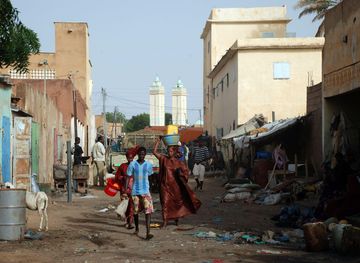
Guidimaka, nestled in the southern part of Mauritania, is a region that captivates with its rich cultural heritage and stunning natural landscapes. This lesser-known destination offers an authentic glimpse into Mauritanian life, far from the bustling cities. The region is known for its picturesque villages, where you can witness traditional mud-brick architecture and experience local customs. The scenic beauty of the area is enhanced by the presence of the Senegal River, which provides lush greenery and a variety of bird species, making it a perfect spot for nature enthusiasts. Guidimaka is also home to historical sites that reflect its diverse past. Visiting ancient ruins and historical monuments offers a journey through time, revealing the area's significance in West African history. The local markets are vibrant and full of life, offering unique handicrafts and local delicacies that are a treat for any visitor. For those interested in adventure, the surrounding landscapes offer opportunities for hiking and exploring the natural environment. The warm and welcoming locals are always eager to share their stories and traditions, making your visit to Guidimaka a memorable experience.

Know before you go
Hi, I'm Eve. Here are a few practical things to know before exploring Guidimaka.
- Visit during the cooler months from November to February to avoid the intense summer heat.
- Engage with local guides for a more in-depth understanding of the area's history and culture.
- Bring cash as ATMs are scarce in the region and credit card acceptance is limited.
- Respect local customs and dress modestly, especially in rural areas.
- Try local dishes such as Thieboudienne and Maffe to experience authentic Mauritanian cuisine.

Best landmarks in Guidimaka
Top-rated picks
Best Landmarks

Richat Structure
Explore the captivating Richat Structure, a stunning geological marvel in the Sahara desert, offering breathtaking views and rich cultural experiences.

Banc d'Arguin National Park
Explore the breathtaking landscapes and rich biodiversity of Banc d'Arguin National Park, a UNESCO World Heritage site in Mauritania.

Galerie Zeinart
Discover the artistic soul of Mauritania at Galerie Zeinart, a hub for local and international art in the heart of Nouakchott.

Carrefour Guidimakha
Experience the vibrant history and culture at Carrefour Guidimakha, a key historical landmark in Nouakchott, Mauritania.

Best restaurants in Guidimaka
Top-rated picks
Best Restaurants

مطعم بالاسيو Palacio
Experience the best of Mauritanian cuisine at Palacio Restaurant in Nouakchott – where every meal tells a story.

The India Gate الطعام الهندي
Experience authentic Indian cuisine at The India Gate in Nouakchott - a delightful blend of flavors and cultures awaits you.

Tafarit Restaurant
Experience authentic Mauritanian seafood at Tafarit Restaurant in Nouakchott – where freshness meets tradition!

Timeless
Experience exquisite Mauritanian cuisine at Timeless in Nouakchott—where tradition meets modern culinary artistry.

Best bars in Guidimaka
Top-rated picks
Best Bars

Tafarit Restaurant
Discover the essence of Mauritania with authentic dishes at Tafarit Restaurant, a delightful culinary experience in Nouakchott.

مطعم فنتازيا
Savor the essence of Mauritania at Restaurant Fantasia, where delightful flavors meet warm hospitality in the heart of Nouakchott.

O Délice
Discover O Délice, Nouakchott's top destination for gourmet hamburgers and tacos in a vibrant setting.

مطعم جلوفة
Experience the authentic taste of Mauritania at مطعم جلوفة, a delightful restaurant in Nouadhibou, offering a rich menu and welcoming atmosphere.

Best nightclubs in Guidimaka
Top-rated picks
Best Nightclubs

Nouakchott Night
Discover the vibrant culinary scene of Nouakchott at Nouakchott Night, offering traditional Mauritanian flavors in a lively atmosphere.

Calipso Club
Discover the flavors of Mauritania at Calipso Club, a vibrant restaurant in Nouakchott offering a delightful culinary experience.
Warf
Experience the vibrant nightlife of Nouakchott at Warf, where music and dance come together in an electrifying atmosphere.

Best shops in Guidimaka
Top-rated picks
Best Shops

Sante yalla Boutique a Dembancane
Explore unique Senegalese crafts and vibrant local culture at Sante yalla Boutique, a must-visit shopping destination in Dembancane.

Ould Yanja
Experience the lively blend of culture and modern shopping at Ould Yanja Shopping Mall in Mauritania.
Samba Thioye
Discover authentic Mauritanian flavors at Samba Thioye, a vibrant grocery store in Kalinioro offering fresh produce and local delicacies.

Cheikh telecom
Explore Cheikh Telecom in Sélibaby - the ideal electronics store for travelers seeking connectivity and quality technology.

Explore Guidimaka on the Map
A handpicked selection of must-see spots in Guidimaka, mapped for you.
Guidimaka Essentials
-
Guidimaka is located in the southern part of Mauritania. The nearest major airport is Nouakchott–Oumtounsy International Airport in Nouakchott, approximately 400 kilometers away. From Nouakchott, you can take a domestic flight to Kiffa, and then travel by road to Guidimaka. Alternatively, you can take a bus or hire a taxi from Nouakchott directly to Guidimaka, which typically takes around 8 to 10 hours by road.
-
Within Guidimaka, the main forms of transportation are taxis and minibuses. Taxis are generally inexpensive and can be hailed from most locations. For longer journeys within the region, minibuses (often referred to as 'bush taxis') are available but can be crowded. Renting a car is also an option, though it is advisable to use a 4x4 vehicle due to the variable road conditions.
-
The official currency in Mauritania is the Mauritanian Ouguiya (MRU). Credit cards are not widely accepted, so it is advisable to carry cash. ATMs are limited in Guidimaka, so it is recommended to withdraw sufficient cash in Nouakchott or Kiffa. Ensure you have smaller denominations for day-to-day transactions.
-
Guidimaka is generally a safe region, but it is important to take standard precautions. Avoid carrying large sums of money and be cautious in crowded areas. Certain areas with high crime rates targeting tourists should be avoided, particularly isolated regions after dark. Always stay informed about the local security situation through reliable sources.
-
In case of an emergency, dial 117 for police assistance and 118 for medical emergencies. The local hospital in Sélibaby is equipped to handle basic medical issues. It is advisable to have travel insurance that covers medical emergencies and to carry a basic first-aid kit. For minor health issues, there are pharmacies in Sélibaby where you can purchase over-the-counter medications.
-
Fashion: Do dress modestly, particularly in rural areas and religious sites. Avoid wearing revealing clothing. Religion: Do respect local customs and traditions. Always seek permission before photographing people, especially around mosques. Public Transport: Do be respectful and patient as public transport can be crowded and schedules may vary. Greetings: Do greet people with a handshake or a nod. Using the right hand is considered polite. Eating & Drinking: Do try local dishes and accept food offerings graciously. Don’t eat or drink with your left hand, as it is considered impolite.
-
To experience Guidimaka like a local, visit the weekly markets where you can buy fresh produce and handmade crafts. Engage with locals, who are often friendly and willing to share stories about their culture and traditions. Don’t miss visiting the traditional villages to witness local farming practices and community life. For a unique experience, attend a local festival or ceremony.
When is the best time to visit Guidimaka?
Useful Local Phrases for Guidimaka
You don't need to speak the language perfectly. Even learning a few simple words can make conversations warmer—and locals usually appreciate the effort.
— Eve

Here are the phrases I use most often in Guidimaka. Try a few—you'll be surprised how far they go! 😊
❤️
-
- HelloSalam
[sah-lahm] - GoodbyeBissalama
[bee-sah-lah-mah] - YesIye
[ee-yeh] - NoLa
[lah] - Please/You're welcomeAfwan
[ah-fwan] - Thank youShukran
[shook-rahn] - Excuse me/SorryAasif
[ah-see-f] - How are you?Kayfa halak?
[kay-fah hah-lak] - Fine. And you?Ana bikhayr. Wa anta?
[ah-nah bee-khayr. wah an-tah] - Do you speak English?Hal tatakallam al-ingiliziyya?
[hal tah-tah-kah-lam al-in-glee-zee-yah] - I don't understandAna la afham
[ah-nah lah ah-fahm]
- HelloSalam
-
- I'd like to see the menu, pleaseUrid an ara al-menu, afwan
[oo-reed an ah-rah al-men-oo, ah-fwan] - I don't eat meatAna la akul laham
[ah-nah lah ah-kool lah-hahm] - Cheers!Fi sahtak!
[fee sah-tak] - I would like to pay, pleaseUrid an adfa'a, afwan
[oo-reed an ad-fah, ah-fwan]
- I'd like to see the menu, pleaseUrid an ara al-menu, afwan
-
- Help!Al-najda!
[al-naj-dah] - Go away!Izhab!
[iz-hab] - Call the Police!Ittasil bil-shurta!
[it-ta-sil bil-shoor-tah] - Call a doctor!Ittasil bi-tabeeb!
[it-ta-sil bi-ta-beeb] - I'm lostAna da'eef
[ah-nah dah-eef] - I'm illAna marid
[ah-nah ma-reed]
- Help!Al-najda!
-
- I'd like to buy...Urid an ashtari...
[oo-reed an ash-tah-ree] - I'm just lookingAna just atafarruj
[ah-nah just ah-tah-fah-reej] - How much is it?Kam thamanuh?
[kam tha-ma-noo] - That's too expensiveThalika ghaly jidan
[tha-lee-kah ghal-ee jee-dan] - Can you lower the price?Hal mumkin an tukhafid al-thaman?
[hal moom-keen an too-khah-feed al-tha-man]
- I'd like to buy...Urid an ashtari...
-
- What time is it?Kayfa al-waqt?
[kay-fah al-waqt] - It's one o'clockAl-saa'a wahida
[al-sah-ah wah-ee-dah] - Half past (10)Nisf al-saa'a (10)
[nisf al-sah-ah (10)] - MorningSabah
[sah-bah] - AfternoonBa'ad al-zuhur
[ba-ad al-zoo-hur] - EveningMasa
[mah-sah] - YesterdayAms
[ams] - TodayAl-yawm
[al-yawm] - TomorrowGhad
[ghad] - 1Wahid
[wah-heed] - 2Ithnain
[ith-nain] - 3Thalatha
[tha-lah-thah] - 4Arba'a
[ar-ba-ah] - 5Khamsa
[khams-ah] - 6Sitta
[sit-tah] - 7Sab'a
[sab-ah] - 8Thamaniya
[tha-ma-nee-yah] - 9Tis'a
[tis-ah] - 10Ashara
[ah-sha-rah]
- What time is it?Kayfa al-waqt?
-
- Where's a/the...?Ayna al...?
[ay-nah al...] - What's the address?Ma huwa al-unwan?
[ma hoo-wah al-oon-wan] - Can you show me (on the map)?Hal mumkin an turini (ala al-kharita)?
[hal moom-keen an too-ree-nee (ah-lah al-khah-ree-tah)] - When's the next (bus)?Mata al-bus al-qadim?
[mah-tah al-bus al-qah-deem] - A ticket (to ....)Tazkara (ila ....)
[taz-kah-rah (ee-lah ...)]
- Where's a/the...?Ayna al...?
History of Guidimaka
-
Guidimaka, located in the southern region of Mauritania, has a rich history that predates the arrival of Islam. Archaeological evidence suggests the area was inhabited by ancient tribes who engaged in trade and agriculture. The pre-Islamic era saw the development of early settlements and the establishment of trade routes connecting the region to larger networks in West Africa.
-
In the 11th century, the spread of Islam reached Guidimaka, significantly influencing its culture and social structure. The Almoravid movement, a significant Islamic reformist wave originating in the Sahara, played a crucial role in the Islamization of the region. The Almoravids established religious schools and mosques, fostering a deep-rooted Islamic heritage that persists to this day.
-
Guidimaka was once part of the powerful Ghana Empire, which flourished between the 9th and 13th centuries. As a key region within the empire, Guidimaka benefited from the empire's wealth generated through gold trade. The decline of the Ghana Empire in the 13th century led to the rise of the Mali Empire, which continued to influence the region's culture and economy.
-
In the late 19th century, Guidimaka, like much of Mauritania, came under French colonial rule. The French imposed administrative changes, introduced new agricultural practices, and integrated the region into the wider colonial economy. The impact of French colonialism is still evident in the local administrative structures and some aspects of the cultural landscape.
-
Mauritania gained independence from France in 1960, marking a new era for Guidimaka. The region has since undergone significant socio-economic changes, including the development of infrastructure, education, and healthcare. Traditional ways of life continue to coexist with modern influences, creating a unique cultural tapestry.
-
Guidimaka is renowned for its vibrant cultural heritage, which includes traditional music, dance, and crafts. The region hosts several annual festivals that celebrate its history and culture, such as the 'Gnawa Festival,' which showcases traditional music and dance. These cultural events provide a glimpse into the rich traditions that have been passed down through generations.
Neighbouring Regions of Guidimaka
The closest regions to Guidimaka, if you have time for more than one.


Your all‑in‑one travel companion app
Explore expert travel guides, compare and book tours, experiences, hotels, and more—all from the palm of your hand. Download now for seamless trip planning wherever your wanderlust takes you.


Explore More of Mauritania

Looking beyond Guidimaka? Discover Mauritania for broader travel guides, local hot-spots, and regional highlights.
Explore MauritaniaGuidimaka in Photos
Browse through our photo collection highlighting the charm and character of the destination.


Guidimaka: A Hidden Gem in Mauritania
Guidimaka, nestled in the southern part of Mauritania, is a region that captivates with its rich cultural heritage and stunning natural landscapes. This lesser-known destination offers an authentic glimpse into Mauritanian life, far from the bustling cities. The region is known for its picturesque villages, where you can witness traditional mud-brick architecture and experience local customs. The scenic beauty of the area is enhanced by the presence of the Senegal River, which provides lush greenery and a variety of bird species, making it a perfect spot for nature enthusiasts. Guidimaka is also home to historical sites that reflect its diverse past. Visiting ancient ruins and historical monuments offers a journey through time, revealing the area's significance in West African history. The local markets are vibrant and full of life, offering unique handicrafts and local delicacies that are a treat for any visitor. For those interested in adventure, the surrounding landscapes offer opportunities for hiking and exploring the natural environment. The warm and welcoming locals are always eager to share their stories and traditions, making your visit to Guidimaka a memorable experience.