

Free Ant Atoll Travel Guide & Mobile App
Explore Ant Atoll with free travel guides. Discover regional history, expert tips, proposed trips, and audio guides on web or mobile app.


Ant Atoll in Micronesia offers remote lagoons, coral reefs and ocean wildlife for carefully planned boat-based journeys from Pohnpei.
Read more about Ant Atoll
When is the best time to visit Ant Atoll?
Best: January–March · 30°C| Month | High (°C) | Rainfall (mm) |
|---|---|---|
| January (best) | 30 | 250 |
| February (best) | 30 | 220 |
| March (best) | 30 | 240 |
| April | 30 | 270 |
| May | 30 | 290 |
| June | 30 | 300 |
| July | 30 | 310 |
| August | 30 | 300 |
| September | 30 | 290 |
| October | 30 | 270 |
| November | 30 | 260 |
| December | 30 | 250 |
Getting to and around Ant Atoll
How to get there
Transportation
Best attractions in Ant Atoll
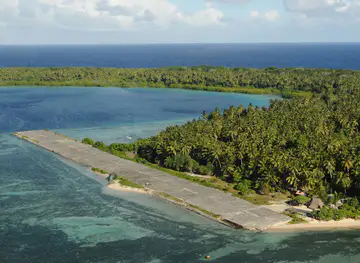
Ant Atoll’s attractions are almost entirely natural and marine. A boat journey across open water leads to a ring of coral reef, low islets and a lagoon whose appearance changes with tide, cloud and sea conditions. Snorkelling and carefully supervised swimming may reveal reef fish and coral habitats, although visibility and safety cannot be guaranteed and local advice should determine where anyone enters the water. The outer reef is of interest to experienced boaters and divers, but exposed ocean conditions demand specialist judgement. On land, the appeal lies in quiet beaches, coastal vegetation, seabirds and the sense of isolation created by the lack of roads and buildings. There are no conventional museums, historic houses, amusement parks or organised shore excursions on the atoll. Ant is best understood as a low-impact destination for observing a Pacific atoll environment, learning about its relationship with Pohnpei and travelling by boat through a remote seascape. Visitors should avoid treating the reef as an activity playground: coral, nesting areas and intertidal habitats are fragile, and every excursion should be planned around permission, weather, tides, safety and the removal of all waste.
-
Tourist attraction
Japanese WWII Anti-Aircraft Guns
Uncover the history of Pohnpei at the Japanese WWII Anti-Aircraft Guns, a fascinating site for history enthusiasts and nature lovers alike, surrounded by stunning views.

Explore Ant Atoll on the map
Plan your trip on one map. See where the top cities, national parks and sights are, and book hotels and experiences in a few clicks.
Best hotels in Ant Atoll
Best restaurants in Ant Atoll
Ant Atoll has no restaurants, cafés, shops or functioning hospitality infrastructure, so dining there means carrying provisions from Pohnpei. A boat operator may help organise packed meals, but visitors should confirm this before departure and bring sufficient drinking water, food and secure containers for rubbish. The useful culinary context is Pohnpei’s island food culture, where locally available fish, seafood, root crops, fruit and coconut may complement imported staples. Food prepared for an Ant Atoll trip needs to withstand heat, spray and a potentially long return journey, with strict attention to cold storage and hygiene. There is no dependable opportunity to replenish supplies on the atoll, and fishing or collecting marine life should never be assumed to be permitted. Travellers can experience regional flavours more comfortably in Pohnpei’s markets, restaurants and family-run food settings before or after the excursion, while keeping the atoll visit focused on the marine environment rather than on a dining scene that does not exist.
-
Restaurant
Arnold's
Experience authentic Pohnpeian flavors at Arnold's - where local ingredients meet warm hospitality.
-
Restaurant
Fusion Restaurant
Discover Fusion Restaurant in Kolonia: A culinary journey blending local flavors with international cuisine in the heart of Pohnpei.
-
Restaurant
Orchid Restaurant (Ocean View)
Discover Orchid Restaurant in Kolonia - where exquisite cuisine meets breathtaking ocean views for an unforgettable dining experience.
-
Restaurant
Kaselehlie Diner
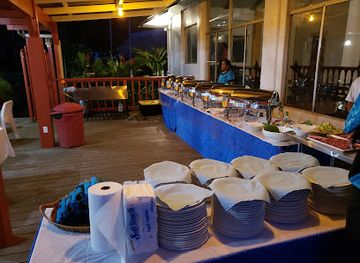
Experience authentic Pohnpeian cuisine at Kaselehlie Diner—a buffet paradise for food lovers in Nett, Pohnpei.



Best bars in Ant Atoll
Ant Atoll has no bars, nightclubs or evening entertainment venues. After dark, visitors are generally aboard their boat or at a permitted temporary camp, where lighting, cooking, waste management and safety require careful preparation. Night travel on the reef should be avoided unless undertaken by an appropriately equipped and experienced crew. The nearest conventional evening scene is on Pohnpei, outside the atoll, where social life is centred more on restaurants, local gatherings and modest bars than on a large club district. Visitors should not bring alcohol as a substitute for safety planning, and boat operators may restrict drinking before or during passages, swimming and other water activities. The atoll’s evening character is defined by darkness, ocean sound and the need to protect equipment and people from changing weather, not by commercial nightlife.
-
 Restaurant
Joy Hotel & Restaurant
Experience the best of Pohnpei's culinary landscape at Joy Hotel & Restaurant with exquisite Japanese cuisine and warm local hospitality.
-
Restaurant
Cliff Hotel & Restaurant
Discover the idyllic Cliff Hotel & Restaurant in Pohnpei, where exquisite dining meets stunning ocean views in a tranquil island setting.
-
Bar
Chinastar Hotel & Restaurant
Experience the authentic taste of Chinese cuisine at Chinastar Hotel & Restaurant in Kolonia, Pohnpei, where hospitality meets culinary excellence.
-
Bar
7 Stars Inn & Riverside Restaurant
Discover the vibrant culture and delicious cuisine at 7 Stars Inn & Riverside Restaurant on Pohnpei Island.
Best nightclubs in Ant Atoll
Ant Atoll has no bars, nightclubs or evening entertainment venues. After dark, visitors are generally aboard their boat or at a permitted temporary camp, where lighting, cooking, waste management and safety require careful preparation. Night travel on the reef should be avoided unless undertaken by an appropriately equipped and experienced crew. The nearest conventional evening scene is on Pohnpei, outside the atoll, where social life is centred more on restaurants, local gatherings and modest bars than on a large club district. Visitors should not bring alcohol as a substitute for safety planning, and boat operators may restrict drinking before or during passages, swimming and other water activities. The atoll’s evening character is defined by darkness, ocean sound and the need to protect equipment and people from changing weather, not by commercial nightlife.
-
Night club
Club Flamingo
Discover the vibrant nightlife at Club Flamingo, Kolonia's top night club, where unforgettable experiences and lively entertainment await.

Best shops in Ant Atoll
There is no shopping on Ant Atoll and no opportunity to buy souvenirs, food, fuel or equipment after departure from Pohnpei. Visitors should purchase all essentials in Pohnpei, including water, meals, sun protection, reef-appropriate equipment, dry bags and waste containers. Shopping before the trip is functional rather than recreational, and responsible travellers should avoid disposable packaging wherever possible. Pohnpei provides the nearest choice of general shops, markets and locally produced goods, including food products and island handicrafts, although availability varies and should not be assumed to match a large international destination. Any shell, coral, stone or other natural material found on Ant Atoll should remain where it is; collecting can damage the environment and may conflict with local expectations or conservation rules. The most appropriate souvenir is therefore a photograph or a locally purchased craft from Pohnpei, rather than anything removed from the reef or its islets.
-
Grocery store
A-One Mart, Kolonia
Explore the rich local flavors at A-One Mart, Kolonia's premier grocery store and market, perfect for tourists seeking authentic Pohnpei experiences.
-
Grocery store
Ace Commercial Center
Experience the vibrant local culture and flavors of Pohnpei at Ace Commercial Center, your go-to grocery store for authentic produce and international delights.
-
Grocery store
Palm Terrace Market
Explore the bustling Palm Terrace Market in Kolonia, Pohnpei, where fresh produce meets local culture in a vibrant shopping experience.
-
Hardware store
Ace Hardware
Discover quality tools and materials at Ace Hardware in Kolonia, Pohnpei – your partner in home improvement and DIY projects.


Get your free copy of our complete guide to Ant Atoll, delivered straight to you.
Everything on this page, from attractions and restaurants to essentials and local phrases, in one PDF you can read offline, print or share.
Already have an account? Sign in
Your Ant Atoll guide is ready.
We'll send it to · Not you? Sign out

Getting your guide ready…
We are putting together a fresh copy of the Ant Atoll guide. This can take up to a minute.
This can take a few moments. If your browser asks, choose Allow so the download can start. You'll find the guide in your Downloads folder.
Nothing happened? Download it again
Sorry, the guide is taking longer than usual. Please try again in a minute, or get it by email instead.
Ant Atoll essentials
Currency and Payment
Safety
Emergency Situations
Do's and Don'ts
Local Tips
From Eve
Local phrases worth knowing
You don't need to get them perfect. A few words go a long way, and locals appreciate the effort.
Basics
| English | Local | Say it |
|---|---|---|
| Hello | Månggei | [mang-gei] |
| Goodbye | Chok | [chok] |
| Yes | Aie | [ai-eh] |
| No | Tia | [tee-ah] |
| Please/You're welcome | Fahna | [fah-nah] |
| Thank you | Kommol tata | [kom-mol tah-tah] |
| Excuse me/Sorry | Sok | [sok] |
| How are you? | Månggei a? | [mang-gei ah] |
| Fine. And you? | Fahna. A ring? | [fah-nah ah ring] |
| Do you speak English? | Aie ian English? | [ai-eh ee-ahn English] |
| I don't understand | Aie ian aolep | [ai-eh ee-ahn ah-oh-lep] |
Eating & Drinking
| English | Local | Say it |
|---|---|---|
| I'd like to see the menu, please | Aie a äi menu, fahna | [ai-eh ah ai menu fah-nah] |
| I don't eat meat | Aie ian chad | [ai-eh ee-ahn chad] |
| Cheers! | Kommol tata! | [kom-mol tah-tah] |
| I would like to pay, please | Aie a äi pay, fahna | [ai-eh ah ai pay fah-nah] |
Emergencies
| English | Local | Say it |
|---|---|---|
| Help! | Bwen! | [bwen] |
| Go away! | Chok! | [chok] |
| Call the Police! | Aie a chad Police! | [ai-eh ah chad Police] |
| Call a doctor! | Aie a chad doctor! | [ai-eh ah chad doctor] |
| I'm lost | Aie ian aolep | [ai-eh ee-ahn ah-oh-lep] |
| I'm ill | Aie ian chad | [ai-eh ee-ahn chad] |
Shopping
| English | Local | Say it |
|---|---|---|
| I'd like to buy... | Aie a äi buy... | [ai-eh ah ai buy] |
| I'm just looking | Aie ian aolep | [ai-eh ee-ahn ah-oh-lep] |
| How much is it? | Månggei chad? | [mang-gei chad] |
| That's too expensive | Chad aolep | [chad ah-oh-lep] |
| Can you lower the price? | Aie a äi chad cheks? | [ai-eh ah ai chad cheks] |
Time & Numbers
| English | Local | Say it |
|---|---|---|
| What time is it? | Månggei chad? | [mang-gei chad] |
| It's one o'clock | Chad chad | [chad chad] |
| Half past (10) | Half chad (10) | [half chad (10)] |
| Morning | Bwen | [bwen] |
| Afternoon | Månggei | [mang-gei] |
| Evening | Chok | [chok] |
| Yesterday | Neng | [neng] |
| Today | Bwen | [bwen] |
| Tomorrow | Aiai | [ah-iah-ee] |
| 1 | Sok | [sok] |
| 2 | Neng | [neng] |
| 3 | Tolu | [to-lu] |
| 4 | Faa | [faa] |
| 5 | Lima | [lee-ma] |
| 6 | Ono | [o-no] |
| 7 | Fitu | [fi-tu] |
| 8 | Walu | [wa-lu] |
| 9 | Siyu | [si-yu] |
| 10 | Sampulu | [sam-pu-lu] |
Transport & Directions
| English | Local | Say it |
|---|---|---|
| Where's a/the...? | Månggei a/the...? | [mang-gei ah/the] |
| What's the address? | Månggei chad address? | [mang-gei chad address] |
| Can you show me (on the map)? | Aie a äi show me (on the map)? | [ai-eh ah ai show me (on the map)] |
| When's the next (bus)? | Månggei chad next (bus)? | [mang-gei chad next bus] |
| A ticket (to ....) | A ticket (to ....) | [a ticket to] |
History of Ant Atoll
Austronesian seafaring and the Pohnpei maritime world
Ant Atoll forms part of the wider Caroline Islands seascape settled and traversed by skilled Austronesian-speaking navigators over many centuries. Although the atoll has little monumental architecture and a limited permanent population today, its reefs and passages would have been understood through practical knowledge of currents, winds, fishing grounds and seasonal conditions. The historical importance of such places lies not only in settlement remains but also in their connection to inter-island voyaging and the ocean-based economy of Pohnpei and neighbouring islands.
Pohnpei chiefly society and customary ocean rights
Before European colonial administration, Pohnpei was organised through powerful chiefly systems and local communities whose authority extended across land and marine resources. Ant Atoll’s relationship with Pohnpei should therefore be understood through customary connections as well as modern administrative boundaries. Fishing areas, landing places and particular islets may carry local rights or expectations that are not visible to outside visitors. Contemporary travel planning should respect this continuing cultural framework rather than treating the atoll as an unowned wilderness.
European charting and the Caroline Islands
European navigators entered the Caroline Islands during the period of Spanish expansion across the western Pacific, and later charts and maritime reports gradually incorporated the islands, reefs and atolls around Pohnpei. Such mapping served colonial, commercial and navigational purposes, but it did not replace Indigenous knowledge of the sea. Ant Atoll’s position within the Pohnpei archipelago consequently reflects two overlapping histories: long-established local navigation and the later European effort to chart remote Pacific waters.
German and Japanese colonial administration
After Spain relinquished its Micronesian possessions at the end of the nineteenth century, the Caroline Islands passed to Germany and, following the First World War, to Japan under a League of Nations mandate. Pohnpei became part of these changing administrative systems, which brought new forms of taxation, shipping regulation, commercial activity and mapping. Ant Atoll remained geographically remote and did not become a major urban or industrial centre, but its surrounding waters were incorporated into the region’s changing colonial maritime networks.
The American period and the Federated States of Micronesia
After the Second World War, the Caroline Islands were administered by the United States as part of the Trust Territory of the Pacific Islands. Pohnpei later became one of the states of the Federated States of Micronesia, which entered into free association with the United States in 1986. Ant Atoll is now administered within Pohnpei State and the national federation. Its contemporary significance is principally environmental, customary and maritime rather than industrial, with access shaped by local governance and the realities of a remote coral atoll.
Contemporary conservation and low-impact visitation
The modern history of Ant Atoll is increasingly connected with marine conservation, sustainable fishing and the protection of coral-island ecosystems. Low-lying atolls are especially exposed to storm damage, coastal erosion, changing marine conditions and the effects of careless tourism. Because Ant Atoll lacks the infrastructure of a developed resort, responsible visits remain small-scale and dependent on local knowledge. This creates an opportunity for low-impact exploration, provided visitors respect customary arrangements and leave the reef and islets as they found them.
Ant Atoll in Photos
Browse through our photo collection highlighting the charm and character of the destination.
Neighbouring regions of Ant Atoll
The closest regions to Ant Atoll, if you have time for more than one.
-

-

-
-

-


Swipe for more regions
Explore more

Explore more of Micronesia
Discover Micronesia: A Pacific paradise with vibrant coral reefs, rich cultural heritage, and breathtaking landscapes.
Explore Micronesia