

Chuuk Lagoon, Micronesia Travel Guide
Discover the mesmerizing underwater world and rich history of Chuuk Lagoon in Micronesia, a paradise for divers and history enthusiasts.
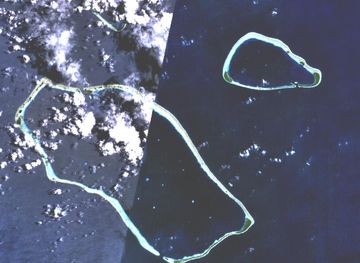
Chuuk Lagoon, nestled in the heart of Micronesia, is a true paradise for divers and history enthusiasts alike. This stunning lagoon is renowned for its crystal-clear waters and the haunting beauty of its underwater shipwrecks. During World War II, Chuuk Lagoon was a significant Japanese naval base, and today, it is home to a vast underwater museum of sunken warships, planes, and submarines. The lagoon's clear waters make it an ideal spot for diving, allowing you to explore this unique underwater world with ease. Apart from its historical wrecks, Chuuk Lagoon offers an abundance of marine life. Divers will be mesmerized by the vibrant coral reefs, teeming with colorful fish and other marine creatures. The lagoon is part of a larger atoll, surrounded by lush, green islands that are perfect for exploring on off-gassing days. The local culture is rich and welcoming, allowing visitors to immerse themselves in the traditions and lifestyles of the Chuukese people. For those who prefer staying above water, Chuuk Lagoon offers stunning views and serene, tranquil beaches. The islands are dotted with charming villages where you can experience the local way of life. Whether you're diving into history, exploring nature, or simply relaxing on the beach, Chuuk Lagoon promises an unforgettable experience.

Know before you go
Hi, I'm Eve. Here are a few practical things to know before exploring Chuuk Lagoon.
- Bring your diving certification and logbook; many dive spots require proof of experience.
- The best time to visit is from December to April when the weather is calm and visibility is at its peak.
- Pack reef-safe sunscreen to protect the delicate marine ecosystems.
- Respect local customs and traditions; always ask for permission before taking photos of people.
- Carry cash, as credit card facilities are limited on the islands.
Top City Travel Guides in Chuuk Lagoon
The cities of Chuuk Lagoon, and the easiest places to base yourself.


Explore Chuuk Lagoon: Things to Do, Places to Eat, Hotels & More
Handpicked recommendations for top attractions, local dining, accommodations, and more

Top Attractions & Sightseeing in Chuuk Lagoon
Top-rated picks
Best Attractions

Truk Lagoon Dive Center at The Truk Stop Hotel
Explore the underwater wonders of Truk Lagoon with unforgettable diving experiences at the Truk Lagoon Dive Center, the gateway to Micronesia's hidden treasures.
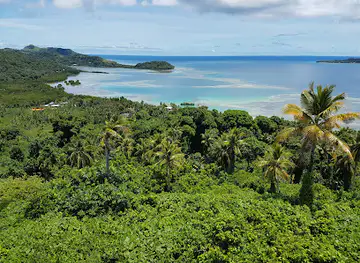
Japanese WWII Lighthouse
Explore the Japanese WWII Lighthouse in Weno, Chuuk - a historical gem offering stunning coastal views and a glimpse into the region's past.

Japanese Power Plant
Explore the historical significance and natural beauty of the Japanese Power Plant in Nukan, Chuuk, a unique tourist attraction in the Pacific.

Japanese Gun
Discover the historical significance and natural beauty of the Japanese Gun in Weno, a remarkable World War II relic nestled in the tropical paradise of Chuuk.

Best landmarks in Chuuk Lagoon
Top-rated picks
Best Landmarks

Truk Blue Lagoon Resort
Discover the beauty of Micronesia at Truk Blue Lagoon Resort, a premier destination for relaxation, adventure, and cultural exploration.

Chuuk Lagoon
Explore the stunning Chuuk Lagoon, a paradise of crystal-clear waters, vibrant marine life, and historical shipwrecks in the heart of Micronesia.

Truk Stop Hotel & Restaurant
Experience the vibrant flavors of Chuuk at Truk Stop Hotel & Restaurant, where local cuisine meets warm hospitality in a picturesque setting.

Japanese WWII Lighthouse
Experience the captivating history and stunning vistas at the Japanese WWII Lighthouse in Weno, Chuuk, a must-visit for every traveler.

Best restaurants in Chuuk Lagoon
Top-rated picks
Best Restaurants
Truk Blue Lagoon Resort
Discover paradise at Truk Blue Lagoon Resort - where tropical beauty meets rich history in Chuuk Islands.

Truk Stop Hotel & Restaurant
Savor authentic Chuukese cuisine with stunning ocean views at Truk Stop Hotel & Restaurant in Weno.

Kurassa Hotel
Experience tranquility at Kurassa Hotel on Iras Island in Chuuk – your serene escape with stunning ocean views and warm hospitality.
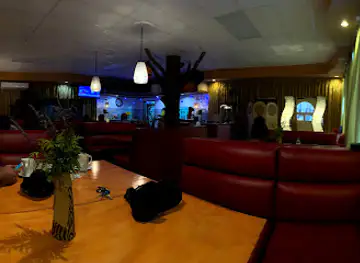
LeiSide Restaurant
Experience authentic Chuukese cuisine at LeiSide Restaurant in Weno – where every meal is a journey through local flavors.

Best bars in Chuuk Lagoon
Top-rated picks
Best Bars
Truk Blue Lagoon Resort
Experience the breathtaking beauty and tranquil ambiance of Truk Blue Lagoon Resort, your ultimate tropical retreat in Chuuk.

Chuuk Lagoon
Explore the breathtaking beauty of Chuuk Lagoon, a diver's paradise rich in marine life and historical shipwrecks from World War II.

Truk Stop Hotel & Restaurant
Experience the best of Chuuk at Truk Stop Hotel & Restaurant, where local flavors meet warm hospitality in a stunning tropical setting.
Level 5 Hotel
Discover the charm of Level 5 Hotel in Weno, Chuuk – your gateway to paradise in the heart of the Pacific.

Best nightclubs in Chuuk Lagoon
Top-rated picks
Best Nightclubs
Truk Blue Lagoon Resort
Discover the idyllic Truk Blue Lagoon Resort in Chuuk, where stunning landscapes and vibrant marine life await your exploration.

Chuuk Lagoon
Explore the stunning beauty and historical treasures of Chuuk Lagoon, a diver's paradise with crystal-clear waters and vibrant marine life.
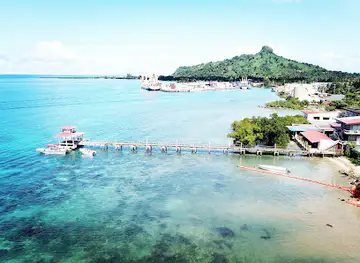
Truk Stop Hotel & Restaurant
Experience the best of Chuuk’s culinary delights at Truk Stop Hotel & Restaurant, where local flavors meet island hospitality.
Level 5 Hotel
Experience the tranquil beauty of Chuuk at Level 5 Hotel, your comfortable base for exploring the wonders of the Pacific Islands.

Best shops in Chuuk Lagoon
Top-rated picks
Best Shops

Blue Lagoon Dive Shop
Discover the underwater wonders of Chuuk at Blue Lagoon Dive Shop, your gateway to spectacular scuba diving adventures.

Roosevelt's Bakery
Experience the delicious flavors of Chuuk at Roosevelt's Bakery, where fresh baked goods and local treats await every visitor.

Island Mart
Explore Island Mart in Weno, Chuuk – a vibrant shopping destination brimming with local treasures and cultural experiences for every traveler.

Ace Hardware Store
Explore Ace Hardware Store in Weno, Chuuk for all your home improvement needs, offering quality tools and expert advice for travelers and locals alike.

Explore Chuuk Lagoon on the Map
A handpicked selection of must-see spots in Chuuk Lagoon, mapped for you.
Chuuk Lagoon Essentials
-
Chuuk Lagoon is located in the Federated States of Micronesia. The nearest international airport is Chuuk International Airport (TKK) on Weno Island. You can reach Chuuk by flying from major hubs like Guam (GUM) or Honolulu (HNL), with connecting flights provided by airlines such as United Airlines. Ensure to check the latest flight schedules as they can vary.
-
Transportation within Chuuk Lagoon primarily involves boats and taxis. Boats are the best way to explore the various islands within the lagoon. On Weno Island, taxis are readily available, but they usually do not have meters, so it’s best to agree on a fare beforehand. Car rentals are also available, but roads can be challenging to navigate.
-
The official currency in Chuuk is the US Dollar (USD). Credit cards are accepted in some hotels and larger establishments, but cash is preferred, especially in smaller shops and for boat rentals. ATMs are available on Weno Island, but it’s advisable to carry enough cash for your trip.
-
Chuuk Lagoon is generally safe for tourists, but it’s important to take standard precautions. Some areas on Weno Island have higher petty crime rates targeting tourists, such as pickpocketing. Avoid walking alone at night in poorly lit areas and keep your belongings secure. Always stay aware of your surroundings and avoid displaying large amounts of cash or valuable items.
-
In case of emergency, dial 911 for immediate assistance. The main hospital is located on Weno Island, and there are several clinics scattered across the lagoon. It is highly recommended to have travel insurance that includes medical evacuation, as the medical facilities can be limited. For minor health issues, pharmacies are available on Weno.
-
Fashion: Do dress modestly, especially in villages. Avoid wearing revealing clothing. Religion: Do respect local customs and traditions. Always ask for permission before entering churches. Public Transport: Do be respectful and polite to drivers and other passengers. Don’t engage in loud conversations. Greetings: Do greet people with a smile and a nod. A handshake is also acceptable. Eating & Drinking: Do try local delicacies and accept food offerings graciously. Don’t refuse hospitality, as it is considered impolite.
-
To experience Chuuk Lagoon like a local, visit the local markets where you can purchase fresh fish and produce. Engage with the island residents, who are often friendly and willing to share their culture and history. Don’t miss the opportunity to explore the numerous WWII shipwrecks and coral reefs, which are some of the best diving spots in the world. Participating in traditional events and ceremonies can also provide a deeper understanding of the local culture.
When is the best time to visit Chuuk Lagoon?
Useful Local Phrases for Chuuk Lagoon
You don't need to speak the language perfectly. Even learning a few simple words can make conversations warmer—and locals usually appreciate the effort.
— Eve

Here are the phrases I use most often in Chuuk Lagoon. Try a few—you'll be surprised how far they go! 😊
❤️
-
- HelloMwan
[mwan] - GoodbyeKaselehlie
[kah-seh-leh-lee-eh] - YesE
[eh] - NoKoh
[koh] - Please/You're welcomeKaselehlie
[kah-seh-leh-lee-eh] - Thank youKaselehlie
[kah-seh-leh-lee-eh] - Excuse me/SorryFaimw
[faim-w] - How are you?Nang in?
[nahng een] - Fine. And you?Faim. Nan in?
[faim. nahn een] - Do you speak English?Ike mwet in English?
[ee-keh mwet een English] - I don't understandKoh enik
[koh eh-neek]
- HelloMwan
-
- I'd like to see the menu, pleaseIke mwet a meniu, kaselehlie
[ee-keh mwet ah meh-nee-oo, kah-seh-leh-lee-eh] - I don't eat meatKoh enik a meat
[koh eh-neek ah meet] - Cheers!Kristo!
[kris-toh] - I would like to pay, pleaseIke mwet a pay, kaselehlie
[ee-keh mwet ah pay, kah-seh-leh-lee-eh]
- I'd like to see the menu, pleaseIke mwet a meniu, kaselehlie
-
- Help!Tasi!
[tah-see] - Go away!Mwan a!
[mwan ah] - Call the Police!Ike mwet a call a Police!
[ee-keh mwet ah call ah Police] - Call a doctor!Ike mwet a call a doctor!
[ee-keh mwet ah call ah doctor] - I'm lostIke enik a lost
[ee-keh eh-neek ah lost] - I'm illIke enik a ill
[ee-keh eh-neek ah ill]
- Help!Tasi!
-
- I'd like to buy...Ike mwet a buy...
[ee-keh mwet ah buy] - I'm just lookingIke mwet a look
[ee-keh mwet ah look] - How much is it?Nang e a?
[nahng eh ah] - That's too expensiveAke e a too expensive
[ah-keh eh ah too eks-pen-siv] - Can you lower the price?Ike mwet a lower a price?
[ee-keh mwet ah lower ah price]
- I'd like to buy...Ike mwet a buy...
-
- What time is it?Nang e a time?
[nahng eh ah time] - It's one o'clockAke e a one o'clock
[ah-keh eh ah one o'clock] - Half past (10)Half past (10)
[half past (10)] - MorningMwanin
[mwan-in] - AfternoonWaiin
[wai-in] - EveningPwanin
[pwa-nin] - YesterdayAkin
[ah-kin] - TodayAkinin
[ah-ki-nin] - TomorrowAkin de
[ah-kin de] - 1Chok
[chok] - 2Chokwar
[chok-war] - 3Choktolu
[chok-toh-lu] - 4Chokfou
[chok-fou] - 5Choklima
[chok-lee-mah] - 6Chokono
[chok-oh-no] - 7Chokfitu
[chok-fee-tu] - 8Chokwalu
[chok-wah-loo] - 9Choknau
[chok-nah-oo] - 10Choktah
[chok-tah]
- What time is it?Nang e a time?
-
- Where's a/the...?Nang a/the...?
[nahng ah/the] - What's the address?Nang e a address?
[nahng eh ah address] - Can you show me (on the map)?Ike mwet a show me (on the map)?
[ee-keh mwet ah show me (on the map)] - When's the next (bus)?Nang e a next (bus)?
[nahng eh ah next (bus)] - A ticket (to ....)A ticket (to ....)
[a ticket (to ....)]
- Where's a/the...?Nang a/the...?
History of Chuuk Lagoon
-
Long before the arrival of Europeans, the islands of Chuuk Lagoon were home to a sophisticated seafaring culture. The Chuukese people are renowned for their navigational skills, using stars, waves, and other natural indicators to traverse vast ocean distances. Oral traditions and archaeological evidence suggest that the inhabitants of Chuuk Lagoon engaged in extensive trade and cultural exchange with neighboring island groups, contributing to a rich and diverse cultural tapestry.
-
Chuuk Lagoon first came to the attention of Europeans in the early 16th century, when Spanish explorers ventured into the Pacific. The lagoon was initially named 'Truk' by the Spanish, a name that persisted until the mid-20th century. European contact brought new goods and ideas but also diseases that had devastating effects on the local population.
-
In the late 19th century, Chuuk Lagoon became part of the German colonial empire following the Spanish-American War. The Germans established administrative centers and began to exploit the islands' natural resources. This period also saw the introduction of Christianity, which had a lasting impact on Chuukese society and culture.
-
Chuuk Lagoon was captured by Japan during World War I and formally became part of the Japanese South Seas Mandate under the League of Nations. The Japanese era was marked by significant infrastructure development, including schools, hospitals, and military installations. However, this period also saw the suppression of local traditions and languages in favor of Japanese culture.
-
One of the most significant events in Chuuk Lagoon's history occurred during World War II. The lagoon served as a major Japanese naval base, making it a strategic target for the Allies. In February 1944, the United States launched Operation Hailstone, a massive aerial and naval assault that resulted in the sinking of dozens of Japanese ships and aircraft. The wreckage from this battle remains on the lagoon floor, making it one of the world's premier wreck diving destinations.
-
After World War II, Chuuk Lagoon came under the administration of the United States as part of the Trust Territory of the Pacific Islands. This period saw significant American influence in education, infrastructure, and economy. The transition from Japanese to American control also brought about changes in political structures and governance.
-
In 1986, Chuuk became one of the four states of the Federated States of Micronesia, an independent nation in free association with the United States. This new political status allowed Chuuk to gain greater autonomy while still receiving economic and military support from the U.S. Today, Chuuk Lagoon is a unique blend of traditional culture and modern influences, attracting tourists from around the world for its natural beauty and historical significance.
Neighbouring Regions of Chuuk Lagoon
The closest regions to Chuuk Lagoon, if you have time for more than one.




Your all‑in‑one travel companion app
Explore expert travel guides, compare and book tours, experiences, hotels, and more—all from the palm of your hand. Download now for seamless trip planning wherever your wanderlust takes you.


Explore More of Micronesia

Looking beyond Chuuk Lagoon? Discover Micronesia for broader travel guides, local hot-spots, and regional highlights.
Explore MicronesiaChuuk Lagoon in Photos
Browse through our photo collection highlighting the charm and character of the destination.



The Underwater Treasures of Chuuk Lagoon
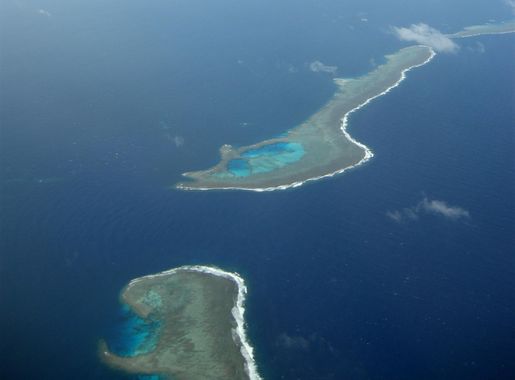
Chuuk Lagoon, nestled in the heart of Micronesia, is a true paradise for divers and history enthusiasts alike. This stunning lagoon is renowned for its crystal-clear waters and the haunting beauty of its underwater shipwrecks. During World War II, Chuuk Lagoon was a significant Japanese naval base, and today, it is home to a vast underwater museum of sunken warships, planes, and submarines. The lagoon's clear waters make it an ideal spot for diving, allowing you to explore this unique underwater world with ease. Apart from its historical wrecks, Chuuk Lagoon offers an abundance of marine life. Divers will be mesmerized by the vibrant coral reefs, teeming with colorful fish and other marine creatures. The lagoon is part of a larger atoll, surrounded by lush, green islands that are perfect for exploring on off-gassing days. The local culture is rich and welcoming, allowing visitors to immerse themselves in the traditions and lifestyles of the Chuukese people. For those who prefer staying above water, Chuuk Lagoon offers stunning views and serene, tranquil beaches. The islands are dotted with charming villages where you can experience the local way of life. Whether you're diving into history, exploring nature, or simply relaxing on the beach, Chuuk Lagoon promises an unforgettable experience.