

Free Outer Islands of Chuuk Travel Guide & Mobile App
Explore Outer Islands of Chuuk with free travel guides. Discover regional history, expert tips, proposed trips, and audio guides on web or mobile app.


Explore the Outer Islands of Chuuk for remote atolls, reef waters, traditional voyaging heritage and community-based Pacific island experiences.
Read more about Outer Islands of Chuuk
When is the best time to visit Outer Islands of Chuuk?
Best: January–March · 29°C| Month | High (°C) | Rainfall (mm) |
|---|---|---|
| January (best) | 29 | 320 |
| February (best) | 29 | 300 |
| March (best) | 29 | 310 |
| April | 29 | 340 |
| May | 29 | 360 |
| June | 30 | 370 |
| July | 30 | 380 |
| August | 29 | 390 |
| September | 29 | 400 |
| October | 29 | 380 |
| November | 29 | 360 |
| December | 29 | 340 |
Getting to and around Outer Islands of Chuuk
How to get there
Transportation
Best attractions in Outer Islands of Chuuk
The Outer Islands of Chuuk are best understood as a maritime landscape rather than a conventional sightseeing circuit. Lagoons, reef flats, channels and beaches provide the setting for snorkelling, diving, fishing, kayaking and boat trips, but access depends heavily on local conditions and experienced guides. The underwater environment is the principal natural attraction, with coral habitats and pelagic waters that reward careful exploration without removing anything from the reef. On land, visitors encounter coconut groves, breadfruit trees, village paths, small churches and community spaces rather than purpose-built visitor attractions. Traditional canoes, local fishing practices and voyaging knowledge can be more meaningful than formal museums, particularly when introduced by residents. The island groups also offer opportunities to observe birdlife, intertidal habitats and the everyday work of low-lying Pacific communities. Historical interest is expressed through oral history, family knowledge and traces of colonial and wartime eras, although the best-known Japanese naval wrecks are concentrated in Chuuk Lagoon, outside the Outer Islands. Activities should be arranged through local hosts, with permission sought for access to land and reefs and with enough flexibility to accommodate weather, tides and transport delays.
-
Tourist attraction
Japanese Gun
Discover the historical significance and breathtaking views at the Japanese Gun in Chuuk, a hidden gem for adventurous tourists.

Best landmarks in Outer Islands of Chuuk
The most significant landmarks of the Outer Islands of Chuuk are geographical and cultural rather than monumental. Low coral islands, lagoon horizons, reef passages and narrow beaches express the region's dependence on the ocean and its vulnerability to changing weather and sea levels. Traditional ocean-going canoes and canoe houses, where they remain in use or are maintained by communities, represent a maritime heritage that connects island groups across considerable distances. Village churches and meeting places are prominent features of settled landscapes, reflecting the central role of community and religious life, although their importance is best understood through local guidance and permission. Coconut groves, breadfruit trees and communal shoreline spaces also form part of the everyday cultural landscape. Wartime traces may exist in scattered locations, but the major concentration of internationally known Japanese naval wrecks belongs to Chuuk Lagoon, not the Outer Islands. Visitors should treat reefs, canoe facilities, cemeteries, churches and customary sites as places with living significance, not simply as photographic subjects.
-
 Resort hotel
Truk Blue Lagoon Resort
Experience the serene beauty of the Truk Blue Lagoon Resort, where adventure meets relaxation in the heart of Micronesia.
-
SCUBA tour agency
SS Thorfinn Liveaboard Dive Center
Discover the underwater marvels of Chuuk Lagoon at SS Thorfinn Liveaboard Dive Center, a premier destination for scuba diving adventures.

Explore Outer Islands of Chuuk on the map
Plan your trip on one map. See where the top cities, national parks and sights are, and book hotels and experiences in a few clicks.
Best hotels in Outer Islands of Chuuk
Best restaurants in Outer Islands of Chuuk
Dining in the Outer Islands is primarily home-based, community-based and dependent on what the sea, gardens and supply boats provide. Fresh fish, reef seafood where sustainably caught, coconut, breadfruit, taro, bananas and other locally grown foods may feature in shared meals, alongside imported rice, tinned goods and packaged provisions. Preparation varies between islands and families, so there is no single Outer Chuuk cuisine presented in restaurants. Travellers staying with local hosts should discuss dietary needs in advance and avoid assuming that regular café or supermarket supplies exist. Small stores, where present, carry a limited range of essentials and may receive stock irregularly. Meals are often part of hospitality and social exchange; accepting food respectfully while explaining allergies or restrictions is useful. In this setting, eating locally means understanding the practical realities of island supply chains as much as seeking a formal dining experience. Carrying reserve snacks and drinking-water supplies is sensible, especially when travelling between communities.
-
Restaurant
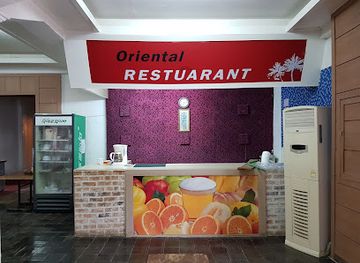
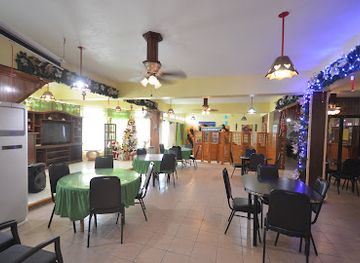
Oriental Restaurant
Discover authentic flavors at Oriental Restaurant in Weno, Chuuk – a culinary delight reflecting the essence of local cuisine.
-
Fast Food
J-Square
Experience delicious fast food at J-Square in Weno - where taste meets convenience amidst the beauty of Chuuk.
-
Restaurant
BS Café
Experience authentic Chuukese cuisine at BS Café in Weno—where every dish tells a story and every bite is a taste of paradise.
-
Restaurant
Sunrise Resto
Experience authentic Chuukese cuisine at Sunrise Resto in Weno - where flavor meets island hospitality.


Best bars in Outer Islands of Chuuk
The Outer Islands do not have a developed bar or nightclub scene. Evening life generally centres on family homes, community gatherings, church-related activities, informal conversation and occasional local celebrations rather than commercial entertainment districts. Some guest arrangements may include shared meals or social time, but visitors should not assume that alcohol is available, appropriate or central to the evening. Respect local expectations around modest behaviour, noise and church or community events, particularly in small settlements where private and public life overlap. After dark, the lack of street lighting and the uneven condition of paths make a torch essential. The strongest evening experiences are often quiet ones: listening to the sea, watching the sky or learning about local history and navigation from a host, provided that conversation is invited rather than demanded.
-
Resort hotel
Truk Blue Lagoon Resort
Discover Truk Blue Lagoon Resort, a tropical paradise offering serene lodging, breathtaking ocean views, and unforgettable diving experiences in Chuuk.
-
Restaurant
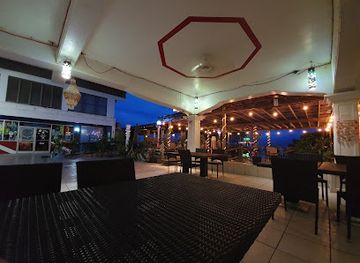
Truk Stop Hotel & Restaurant
Discover the flavors of Chuuk at Truk Stop Hotel & Restaurant, where local cuisine meets breathtaking views in a charming atmosphere.
-
Restaurant
Oriental Restaurant
Discover the authentic taste of Chuuk at Oriental Restaurant, where every dish is a celebration of local and Asian culinary traditions.
-
Fast Food
J-Square
Discover the flavors of Chuuk at J-Square, Weno's favorite fast food destination, offering quick bites in a welcoming atmosphere.


Best nightclubs in Outer Islands of Chuuk
The Outer Islands do not have a developed bar or nightclub scene. Evening life generally centres on family homes, community gatherings, church-related activities, informal conversation and occasional local celebrations rather than commercial entertainment districts. Some guest arrangements may include shared meals or social time, but visitors should not assume that alcohol is available, appropriate or central to the evening. Respect local expectations around modest behaviour, noise and church or community events, particularly in small settlements where private and public life overlap. After dark, the lack of street lighting and the uneven condition of paths make a torch essential. The strongest evening experiences are often quiet ones: listening to the sea, watching the sky or learning about local history and navigation from a host, provided that conversation is invited rather than demanded.
-
Resort hotel
Truk Blue Lagoon Resort
Experience the serene beauty of Truk Blue Lagoon Resort, where tropical bliss meets diving adventures in the heart of Chuuk.
-
Restaurant
Truk Stop Hotel & Restaurant
Discover the flavors of Chuuk at Truk Stop Hotel & Restaurant, where local cuisine meets breathtaking views in a vibrant atmosphere.
-
Hotel
Level 5 Hotel
Discover the charm of Weno with a stay at Level 5 Hotel, where comfort meets local hospitality in the heart of Chuuk.
-
Hotel
Kurassa Hotel
Discover the beauty of Iras Island at Kurassa Hotel, a serene escape in the heart of Chuuk, perfect for relaxation and exploration.

Best shops in Outer Islands of Chuuk
Shopping in the Outer Islands is limited and practical rather than retail-oriented. Small local stores may stock basic food, drinks, toiletries and household goods, but deliveries are irregular and selection varies sharply between islands. The most meaningful purchases are usually made through local relationships: woven pandanus articles, shell or coconut crafts, small carvings, locally produced food items or other handmade goods may be available when communities choose to sell them. Availability is not guaranteed, and visitors should buy respectfully without bargaining aggressively over labour-intensive work. Bring essential equipment and personal supplies from Weno or another larger travel centre before heading into the outer region. Do not collect shells, coral, historic objects or other material from beaches and reefs as souvenirs. Cash in US dollars is generally necessary, while opportunities to use cards or withdraw money should not be expected.
-
Restaurant
LeiSide Restaurant
Discover the rich flavors of Chuuk at LeiSide Restaurant, where local cuisine meets international favorites in a welcoming atmosphere.
-
SCUBA tour agency
Blue Lagoon Dive Shop
Discover the underwater beauty of Chuuk with unforgettable diving experiences at Blue Lagoon Dive Shop.
-
Shopping mall
Island Mart
Discover the best of Chuuk at Island Mart, where local culture meets diverse shopping experiences in a warm and welcoming environment.
-
Office supply store
His & Hers School & Office Supplies
Explore His & Hers School & Office Supplies in Weno, Chuuk, for all your educational and office supply needs, blending local charm with practicality.


Get your free copy of our complete guide to Outer Islands of Chuuk, delivered straight to you.
Everything on this page, from attractions and restaurants to essentials and local phrases, in one PDF you can read offline, print or share.
Already have an account? Sign in
Your Outer Islands of Chuuk guide is ready.
We'll send it to · Not you? Sign out

Getting your guide ready…
We are putting together a fresh copy of the Outer Islands of Chuuk guide. This can take up to a minute.
This can take a few moments. If your browser asks, choose Allow so the download can start. You'll find the guide in your Downloads folder.
Nothing happened? Download it again
Sorry, the guide is taking longer than usual. Please try again in a minute, or get it by email instead.
Outer Islands of Chuuk essentials
Currency and Payment
Safety
Emergency Situations
Do's and Don'ts
Local Tips
From Eve
Local phrases worth knowing
You don't need to get them perfect. A few words go a long way, and locals appreciate the effort.
Basics
| English | Local | Say it |
|---|---|---|
| Hello | Mwar | [mwar] |
| Goodbye | Sata | [sah-tah] |
| Yes | Ika | [ee-kah] |
| No | Awa | [ah-wah] |
| Please/You're welcome | Ngara | [ngah-rah] |
| Thank you | Kinisou | [kee-nee-soh] |
| Excuse me/Sorry | Sokos | [soh-kohs] |
| How are you? | Ningin? | [neen-gin] |
| Fine. And you? | Ngasan. A mwak? | [ngah-sahn. ah mwahk] |
| Do you speak English? | Ika me ngeni English? | [ee-kah meh ngen-ee een-glish] |
| I don't understand | A nengin | [ah nen-gin] |
Eating & Drinking
| English | Local | Say it |
|---|---|---|
| I'd like to see the menu, please | Ngara, ufan a menu | [ngah-rah, oo-fahn ah meh-noo] |
| I don't eat meat | A nengin a ngeni meat | [ah nen-gin ah ngen-ee meet] |
| Cheers! | Sopas! | [soh-pahs] |
| I would like to pay, please | Ngara, ufan a pwe | [ngah-rah, oo-fahn ah pweh] |
Emergencies
| English | Local | Say it |
|---|---|---|
| Help! | Ufan! | [oo-fahn] |
| Go away! | Ufan a kappa! | [oo-fahn ah kah-pah] |
| Call the Police! | Ufan a Police! | [oo-fahn ah poh-lees] |
| Call a doctor! | Ufan a doktor! | [oo-fahn ah dok-tor] |
| I'm lost | Efan a kappa | [eh-fahn ah kah-pah] |
| I'm ill | Efan a pwe | [eh-fahn ah pweh] |
Shopping
| English | Local | Say it |
|---|---|---|
| I'd like to buy... | Ngara, ufan a pwe... | [ngah-rah, oo-fahn ah pweh] |
| I'm just looking | Efan a mwak | [eh-fahn ah mwahk] |
| How much is it? | Ningin a mwak? | [neen-gin ah mwahk] |
| That's too expensive | A mwak a ngeni a choch | [ah mwahk ah ngen-ee ah choch] |
| Can you lower the price? | Ika pwe a mwak a choch? | [ee-kah pweh ah mwahk ah choch] |
Time & Numbers
| English | Local | Say it |
|---|---|---|
| What time is it? | Ningin a pwe? | [neen-gin ah pweh] |
| It's one o'clock | A mwak a pwe | [ah mwahk ah pweh] |
| Half past (10) | A mwak a pwe (10) | [ah mwahk ah pweh (10)] |
| Morning | Ningin | [neen-gin] |
| Afternoon | Ningin a pwe | [neen-gin ah pweh] |
| Evening | Ningin a mwak | [neen-gin ah mwahk] |
| Yesterday | A mwak a pwe | [ah mwahk ah pweh] |
| Today | A mwak | [ah mwahk] |
| Tomorrow | A mwak a kappa | [ah mwahk ah kah-pah] |
| 1 | Tahi | [tah-hee] |
| 2 | Nii | [nee-ee] |
| 3 | Tolu | [toh-loo] |
| 4 | Fā | [fah] |
| 5 | Lima | [lee-mah] |
| 6 | Ono | [oh-noh] |
| 7 | Hitu | [hee-too] |
| 8 | Walu | [wah-loo] |
| 9 | Siu | [see-oo] |
| 10 | Sā | [sah] |
Transport & Directions
| English | Local | Say it |
|---|---|---|
| Where's a/the...? | A mwak a ...? | [ah mwahk ah ...?] |
| What's the address? | Ningin a address? | [neen-gin ah ad-dress] |
| Can you show me (on the map)? | Ika pwe a mwak (a mapa)? | [ee-kah pweh ah mwahk (ah mah-pah)] |
| When's the next (bus)? | Ningin a mwak (bus)? | [neen-gin ah mwahk (bus)?] |
| A ticket (to ....) | A ticket (a ...) | [ah tee-ket (ah ...)] |
History of Outer Islands of Chuuk
Austronesian Settlement and Seafaring
The islands of Chuuk were settled by Austronesian-speaking peoples whose descendants developed societies adapted to small islands, atolls and extensive ocean distances. Subsistence depended on fishing, breadfruit, coconuts, taro where conditions permitted, and knowledge of seasonal weather and currents. Canoes were the essential technology of inter-island life, allowing people to maintain relationships across separated communities. In the Outer Islands, navigation was not simply a means of transport but a body of environmental knowledge involving stars, swells, winds, birds and reef features. Many contemporary cultural practices and community identities retain links to this long maritime history.
Island Chiefdoms and Inter-island Networks
Before European colonial rule, the islands were organised through local chiefly systems, family relationships and networks of exchange rather than a single centralised state. Political authority and social obligations varied between island groups, while voyaging connected communities across the region. Outer-island societies developed distinctive languages, customs and forms of leadership, even as marriage, trade and ceremonial relationships linked them to neighbouring islands. The dispersed geography encouraged both local independence and a strong dependence on trusted maritime connections, a balance that remains important when travelling between the islands today.
Spanish and German Colonial Rule
European interest in the Caroline Islands increased from the sixteenth century, although sustained colonial administration came later. Spain asserted control over the archipelago and introduced Catholic missionary activity before selling its Micronesian possessions to Germany in 1899. German administration brought the islands into a wider colonial economic system, while mission stations and new forms of schooling altered local religious and social life. Colonial influence was uneven in the remote Outer Islands, where distance from administrative centres limited direct intervention, but the period established political and commercial relationships that shaped the islands' twentieth-century history.
Japanese Administration and the Pacific War
Japan took control of the Caroline Islands after the First World War under a League of Nations mandate and later incorporated them into its Pacific wartime system. Japanese administration expanded commercial activity and infrastructure in parts of Micronesia, though the remote outer communities remained far less developed than major centres. During the Second World War, Chuuk Lagoon became a significant Japanese naval base and was attacked by United States forces in 1944. The most extensive wreck legacy lies in and around the lagoon rather than the Outer Islands, but the war affected travel, food supply, labour and security throughout Chuuk State.
United States Trusteeship and Political Change
After the Second World War, the former Japanese mandate territories became part of the United Nations Trust Territory of the Pacific Islands, administered by the United States. New schools, medical services, communications and political institutions gradually reached the islands, though the remoteness of the Outer Islands continued to limit regular provision. Local leaders participated in the movement towards self-government as Micronesian states negotiated their political future. These decades brought major changes in education, migration and public administration while leaving many communities dependent on subsistence activities, family networks and maritime transport.
The Federated States of Micronesia and Contemporary Outer Chuuk
The Federated States of Micronesia became a sovereign nation in 1986 through a Compact of Free Association with the United States, with Chuuk as one of its four states. The modern Outer Islands remain part of Chuuk State but retain strong local identities and distinctive cultural traditions. Their contemporary challenges include transport costs, limited public services, climate vulnerability, dependence on imported goods and the difficulty of maintaining schools and health provision across vast ocean distances. At the same time, traditional navigation, communal life and marine knowledge remain important sources of cultural continuity.
Outer Islands of Chuuk in Photos
Browse through our photo collection highlighting the charm and character of the destination.
Neighbouring regions of Outer Islands of Chuuk
The closest regions to Outer Islands of Chuuk, if you have time for more than one.
-

-

-
-

-


Swipe for more regions
Explore more

Explore more of Micronesia
Discover Micronesia: A Pacific paradise with vibrant coral reefs, rich cultural heritage, and breathtaking landscapes.
Explore Micronesia