

Mortlock Islands, Micronesia Travel Guide
Discover the unspoiled beauty and rich culture of the Mortlock Islands, Micronesia's hidden paradise, where crystal-clear waters and lush landscapes await.
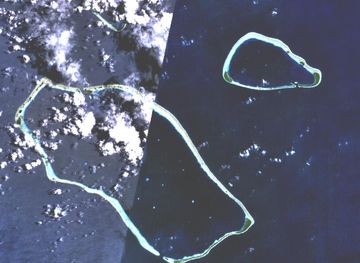
The Mortlock Islands, part of the Federated States of Micronesia, are a hidden gem in the vast Pacific Ocean. This group of atolls and islands offers a unique chance to experience untouched natural beauty and rich cultural heritage. Surrounded by crystal-clear waters and coral reefs, the Mortlock Islands are a paradise for divers and snorkelers. The underwater world here is teeming with vibrant marine life, including colorful fish, sea turtles, and stunning coral formations. On land, visitors can explore traditional Micronesian villages, where locals maintain their centuries-old customs and way of life. The islands' lush landscapes feature coconut groves, breadfruit trees, and pristine beaches that invite you to relax and unwind. The slow-paced island lifestyle allows you to disconnect from the hustle and bustle of modern life and immerse yourself in the tranquility of nature. The Mortlock Islands are not just about relaxation; they also offer a range of activities for the adventurous traveler. You can go kayaking, fishing, or even take a guided tour to learn about the islands' history and culture. Whether you're looking for an adventurous escape or a peaceful retreat, the Mortlock Islands provide an unforgettable experience that will leave you longing to return.

Know before you go
Hi, I'm Eve. Here are a few practical things to know before exploring Mortlock Islands.
- Bring plenty of sunscreen and insect repellent, as the tropical climate can be intense.
- Respect local customs and traditions, and always ask for permission before taking photos of people.
- Cash is essential, as there are limited ATMs and credit card facilities on the islands.
- Plan your visit during the dry season, typically between December and April, for the best weather.
- Learn a few basic phrases in the local language to enhance your interaction with the friendly islanders.
Explore Mortlock Islands: Things to Do, Places to Eat, Hotels & More
Handpicked recommendations for top attractions, local dining, accommodations, and more

Top Attractions & Sightseeing in Mortlock Islands

Best landmarks in Mortlock Islands
Top-rated picks
Best Landmarks

Nan Madol
Explore the mystical ruins of Nan Madol, a UNESCO World Heritage site in Pohnpei, showcasing ancient engineering and cultural heritage surrounded by breathtaking nature.

Kepirohi Waterfall
Experience the natural beauty of Kepirohi Waterfall in Pohnpei, where adventure meets serenity in a breathtaking tropical paradise.

Lelu Ruins Historic Park
Discover the ancient legacy of Kosrae at Lelu Ruins Historic Park, where history meets breathtaking natural beauty in the heart of Micronesia.

Sokehs Rock
Discover the breathtaking views and rich cultural heritage at Sokehs Rock, a scenic marvel in Pohnpei, perfect for adventurers and nature lovers.

Best restaurants in Mortlock Islands
Top-rated picks
Best Restaurants

Cliff Hotel & Restaurant
Experience comfort and exquisite dining at Cliff Hotel & Restaurant in Kolonia, Pohnpei—your gateway to island adventures.

Truk Stop Hotel & Restaurant
Discover the flavors of Chuuk at Truk Stop Hotel & Restaurant—where local cuisine meets breathtaking views.
Joy Hotel & Restaurant
Discover Joy Hotel & Restaurant: Your gateway to authentic Japanese cuisine and comfortable stays in Kolonia, Pohnpei.
Chinastar Hotel & Restaurant
Discover the essence of Chinese cuisine at Chinastar Hotel & Restaurant in Kolonia, Pohnpei – where comfort meets flavor.

Best bars in Mortlock Islands
Top-rated picks
Best Bars

Nan Madol
Explore the ancient ruins of Nan Madol, a UNESCO World Heritage Site in Pohnpei, rich in history and stunning Pacific views, perfect for adventurous travelers.

Truk Stop Hotel & Restaurant
Experience authentic Chuukese cuisine at Truk Stop Hotel & Restaurant, a culinary gem in Weno, perfect for travelers seeking local flavors.

Livehouse
Experience the vibrant nightlife of Guam at Livehouse, Tumon's premier bar for live music, cocktails, and unforgettable memories.

Kepirohi Waterfall
Explore the breathtaking Kepirohi Waterfall in Pohnpei—an idyllic spot for hiking, swimming, and experiencing nature's beauty.


Best shops in Mortlock Islands
Top-rated picks
Best Shops

Micronesia Mall
Experience the lively atmosphere of Micronesia Mall, Guam's premier shopping destination with diverse shops, dining, and entertainment for everyone.

Truk Stop Hotel & Restaurant
Experience the flavors of Chuuk with a blend of local and international cuisine at Truk Stop Hotel & Restaurant, a must-visit dining destination.

Geek Out
Discover a treasure trove of collectibles and geek culture at Geek Out in Micronesia Mall, a must-visit for enthusiasts and collectors in Guam.

LeiSide Restaurant
Experience the authentic flavors of Chuuk at LeiSide Restaurant, a culinary favorite in Weno, blending local ingredients with a welcoming atmosphere.

Explore Mortlock Islands on the Map
A handpicked selection of must-see spots in Mortlock Islands, mapped for you.
Mortlock Islands Essentials
-
The Mortlock Islands, part of the Federated States of Micronesia, are accessible primarily by air and sea. The nearest major airport is Chuuk International Airport (TKK) on Weno Island, which is connected to several international destinations. From Chuuk, you can take a domestic flight to the Mortlock Islands via Caroline Islands Air. Alternatively, you can travel by boat from Weno, which takes longer but offers a scenic route.
-
Once you arrive on the Mortlock Islands, transportation options are limited. The islands are small, and many places are accessible on foot. Boats are the primary mode of transport between islands. Local boats can be hired for inter-island travel. There are no car rental services on the islands, and public transportation is minimal, so plan your trips accordingly.
-
The official currency on the Mortlock Islands is the United States Dollar (USD). Credit card acceptance is extremely limited, so it is advisable to carry sufficient cash for your entire stay. ATMs are scarce or non-existent, so withdraw enough cash in Chuuk or before you arrive. Local markets and small businesses typically deal in cash transactions.
-
The Mortlock Islands are generally safe for tourists, with low crime rates. However, standard travel precautions should be taken. Avoid walking alone at night in unfamiliar areas and keep an eye on your belongings, especially in crowded places. There are no specific high-crime areas targeting tourists, but always stay vigilant and aware of your surroundings.
-
In case of emergency, the local emergency contact number in Micronesia is 911. Medical facilities on the Mortlock Islands are basic, so for serious medical issues, evacuation to a larger medical facility in Chuuk or another major island may be necessary. It is recommended to have comprehensive travel insurance that includes medical evacuation coverage. For minor health issues, there are small clinics available.
-
Fashion: Do dress modestly, especially in villages and religious sites. Avoid wearing revealing clothing. Religion: Do respect local customs and traditions. Always ask for permission before taking photos of people or sacred sites. Public Transport: Do be respectful when using local boats. Don't expect western standards of service. Greetings: Do greet locals with a smile and a friendly hello. A handshake is usually acceptable. Eating & Drinking: Do try local dishes and accept food offerings graciously. Don’t refuse hospitality, as it may be considered impolite.
-
To experience the Mortlock Islands like a local, engage with the community and participate in traditional events or ceremonies if invited. Visit local markets to buy fresh produce and handmade crafts. Try to learn a few words in the local language, Mortlockese, as it will be appreciated by the locals. Don't miss the opportunity to explore the beautiful coral reefs and enjoy snorkeling or diving.
When is the best time to visit Mortlock Islands?
Useful Local Phrases for Mortlock Islands
You don't need to speak the language perfectly. Even learning a few simple words can make conversations warmer—and locals usually appreciate the effort.
— Eve

Here are the phrases I use most often in Mortlock Islands. Try a few—you'll be surprised how far they go! 😊
❤️
-
- HelloMwar
[mwar] - GoodbyeTofa
[tofa] - YesEo
[eo] - NoOno
[ono] - Please/You’re welcomeFakalofa
[fakalofa] - Thank youMeitaki
[meitaki] - Excuse me/SorryKere
[kere] - How are you?Ona koe?
[ona koe] - Fine. And you?Eai. A koe?
[eai. a koe] - Do you speak English?E te reo Ingari?
[e te reo ingari] - I don't understandTei tei te reo
[tei tei te reo]
- HelloMwar
-
- I’d like to see the menu, pleaseKa hiahia au ki te kite i te meniu, fakalofa
[ka hiahia au ki te kite i te meniu, fakalofa] - I don't eat meatKāore au e kai i te mīti
[kāore au e kai i te mīti] - Cheers!Ka riro!
[ka riro] - I would like to pay, pleaseKa hiahia au ki te utu, fakalofa
[ka hiahia au ki te utu, fakalofa]
- I’d like to see the menu, pleaseKa hiahia au ki te kite i te meniu, fakalofa
-
- Help!Aroha mai!
[aroha mai] - Go away!Haere atu!
[haere atu] - Call the Police!Karanga ki te Pirihimana!
[karanga ki te pirihimana] - Call a doctor!Karanga ki te taakuta!
[karanga ki te taakuta] - I’m lostKei te ngaro au
[kei te ngaro au] - I’m illKei te mate au
[kei te mate au]
- Help!Aroha mai!
-
- I’d like to buy...Ka hiahia au ki te hoko...
[ka hiahia au ki te hoko] - I’m just lookingKei te tirohia noa au
[kei te tirohia noa au] - How much is it?E hia te utu?
[e hia te utu] - That’s too expensiveHe nui rawa te utu
[he nui rawa te utu] - Can you lower the price?Ka taea e koe te tuku i te utu?
[ka taea e koe te tuku i te utu]
- I’d like to buy...Ka hiahia au ki te hoko...
-
- What time is it?He aha te wā?
[he aha te wā] - It's one o'clockHe kotahi te karaka
[he kotahi te karaka] - Half past (10)Hāwhe ki te (10)
[hāwhe ki te 10] - MorningAta
[ata] - AfternoonAhiahi
[ahiahi] - EveningPō
[pō] - YesterdayInanahi
[inanahi] - TodayI tenei ra
[i tenei ra] - TomorrowĀpōpō
[āpōpō] - 1Tahi
[tahi] - 2Rua
[rua] - 3Toru
[toru] - 4Whā
[whā] - 5Rima
[rima] - 6Ono
[ono] - 7Whitu
[whitu] - 8Waru
[waru] - 9Iwa
[iwa] - 10Tekau
[tekau]
- What time is it?He aha te wā?
-
- Where's a/the...?Kei te hea te...?
[kei te hea te] - What's the address?He aha te wāhitau?
[he aha te wāhitau] - Can you show me (on the map)?Ka taea e koe te whakaatu mai ki au (i te mahere)?
[ka taea e koe te whakaatu mai ki au] - When's the next (bus)?Ka tīmata te (pahi) i te taimi e whai ake nei?
[ka tīmata te pahi i te taimi e whai ake nei] - A ticket (to ....)He tikiti (ki ....)
[he tikiti ki]
- Where's a/the...?Kei te hea te...?
History of Mortlock Islands
-
The Mortlock Islands, part of the Federated States of Micronesia, have been inhabited for thousands of years. Early settlers were skilled navigators who used traditional stick charts and celestial navigation to traverse the vast Pacific Ocean. These ancient Micronesians established complex societies and built villages that showcased their advanced maritime culture.
-
The Mortlock Islands were first encountered by European explorers in the early 19th century. Spanish explorer Juan Antonio de Ibargoitia was the first recorded European to visit the islands in 1795. The islands were later mapped by Russian explorer Fyodor Litke in 1828, who named them the Mortlock Islands after the British whaling captain Mortlock.
-
In the late 19th century, the Mortlock Islands, along with the rest of the Caroline Islands, came under German colonial control. The Germans established administrative systems and introduced new economic activities, such as copra production. German colonial rule left a lasting impact on the islands' infrastructure and economy.
-
During World War II, the Mortlock Islands were occupied by Japanese forces. The islands became strategically important, and the Japanese established military installations and airstrips. The local population experienced significant hardship during this period, including forced labor and resource shortages.
-
After World War II, the Mortlock Islands became part of the Trust Territory of the Pacific Islands, administered by the United States under a United Nations mandate. This period saw improvements in education, healthcare, and infrastructure, as well as the introduction of democratic governance structures.
-
The Mortlock Islands became part of the Federated States of Micronesia when the nation gained independence in 1986. As part of the state of Chuuk, the islands have continued to develop while preserving their unique cultural heritage. Today, the Mortlock Islands are known for their vibrant traditions, including dance, music, and navigation.
Neighbouring Regions of Mortlock Islands
The closest regions to Mortlock Islands, if you have time for more than one.

Your all‑in‑one travel companion app
Explore expert travel guides, compare and book tours, experiences, hotels, and more—all from the palm of your hand. Download now for seamless trip planning wherever your wanderlust takes you.


Explore More of Micronesia

Looking beyond Mortlock Islands? Discover Micronesia for broader travel guides, local hot-spots, and regional highlights.
Explore MicronesiaMortlock Islands in Photos
Browse through our photo collection highlighting the charm and character of the destination.


The Enchanting Mortlock Islands of Micronesia
The Mortlock Islands, part of the Federated States of Micronesia, are a hidden gem in the vast Pacific Ocean. This group of atolls and islands offers a unique chance to experience untouched natural beauty and rich cultural heritage. Surrounded by crystal-clear waters and coral reefs, the Mortlock Islands are a paradise for divers and snorkelers. The underwater world here is teeming with vibrant marine life, including colorful fish, sea turtles, and stunning coral formations. On land, visitors can explore traditional Micronesian villages, where locals maintain their centuries-old customs and way of life. The islands' lush landscapes feature coconut groves, breadfruit trees, and pristine beaches that invite you to relax and unwind. The slow-paced island lifestyle allows you to disconnect from the hustle and bustle of modern life and immerse yourself in the tranquility of nature. The Mortlock Islands are not just about relaxation; they also offer a range of activities for the adventurous traveler. You can go kayaking, fishing, or even take a guided tour to learn about the islands' history and culture. Whether you're looking for an adventurous escape or a peaceful retreat, the Mortlock Islands provide an unforgettable experience that will leave you longing to return.