

Free Kapingamarangi Atoll Travel Guide & Mobile App
Explore Kapingamarangi Atoll with free travel guides. Discover regional history, expert tips, proposed trips, and audio guides on web or mobile app.


Kapingamarangi Atoll offers remote lagoon scenery, Polynesian heritage and an expedition-style visit within the Federated States of Micronesia.
Read more about Kapingamarangi Atoll
When is the best time to visit Kapingamarangi Atoll?
Best: February–March, November · 30°C| Month | High (°C) | Rainfall (mm) |
|---|---|---|
| January | 30 | 270 |
| February (best) | 30 | 220 |
| March (best) | 30 | 260 |
| April | 30 | 270 |
| May | 30 | 280 |
| June | 30 | 290 |
| July | 30 | 280 |
| August | 30 | 280 |
| September | 30 | 270 |
| October | 30 | 280 |
| November (best) | 30 | 260 |
| December | 30 | 270 |
Getting to and around Kapingamarangi Atoll
How to get there
Transportation
Best landmarks in Kapingamarangi Atoll
Kapingamarangi's most important landmarks are landscape features and communal places rather than monumental buildings. The broad central lagoon defines the atoll's geography, economy and visual character, while the outer reef marks the boundary between sheltered island waters and the open Pacific. The low islets, coconut groves and narrow shorelines show how settlement is adapted to scarce land and freshwater. Canoes and canoe houses, where present and accessible, carry particular cultural significance because they express the atoll's seafaring heritage and links between households and islands. Community meeting places and churches may also be prominent within settlements, but they are living spaces rather than public monuments and should be visited only with permission. There are no large castles, cathedrals or civic memorials; the enduring landmark is the relationship between the lagoon, reef, palms and inhabited islets. For visitors, understanding that this landscape is both home and working environment is more important than searching for a conventional viewpoint or photographic monument.
-
Atoll
Kapingamarangi
Explore Kapingamarangi Atoll: A hidden paradise in the Pacific with stunning beaches, vibrant culture, and serene waters inviting adventure and relaxation.

Explore Kapingamarangi Atoll on the map
Plan your trip on one map. See where the top cities, national parks and sights are, and book hotels and experiences in a few clicks.
Best hotels in Kapingamarangi Atoll
Best restaurants in Kapingamarangi Atoll
Kapingamarangi does not have a conventional restaurant scene. Meals are generally arranged through households, local contacts or self-catering supplies brought from Pohnpei, and visitors should confirm arrangements before travelling. Local food reflects an atoll economy based on fishing, coconut, breadfruit and other available crops, supplemented by imported rice, tinned goods and packaged staples. Fresh catch may form part of a communal or hosted meal, but availability depends on weather, fishing success and household custom rather than a menu. Visitors should ask politely before accepting, photographing or commenting on food, and should not assume that dietary substitutions can be found. There are no dependable cafés, supermarkets or late-opening food outlets, so essential provisions, safe drinking water and specialist dietary supplies should be carried in. Sharing food and contributing appropriately to a host household may be more relevant than paying a restaurant bill, but arrangements should be agreed clearly and respectfully in advance.
-
Atoll
Kapingamarangi
Explore the untouched beauty and rich culture of Kapingamarangi Atoll - a hidden gem in Pohnpei that offers unforgettable experiences.

Best bars in Kapingamarangi Atoll
Kapingamarangi has no established bar, nightclub or entertainment district. Evening life is shaped by households, community gatherings, conversation, church and the natural rhythm of an isolated atoll rather than commercial nightlife. Alcohol should not be assumed to be available, and visitors should follow local expectations about drinking, noise, dress and movement after dark. The absence of street lighting and the risks around reefs and boats make night-time wandering or swimming particularly unwise. A quiet evening may involve sharing food, listening to local stories, observing the stars or discussing canoe and island life with hosts. If organised music or a community event takes place, attend only by invitation or with a local introduction and observe rather than intrude. Travellers seeking extensive nightlife should plan it elsewhere in the Federated States of Micronesia rather than expecting it on Kapingamarangi.
-
Historical landmark
Nan Madol
Discover the ancient marvels of Nan Madol, a UNESCO World Heritage Site in Pohnpei, showcasing breathtaking ruins and rich cultural heritage.
-
Bar
Tabu Tiki Bar
Discover the vibrant ambiance of Tabu Tiki Bar in Guam, where tropical drinks and live music create unforgettable evenings.
-
Tourist attraction
Kepirohi Waterfall
Experience the breathtaking beauty and tranquil atmosphere of Kepirohi Waterfall, a must-see natural attraction in Pohnpei, perfect for swimming and hiking.
-
Bar
Mangrove Bay Bar
Discover the lively nightlife at Mangrove Bay Bar in Kolonia, Pohnpei - a hub for great drinks, delicious food, and unforgettable experiences.


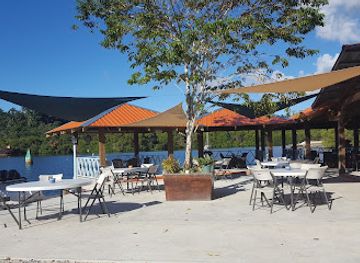
Best nightclubs in Kapingamarangi Atoll
Kapingamarangi has no established bar, nightclub or entertainment district. Evening life is shaped by households, community gatherings, conversation, church and the natural rhythm of an isolated atoll rather than commercial nightlife. Alcohol should not be assumed to be available, and visitors should follow local expectations about drinking, noise, dress and movement after dark. The absence of street lighting and the risks around reefs and boats make night-time wandering or swimming particularly unwise. A quiet evening may involve sharing food, listening to local stories, observing the stars or discussing canoe and island life with hosts. If organised music or a community event takes place, attend only by invitation or with a local introduction and observe rather than intrude. Travellers seeking extensive nightlife should plan it elsewhere in the Federated States of Micronesia rather than expecting it on Kapingamarangi.
-
Night club
Club Flamingo
Discover the vibrant nightlife at Club Flamingo, the premier night club in Kolonia, Pohnpei, where music, dance, and culture come alive.

Best shops in Kapingamarangi Atoll
Shopping on Kapingamarangi is extremely limited and should not be treated as a source of routine supplies. There are no established shopping streets, department stores or dependable souvenir outlets, while imported food and household goods may be scarce. Locally made craftwork, woven items, carved objects or other cultural products may occasionally be available through personal contacts, but visitors should buy only with the maker's permission and should never bargain aggressively or encourage the sale of culturally restricted objects. Do not remove shells, coral, feathers, plants or other natural material as souvenirs. Bring essential toiletries, medicines, batteries, specialist foods and practical equipment from Pohnpei or from home. Any purchase or contribution should be arranged transparently, with respect for ownership and customary protocols. The most appropriate mementoes are often photographs taken with consent and memories of the landscape, rather than items removed from the atoll.
-
Shopping mall
Micronesia Mall
Explore Micronesia Mall in Guam for an unforgettable shopping experience with diverse stores, dining, and entertainment.
-
Shopping mall
JP Superstore
Explore the vibrant shopping scene at JP Superstore in Tumon, Guam, where local charm meets international brands in a delightful retail experience.
-
Duty free store
DFS Saipan
Discover luxury shopping at DFS Saipan, your ultimate destination for duty-free goods and local treasures in the Northern Mariana Islands.
-
Grocery store
JOETEN HAFA ADAI SHOPPING CENTER
Explore local flavors and unique souvenirs at JOETEN HAFA ADAI SHOPPING CENTER in Garapan, the heart of Saipan's vibrant shopping scene.


Get your free copy of our complete guide to Kapingamarangi Atoll, delivered straight to you.
Everything on this page, from attractions and restaurants to essentials and local phrases, in one PDF you can read offline, print or share.
Already have an account? Sign in
Your Kapingamarangi Atoll guide is ready.
We'll send it to · Not you? Sign out

Getting your guide ready…
We are putting together a fresh copy of the Kapingamarangi Atoll guide. This can take up to a minute.
This can take a few moments. If your browser asks, choose Allow so the download can start. You'll find the guide in your Downloads folder.
Nothing happened? Download it again
Sorry, the guide is taking longer than usual. Please try again in a minute, or get it by email instead.
Kapingamarangi Atoll essentials
Currency and Payment
Safety
Emergency Situations
Do's and Don'ts
Local Tips
From Eve
Local phrases worth knowing
You don't need to get them perfect. A few words go a long way, and locals appreciate the effort.
Basics
| English | Local | Say it |
|---|---|---|
| Hello | Mālo | [Mah-lo] |
| Goodbye | Aroha | [Ah-roh-ha] |
| Yes | Ē | [Eh] |
| No | Aua | [Ow-ah] |
| Please/You're welcome | Tōfā | [Toh-fah] |
| Thank you | Fa'amolemole | [Fah-ah-moh-leh-moh-leh] |
| Excuse me/Sorry | Fa'amalie | [Fah-ah-mah-lee-eh] |
| How are you? | O ai te koe? | [Oh ai teh koh-eh] |
| Fine. And you? | Mālō. 'O ai te koe? | [Mah-loh. Oh ai teh koh-eh] |
| Do you speak English? | E te fāgogo i le gagana Ingilisi? | [Eh teh fah-go-go ee leh gah-gah-nah In-gi-li-si] |
| I don't understand | E le'o ia te au | [Eh leh-oh ee-ah teh ow] |
Eating & Drinking
| English | Local | Say it |
|---|---|---|
| I'd like to see the menu, please | E manaʻomia e au le menu, tōfā | [Eh mah-noh-mee-ah eh ow leh meh-noo, toh-fah] |
| I don't eat meat | E le ai au i le 'ai | [Eh leh ah-ee ow ee leh eye] |
| Cheers! | Mālo! | [Mah-lo] |
| I would like to pay, please | E manaʻo e totogi, tōfā | [Eh mah-nah-oh eh toh-toh-gee, toh-fah] |
Emergencies
| English | Local | Say it |
|---|---|---|
| Help! | Faʻamolemole! | [Fah-ah-moh-leh-moh-leh] |
| Go away! | Alu ese! | [Ah-loo eh-seh] |
| Call the Police! | Fa'ailoa i le Ofisa o leoleo! | [Fah-ah-ee-loh-ah ee leh Oh-fee-sah oh leh-oh-leh-oh] |
| Call a doctor! | Fa'ailoa i se foma'i! | [Fah-ah-ee-loh-ah ee seh fo-mah-ee] |
| I'm lost | O le a'u i le fa'anoanoa | [Oh leh ah-oo ee leh fah-ah-noh-ah-no-ah] |
| I'm ill | O le a'u i le ma'i | [Oh leh ah-oo ee leh mah-ee] |
Shopping
| English | Local | Say it |
|---|---|---|
| I'd like to buy... | E manaʻo e faʻatau... | [Eh mah-nah-oh eh fah-too] |
| I'm just looking | O le fa'atekinolosi a'u | [Oh leh fah-ah-teh-kee-noh-loh-see ah-oo] |
| How much is it? | E fia le totogi? | [Eh fee-ah leh toh-toh-gee] |
| That's too expensive | E matua le soifuaga | [Eh mah-too-ah leh so-ee-foo-ah-gah] |
| Can you lower the price? | E mafai ona fa'alelei le tau? | [Eh mah-fah-ee oh-nah fah-ah-leh-lee leh tau] |
Time & Numbers
| English | Local | Say it |
|---|---|---|
| What time is it? | O le ā le taimi? | [Oh leh ah leh tie-mee] |
| It's one o'clock | O le tasi le itula | [Oh leh tah-see leh ee-too-lah] |
| Half past (10) | O le to'afa i le itula | [Oh leh toh-ah-fah ee leh ee-too-lah] |
| Morning | Mālō | [Mah-lo] |
| Afternoon | Afiafi | [Ah-fee-ah-fee] |
| Evening | Aso o le afiafi | [Ah-soh oh leh ah-fee-ah-fee] |
| Yesterday | I le aso o le gaoioiga | [Ee leh ah-soh oh leh gah-oh-ee-oh-gah] |
| Today | O le aso | [Oh leh ah-soh] |
| Tomorrow | O le aso o le taeao | [Oh leh ah-soh oh leh tah-eh-ah-oh] |
| 1 | Tasi | [Tah-see] |
| 2 | Lua | [Loo-ah] |
| 3 | Tolu | [Toh-loo] |
| 4 | Fa | [Fah] |
| 5 | Lima | [Lee-mah] |
| 6 | Ona | [Oh-nah] |
| 7 | Fitu | [Fee-too] |
| 8 | Valu | [Vah-loo] |
| 9 | Iota | [Ee-oh-tah] |
| 10 | Sefulu | [Seh-foo-loo] |
Transport & Directions
| English | Local | Say it |
|---|---|---|
| Where's a/the...? | O fea le...? | [Oh feh-ah leh] |
| What's the address? | O le ā le fa'amaoniga? | [Oh leh ah leh fah-ah-mah-oh-nee-gah] |
| Can you show me (on the map)? | E mafai ona fa'aali mai ia te a'u (i le ata)? | [Eh mah-fah-ee oh-nah fah-ah-lee my ee ah teh ow (ee leh ah-tah)] |
| When's the next (bus)? | O le ā le taimi e sosoo ai (i le bus)? | [Oh leh ah leh tie-mee eh so-soo-ah-ee (ee leh bus)] |
| A ticket (to ....) | Se tiketi (i ....) | [Seh tee-keh-tee (ee ....)] |
History of Kapingamarangi Atoll
Polynesian Settlement and Cultural Formation
Kapingamarangi is recognised as a Polynesian outlier: a Polynesian-speaking community situated among the islands of Micronesia. Its settlement history belongs to the wider movement of seafaring peoples across the Pacific, although many details of early voyaging remain part of oral tradition and island-based historical knowledge. Over generations, residents developed a society adapted to a small atoll environment, with the lagoon, reef, coconut palms and dependable knowledge of winds and currents shaping food production, mobility and social organisation.
Atoll Society and Traditional Navigation
Before sustained outside administration, Kapingamarangi society was organised through kinship, chiefly authority, customary obligations and communal work. Canoes linked the islets with fishing grounds and made occasional long-distance movement possible, while navigation knowledge depended on reading stars, swells, winds, birds and ocean conditions. The physical landscape offered limited land and fresh water, encouraging careful use of resources and strong cooperation. Although modern life has altered transport and communications, canoe culture, local language and customary relationships remain central to the atoll's identity.
European Contact and Colonial Administration
European contact brought Kapingamarangi into the wider history of the Caroline Islands, whose communities were successively affected by Spanish, German and Japanese colonial rule before the Second World War. External administrations altered systems of authority, trade and religion, while missionaries and imported goods introduced new institutions and dependencies. The atoll's remoteness limited the intensity of outside settlement compared with larger islands, but it did not isolate residents from the political changes affecting the Caroline archipelago.
Japanese Rule and the Pacific War
Japan administered the Caroline Islands under the League of Nations mandate after the First World War and controlled the region during the Second World War. Kapingamarangi was not a major battlefield or industrial centre, yet the war affected remote island communities through disrupted movement, shortages, military insecurity and the reorganisation of regional transport. The wartime period forms part of the broader history through which the atoll became linked to the changing strategic and political order of the western Pacific.
Trust Territory and Political Transition
After the Second World War, the Caroline Islands became part of the United Nations Trust Territory of the Pacific Islands, administered by the United States. Education, health services, communications and transport developed unevenly across the islands, while islanders increasingly participated in new political institutions. Kapingamarangi's residents became part of the constitutional and electoral development that led to the Federated States of Micronesia, established in free association with the United States in 1986.
Contemporary Kapingamarangi
Modern Kapingamarangi balances local continuity with migration, imported goods, formal education and dependence on connections beyond the atoll. Families may maintain ties with Pohnpei and other places in the Federated States of Micronesia, while residents continue to manage a fragile environment with limited land, freshwater and waste-disposal capacity. Contemporary cultural work, including the preservation of language, canoe knowledge, craft and oral history, is therefore not simply a tourist resource but an important part of community continuity.
Kapingamarangi Atoll in Photos
Browse through our photo collection highlighting the charm and character of the destination.
Neighbouring regions of Kapingamarangi Atoll
The closest regions to Kapingamarangi Atoll, if you have time for more than one.
-

-

-

-
-


Swipe for more regions
Explore more

Explore more of Micronesia
Discover Micronesia: A Pacific paradise with vibrant coral reefs, rich cultural heritage, and breathtaking landscapes.
Explore Micronesia