

Free Ulithi Atoll Travel Guide & Mobile App
Explore Ulithi Atoll with free travel guides. Discover regional history, expert tips, proposed trips, and audio guides on web or mobile app.


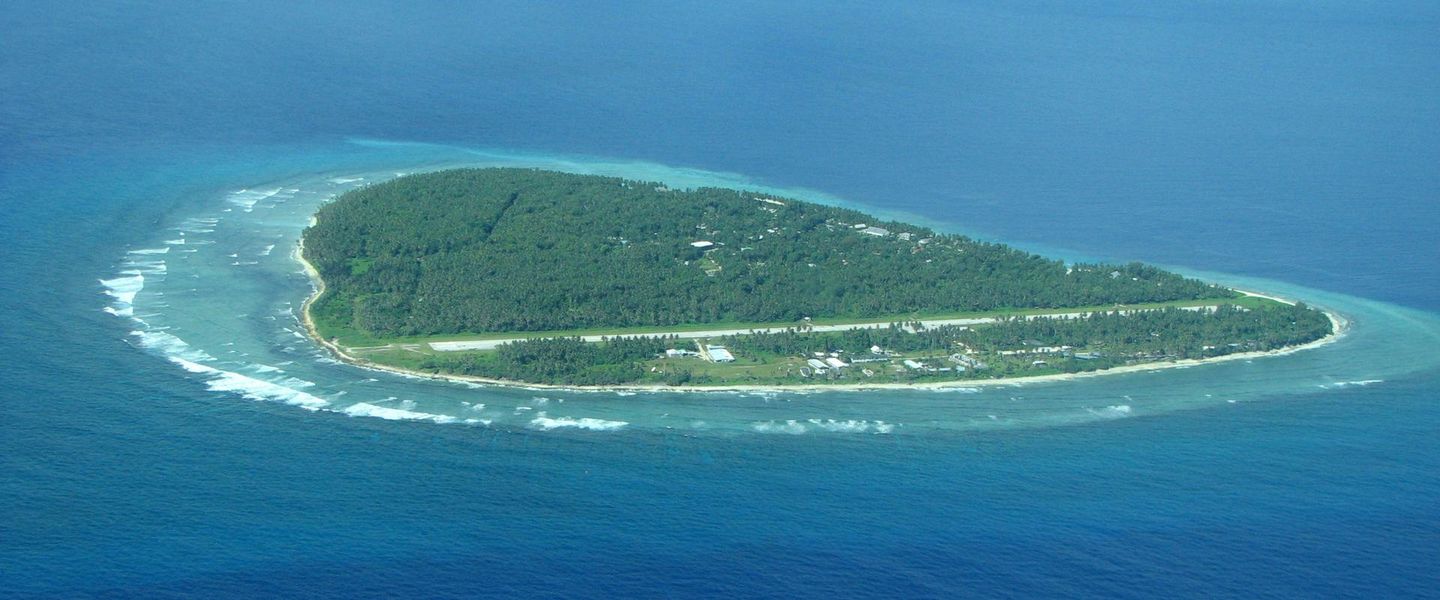


Ulithi Atoll in Micronesia combines clear lagoon waters, traditional island communities and significant Second World War heritage in a remote Yapese setting.
Read more about Ulithi Atoll
When is the best time to visit Ulithi Atoll?
Best: December–February · 29°C| Month | High (°C) | Rainfall (mm) |
|---|---|---|
| January (best) | 29 | 200 |
| February (best) | 29 | 170 |
| March | 30 | 210 |
| April | 30 | 230 |
| May | 30 | 260 |
| June | 30 | 290 |
| July | 30 | 300 |
| August | 30 | 320 |
| September | 30 | 270 |
| October | 30 | 250 |
| November | 29 | 230 |
| December (best) | 29 | 210 |
Getting to and around Ulithi Atoll
How to get there
Transportation
Best landmarks in Ulithi Atoll
Ulithi's most important landmark is its vast enclosed lagoon, whose reef-fringed geometry explains both the atoll's traditional maritime life and its wartime strategic importance. Falalop is the principal practical centre, with its airstrip, inhabited landscape and access to local services. Mogemog carries particular customary and historical significance within the atoll, and visits should be arranged through local hosts rather than treated as unrestricted sightseeing. On several islands, weathered concrete pads, roads, foundations and other remnants of the American naval base remain among palms and dense vegetation. They mark the extraordinary wartime expansion that made Ulithi a major fleet anchorage in 1944–45. The reef edge, beaches and low coral islands are also geographical landmarks, illustrating how little elevation separates land from the surrounding Pacific. Because many sites are customary, fragile or potentially unsafe, their importance is best understood with local guidance rather than through unsupervised exploration.
-
Atoll
Ulithi
Explore the pristine beauty and vibrant culture of Ulithi Atoll, a hidden paradise in the Federated States of Micronesia.

Explore Ulithi Atoll on the map
Plan your trip on one map. See where the top cities, national parks and sights are, and book hotels and experiences in a few clicks.
Best hotels in Ulithi Atoll
Best restaurants in Ulithi Atoll
Dining in Ulithi is simple, local and dependent on supplies brought to the atoll. Visitors generally eat through their accommodation or a pre-arranged host rather than choosing from a large restaurant scene. Freshly caught fish, shellfish where locally available, coconut, breadfruit, taro and rice may feature in home-style meals, alongside imported tinned and packaged foods. Cooking reflects the practical resources of a remote coral island, and menus can change with fishing conditions, weather and shipping. Do not expect a specialised café culture, extensive vegetarian choice or reliable access to international dishes without advance discussion. On Yap Proper, the regional gateway, there is a broader selection of restaurants and shops, but supplies purchased there still need to be transported and stored carefully for an Ulithi stay. Carrying agreed snacks and dietary essentials is sensible, especially for longer visits. Accepting food offered by hosts graciously and clarifying allergies or dietary restrictions before arrival will make communal meals easier.
-
Atoll
Ulithi
Experience the tranquil beauty of Ulithi Atoll – a hidden gem in Micronesia with stunning beaches and rich cultural heritage.
-
 Hotel
HotelUlithi Adventure Lodge
Discover tranquility at Ulithi Adventure Lodge, your perfect getaway in Micronesia's stunning Ulithi Atoll with adventures and cultural experiences.
-
Restaurant
Yıldırımlar Otantik Restaurant
Experience authentic local cuisine at Yıldırımlar Otantik Restaurant, where traditional flavors meet warm hospitality in every dish.
Best bars in Ulithi Atoll
Ulithi has no conventional nightclub district and little commercial nightlife. Evenings are centred on family and community life, conversation, quiet walks, shared meals and the dark skies over the lagoon. Any social drinking tends to be private or locally organised rather than part of a tourist bar circuit, and visitors should follow the expectations of their hosts. There may be small informal places to obtain basic refreshments, but opening arrangements and supplies cannot be assumed. Night travel between islands is unsafe without an experienced local boat crew, particularly around reefs and changing weather. The more developed evening options are on Yap Proper, outside Ulithi, where visitors may find a wider range of dining and social venues. In the atoll, the respectful approach is to treat nightlife as a chance to spend time with hosts and observe local rhythms, not as a search for late-night entertainment.
-
Hotel
Ulithi Adventure Lodge
Experience the unique blend of adventure and tranquility at Ulithi Adventure Lodge, your perfect retreat in the heart of the Pacific.
Best nightclubs in Ulithi Atoll
Ulithi has no conventional nightclub district and little commercial nightlife. Evenings are centred on family and community life, conversation, quiet walks, shared meals and the dark skies over the lagoon. Any social drinking tends to be private or locally organised rather than part of a tourist bar circuit, and visitors should follow the expectations of their hosts. There may be small informal places to obtain basic refreshments, but opening arrangements and supplies cannot be assumed. Night travel between islands is unsafe without an experienced local boat crew, particularly around reefs and changing weather. The more developed evening options are on Yap Proper, outside Ulithi, where visitors may find a wider range of dining and social venues. In the atoll, the respectful approach is to treat nightlife as a chance to spend time with hosts and observe local rhythms, not as a search for late-night entertainment.
-
Hotel
Ulithi Adventure Lodge
Discover the tranquility and adventure of Ulithi Adventure Lodge, where pristine beaches meet vibrant marine life in the heart of Micronesia.
Best shops in Ulithi Atoll
Shopping in Ulithi is extremely limited and should not be a central part of an itinerary. Small local stores may carry basic food, drinks and household necessities, but stock depends on transport, weather and freight deliveries. Visitors should bring specialist toiletries, medicines, batteries, snacks and equipment from Yap Proper or their country of departure. Locally made woven items, shell work or other handicrafts may sometimes be available through personal contacts, although supply is irregular and products should be purchased respectfully rather than negotiated aggressively. Do not buy coral, protected marine life, archaeological material or wartime objects. Yap Proper offers a wider range of shops and practical supplies before the onward journey, but travellers should confirm what can legally and safely be transported to the atoll. The most appropriate souvenirs are durable, community-sourced crafts or photographs taken with permission, rather than objects removed from Ulithi's beaches or historical sites.
-
Hotel
Ulithi Adventure Lodge
Experience the tranquility and adventure of Ulithi Adventure Lodge, your gateway to the stunning islands of Yap.
-
Grocery store
K.T.Store
Explore the local flavors at K.T. Store in Ngariy, Yap, your ultimate destination for fresh produce and unique local products.
-
Airport
Ulithi Airport
Experience the enchanting beauty of the Ulithi Atoll, a hidden gem in the Federated States of Micronesia, accessible via Ulithi Airport.

Get your free copy of our complete guide to Ulithi Atoll, delivered straight to you.
Everything on this page, from attractions and restaurants to essentials and local phrases, in one PDF you can read offline, print or share.
Already have an account? Sign in
Your Ulithi Atoll guide is ready.
We'll send it to · Not you? Sign out

Getting your guide ready…
We are putting together a fresh copy of the Ulithi Atoll guide. This can take up to a minute.
This can take a few moments. If your browser asks, choose Allow so the download can start. You'll find the guide in your Downloads folder.
Nothing happened? Download it again
Sorry, the guide is taking longer than usual. Please try again in a minute, or get it by email instead.
Ulithi Atoll essentials
Currency and Payment
Safety
Emergency Situations
Do's and Don'ts
Local Tips
From Eve
Local phrases worth knowing
You don't need to get them perfect. A few words go a long way, and locals appreciate the effort.
Basics
| English | Local | Say it |
|---|---|---|
| Hello | Kaselehlie | [kah-seh-leh-lee-eh] |
| Goodbye | Kaselehlie | [kah-seh-leh-lee-eh] |
| Yes | Eke | [eh-keh] |
| No | Nge | [ngeh] |
| Please/You're welcome | Maalosi | [mah-ah-loh-see] |
| Thank you | Meur | [meh-ooh-rr] |
| Excuse me/Sorry | Mwar | [m-wahr] |
| How are you? | Kaselehlie, na? | [kah-seh-leh-lee-eh nah] |
| Fine. And you? | Maalosi. Na? | [mah-ah-loh-see nah] |
| Do you speak English? | Nge meka English? | [ngeh meh-kah ehng-lish] |
| I don't understand | Nge meka ewal | [ngeh meh-kah eh-wahl] |
Eating & Drinking
| English | Local | Say it |
|---|---|---|
| I'd like to see the menu, please | Maalosi, ewa e menu | [mah-ah-loh-see eh-wah eh meh-noo] |
| I don't eat meat | Nge meka ewa meat | [ngeh meh-kah eh-wah meet] |
| Cheers! | Ngei! | [ngeh-ee] |
| I would like to pay, please | Maalosi, ewa e pay | [mah-ah-loh-see eh-wah eh pay] |
Emergencies
| English | Local | Say it |
|---|---|---|
| Help! | Ewe! | [eh-weh] |
| Go away! | Nge ewa! | [ngeh eh-wah] |
| Call the Police! | Ewa e call Police! | [eh-wah eh call poh-lees] |
| Call a doctor! | Ewa e call doctor! | [eh-wah eh call dok-tor] |
| I'm lost | Nge ewa lost | [ngeh eh-wah lost] |
| I'm ill | Nge ewa ill | [ngeh eh-wah ill] |
Shopping
| English | Local | Say it |
|---|---|---|
| I'd like to buy... | Maalosi, ewa e buy... | [mah-ah-loh-see eh-wah eh buy] |
| I'm just looking | Nge ewa e look | [ngeh eh-wah eh look] |
| How much is it? | Eke ewa e price? | [eh-keh eh-wah eh prah-eece] |
| That's too expensive | Ewe ewa e expensive | [eh-weh eh-wah eh eks-pens-iv] |
| Can you lower the price? | Nge meka lower e price? | [ngeh meh-kah loh-wah eh prah-eece] |
Time & Numbers
| English | Local | Say it |
|---|---|---|
| What time is it? | Eke time ewa? | [eh-keh tah-eem eh-wah] |
| It's one o'clock | Eke ewa one o'clock | [eh-keh eh-wah one oh-clock] |
| Half past (10) | Half past ten | [half past ten] |
| Morning | Morn | [morn] |
| Afternoon | Afternoon | [af-ter-noon] |
| Evening | Evening | [ee-ven-ing] |
| Yesterday | Yesterday | [yes-ter-day] |
| Today | Today | [to-day] |
| Tomorrow | Tomorrow | [to-mor-row] |
| 1 | Tahi | [tah-hee] |
| 2 | Dua | [doo-ah] |
| 3 | Tolu | [toh-loo] |
| 4 | Fā | [fah] |
| 5 | Lima | [lee-mah] |
| 6 | Ono | [oh-no] |
| 7 | Fitu | [fee-too] |
| 8 | Walu | [wah-loo] |
| 9 | Nau | [nah-oo] |
| 10 | Sā | [sah] |
Transport & Directions
| English | Local | Say it |
|---|---|---|
| Where's a/the...? | Eke ewa a ...? | [eh-keh eh-wah ah ...] |
| What's the address? | Eke ewa e address? | [eh-keh eh-wah eh ad-dress] |
| Can you show me (on the map)? | Nge meka show ewa (on the map)? | [ngeh meh-kah show eh-wah (on the map)] |
| When's the next (bus)? | Eke ewa e next (bus)? | [eh-keh eh-wah eh next (bus)] |
| A ticket (to ....) | Ewa e ticket (to ...) | [eh-wah eh ticket (to ...)] |
History of Ulithi Atoll
Early Austronesian settlement and seafaring
Ulithi was settled by Austronesian-speaking seafarers whose descendants developed an island culture adapted to atoll life. Navigation by stars, waves, winds and ocean currents supported movement between islands across the Caroline archipelago. Fishing, breadfruit, taro, coconut and other marine and cultivated resources shaped subsistence, while customary authority governed access to land, reefs and lagoon waters. Archaeological evidence across the wider region points to long-established settlement and exchange networks, although the surviving historical record is expressed as much through oral tradition, language and customary practice as through monumental architecture.
European contact and colonial administration
European navigators reached the Caroline Islands during the early modern period, bringing the atoll into wider maps and maritime accounts without immediately transforming everyday life. Spain later asserted colonial authority over the Carolines, and Germany took control at the end of the nineteenth century after Spain relinquished its claims. Colonial administration remained limited in the remote atolls, but trade, mission activity and outside political influence gradually became part of local experience. The islands then passed to Japan under the League of Nations mandate after the First World War.
Japanese rule before the Pacific War
Under Japanese administration, the Caroline Islands were linked more closely to Japan's commercial and strategic networks. Japanese officials, traders and military planners operated across the islands, while local communities continued to maintain their own social structures and customary relationships. Ulithi's deep lagoon had obvious naval value because it could shelter vessels in the western Pacific. The military significance of that geography became decisive after Japan's attack on Pearl Harbor and the expansion of war across Micronesia.
The United States naval base at Ulithi, 1944–1945
United States forces occupied Ulithi in 1944 and rapidly transformed the lagoon into one of the largest fleet anchorages of the Second World War. Dredging, floating facilities, piers, airfield works and supply operations supported ships preparing for campaigns farther west, including operations connected with the Philippines and Okinawa. At its height, a vast wartime population occupied ships and military installations around the atoll. Concrete foundations, roads and other traces remain reminders of this sudden military transformation, although many structures have deteriorated or been absorbed by vegetation and later island use.
Post-war transition and the Trust Territory
After Japan's defeat, the American military presence declined and Ulithi returned to a much quieter rhythm. The islands became part of the United Nations Trust Territory of the Pacific Islands, administered by the United States, during the post-war era. Government services, schooling, religious institutions and new forms of transport connected the atoll with broader Micronesian political and economic systems. At the same time, customary landholding, chiefly authority, fishing and inter-island relationships remained central to local life.
The Federated States of Micronesia and contemporary Ulithi
The Federated States of Micronesia entered into free association with the United States in the 1980s, and Ulithi became part of Yap State within the new federation. Contemporary life combines customary governance and subsistence practices with public administration, remittances, education and limited outside travel. The atoll's wartime sites and marine environment attract specialised visitors, particularly divers and researchers, but tourism remains small in scale. Climate change, coastal erosion, storm exposure and the cost of transporting supplies are important contemporary pressures for this low-lying island community.
Ulithi Atoll in Photos
Browse through our photo collection highlighting the charm and character of the destination.
Neighbouring regions of Ulithi Atoll
The closest regions to Ulithi Atoll, if you have time for more than one.
-

-

-

-

-


Swipe for more regions
Explore more

Explore more of Micronesia
Discover Micronesia: A Pacific paradise with vibrant coral reefs, rich cultural heritage, and breathtaking landscapes.
Explore Micronesia