

Tishomingo State Park Travel Guide - Free Web & App
Your ultimate guide to Tishomingo State Park. Discover top landmarks, proposed trips, and local tips. Free on the web or via the Evendo companion app.


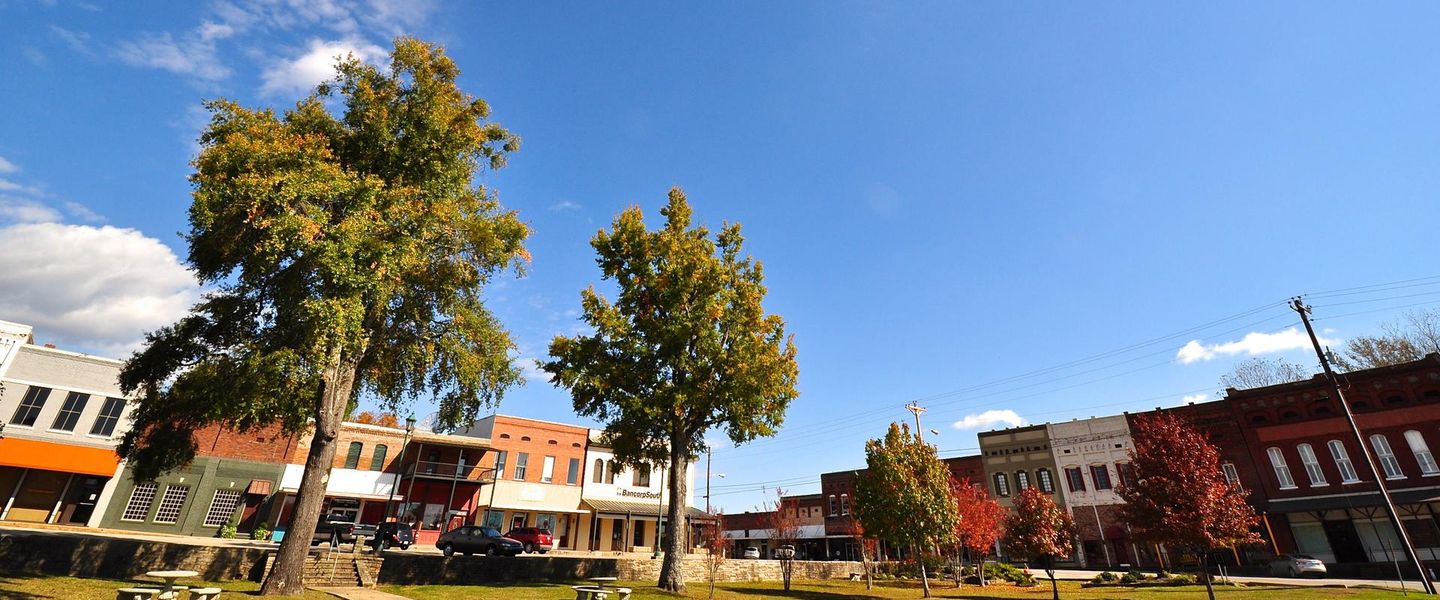


Discover the natural beauty and rich history of Tishomingo State Park in Mississippi, offering outdoor adventures, scenic trails, and tranquil retreats in the Appalachian foothills.
Read more about Tishomingo State Park
When is the best time to visit Tishomingo State Park?
Best: April, September–October · 22–28°C| Month | High (°C) | Rainfall (mm) |
|---|---|---|
| January | 11 | 126 |
| February | 13 | 123 |
| March | 18 | 158 |
| April (best) | 23 | 137 |
| May | 28 | 137 |
| June | 31 | 104 |
| July | 33 | 118 |
| August | 32 | 122 |
| September (best) | 28 | 100 |
| October (best) | 22 | 92 |
| November | 16 | 115 |
| December | 12 | 125 |
Getting to and around Tishomingo State Park
How to get there
Transportation
Best attractions in Tishomingo State Park
Tishomingo State Park in Mississippi offers visitors a unique blend of natural beauty and historical significance. From towering rock formations to lush forests, the park provides endless opportunities for hiking, camping, and wildlife viewing. History buffs will appreciate the park's ties to Native American culture and the Civil War, with interpretive exhibits and guided tours available. Visitors can also enjoy swimming and fishing in the park's crystal-clear streams and tranquil lakes. Tishomingo State Park truly has something for everyone to enjoy in a picturesque and serene setting.
-
Bridge
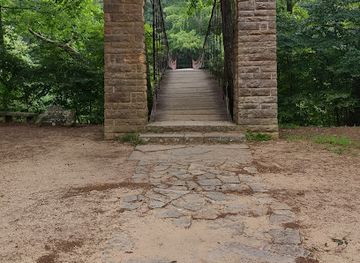
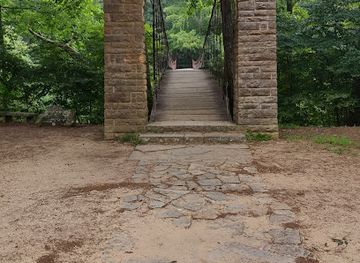
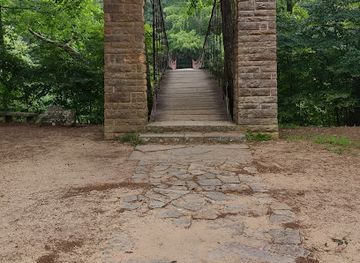
Swinging Bridge
Experience the thrill of walking across the Swinging Bridge in Mississippi, surrounded by stunning nature and adventure, perfect for outdoor enthusiasts and families.
-
Lodge
Tishomingo State Park Lodge
Discover tranquility and adventure at Tishomingo State Park Lodge, your gateway to the natural wonders of Mississippi.
-
Campground
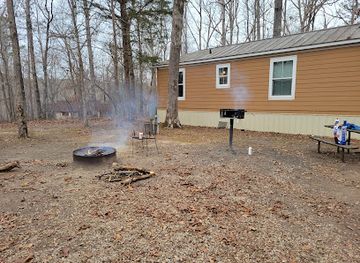
Tishomingo State Park Campground
Experience the tranquil beauty of Tishomingo State Park Campground, where nature's wonders await every outdoor enthusiast.
-
Visitor center
Tishomingo State Park Visitors Center
Explore the wonders of Tishomingo State Park Visitors Center, your gateway to Mississippi's breathtaking outdoor adventures and educational experiences.
Explore Tishomingo State Park on the map
Plan your trip on one map. See where the top attractions, landmarks, restaurants and hotels are, and book hotels and experiences in a few clicks.
Best hotels in Tishomingo State Park
Best bars in Tishomingo State Park
While Tishomingo State Park may be known for its natural beauty and outdoor activities, visitors will be pleasantly surprised by the vibrant nightlife scene in the area. From cozy pubs serving up local craft beers to lively bars with live music and dancing, there is something for everyone to enjoy after the sun sets. Whether you're looking for a relaxed evening sipping cocktails or a night of excitement and entertainment, Tishomingo State Park has it all. Don't miss out on the opportunity to experience the lively and welcoming atmosphere of the local bars and nightclubs during your visit.
-
Lodge
Tishomingo State Park Lodge
Experience the tranquility of Tishomingo State Park Lodge, a serene haven for nature lovers in the heart of Mississippi's breathtaking wilderness.
-
Park
Tishomingo state park cottage 7
Experience the natural beauty and tranquility of Tishomingo State Park Cottage 7 in Mississippi, perfect for outdoor enthusiasts and nature lovers.
-
Campground
Tishomingo State Park Campground
Experience the tranquil beauty of Tishomingo State Park Campground, a perfect retreat for outdoor enthusiasts and families in Mississippi.
Best shops in Tishomingo State Park
Tishomingo State Park offers a unique shopping experience for visitors, featuring a variety of locally owned stores and boutiques showcasing handmade crafts, artwork, and souvenirs. Visitors can browse through charming shops filled with one-of-a-kind treasures, including handcrafted jewelry, pottery, and traditional Mississippi goods. Whether you're looking for a special memento to remember your trip or a unique gift for a loved one, the shopping scene at Tishomingo State Park has something for everyone to enjoy.
-
State park
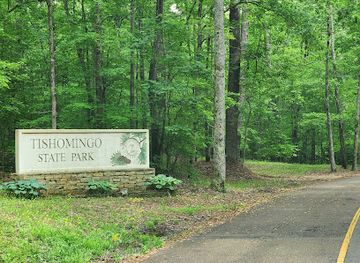
Tishomingo State Park
Discover the natural beauty and outdoor adventures at Tishomingo State Park, a top destination for nature lovers and adventure seekers in Mississippi.
-
Lodge
Tishomingo State Park Lodge
Experience the natural beauty and tranquility of Tishomingo State Park Lodge, your gateway to outdoor adventures in Mississippi.
-
Park
Tishomingo state park cottage 7
Experience the tranquility of Tishomingo State Park Cottage 7, a natural haven for outdoor enthusiasts in Mississippi.
-
Campground
Tishomingo State Park Campground
Experience the natural beauty and tranquility of Tishomingo State Park Campground in Mississippi, a perfect retreat for outdoor enthusiasts and nature lovers.
Get your free copy of our complete guide to Tishomingo State Park, delivered straight to you.
Everything on this page, from attractions and restaurants to essentials and local phrases, in one PDF you can read offline, print or share.
Already have an account? Sign in
Your Tishomingo State Park guide is ready.
We'll send it to · Not you? Sign out

Getting your guide ready…
We are putting together a fresh copy of the Tishomingo State Park guide. This can take up to a minute.
This can take a few moments. If your browser asks, choose Allow so the download can start. You'll find the guide in your Downloads folder.
Nothing happened? Download it again
Sorry, the guide is taking longer than usual. Please try again in a minute, or get it by email instead.
Tishomingo State Park essentials
Currency and Payment
Safety
Emergency Situations
Do's and Don'ts
Local Tips
From Eve
Local phrases worth knowing
You don't need to get them perfect. A few words go a long way, and locals appreciate the effort.
Basics
| English | Local | Say it |
|---|---|---|
| Hello | Howdy | [HOU-dee] |
| Goodbye | See ya | [SEE yuh] |
| Yes | Yep | [YEP] |
| No | Nah | [NAH] |
| Please/You're welcome | Please/You're welcome | [Please/You're welcome] |
| Thank you | Thanks | [THANKS] |
| Excuse me/Sorry | Pardon me | [PAR-den mee] |
| How are you? | How y'all doin'? | [HOW y'all DOO-in] |
| Fine. And you? | Fine. And y'all? | [Fine. And y'all?] |
| Do you speak English? | Y'all speak English? | [Y'all speak English?] |
| I don't understand | I don't get it | [I don't get it] |
Eating & Drinking
| English | Local | Say it |
|---|---|---|
| I'd like to see the menu, please | Let me see that menu, please | [Let me see that menu, please] |
| I don't eat meat | I don't eat meat | [I don't eat meat] |
| Cheers! | Cheers! | [Cheers!] |
| I would like to pay, please | I'd like to settle up, please | [I'd like to settle up, please] |
Emergencies
| English | Local | Say it |
|---|---|---|
| Help! | Help! | [Help!] |
| Go away! | Git! | [Git!] |
| Call the Police! | Call the Sheriff! | [Call the Sheriff!] |
| Call a doctor! | Call a doc! | [Call a doc!] |
| I'm lost | I'm turned around | [I'm turned around] |
| I'm ill | I'm feelin' poorly | [I'm feelin' poorly] |
Shopping
| English | Local | Say it |
|---|---|---|
| I'd like to buy... | I'm fixin' to buy... | [I'm fixin' to buy...] |
| I'm just looking | I'm just lookin' | [I'm just lookin'] |
| How much is it? | How much is that? | [How much is that?] |
| That's too expensive | That's too pricey | [That's too pricey] |
| Can you lower the price? | Can you budge on the price? | [Can you budge on the price?] |
Time & Numbers
| English | Local | Say it |
|---|---|---|
| What time is it? | What's the time? | [What's the time?] |
| It's one o'clock | It's one o'clock | [It's one o'clock] |
| Half past (10) | Half past ten | [Half past ten] |
| Morning | Mornin' | [Mornin'] |
| Afternoon | Afternoon | [Afternoon] |
| Evening | Evenin' | [Evenin'] |
| Yesterday | Yest'day | [Yest'day] |
| Today | Today | [Today] |
| Tomorrow | T'morrow | [T'morrow] |
| 1 | One | [One] |
| 2 | Two | [Two] |
| 3 | Three | [Three] |
| 4 | Four | [Four] |
| 5 | Five | [Five] |
| 6 | Six | [Six] |
| 7 | Seven | [Seven] |
| 8 | Eight | [Eight] |
| 9 | Nine | [Nine] |
| 10 | Ten | [Ten] |
Transport & Directions
| English | Local | Say it |
|---|---|---|
| Where's a/the...? | Where's the...? | [Where's the...?] |
| What's the address? | What's the address? | [What's the address?] |
| Can you show me (on the map)? | Can you point it out (on the map)? | [Can you point it out (on the map)?] |
| When's the next (bus)? | When's the next (bus)? | [When's the next (bus)?] |
| A ticket (to ....) | A ticket (to ....) | [A ticket (to ....)] |
History of Tishomingo State Park
Native American Heritage
Tishomingo State Park is named after Chief Tishomingo, the last full-blooded chief of the Chickasaw Nation. The area that now encompasses the park was once inhabited by the Chickasaw people, who left behind numerous artifacts and evidence of their rich culture. Exploring the park, visitors can find ceremonial mounds, ancient trails, and rock formations that were significant to the Chickasaw tribe.
The Natchez Trace Parkway
The Natchez Trace Parkway, a historic forest trail extending roughly 440 miles from Natchez, Mississippi, to Nashville, Tennessee, passes through Tishomingo State Park. This ancient travel corridor was used by Native Americans, European settlers, soldiers, and traders. The park provides a glimpse into the historical significance of this route, with preserved sections of the original trail and interpretive exhibits explaining its importance.
Civilian Conservation Corps (CCC) Era
During the Great Depression, the Civilian Conservation Corps (CCC) played a pivotal role in the development of Tishomingo State Park. Established in the 1930s, the CCC was a public work relief program that provided jobs for young men. The corps constructed many of the park's facilities, including cabins, a lodge, and the iconic swinging bridge over Bear Creek. Their craftsmanship and dedication are still evident in the park's rustic architecture and well-maintained trails.
Historical Architecture
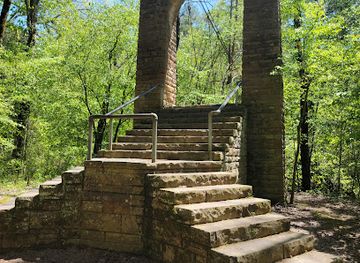
Tishomingo State Park boasts several examples of historical architecture that reflect the region's past. The lodge and cabins built by the CCC feature native stone and timber, showcasing the natural materials of the area. The park's stone arch bridge, another CCC creation, is a testament to the engineering skills of the time. These structures not only serve as functional facilities but also as historical landmarks that connect visitors to the park's past.
Bear Creek and the Old Water Mill
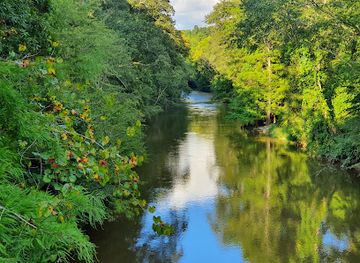
Bear Creek, which flows through Tishomingo State Park, has been a vital water source for centuries. One of the historical highlights along the creek is the Old Water Mill. While the original mill no longer stands, remnants of its foundation and millstones can still be seen. The mill was once a crucial element of local industry, providing the community with essential milling services. Interpretive signs near the site offer insights into the mill's operation and its role in the area's history.
Tishomingo State Park in Photos
Browse through our photo collection highlighting the charm and character of the destination.
Neighbouring destination travel guides
The closest destinations to Tishomingo State Park, if you have time for more than one.
-

-
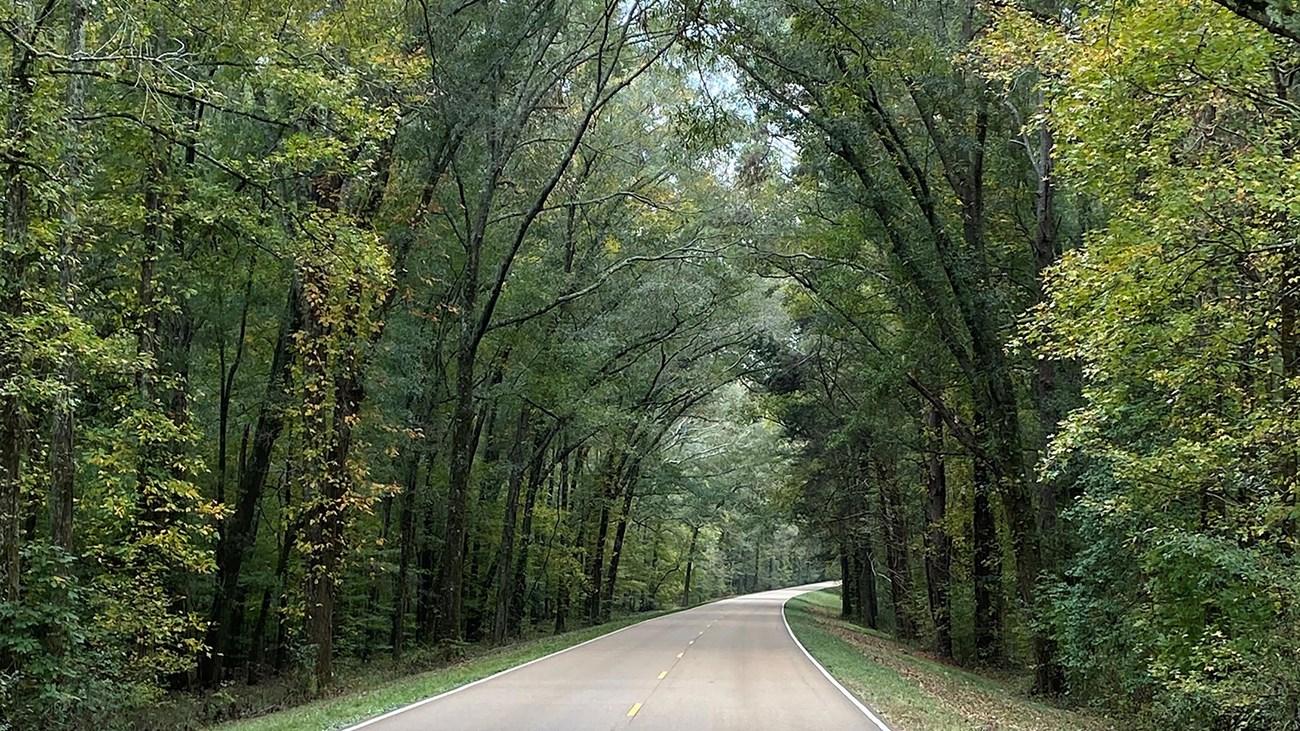 Natchez Trace Parkway
Explore the scenic, historic, and cultural wonders of the Natchez Trace Parkway, a 444-mile journey through the heart of the American South.
Natchez Trace Parkway
Explore the scenic, historic, and cultural wonders of the Natchez Trace Parkway, a 444-mile journey through the heart of the American South.
-

-

-


Swipe for more destinations
Explore more
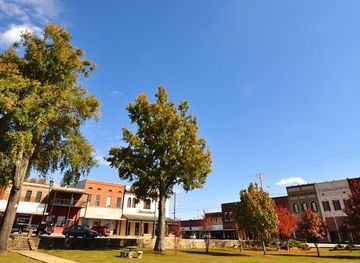
Explore more of The Tennessee-Tombigbee Hills
Explore the Tennessee-Tombigbee Hills of Mississippi for Tupelo music heritage, Civil War history, forested parks and distinctive inland waterways.
Explore The Tennessee-Tombigbee Hills
Explore more of Mississippi
Discover Mississippi: A treasure trove of Southern culture, blues music heritage, and stunning natural landscapes perfect for every kind of traveler.
Explore Mississippi