

Free Mississippi River Valley Travel Guide & Mobile App
Explore Mississippi River Valley with free travel guides. Discover regional history, expert tips, proposed trips, and audio guides on web or mobile app.


Explore Missouri’s Mississippi River Valley for St Louis landmarks, French colonial heritage, Mark Twain country, river towns and floodplain landscapes.
Read more about Mississippi River Valley
Getting to and around Mississippi River Valley
How to get there
Transportation
Top city travel guides in Mississippi River Valley
The cities of Mississippi River Valley, and the easiest places to base yourself.
-

-


Swipe for more cities
Best attractions in Mississippi River Valley
The Mississippi River Valley in Missouri offers a varied collection of urban, historic and landscape-based attractions rather than one continuous tourist strip. St Louis provides the largest concentration, including the Gateway Arch and its museum, the Old Courthouse, riverfront parks, historic neighbourhoods and major cultural institutions. North of the city, the confluence area and Columbia Bottom Conservation Area provide opportunities to understand wetlands, migratory birds and the meeting of major rivers. Hannibal combines Mark Twain heritage with a compact historic centre, river views, caves and bluff scenery. Ste Genevieve is notable for colonial-era houses, historic churches and museums that explain the community’s French and early American past. Farther south, Cape Girardeau offers riverfront history and civic heritage, while New Madrid’s museums interpret the great earthquakes of 1811–12 and the fragile geography of the lower valley. Outdoor interests include fishing, birdwatching, cycling, photography and paddling, although conditions and access vary with weather and water levels.
-
Park
Cliff Cave County Park
Explore Cliff Cave County Park, a scenic escape with hiking trails, fishing opportunities, and breathtaking views of the Mississippi River in St. Louis.
-
Tourist attraction
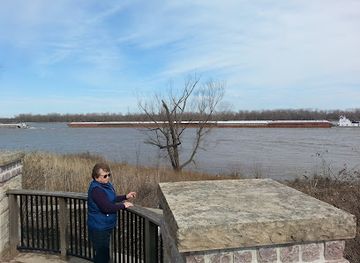
Mississippi River Overlook
Discover the beauty of nature and city life at the stunning Mississippi River Overlook in St. Louis, MO, perfect for relaxation and photography.

Best landmarks in Mississippi River Valley
The Gateway Arch is Missouri’s most recognisable Mississippi landmark, rising beside the St Louis riverfront as a monument to the city’s role in westward expansion and a reminder of the complex histories attached to that movement. The Old Courthouse, facing the Arch, is an important Greek Revival civic building and a site associated with the Dred Scott case. In Hannibal, the preserved downtown, riverfront and Mark Twain-related buildings express the relationship between the town and nineteenth-century American literature. Ste Genevieve’s historic houses, including examples of French colonial construction, are among the clearest architectural reminders of Missouri’s pre-American settlement. Cape Girardeau’s riverfront and historic civic buildings reflect its development as a transport and trading centre. In the lower valley, New Madrid’s landscape is itself a landmark: its low-lying setting and flood-control works remain connected to the powerful earthquakes that reshaped the region in 1811 and 1812.
-
State park
Trail of Tears State Park
Reflect on history and experience natural beauty at Trail of Tears State Park, a memorial to the Cherokee Nation's tragic journey.
-
Children's party service
Cape and Crown Co
Enchanting parties and magical merchandise for kids in Cape Girardeau, MO – where every child's fantasy becomes a reality!


Explore Mississippi River Valley on the map
Plan your trip on one map. See where the top cities, national parks and sights are, and book hotels and experiences in a few clicks.
Best hotels in Mississippi River Valley
Best restaurants in Mississippi River Valley
Dining in Missouri’s Mississippi River Valley ranges from St Louis’s established urban food culture to family restaurants, bakeries and cafés in smaller river towns. St Louis specialities include toasted ravioli, gooey butter cake and a distinctive barbecue tradition, while local breweries and Italian-American cooking reflect the city’s immigrant history. Hannibal and Ste Genevieve offer casual dining in historic settings, with menus commonly centred on American comfort food, baked goods and seasonal produce rather than a single formal regional cuisine. Cape Girardeau has a broader selection of independent restaurants, cafés and bars serving visitors and the surrounding region. Farmers’ markets and specialist shops are useful for Missouri wine, preserves, fruit, baked products and locally produced foods. In rural areas, opening days and meal choices can be limited, so eating in larger towns and carrying provisions for longer excursions is sensible.
-
American
Broussard's Cajun Cuisine
Savor authentic Cajun dishes at Broussard's Cajun Cuisine in Cape Girardeau—where flavor meets tradition in every bite.
-
Steak
Texas Roadhouse
Experience the best steaks and vibrant atmosphere at Texas Roadhouse in Cape Girardeau – where every meal feels like a celebration.
-
Steak
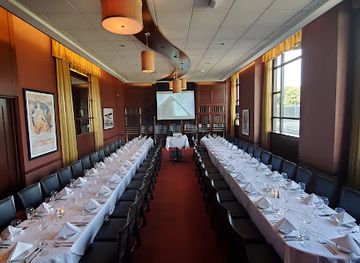
Ruth's Chris Steak House
Experience world-class dining at Ruth's Chris Steak House in Downtown St. Louis - where every meal is a celebration of flavor.
-
Restaurant
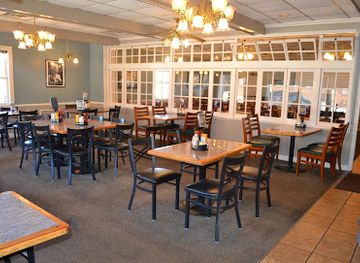
Mark Twain Dinette: Maid-Rite Restaurant and Diner
Discover the flavors of Americana at Mark Twain Dinette in Hannibal - home of Maid-Rite sandwiches and classic comfort food.


Best bars in Mississippi River Valley
-
American
Lemonade House Grille
Discover the heart of American cuisine at Lemonade House Grille, Poplar Bluff's favorite spot for delicious comfort food.
-
Restaurant
Dogwood Social House Cape Girardeau
Discover Dogwood Social House in Cape Girardeau - where great food, bowling, and live music create unforgettable experiences!
-
Restaurant
Applebee's Grill + Bar
Experience the heart of American comfort food at Applebee's Grill + Bar in Poplar Bluff, MO, where every meal feels like home.
-
Restaurant
Mary Jane bourbon + smokehouse
Discover the mouth-watering barbecue and vibrant cocktails at Cape Girardeau's Mary Jane Bourbon + Smokehouse, a local favorite for food lovers.


Best nightclubs in Mississippi River Valley
Evening life is concentrated in St Louis, where neighbourhood bars, breweries, cocktail lounges, live-music venues, theatres and late-night restaurants create the most varied scene in the Missouri section of the valley. Downtown and surrounding districts have changed over time, so visitors should check current arrangements locally rather than rely on old venue listings. Hannibal, Ste Genevieve and Cape Girardeau offer a quieter mixture of traditional pubs, wine bars, restaurants and occasional live music, with activity focused on weekends and seasonal events. In the lower valley, evenings are generally community-oriented and revolve around local restaurants, taverns and civic gatherings rather than nightclubs. River towns are often best appreciated after dark for their historic streets, food and music, not simply for alcohol-based entertainment.
-
Bar
Howl at the Moon Kansas City
Discover the electrifying atmosphere of Howl at the Moon Kansas City, where live music and cocktails create an unforgettable nightlife experience.

Best shops in Mississippi River Valley
-
Shopping mall
Mansion Mall
Discover a delightful shopping experience at Mansion Mall, where retail therapy meets unique dining options in Poplar Bluff, Missouri.
-
Craft store
Hobby Lobby
Discover the ultimate crafting paradise at Hobby Lobby in Poplar Bluff, featuring a wide range of supplies for every creative endeavor.
-
Gift shop
Five Below
Discover the joy of budget-friendly shopping at Five Below in Cape Girardeau, where everything is $5 or less!
-
Gift shop
Five Below
Discover a world of affordable treasures at Five Below, where every item is just five dollars or less in Poplar Bluff.


Get your free copy of our complete guide to Mississippi River Valley, delivered straight to you.
Everything on this page, from attractions and restaurants to essentials and local phrases, in one PDF you can read offline, print or share.
Already have an account? Sign in
Your Mississippi River Valley guide is ready.
We'll send it to · Not you? Sign out

Getting your guide ready…
We are putting together a fresh copy of the Mississippi River Valley guide. This can take up to a minute.
This can take a few moments. If your browser asks, choose Allow so the download can start. You'll find the guide in your Downloads folder.
Nothing happened? Download it again
Sorry, the guide is taking longer than usual. Please try again in a minute, or get it by email instead.
Mississippi River Valley essentials
Currency and Payment
Safety
Emergency Situations
Do's and Don'ts
Local Tips
From Eve
Local phrases worth knowing
You don't need to get them perfect. A few words go a long way, and locals appreciate the effort.
Basics
| English | Local | Say it |
|---|---|---|
| Hello | Howdy | [Hao-dee] |
| Goodbye | See ya | [See yah] |
| Yes | Yep | [Yep] |
| No | Nope | [Nope] |
| Please/You're welcome | Please/You bet | [Pleez/You bet] |
| Thank you | Thanks a lot | [Thangs a lot] |
| Excuse me/Sorry | Pardon me/Sorry | [Pardon me/Saw-ree] |
| How are you? | How ya doin'? | [How ya doin'?] |
| Fine. And you? | I’m good. And you? | [I’m good. An' you?] |
| Do you speak English? | You speakin' English? | [You speakin' English?] |
| I don't understand | I ain't followin' | [I ain't followin'] |
Eating & Drinking
| English | Local | Say it |
|---|---|---|
| I'd like to see the menu, please | Can I see the menu, please? | [Can I see the menu, pleez?] |
| I don't eat meat | I don’t eat no meat | [I don’t eat no meat] |
| Cheers! | Cheers! | [Cheers!] |
| I would like to pay, please | I wanna pay, please | [I wanna pay, pleez] |
Emergencies
| English | Local | Say it |
|---|---|---|
| Help! | Help! | [Help!] |
| Go away! | Leave me be! | [Leave me be!] |
| Call the Police! | Call the cops! | [Call the cops!] |
| Call a doctor! | Get a doctor! | [Get a doctor!] |
| I'm lost | I’m lost | [I’m lost] |
| I'm ill | I ain't feelin' well | [I ain't feelin' well] |
Shopping
| English | Local | Say it |
|---|---|---|
| I'd like to buy... | I wanna buy... | [I wanna buy...] |
| I'm just looking | Just lookin' | [Just lookin'] |
| How much is it? | What's the price? | [What's the price?] |
| That's too expensive | That's too pricey | [That's too pricey] |
| Can you lower the price? | Can ya drop the price? | [Can ya drop the price?] |
Time & Numbers
| English | Local | Say it |
|---|---|---|
| What time is it? | What time is it? | [What time is it?] |
| It's one o'clock | It's one o'clock | [It's one o'clock] |
| Half past (10) | Half past ten | [Half past ten] |
| Morning | Mornin' | [Mornin'] |
| Afternoon | Afternoon | [Afternoon] |
| Evening | Evenin' | [Evenin'] |
| Yesterday | Yesterday | [Yesterday] |
| Today | Today | [Today] |
| Tomorrow | Tomorrow | [Tomorrow] |
| 1 | One | [One] |
| 2 | Two | [Two] |
| 3 | Three | [Three] |
| 4 | Four | [Four] |
| 5 | Five | [Five] |
| 6 | Six | [Six] |
| 7 | Seven | [Seven] |
| 8 | Eight | [Eight] |
| 9 | Nine | [Nine] |
| 10 | Ten | [Ten] |
Transport & Directions
| English | Local | Say it |
|---|---|---|
| Where's a/the...? | Where's a...? | [Where's a...?] |
| What's the address? | What’s the address? | [What’s the address?] |
| Can you show me (on the map)? | Can ya show me on the map? | [Can ya show me on the map?] |
| When's the next (bus)? | When's the next bus? | [When's the next bus?] |
| A ticket (to ....) | A ticket to... | [A ticket to...] |
History of Mississippi River Valley
Indigenous River Civilisations
Long before European settlement, Indigenous peoples used the Mississippi corridor for farming, fishing, travel and exchange. The wider St Louis area lay near Cahokia, the major Mississippian urban centre across the river in present-day Illinois, while communities throughout what is now eastern Missouri participated in regional networks of trade and culture. Later peoples, including the Osage and other Native nations, maintained connections with the river and its tributaries. Archaeological earthworks, artefacts and continuing Indigenous histories demonstrate that the valley was a populated cultural landscape rather than an untouched wilderness when Europeans arrived.
French Colonial Settlement
French traders and settlers established communities along the Mississippi during the eighteenth century. Ste Genevieve, founded in the 1750s, became an important agricultural and administrative settlement, while St Louis was established in 1764 by Pierre Laclède and Auguste Chouteau. French influence remains visible in historic house forms, Catholic institutions, place names and aspects of local food culture. Following France’s transfer of its North American possessions, the settlements entered Spanish administration before becoming part of the United States through the Louisiana Purchase.
The Louisiana Purchase and St Louis’s Expansion
The 1803 Louisiana Purchase brought the Mississippi Valley west of the river under United States control and transformed St Louis into a principal gateway for exploration, trade and migration. The city supplied and organised expeditions moving up the Missouri River and towards the western frontier, while river transport linked it to settlements across the interior. Steamboats later increased the volume and speed of commerce, carrying agricultural goods, manufactured products and passengers through Missouri’s river ports.
River Commerce, Slavery and Civil War
Nineteenth-century prosperity along the Mississippi depended on shipping, farming, warehousing and enslaved labour, even as St Louis became a major centre of immigration and manufacturing. Missouri’s position as a slave state with divided loyalties made the river corridor strategically important during the American Civil War. Control of transport routes, arsenals and ports shaped military and political events, while emancipation and wartime disruption altered labour and commercial systems. Historic buildings and cemeteries across the valley preserve parts of this contested period.
Mark Twain and the Literary Mississippi
Samuel Clemens, who wrote as Mark Twain, was born in Florida, Missouri, but spent his formative years in Hannibal. His experiences along the river informed works including The Adventures of Tom Sawyer and Adventures of Huckleberry Finn, which made the Mississippi a defining setting in American literature. Hannibal’s preserved Clemens-related sites and riverfront landscape draw visitors interested in the relationship between place, memory and fiction, while also inviting scrutiny of the racial and social realities represented in Twain’s writing.
Levees, Floods and Changing River Landscapes
The Mississippi has repeatedly altered its course, flooded settlements and deposited fertile soils across Missouri’s eastern lowlands. From the nineteenth century onwards, levees, drainage works and floodways were constructed to protect communities and farmland, but major floods demonstrated the limits of engineering control. The earthquakes centred near New Madrid in 1811 and 1812 also reshaped the lower valley and remain part of regional historical identity. Today, wetlands, agricultural fields, navigation structures and flood-control landscapes reflect an ongoing negotiation with the river.
Mississippi River Valley in Photos
Browse through our photo collection highlighting the charm and character of the destination.
Neighbouring regions of Mississippi River Valley
The closest regions to Mississippi River Valley, if you have time for more than one.
-

-
 Southeast Missouri
Explore Southeast Missouri for Mississippi River towns, French colonial heritage, Ozark wilderness, wetlands, farm-country food and welcoming small cities.
-

-

-


Swipe for more regions
Explore more

Explore more of Missouri
Experience the diverse landscapes, rich history, and vibrant culture of Missouri, the heart of America, offering everything from bustling cities to serene natural escapes.
Explore Missouri