

Free Saint Roman Travel Guide & Mobile App
Plan your Saint Roman trip with Evendo. Get free guides to top attractions, restaurants, hotels, and bars. Web access or download the mobile app.


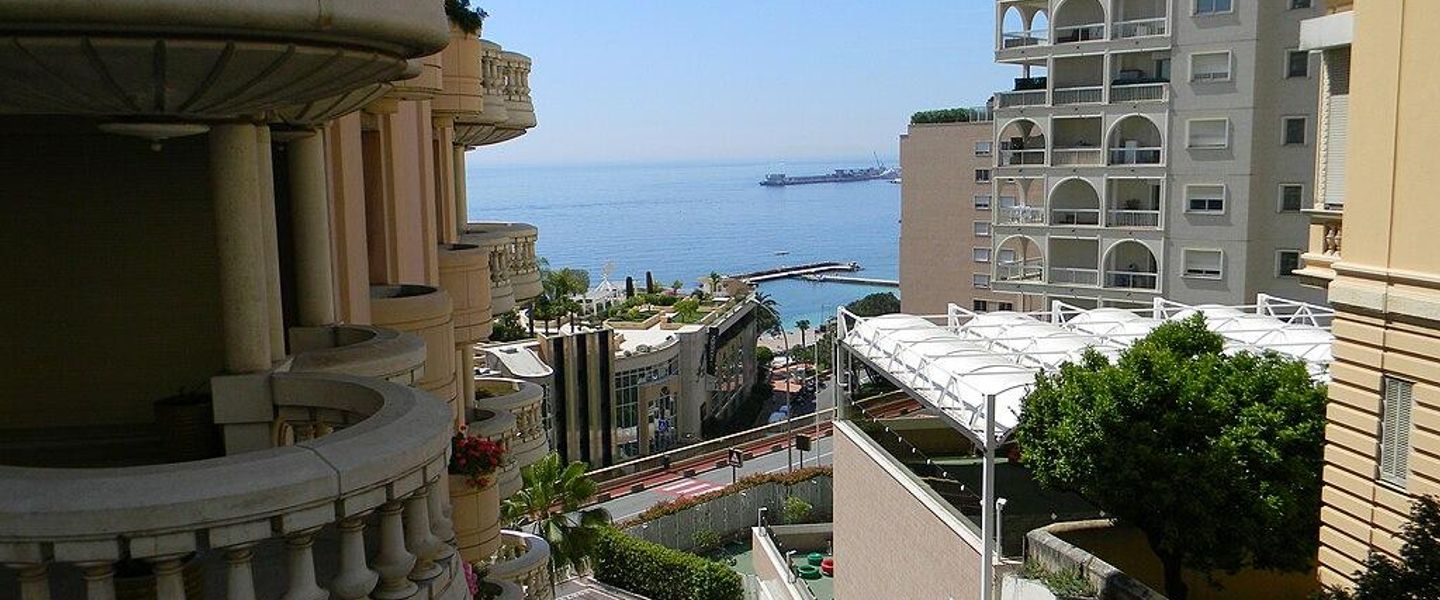


Saint Roman, Monaco combines Riviera sea views, modern architecture and easy access to Larvotto beaches, Monte-Carlo culture, dining and coastal walks.
Between the City and the Coast
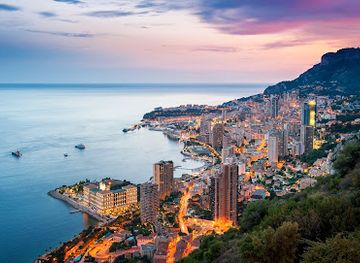
Saint Roman is Monaco’s easternmost urban quarter, extending uphill from the Mediterranean towards the border with France. It is primarily residential, with broad avenues, high-rise apartment buildings and long views across the Ligurian Sea. Its position makes it a useful base for exploring Monaco: Larvotto’s beaches and waterfront lie close by, while the centre of Monte-Carlo is within walking distance for visitors comfortable with steep streets and changing elevations. Beyond the dense urban landscape, the hills rise towards La Turbie and the Alpes-Maritimes.Read more about Saint Roman
Modern Monaco by the Water
Everyday Life and Riviera Access
When is the best time to visit Saint Roman?
Best: June, September–October · 24–28°C| Month | High (°C) | Rainfall (mm) |
|---|---|---|
| January | 13 | 90 |
| February | 14 | 80 |
| March | 16 | 70 |
| April | 19 | 60 |
| May | 23 | 50 |
| June (best) | 27 | 40 |
| July | 30 | 20 |
| August | 31 | 20 |
| September (best) | 28 | 40 |
| October (best) | 24 | 60 |
| November | 20 | 80 |
| December | 16 | 90 |
Getting to and around Saint Roman
How to get there
Transportation
Best attractions in Saint Roman
Saint Roman’s main attractions are concentrated along its edge and in the neighbouring Larvotto waterfront. The public beach and landscaped promenade provide space for swimming, seaside walks and views towards the Italian Riviera, while the Grimaldi Forum Monaco presents exhibitions, conferences and performances in a modern cultural setting. The Sporting Monte-Carlo complex is associated with major events and entertainment, although access varies according to programmes and arrangements. Tour Odéon offers one of the most recognisable examples of Monaco’s contemporary high-rise architecture, seen from streets that climb behind the coast. A short journey west leads to the Japanese Garden, the Monte-Carlo district and the Casino de Monte-Carlo, while the railway station makes further Riviera exploration straightforward. Saint Roman itself is less a museum quarter than a vantage point on Monaco’s dense urban development, where apartment streets, public infrastructure and open Mediterranean views reveal how the principality has adapted to limited land.
-
City park
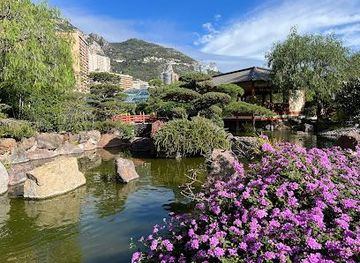
Princess Grace Japanese Garden
Explore the enchanting Princess Grace Japanese Garden in Monaco, a serene retreat filled with beautiful landscapes and traditional Japanese aesthetics.
10 min walk · 0.8 km from city centre
-
Anglican church
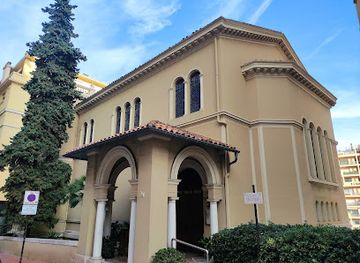
St Paul's Anglican Church, Monte-Carlo
Explore the peaceful St Paul's Anglican Church in Monte-Carlo, a stunning architectural landmark and a serene retreat for travelers seeking reflection.
9 min walk · 0.8 km from city centre
-
Tourist attraction
Portier - Monaco Grand Prix
Explore Portier, the iconic corner of the Monaco Grand Prix, where motorsport meets luxury and breathtaking Mediterranean views.
12 min walk · 0.9 km from city centre
-
Tourist attraction
PROMENADE DU LARVOTTO
Experience the breathtaking beauty of Promenade du Larvotto, where the Mediterranean meets luxury in Monaco's idyllic beachfront setting.
4 min walk · 0.3 km from city centre

Best landmarks in Saint Roman
Saint Roman’s most distinctive landmark is Tour Odéon, a pair of high-rise towers that mark Monaco’s modern approach to dense vertical development and dominate views across the eastern principality. Close by, the Grimaldi Forum Monaco is an important contemporary cultural building whose exhibitions and performances extend Monaco’s identity beyond its historic monuments. The nearby Monte-Carlo Beach complex represents the Riviera’s long-established resort architecture and leisure culture, while the Casino de Monte-Carlo farther west remains the principality’s best-known symbol of nineteenth-century tourism and Belle Époque ambition. The Japanese Garden adds a contrasting, carefully composed landscape beside the Larvotto waterfront. Together, these places show the architectural range of Monaco: residential towers and engineered coastlines in the east, formal resort buildings around Monte-Carlo and landscaped public spaces shaped for a densely occupied Mediterranean territory.
-
Exhibition and trade centre
Grimaldi Forum
Discover the Grimaldi Forum in Monaco, a cultural gem showcasing art, events, and stunning architecture along the Mediterranean coast.
7 min walk · 0.6 km from city centre
-
Beach pavillion
Larvotto Beach
Experience the enchanting Larvotto Beach in Monaco, where golden sands meet luxurious beachfront pavilions and vibrant local culture.
4 min walk · 0.3 km from city centre
-
Hotel
Le Méridien Beach Plaza
Experience luxury at Le Méridien Beach Plaza in Monaco, featuring stunning views, gourmet dining, and exclusive beach access for your perfect getaway.
2 min walk · 0.1 km from city centre
-
 Hotel
HotelAparthotel Adagio Monaco Palais Joséphine
Discover the elegance of Monaco from the comfort of Aparthotel Adagio Monaco Palais Joséphine, your home away from home in Beausoleil.
12 min walk · 1.0 km from city centre

Explore Saint Roman on the map
Plan your Saint Roman trip on one map. See where the top attractions, landmarks, restaurants, bars and hotels are, find what's near where you're staying, and book hotels and experiences in a few clicks.
Best hotels in Saint Roman
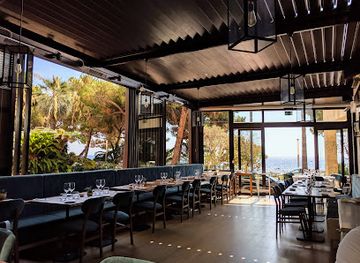
Best restaurants in Saint Roman
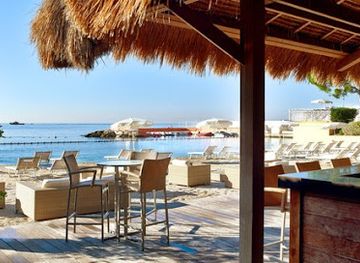
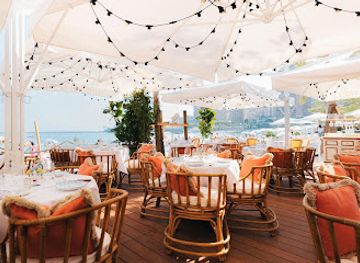
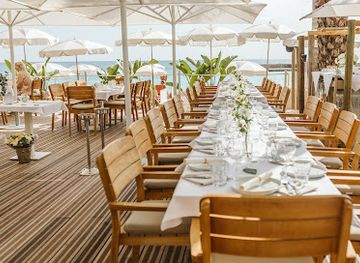
Dining in and around Saint Roman reflects Monaco’s international population and its position on the French-Italian Riviera. The nearby Larvotto waterfront combines seafront restaurants with more informal places to eat, while Monte-Carlo offers a far wider range, from hotel dining rooms and polished Mediterranean cuisine to cafés and Italian restaurants. Local menus commonly draw on Provençal and Ligurian influences, with seafood, vegetables, olive oil, pasta and rice dishes appearing alongside French favourites. Monaco’s traditional culinary repertoire includes barbajuan, a fried pastry filled with greens and ricotta or other savoury ingredients, and socca is also associated with the wider Riviera. Food shopping is more practical than market-led in Saint Roman, with supermarkets, bakeries and specialist shops serving residents. Reservations and smart dress may be expected at more formal venues, particularly around major events.
-
Restaurant
Giacomo
Discover Giacomo in Monaco: where exquisite Mediterranean flavors meet family-friendly Italian dining amidst stunning coastal views.
2 min walk · 0.2 km from city centre
-
Restaurant
La Note Bleue
Discover exquisite Mediterranean cuisine at La Note Bleue in Monaco, where stunning sea views meet exceptional dining experiences.
3 min walk · 0.3 km from city centre
-
Thai
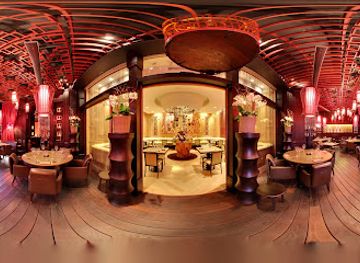
MayaBay
Experience exquisite Thai and Japanese cuisine at MayaBay, where elegance meets flavor in the heart of Monaco's vibrant culinary scene.
2 min walk · 0.2 km from city centre
-
Italian
Avenue 31
Discover authentic Italian cuisine at Avenue 31 in Monaco; a culinary oasis blending tradition with elegance.
4 min walk · 0.3 km from city centre
Best bars in Saint Roman
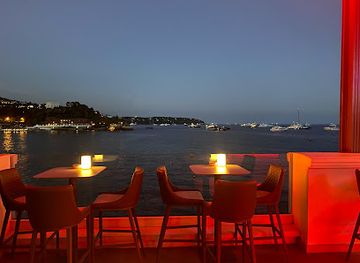
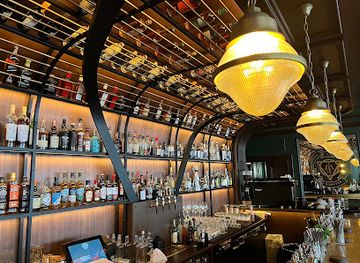
Evenings in Saint Roman are generally quieter and more residential than in central Monte-Carlo, but the quarter is close to Monaco’s principal nightlife. The Larvotto waterfront provides a relaxed setting for drinks and late dining, while the Sporting Monte-Carlo complex and nearby hotel venues host concerts, seasonal events and high-profile entertainment when programmed. Around the Casino de Monte-Carlo, visitors find elegant bars, hotel lounges and venues shaped by the principality’s formal evening culture rather than a concentrated pub district. Nightclubs and late-night entertainment are chiefly associated with Monte-Carlo rather than Saint Roman itself. Dress standards can be more formal at casino and event venues, and taxis or buses are useful for the return journey because uphill streets and busy roads make late-night walking less comfortable than the compact map suggests.
-
Restaurant
Twiga Monte Carlo
Experience unparalleled luxury dining and vibrant nightlife at Twiga Monte Carlo, where exquisite cuisine meets electrifying entertainment.
7 min walk · 0.6 km from city centre
-
Bar
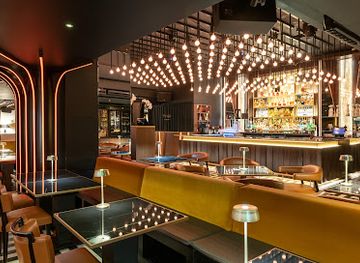
Blue Gin
Experience the elegance of Monaco at Blue Gin, where stunning views and sophisticated cocktails create an unforgettable nightlife experience.
5 min walk · 0.4 km from city centre
-
Bar
Trinity Monaco
Experience the vibrant nightlife of Monaco at Trinity Monaco, where exceptional cocktails and a lively atmosphere await.
11 min walk · 0.8 km from city centre
-
Bar
Bar-Tabacs des Moulins
Discover the charm of Monaco at Bar-Tabacs des Moulins, a cozy bar perfect for relaxation and local flavors amid the city's vibrant atmosphere.
8 min walk · 0.6 km from city centre

Best nightclubs in Saint Roman
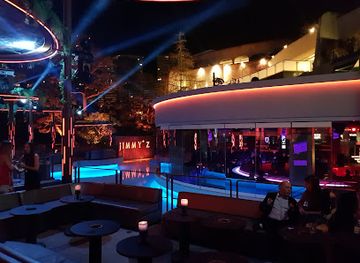
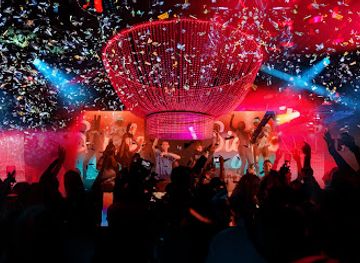
Evenings in Saint Roman are generally quieter and more residential than in central Monte-Carlo, but the quarter is close to Monaco’s principal nightlife. The Larvotto waterfront provides a relaxed setting for drinks and late dining, while the Sporting Monte-Carlo complex and nearby hotel venues host concerts, seasonal events and high-profile entertainment when programmed. Around the Casino de Monte-Carlo, visitors find elegant bars, hotel lounges and venues shaped by the principality’s formal evening culture rather than a concentrated pub district. Nightclubs and late-night entertainment are chiefly associated with Monte-Carlo rather than Saint Roman itself. Dress standards can be more formal at casino and event venues, and taxis or buses are useful for the return journey because uphill streets and busy roads make late-night walking less comfortable than the compact map suggests.
-
Restaurant
Twiga Monte Carlo
Experience glamour and sophistication at Twiga Monte Carlo, where exquisite cuisine meets vibrant nightlife in the heart of Monaco.
7 min walk · 0.6 km from city centre
-
Night club
Jimmy’z Monte-Carlo
Explore the unrivaled nightlife of Jimmy’z Monte-Carlo, a premier nightclub offering luxury, excitement, and unforgettable entertainment in the heart of Monaco.
5 min walk · 0.4 km from city centre
-
Lounge
AMBER LOUNGE
Experience the glamour and excitement of Monaco's nightlife at Amber Lounge, a top lounge and nightclub offering unforgettable entertainment and ambiance.
2 min walk · 0.2 km from city centre

Best shops in Saint Roman
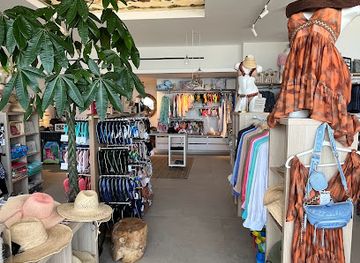
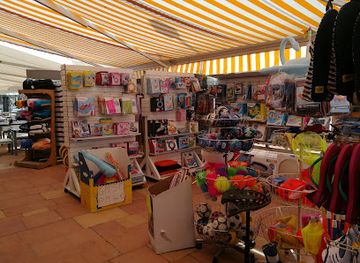
Saint Roman is primarily a neighbourhood for everyday shopping rather than a destination retail district. Its avenues contain practical convenience shops, supermarkets, bakeries, pharmacies and services used by local residents, while the Larvotto and Monte-Carlo areas provide more cafés, boutiques and specialist retail. The principal concentration of luxury fashion, jewellery, watches and department-store-style shopping lies around Monte-Carlo, particularly near the Carré d’Or and Avenue des Beaux-Arts, rather than within Saint Roman itself. Visitors seeking food gifts can look for regional olive oils, confectionery, wines and Riviera specialities in established delicatessens and supermarkets, while Monaco-themed souvenirs are widely available in central commercial areas. Retail character changes noticeably across the principality: Saint Roman feels residential and functional, Larvotto is oriented towards leisure, and Monte-Carlo carries the polished luxury image associated with Monaco.
-
Beach entertainment shop
Maillot Palace
Experience the best of beach culture at Maillot Palace, Monaco's top spot for stylish beachwear and refreshing juices.
4 min walk · 0.3 km from city centre
-
Art gallery
Meta Monaco Av. Princess Grace
Explore Meta Monaco - A Premier Art Gallery Showcasing Exquisite Jewelry and Leather Goods in the Heart of Monaco.
2 min walk · 0.1 km from city centre
-
Swimwear store
La Licorne
Discover the finest swimwear and beach essentials at La Licorne, Monaco’s boutique for stylish beachgoers.
4 min walk · 0.3 km from city centre
-
Men's clothing store
Luxury MonteCarlo
Discover the essence of luxury shopping at Luxury MonteCarlo, where high-end men's fashion meets the glamour of Monaco.
12 min walk · 1.0 km from city centre
Get your free copy of our complete guide to Saint Roman, delivered straight to you.
Everything on this page, from attractions and restaurants to essentials and local phrases, in one PDF you can read offline, print or share.
Already have an account? Sign in
Your Saint Roman guide is ready.
We'll send it to · Not you? Sign out

Getting your guide ready…
We are putting together a fresh copy of the Saint Roman guide. This can take up to a minute.
This can take a few moments. If your browser asks, choose Allow so the download can start. You'll find the guide in your Downloads folder.
Nothing happened? Download it again
Sorry, the guide is taking longer than usual. Please try again in a minute, or get it by email instead.
Saint Roman essentials
Currency and Payment
Safety
Emergency Situations
Do's and Don'ts
Local Tips
From Eve
Local phrases worth knowing
You don't need to get them perfect. A few words go a long way, and locals appreciate the effort.
Basics
| English | Local | Say it |
|---|---|---|
| Hello | Bonjour | [bon-zhoor] |
| Goodbye | Au revoir | [oh ruh-vwahr] |
| Yes | Oui | [wee] |
| No | Non | [nohn] |
| Please/You're welcome | S'il vous plaît/De rien | [seel voo pleh/duh ryen] |
| Thank you | Merci | [mehr-see] |
| Excuse me/Sorry | Excusez-moi/Désolé | [ehk-skew-zay mwah/deh-zoh-lay] |
| How are you? | Comment ça va? | [koh-mohn sah vah] |
| Fine. And you? | Bien. Et vous? | [byen. ay voo] |
| Do you speak English? | Parlez-vous anglais? | [par-lay voo ahn-glay] |
| I don't understand | Je ne comprends pas | [zhuh nuh kohm-prahnd pah] |
Eating & Drinking
| English | Local | Say it |
|---|---|---|
| I'd like to see the menu, please | Je voudrais voir la carte, s'il vous plaît | [zhuh voo-dray vwahr lah kart, seel voo pleh] |
| I don't eat meat | Je ne mange pas de viande | [zhuh nuh mahnj pah duh vyand] |
| Cheers! | Santé! | [sahn-tay] |
| I would like to pay, please | Je voudrais payer, s'il vous plaît | [zhuh voo-dray pay-ay, seel voo pleh] |
Emergencies
| English | Local | Say it |
|---|---|---|
| Help! | Au secours! | [oh suh-coor] |
| Go away! | Allez-vous en! | [ah-lay voo zahn] |
| Call the Police! | Appelez la police! | [ah-peh-lay lah poh-lees] |
| Call a doctor! | Appelez un médecin! | [ah-peh-lay uhn meh-deh-sahn] |
| I'm lost | Je suis perdu | [zhuh swee pair-doo] |
| I'm ill | Je suis malade | [zhuh swee mah-lahd] |
Shopping
| English | Local | Say it |
|---|---|---|
| I'd like to buy... | Je voudrais acheter... | [zhuh voo-dray zheh-tay...] |
| I'm just looking | Je regarde seulement | [zhuh ruh-gard suhl-mahn] |
| How much is it? | Combien ça coûte? | [kohm-byen sah koot] |
| That's too expensive | C'est trop cher | [say troh shair] |
| Can you lower the price? | Pouvez-vous baisser le prix? | [poo-veh voo bay-say luh pree] |
Time & Numbers
| English | Local | Say it |
|---|---|---|
| What time is it? | Quelle heure est-il? | [kell uhr ay-teel] |
| It's one o'clock | Il est une heure | [eel ay uhn uhr] |
| Half past (10) | Dix heures et demie | [dees uhr ay duh-mee] |
| Morning | Matin | [mah-tahn] |
| Afternoon | Après-midi | [ah-preh-mee-dee] |
| Evening | Soir | [swahr] |
| Yesterday | Hier | [yehr] |
| Today | Aujourd'hui | [oh-zhoor-dwee] |
| Tomorrow | Demain | [duh-mahn] |
| 1 | Un | [uhn] |
| 2 | Deux | [duh] |
| 3 | Trois | [twah] |
| 4 | Quatre | [kah-truh] |
| 5 | Cinq | [sank] |
| 6 | Six | [sees] |
| 7 | Sept | [sept] |
| 8 | Huit | [wheet] |
| 9 | Neuf | [nuhf] |
| 10 | Dix | [dees] |
Transport & Directions
| English | Local | Say it |
|---|---|---|
| Where's a/the...? | Où se trouve...? | [oo suh truv] |
| What's the address? | Quelle est l'adresse? | [kell ay la-dress] |
| Can you show me (on the map)? | Pouvez-vous me montrer (sur la carte)? | [poo-veh voo muh mohn-tray (soor lah kart)] |
| When's the next (bus)? | Quand est le prochain (bus)? | [kahn ay luh proh-shahn (boos)] |
| A ticket (to ....) | Un billet (pour ...) | [uhn bee-yay (poor)] |
History of Saint Roman
Early Ligurian and Roman Coast
The coast around present-day Monaco was inhabited by Ligurian communities before Roman power reached the region. Roman influence brought the area into a wider Mediterranean network, and the ancient settlement of Monoikos was associated with the rocky Monaco headland rather than with the later residential slopes of Saint Roman. The surrounding coastline connected inland routes with maritime traffic, while hills and coves shaped movement through the territory. Although little of this early history is visible in Saint Roman itself, the quarter forms part of the same narrow coastal landscape whose strategic position made Monaco valuable across successive periods.
Medieval Grimaldi Rule
Monaco’s medieval history was defined by the fortress on the Rock and by the Grimaldi family’s arrival in 1297, traditionally associated with François Grimaldi’s seizure of the stronghold. Authority developed around the fortified promontory, while the less protected eastern slopes remained peripheral to the political centre. The territory’s position between Provence and the Italian states exposed it to shifting alliances and rival claims. Over time, the Grimaldis consolidated control, and the principality’s identity became closely tied to the survival of a small sovereign state on one of the Mediterranean’s most constrained coastal sites.
From Feudal Territory to Sovereign State
Monaco’s status changed repeatedly as European powers competed for influence in the western Mediterranean. The principality came under French protection during the Napoleonic period, before sovereignty was restored in 1814. In 1848, Menton and Roquebrune broke away from Monaco and were later incorporated into France, leaving the principality with a much smaller territory. The Franco-Monegasque Treaty of 1861 confirmed Monaco’s independence in a new political framework. These changes helped define the modern borders in which Saint Roman now stands, close to the eastern frontier and the French town of Roquebrune-Cap-Martin.
Railways, Tourism and the New Riviera
The arrival of the railway in the nineteenth century connected Monaco more directly with Nice, Menton and the wider French and Italian Riviera, encouraging tourism, investment and population growth. The Casino de Monte-Carlo and its associated hotels made the principality an international resort, while improved roads and maritime links brought further visitors. Settlement gradually spread beyond the old Rock and Monte-Carlo, although the steep terrain limited conventional expansion. Saint Roman’s later urban role grew from this wider transformation, as residential and leisure development moved along the eastern coastline and up the hills behind it.
Post-War Expansion and High-Rise Monaco
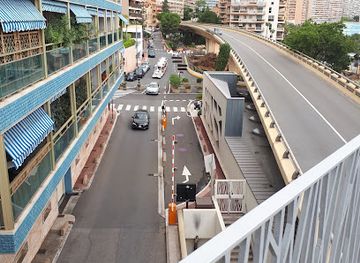
After the Second World War, Monaco responded to its shortage of buildable land through ambitious engineering, reclamation and high-density construction. New apartment districts expanded around Larvotto and Saint Roman, and infrastructure was adapted to connect steep neighbourhoods with lifts, tunnels and public transport. The late twentieth and early twenty-first centuries brought further redevelopment of the waterfront, including landscaped public spaces and cultural facilities. Tour Odéon, completed in the 2010s, illustrates the contemporary skyline that now characterises the eastern side of the principality, where residential towers stand beside older roads and the open Mediterranean.
Saint Roman in Photos
Browse through our photo collection highlighting the charm and character of the destination.
Cities near Saint Roman
The closest cities to Saint Roman, if you have time for more than one stop.
-
-

-

-

-


Swipe for more cities
Explore more

Explore more of Monaco
Explore Monaco: A glamorous principality on the French Riviera, known for its luxury casinos, stunning Mediterranean views, cultural landmarks, and vibrant nightlife.
Explore Monaco