

Free Saint-Tropez Travel Guide & Mobile App
Plan your Saint-Tropez trip with Evendo. Get free guides to top attractions, restaurants, hotels, and bars. Web access or download the mobile app.


Saint-Tropez, France’s legendary harbour town blends Provençal heritage, art, beaches, yacht culture and glamorous Mediterranean days with village character.
Harbour, Village and Peninsula
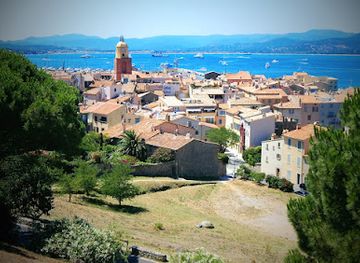
Saint-Tropez occupies a sheltered position on the Côte d’Azur, where a compact Provençal village opens onto a harbour filled with sailing boats, traditional fishing craft and large yachts. Its fame can sometimes obscure its physical character: behind the waterfront, lanes climb through ochre and pastel façades, small squares gather beneath plane trees, and churches, chapels and old defensive walls recall a settlement shaped by the sea. The town sits on the Saint-Tropez peninsula, with the beaches and pine-fringed landscapes of Ramatuelle and Gassin nearby but outside the town itself.Read more about Saint-Tropez
Artistic and Cinematic Legacy
Life Around the Port
When is the best time to visit Saint-Tropez?
Best: June–July, September · 24–28°C| Month | High (°C) | Rainfall (mm) |
|---|---|---|
| January | 12 | 60 |
| February | 13 | 55 |
| March | 14 | 60 |
| April | 17 | 50 |
| May | 20 | 45 |
| June (best) | 24 | 30 |
| July (best) | 28 | 20 |
| August | 28 | 25 |
| September (best) | 26 | 45 |
| October | 21 | 60 |
| November | 17 | 65 |
| December | 13 | 70 |
Getting to and around Saint-Tropez
How to get there
Transportation
Best attractions in Saint-Tropez
Saint-Tropez’s principal attractions unfold through a compact centre and the surrounding peninsula. The Vieux Port is the town’s visual centre, where traditional fishing boats and superyachts share the quays with cafés and galleries. From there, the Musée de l’Annonciade occupies a former chapel and presents works connected with the artists who transformed the port into a modern art destination. The Citadel offers broad views across the Gulf of Saint-Tropez, while the Musée d’Histoire Maritime inside its grounds explains the seafaring lives of local residents. Place des Lices brings a more everyday atmosphere through its market and pétanque courts. The Maison des Papillons displays an extensive butterfly collection in a historic town house, and the nearby coastal roads lead towards beaches, vineyards and pine-covered landscapes around Ramatuelle and Gassin, which are separate communes rather than attractions within Saint-Tropez itself.
-
Marina
Port de Saint-Tropez
Experience the allure of the French Riviera at the Port de Saint-Tropez, a glamorous marina steeped in history and Mediterranean charm.
7 min walk · 0.5 km from city centre
-
Museum
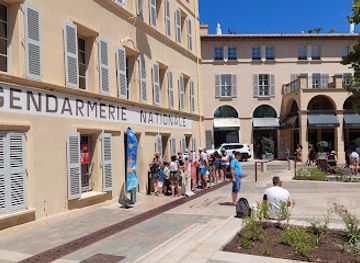
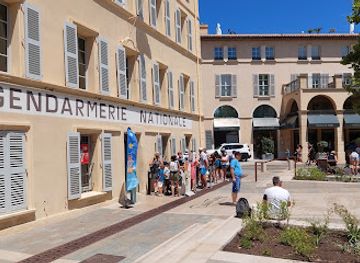
Gendarmerie Nationale
Explore the history of French cinema and law enforcement in the iconic Gendarmerie Nationale building of Saint-Tropez.
5 min walk · 0.4 km from city centre
-
Historical landmark
Place des Lices
Experience the charm of Saint-Tropez at Place des Lices: a historic square with vibrant markets, boules games, and timeless appeal.
2 min walk · 0.2 km from city centre
-
Maritime museum
Citadelle de Saint-Tropez - Musée d'histoire maritime
Explore Saint-Tropez's maritime history at this 17th-century citadel with panoramic views and engaging museum exhibits.
7 min walk · 0.5 km from city centre



Best landmarks in Saint-Tropez
The most defining landmark is the Citadel of Saint-Tropez, whose seventeenth-century fortifications rise above the town and express the port’s former strategic role; its position also gives the structure a commanding relationship with the gulf. In the historic centre, the ochre-and-yellow Église Notre-Dame-de-l’Assomption, built in the eighteenth century, is recognisable by its campanile and remains closely connected with local religious traditions. The Tour du Portalet and Tour Vieille, remnants of the town’s defensive system, mark the edges of the old settlement near the waterfront. The Vieux Port is itself a cultural landmark, linking the fishing community, maritime trade and modern yachting culture. Place des Lices provides a civic focus beneath its plane trees, while the old lanes around Rue de la Ponche preserve the scale and character of the former fishing quarter.
-
Marina
Port de Saint-Tropez
Explore the enchanting Port de Saint-Tropez, where luxury yachts, vibrant culture, and stunning Mediterranean views await you on the French Riviera.
7 min walk · 0.5 km from city centre
-
Museum
Gendarmerie Nationale
Explore the Gendarmerie Nationale in Saint-Tropez, a captivating museum that unveils the rich maritime history and cultural heritage of this iconic Mediterranean town.
5 min walk · 0.4 km from city centre
-
Historical landmark
Place des Lices
Discover the vibrant heart of Saint-Tropez at Place des Lices, a historical landmark filled with charm, culture, and local delights.
2 min walk · 0.2 km from city centre
-
Maritime museum
Citadelle de Saint-Tropez - Musée d'histoire maritime
Explore the Citadelle de Saint-Tropez, a historic fortress and maritime museum, offering stunning views and rich cultural experiences on the French Riviera.
7 min walk · 0.5 km from city centre

Explore Saint-Tropez on the map
Plan your Saint-Tropez trip on one map. See where the top attractions, landmarks, restaurants, bars and hotels are, find what's near where you're staying, and book hotels and experiences in a few clicks.
Best hotels in Saint-Tropez
Best restaurants in Saint-Tropez
Dining in Saint-Tropez combines Provençal cooking with the cosmopolitan habits of a major Riviera resort. Local menus draw on olive oil, tomatoes, garlic, herbs, seasonal vegetables and Mediterranean fish, with dishes such as bouillabaisse, soupe au pistou, ratatouille and tarte tropézienne reflecting the wider Provençal tradition; the cream-filled brioche associated with Saint-Tropez is one of the town’s best-known sweet specialities. Restaurants around the old port range from formal establishments to casual places serving seafood, while quieter lanes and the Place des Lices area offer cafés, bakeries and everyday Provençal fare. Market shopping is part of the food culture, with fruit, vegetables, cheeses, cured meats and regional products appearing at the twice-weekly market. Dining becomes more international and seasonal around the marina and beaches, but Provençal ingredients remain an important link between the polished resort and its local heritage.
-
French
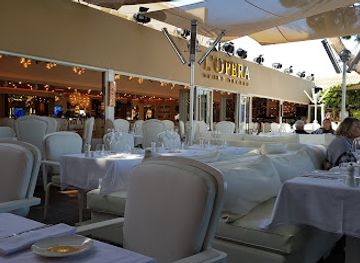
L'Opéra - Saint-Tropez
Discover culinary excellence at L'Opéra - Saint-Tropez, where French flair meets Mediterranean charm in an unforgettable dining experience.
5 min walk · 0.4 km from city centre
-
Seafood
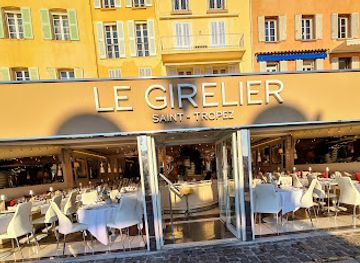
Le Girelier
Experience exquisite seafood dining at Le Girelier in Saint-Tropez, where French culinary tradition meets stunning waterfront views.
6 min walk · 0.5 km from city centre
-
Mediterranean
La Table de Léon
Experience exquisite Mediterranean dining at La Table de Léon in Saint-Tropez - where every meal is a celebration of flavor.
5 min walk · 0.4 km from city centre
-
Restaurant
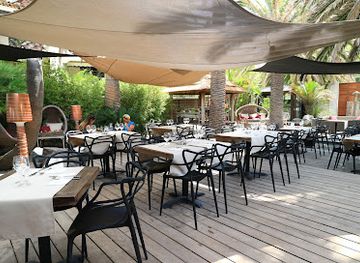
Pearl Beach Saint-Tropez
Experience culinary excellence at Pearl Beach Saint-Tropez – where Mediterranean flavors meet stunning seaside views.
15 min walk · 1.2 km from city centre
Best bars in Saint-Tropez
Evenings in Saint-Tropez move from relaxed harbour terraces and wine bars to a more theatrical late-night scene associated with the peninsula’s summer visitors. The old port and surrounding streets have cafés and bars suited to an aperitif, while places around the marina often take on a dressier atmosphere after dark. The town is internationally known for long-established nightlife venues such as Les Caves du Roy, although access, schedules and seasonal operation vary. Beyond clubs, evening life includes live music, cultural events and performances at venues such as La Renaissance and the Cinéma-théâtre La Renaissance when programmes are scheduled. Summer nightlife is substantially busier than the off-season, and many venues operate with a polished, fashion-conscious style. Taxis or pre-arranged transport are useful when travelling between the centre, beaches and outlying venues, where walking routes can be limited.
-
Bar
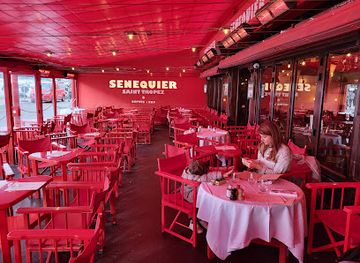
Sénéquier
Discover the elegance of Sénéquier, a premier bar and restaurant in Saint-Tropez, where exquisite cuisine meets stunning waterfront views.
5 min walk · 0.4 km from city centre
-
Restaurant
Pearl Beach Saint-Tropez
Experience the elegance of Pearl Beach in Saint-Tropez, where Mediterranean cuisine meets stunning sea views in a vibrant and stylish atmosphere.
15 min walk · 1.2 km from city centre
-
French
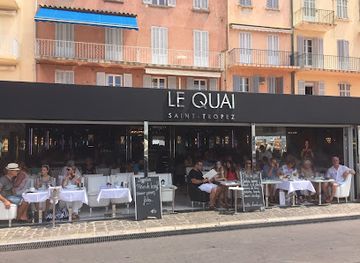
Le Quai
Discover the vibrant nightlife and exquisite French cuisine at Le Quai, the ultimate destination in Saint-Tropez for dining and entertainment.
5 min walk · 0.4 km from city centre
-
French
Bar du Port
Experience the essence of French cuisine at Bar du Port, a vibrant restaurant overlooking the stunning harbor in Saint-Tropez.
5 min walk · 0.4 km from city centre


Best nightclubs in Saint-Tropez
Evenings in Saint-Tropez move from relaxed harbour terraces and wine bars to a more theatrical late-night scene associated with the peninsula’s summer visitors. The old port and surrounding streets have cafés and bars suited to an aperitif, while places around the marina often take on a dressier atmosphere after dark. The town is internationally known for long-established nightlife venues such as Les Caves du Roy, although access, schedules and seasonal operation vary. Beyond clubs, evening life includes live music, cultural events and performances at venues such as La Renaissance and the Cinéma-théâtre La Renaissance when programmes are scheduled. Summer nightlife is substantially busier than the off-season, and many venues operate with a polished, fashion-conscious style. Taxis or pre-arranged transport are useful when travelling between the centre, beaches and outlying venues, where walking routes can be limited.
-
French
Le Quai
Experience the vibrant nightlife and exquisite French cuisine at Le Quai, the ultimate destination in Saint-Tropez for food and entertainment.
5 min walk · 0.4 km from city centre
-
Bar
Tsar Folie's St. Tropez
Dive into an unforgettable nightlife experience at Tsar Folie's St. Tropez, where exquisite cocktails and vibrant entertainment meet.
6 min walk · 0.5 km from city centre
-
Restaurant
Gaïo Restaurant & Club
Discover Gaïo Restaurant & Club in Saint-Tropez, where exquisite Asian fusion cuisine meets vibrant nightlife and unforgettable live performances.
5 min walk · 0.4 km from city centre
-
Night club
VIP Room
Discover the glamorous nightlife at VIP Room, a premier night club in Saint-Tropez, known for its luxury, electrifying ambiance, and celebrity sightings.
6 min walk · 0.5 km from city centre

Best shops in Saint-Tropez
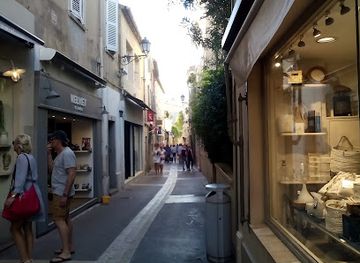
Shopping in Saint-Tropez ranges from Provençal food and crafts to international fashion, reflecting the town’s transformation into a luxury resort without erasing its market traditions. Place des Lices is the key setting for the Tuesday and Saturday market, where visitors find seasonal produce, olives, cheeses, fabrics, baskets and other regional goods alongside clothing and household items. Streets around the old port, Rue Gambetta and Rue du Général Allard contain boutiques, galleries, established fashion labels and independent shops, while the lanes of La Ponche are well suited to browsing smaller design and souvenir businesses. Tropezian-style espadrilles, woven accessories, olive-oil products, soaps and regional delicacies make more locally rooted purchases than generic resort merchandise. Seasonal stalls and shop hours vary, so the town’s retail character can feel markedly different in winter from the highly commercial summer months.
-
Leather goods store
Louis Vuitton
Explore the luxurious world of Louis Vuitton in Saint-Tropez, offering leather goods, fashion accessories, and timeless elegance in a stunning coastal setting.
3 min walk · 0.3 km from city centre
-
Gift shop
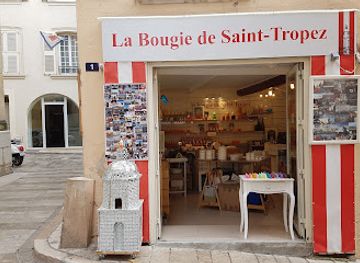
La bougie de St Tropez
Discover the luxurious world of scented candles at La Bougie de St Tropez, where every fragrance tells a story of the French Riviera.
6 min walk · 0.5 km from city centre
-
Clothing store
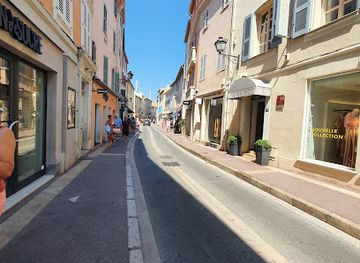
CHANEL
Discover the allure of Chanel in Saint-Tropez, where luxury fashion meets the charm of the French Riviera.
4 min walk · 0.3 km from city centre
-
Clothing store
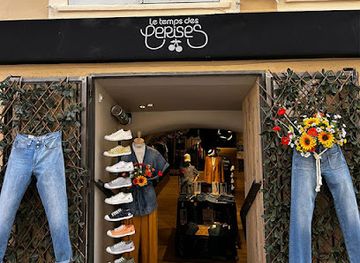
Le Temps des Cerises
Explore Le Temps des Cerises in Saint-Tropez for stylish clothing and accessories for the whole family, capturing the essence of French Riviera fashion.
6 min walk · 0.5 km from city centre
Get your free copy of our complete guide to Saint-Tropez, delivered straight to you.
Everything on this page, from attractions and restaurants to essentials and local phrases, in one PDF you can read offline, print or share.
Already have an account? Sign in
Your Saint-Tropez guide is ready.
We'll send it to · Not you? Sign out

Getting your guide ready…
We are putting together a fresh copy of the Saint-Tropez guide. This can take up to a minute.
This can take a few moments. If your browser asks, choose Allow so the download can start. You'll find the guide in your Downloads folder.
Nothing happened? Download it again
Sorry, the guide is taking longer than usual. Please try again in a minute, or get it by email instead.
Saint-Tropez essentials
Currency and Payment
Safety
Emergency Situations
Do's and Don'ts
Local Tips
From Eve
Local phrases worth knowing
You don't need to get them perfect. A few words go a long way, and locals appreciate the effort.
Basics
| English | Local | Say it |
|---|---|---|
| Hello | Bonjour | [bohn-zhoor] |
| Goodbye | Au revoir | [oh ruh-vwahr] |
| Yes | Oui | [wee] |
| No | Non | [nohn] |
| Please/You're welcome | S'il vous plaît / De rien | [seel voo pleh / duh ryehn] |
| Thank you | Merci | [mehr-see] |
| Excuse me/Sorry | Excusez-moi / Désolé | [ex-kew-zay mwa / deh-zoh-lay] |
| How are you? | Comment ça va? | [koh-mohn sah vah?] |
| Fine. And you? | Bien. Et vous? | [byen. ay voo?] |
| Do you speak English? | Parlez-vous anglais? | [par-lay voo ahn-glay?] |
| I don't understand | Je ne comprends pas | [zhuh nuh kohm-prahnd pah] |
Eating & Drinking
| English | Local | Say it |
|---|---|---|
| I'd like to see the menu, please | Je voudrais voir la carte, s'il vous plaît | [zhuh voo-dray vwahr lah kart, seel voo pleh] |
| I don't eat meat | Je ne mange pas de viande | [zhuh nuh mahnj pah duh vyand] |
| Cheers! | Santé! | [sahn-tay] |
| I would like to pay, please | Je voudrais payer, s'il vous plaît | [zhuh voo-dray pay-ay, seel voo pleh] |
Emergencies
| English | Local | Say it |
|---|---|---|
| Help! | À l'aide! | [ah layd] |
| Go away! | Allez-vous en! | [ah-lay vooz ahn] |
| Call the Police! | Appelez la police! | [ah-peh-lay lah poh-lees] |
| Call a doctor! | Appelez un médecin! | [ah-peh-lay uhn mayd-sahn] |
| I'm lost | Je suis perdu | [zhuh swee pair-doo] |
| I'm ill | Je suis malade | [zhuh swee mah-lahd] |
Shopping
| English | Local | Say it |
|---|---|---|
| I'd like to buy... | Je voudrais acheter... | [zhuh voo-dray zah-shay...] |
| I'm just looking | Je regarde juste | [zhuh ruh-gahrd zhuhst] |
| How much is it? | Combien ça coûte? | [kohm-byen sah koot?] |
| That's too expensive | C'est trop cher | [say troh shair] |
| Can you lower the price? | Pouvez-vous baisser le prix? | [poo-vay voo beh-say luh pree?] |
Time & Numbers
| English | Local | Say it |
|---|---|---|
| What time is it? | Quelle heure est-il? | [kell uhr ay-teel?] |
| It's one o'clock | Il est une heure | [eel ay uhn uhr] |
| Half past (10) | Dix heures et demie | [dees uhr ay dehm-ee] |
| Morning | Matin | [mah-tahn] |
| Afternoon | Après-midi | [ah-pray mee-dee] |
| Evening | Soir | [swahr] |
| Yesterday | Hier | [yehr] |
| Today | Aujourd'hui | [oh-zhoor-dwee] |
| Tomorrow | Demain | [duh-mahn] |
| 1 | Un | [uhn] |
| 2 | Deux | [duh] |
| 3 | Trois | [twah] |
| 4 | Quatre | [kah-truh] |
| 5 | Cinq | [sank] |
| 6 | Six | [sees] |
| 7 | Sept | [sept] |
| 8 | Huit | [weet] |
| 9 | Neuf | [nurf] |
| 10 | Dix | [dees] |
Transport & Directions
| English | Local | Say it |
|---|---|---|
| Where's a/the...? | Où se trouve...? | [oo suh troov] |
| What's the address? | Quelle est l'adresse? | [kell ay la-dress] |
| Can you show me (on the map)? | Pouvez-vous me montrer (sur la carte)? | [poo-vay voo muh mohn-tray (soor lah kart)] |
| When's the next (bus)? | Quand est le prochain (bus)? | [kohnd ay luh proh-shan (boos)] |
| A ticket (to ....) | Un billet (pour ...) | [uhn bee-yay (poor)] |
History of Saint-Tropez
The Legend of Saint Torpes
Saint-Tropez takes its name from Saint Torpes, or Saint Tropez, a Christian martyr traditionally associated with Pisa and the reign of the Roman emperor Nero. According to legend, his body was placed in a boat that drifted to the Gulf of Saint-Tropez, although the story belongs to the realm of religious tradition rather than securely documented urban history. The settlement’s coastal position made it vulnerable to raids and shaped its identity for centuries. Ancient Greek and Roman activity is recorded more broadly around the gulf, but the continuous history of the present town is better documented from the medieval period onwards.
Medieval Settlement and Maritime Raids
During the Middle Ages, the small coastal settlement experienced the insecurity common to parts of the western Mediterranean. Raids and depopulation affected the area, while control of the coast shifted among regional powers. The town’s harbour nevertheless remained valuable for fishing, shipping and defence. Its later fortifications and tightly arranged historic streets reflect the need to protect residents and goods in a port exposed to both commercial opportunity and attack. The old quarter visible today developed from this maritime settlement rather than from a grand royal foundation.
Genoese Colonists Rebuild the Town
In 1470, Jean de Cossa, acting for René of Anjou, invited a group of Genoese families to settle and repopulate Saint-Tropez. The colonists received privileges in return for helping defend the coast and restoring economic life. Their arrival is a defining moment in the town’s history, influencing its population, commercial connections and built form. The community’s maritime skills supported fishing, trade and coastal activity, while the town developed the fortified character that can still be sensed around the old centre and citadel. Saint-Tropez subsequently became part of the political landscape of Provence and, from 1481, the French kingdom through the incorporation of Provence.
Fortifications and Naval Defence
Saint-Tropez’s strategic harbour prompted successive efforts to strengthen its defences. The Citadel, begun in the early seventeenth century, formed part of a wider system intended to protect the coast and the entrance to the gulf. Its imposing walls and elevated position testify to the military importance of the port during an era of naval rivalry and Mediterranean insecurity. The town also remained connected to fishing, coastal commerce and shipbuilding, even as its defensive role evolved. The maritime traditions associated with bragozzi and other local boats continued into the modern period and remain visible in the port’s heritage.
Artists, Cinema and International Fame
Saint-Tropez acquired a new cultural identity from the late nineteenth century, when painters such as Paul Signac were drawn to its light, harbour and changing coastline. The port became associated with Neo-Impressionist and later modern artistic circles, attracting writers and artists beyond the established resorts of the Riviera. After the Second World War, cinema transformed the town’s international image. Roger Vadim’s And God Created Woman, released in 1956 and starring Brigitte Bardot, made the surrounding coast a symbol of youthful freedom and glamour. That reputation expanded through tourism, fashion and yachting, while the town retained older institutions such as the Bravades, religious-military festivities held in honour of Saint Torpes.
Saint-Tropez in Photos
Browse through our photo collection highlighting the charm and character of the destination.
Cities near Saint-Tropez
The closest cities to Saint-Tropez, if you have time for more than one stop.
-
-

-

-

-


Swipe for more cities
Explore more

Explore more of France
Explore France: A land of romance, history, and unparalleled beauty, from the iconic streets of Paris to the serene landscapes of Provence and the luxury of the French Riviera.
Explore France