

Free Sinjajevina Travel Guide & Mobile App
Explore Sinjajevina with free travel guides. Discover regional history, expert tips, proposed trips, and audio guides on web or mobile app.


Explore Sinjajevina in Montenegro for open karst plateaux, remote hikes, pastoral katuns, mountain lakes and wide views across the northern highlands.
Read more about Sinjajevina
When is the best time to visit Sinjajevina?
Best: June–August · 24–27°C| Month | High (°C) | Rainfall (mm) |
|---|---|---|
| January | 6 | 80 |
| February | 7 | 70 |
| March | 11 | 80 |
| April | 15 | 90 |
| May | 20 | 90 |
| June (best) | 24 | 70 |
| July (best) | 27 | 60 |
| August (best) | 27 | 60 |
| September | 23 | 70 |
| October | 17 | 80 |
| November | 11 | 90 |
| December | 6 | 90 |
Getting to and around Sinjajevina
How to get there
Transportation
Destinations in Sinjajevina
Resorts, valleys and scenic spots worth a trip of their own.

Swipe for more destinations
Best attractions in Sinjajevina
Sinjajevina’s attractions are primarily landscapes and experiences rather than built visitor complexes. The open limestone plateau offers long walks across grassy basins, rounded summits and high ridges, with views towards Durmitor, Bjelasica and the mountain valleys surrounding the massif. Zabojsko Lake is a notable natural destination, reached through a remote setting where route planning is essential. Seasonal katuns provide insight into Montenegro’s pastoral heritage, although they remain working communities and should be visited respectfully. Hikers can combine ridge walking with photography of karst features, shepherds’ tracks and broad horizons, while experienced cyclists and off-road travellers may use selected mountain approaches with appropriate local advice. Nearby Žabljak, Mojkovac, Kolašin and Šavnik are useful bases for arranging guides, food and transport, but they are outside Sinjajevina itself and offer different access points rather than a single gateway. The region has little conventional family entertainment, dense museum provision or marked resort infrastructure; its appeal lies in remoteness, geology, wildlife, silence and the continuing relationship between people and high pasture.
-
Tourist attraction
Katun Potrk
Discover the stunning natural beauty and rich cultural heritage of Katun Potrk, a captivating attraction in Kolasin, Montenegro.

Best landmarks in Sinjajevina
-
National park
Biogradska gora National Park
Explore the untouched beauty of Biogradska Gora National Park, a serene escape in Montenegro with stunning landscapes and rich biodiversity.
-
Woods
Biogradska Gora
Discover the enchanting beauty of Biogradska Gora, Montenegro's primeval forest and stunning lakes, perfect for nature lovers and outdoor enthusiasts.
-
Hiking area
Biograd forest
Explore the enchanting Biograd Forest, a hidden gem in Montenegro perfect for hiking, nature walks, and breathtaking landscapes.


Explore Sinjajevina on the map
Plan your trip on one map. See where the top cities, national parks and sights are, and book hotels and experiences in a few clicks.
Best hotels in Sinjajevina
Best restaurants in Sinjajevina
Sinjajevina itself has very limited formal dining, so visitors generally eat before departure or arrange provisions through Žabljak, Mojkovac, Kolašin or Šavnik. Food associated with the surrounding mountain districts is based on practical pastoral and rural cooking: sheep and cow cheeses, kajmak, cured meats, potatoes, beans, seasonal vegetables, bread and hearty soups. Kačamak, a cornmeal and potato dish often served with dairy products, is a familiar Montenegrin highland food, although it belongs to the wider national and Balkan culinary tradition rather than Sinjajevina alone. Rural households and mountain lodges may offer simple home-style meals when arranged in advance, but visitors should not assume that a remote katun has a restaurant or regular supplies. Carrying packed food is sensible for full-day walks, while local markets and small shops in the surrounding towns are useful for bread, cheese, fruit and water. Expect straightforward meals and regional produce rather than an extensive choice of international cuisine.
-
Restaurant
Restoran RAJ
Experience authentic Montenegrin cuisine at Restoran RAJ - where every dish tells a story of local tradition.
-
Country food restaurant
Restoran Crkvine
Discover authentic Montenegrin cuisine at Restoran Crkvine, where every meal tells a story of tradition and flavor.
-
Restaurant
Nacionalni restoran Crno jezero
Experience authentic Montenegrin cuisine at Nacionalni restoran Crno jezero – where tradition meets taste in a stunning natural setting.
-
Restaurant
Izvor
Experience authentic Montenegrin cuisine at Izvor in Žabljak – where every meal tells a story.


Best bars in Sinjajevina
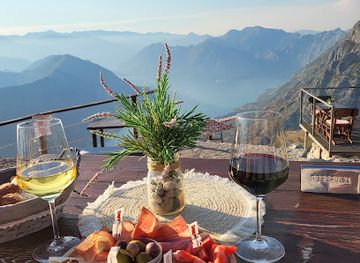
There is no conventional nightlife scene on Sinjajevina. Evenings on the plateau are quiet and usually centre on a mountain hut, arranged rural stay or the simple social life of a seasonal katun, where visitors should be guests rather than unannounced customers. More established evening options are found in Žabljak, Mojkovac, Kolašin and Šavnik, outside the massif, with cafés, hotel bars, traditional restaurants and a modest selection of pubs. Žabljak generally has the broadest visitor-oriented choice because of its mountain tourism infrastructure, while smaller towns offer a slower, local pattern of conversation and dining. Seasonal activity may increase during the summer hiking period, but opening arrangements vary and should be checked locally. The region is better suited to stargazing, early starts and quiet evenings than to late-night entertainment.
-
Cocktail bar
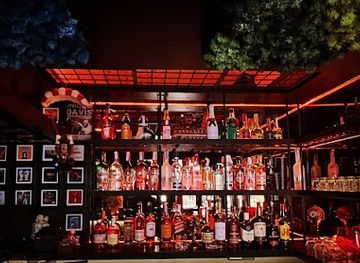
The Nitrox Pub & Eatery
Discover the vibrant atmosphere and delightful drinks at The Nitrox Pub & Eatery in the heart of Kotor's old town.
-
Bar
Casper Bar
Experience the vibrant nightlife at Casper Bar in Budva, Montenegro, where innovative cocktails and a lively atmosphere await every visitor.
-
Bar
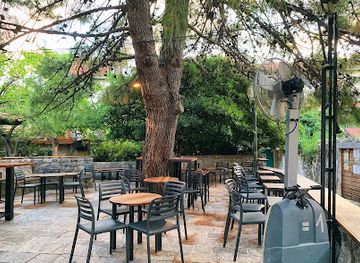
Horizont Bar
Discover the lively charm of Horizont Bar in Cetinje, where refreshing drinks, delicious meals, and vibrant atmosphere await.
-
Lounge
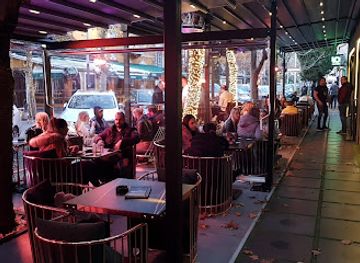
Zeppelin Lounge Bar & Pub
Discover the vibrant atmosphere of Zeppelin Lounge Bar & Pub in Podgorica, where great drinks, delicious food, and live music await.
Best nightclubs in Sinjajevina
There is no conventional nightlife scene on Sinjajevina. Evenings on the plateau are quiet and usually centre on a mountain hut, arranged rural stay or the simple social life of a seasonal katun, where visitors should be guests rather than unannounced customers. More established evening options are found in Žabljak, Mojkovac, Kolašin and Šavnik, outside the massif, with cafés, hotel bars, traditional restaurants and a modest selection of pubs. Žabljak generally has the broadest visitor-oriented choice because of its mountain tourism infrastructure, while smaller towns offer a slower, local pattern of conversation and dining. Seasonal activity may increase during the summer hiking period, but opening arrangements vary and should be checked locally. The region is better suited to stargazing, early starts and quiet evenings than to late-night entertainment.
-
Disco club
Club SPARTA
Discover the electrifying energy of Club SPARTA, a premier disco club in Bijelo Polje, where the rhythm of Montenegro comes alive.
-
Night club
Montenegro Pub
Explore the vibrant nightlife of Nikšić at Montenegro Pub, where great food, drinks, and music create unforgettable experiences.
-
Disco club
SELECT
Immerse yourself in the electrifying atmosphere of SELECT Disco Club in Kolašin, where unforgettable nights and vibrant music await.
-
Night club
Win Night Club Tivat
Experience the vibrant nightlife of Tivat at Win Night Club, where music, dancing, and unforgettable moments come together.


Best shops in Sinjajevina
Shopping on Sinjajevina is limited to practical supplies and occasional locally produced food arranged through households or guides. The surrounding towns provide better opportunities to buy mountain cheeses, kajmak, honey, cured meat, bread, preserves and other products from northern Montenegro, although availability is seasonal and product quality and provenance should be discussed with the seller. Žabljak, Mojkovac, Kolašin and Šavnik also have small shops and everyday markets rather than large retail districts. Visitors looking for souvenirs should favour useful, locally made items such as woollen goods, woodwork or regional food products when their origin is clear, rather than generic imported merchandise. Carry essentials from a larger town before entering the plateau, as there are no dependable shopping facilities, craft centres or regular retail markets in the remote high pastures. Respect private household production and do not photograph or handle goods without permission.
-
Shopping mall
Shopping Centre Kamelija
Discover a vibrant shopping experience at Kamelija in Kotor, where fashion, dining, and entertainment come together in one stunning location.
-
Shopping mall
HDL Novi Mall
Discover HDL Novi Mall in Sutorina, Montenegro: a vibrant shopping hub with diverse stores, delightful dining, and family-friendly activities for everyone.
-
Supermarket
Aroma centar
Discover the vibrant flavors of Montenegro at Aroma Centar, your go-to supermarket in Žabljak for local and international products.
-
Souvenir store
Cats Of Kotor
Explore the enchanting Cats Of Kotor, a unique souvenir store celebrating feline artistry and culture in the heart of Montenegro.


Get your free copy of our complete guide to Sinjajevina, delivered straight to you.
Everything on this page, from attractions and restaurants to essentials and local phrases, in one PDF you can read offline, print or share.
Already have an account? Sign in
Your Sinjajevina guide is ready.
We'll send it to · Not you? Sign out

Getting your guide ready…
We are putting together a fresh copy of the Sinjajevina guide. This can take up to a minute.
This can take a few moments. If your browser asks, choose Allow so the download can start. You'll find the guide in your Downloads folder.
Nothing happened? Download it again
Sorry, the guide is taking longer than usual. Please try again in a minute, or get it by email instead.
Sinjajevina essentials
Currency and Payment
Safety
Emergency Situations
Do's and Don'ts
Local Tips
From Eve
Local phrases worth knowing
You don't need to get them perfect. A few words go a long way, and locals appreciate the effort.
Basics
| English | Local | Say it |
|---|---|---|
| Hello | Zdravo | [Zdra-vo] |
| Goodbye | Doviđenja | [Do-vi-đen-ya] |
| Yes | Da | [Da] |
| No | Ne | [Ne] |
| Please/You’re welcome | Molim/ Nema na čemu | [Mo-lim/ Ne-ma na che-mu] |
| Thank you | Hvala | [Hva-la] |
| Excuse me/Sorry | Izvinite | [Iz-vi-ni-te] |
| How are you? | Kako si? | [Ka-ko si?] |
| Fine. And you? | Dobro. A ti? | [Do-bro. A ti?] |
| Do you speak English? | Da li govorite engleski? | [Da li go-vo-ri-te en-gles-ki?] |
| I don't understand | Ne razumem | [Ne ra-zu-mem] |
Eating & Drinking
| English | Local | Say it |
|---|---|---|
| I’d like to see the menu, please | Hteo bih da vidim meni, molim | [Hte-o bih da vi-dim me-ni, mo-lim] |
| I don't eat meat | Ne jedem meso | [Ne ye-dem me-so] |
| Cheers! | Živeli! | [Ži-ve-li] |
| I would like to pay, please | Hteo bih da platim, molim | [Hte-o bih da pla-tim, mo-lim] |
Emergencies
| English | Local | Say it |
|---|---|---|
| Help! | Pomoć! | [Po-moć] |
| Go away! | Odlazi! | [Od-la-zi] |
| Call the Police! | Pozovite policiju! | [Po-zo-vi-te po-li-ci-ju] |
| Call a doctor! | Pozovite doktora! | [Po-zo-vi-te dok-to-ra] |
| I’m lost | Izgubio sam se | [Iz-gu-bi-o sam se] |
| I’m ill | Bolestan sam | [Bo-le-stan sam] |
Shopping
| English | Local | Say it |
|---|---|---|
| I’d like to buy... | Hteo bih da kupim... | [Hte-o bih da ku-pim] |
| I’m just looking | Samo gledam | [Sa-mo gle-dam] |
| How much is it? | Koliko košta? | [Ko-li-ko ko-šta?] |
| That’s too expensive | To je preskupo | [To je pre-sku-po] |
| Can you lower the price? | Možete li spustiti cenu? | [Mo-že-te li spu-sti-ti ce-nu?] |
Time & Numbers
| English | Local | Say it |
|---|---|---|
| What time is it? | Koliko je sati? | [Ko-li-ko je sa-ti?] |
| It’s one o'clock | Jedan je sat | [Je-dan je sat] |
| Half past (10) | Polovina (deset) | [Po-lo-vi-na (de-set)] |
| Morning | Jutro | [Ju-tro] |
| Afternoon | Popodne | [Po-podne] |
| Evening | Veče | [Ve-che] |
| Yesterday | Juče | [Ju-che] |
| Today | Danas | [Da-nas] |
| Tomorrow | Sutra | [Su-tra] |
| 1 | Jedan | [Je-dan] |
| 2 | Dva | [Dva] |
| 3 | Tri | [Tri] |
| 4 | Četiri | [Če-ti-ri] |
| 5 | Pet | [Pet] |
| 6 | Šest | [Šest] |
| 7 | Sedam | [Se-dam] |
| 8 | Osam | [O-sam] |
| 9 | Devet | [De-vet] |
| 10 | Deset | [De-set] |
Transport & Directions
| English | Local | Say it |
|---|---|---|
| Where's a/the...? | Gde je...? | [Gde je...?] |
| What's the address? | Koja je adresa? | [Ko-ja je a-dre-sa?] |
| Can you show me (on the map)? | Možete li mi pokazati (na mapi)? | [Mo-že-te li mi po-ka-za-ti (na ma-pi)?] |
| When's the next (bus)? | Kada je sledeći (autobus)? | [Ka-da je sle-de-ći (au-to-bus)?] |
| A ticket (to ....) | Jedna karta (do....) | [Jed-na kar-ta (do....)] |
History of Sinjajevina
Karst formation and prehistoric mountain use
Sinjajevina’s oldest story is geological. Limestone uplift, glacial shaping and the long action of water produced an elevated karst landscape of basins, ridges, sinkholes and underground drainage. People have used the surrounding valleys and mountain approaches since prehistoric times, although the plateau’s exposed conditions encouraged seasonal rather than dense permanent settlement. The landscape’s archaeological record is more scattered than that of Montenegro’s major lowland and coastal sites, but the enduring pattern of moving livestock to high summer pastures reflects a very old relationship between communities and the mountain environment.
Medieval highland communities
During the medieval period, the wider interior of present-day Montenegro was governed through shifting local lordships and regional powers rather than a single permanently centralised authority. Sinjajevina’s uplands functioned primarily as a seasonal resource for communities in the surrounding valleys. Pastoral movement, woodland use and control of routes through the Tara and Morača regions connected mountain households with nearby settlements. The katun tradition developed within this broader Balkan highland culture, linking summer grazing, family labour and customary rights to particular pastures.
Ottoman-era frontier conditions
From the late medieval period into the nineteenth century, much of the interior of Montenegro existed within a changing frontier zone influenced by the Ottoman Empire and local Montenegrin authorities. Sinjajevina was not a major urban centre, but its surrounding valleys and passes mattered for movement, grazing and military communications. Political control could be uneven in remote highlands, while clans and village communities retained substantial practical importance. This history helps explain why the region’s heritage is expressed less through grand monuments on the plateau than through settlement patterns, pastoral customs and routes across difficult terrain.
Montenegrin state consolidation in the nineteenth century
The nineteenth century brought the gradual consolidation and international recognition of the Montenegrin state, alongside conflicts that reshaped the country’s borders and administration. Communities around Sinjajevina became more closely connected to a national political framework, while the mountain remained an important grazing area rather than an administrative capital. Seasonal pastoralism continued to support households in the surrounding districts, and traditional movement between valley settlements and summer pasture remained central to local economic life.
Kingdom, Yugoslavia and mountain mobility
After the First World War, Montenegro became part of the Kingdom of Serbs, Croats and Slovenes, later Yugoslavia. The twentieth century brought roads, schools, administrative change and new patterns of migration to the surrounding towns, but it did not eliminate seasonal use of Sinjajevina. During the socialist period, collective and state economic systems altered rural life, while improved transport made the mountain more accessible to forestry, grazing and recreation. Many upland practices survived through household traditions rather than through large-scale commercial development.
Contemporary conservation and pastoral heritage
Today Sinjajevina stands at the meeting point of conservation, outdoor tourism and the needs of mountain communities. Its open grasslands are valuable habitats and important grazing grounds, while its proximity to Durmitor, the Tara valley and other northern mountain destinations gives it growing visibility among hikers and nature travellers. Contemporary discussion about the plateau has also highlighted the importance of protecting pastoral livelihoods and community use. The landscape’s future depends on balancing responsible access with the ecological and cultural value of its seasonal settlements.
Sinjajevina in Photos
Browse through our photo collection highlighting the charm and character of the destination.
Neighbouring regions of Sinjajevina
The closest regions to Sinjajevina, if you have time for more than one.
-

-

-

-

-


Swipe for more regions
Explore more
Explore more of Montenegro
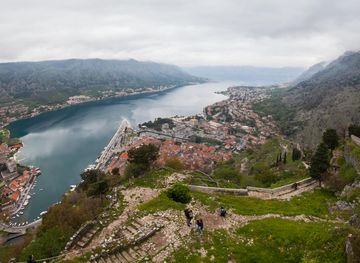
Discover Montenegro: A blend of stunning landscapes, rich history, and vibrant culture on the breathtaking Adriatic coast.
Explore Montenegro