

Free Brda Travel Guide & Mobile App
Explore Brda with free travel guides. Discover regional history, expert tips, proposed trips, and audio guides on web or mobile app.


Explore Brda in Montenegro for alpine scenery, historic monasteries, highland villages, national parks and distinctive mountain cuisine.
Read more about Brda
When is the best time to visit Brda?
Best: June–August · 25–27°C| Month | High (°C) | Rainfall (mm) |
|---|---|---|
| January | 7 | 75 |
| February | 9 | 65 |
| March | 13 | 70 |
| April | 17 | 80 |
| May | 21 | 85 |
| June (best) | 25 | 65 |
| July (best) | 27 | 60 |
| August (best) | 27 | 65 |
| September | 21 | 75 |
| October | 16 | 85 |
| November | 10 | 80 |
| December | 7 | 75 |
Getting to and around Brda
How to get there
Transportation
Top city travel guides in Brda
The cities of Brda, and the easiest places to base yourself.
-

-


Swipe for more cities
Destinations in Brda
Resorts, valleys and scenic spots worth a trip of their own.
-

-

-

-

-

-


Swipe for more destinations
Best attractions in Brda
Brda’s attractions are primarily landscapes and heritage sites experienced across several mountain bases rather than concentrated in one city. Biogradska Gora National Park is the region’s best-known natural draw, combining an old-growth forest, Biogradsko Lake, marked walking routes and high Bjelasica scenery. The Morača valley offers a very different journey, with steep limestone surroundings and the medieval Morača Monastery. Around Kolašin, visitors can combine forest walks and mountain viewpoints with winter sports, while the Lim valley provides access to river landscapes, rural settlements and the towns of Berane and Andrijevica. Plav and Gusinje are gateways to demanding hikes in the Prokletije, where glacial valleys, peaks and remote mountain hamlets dominate the experience. Rafting and other river activities are available seasonally on suitable stretches of the Tara and Lim, while fishing, cycling, birdwatching and scenic driving suit quieter itineraries. The attraction landscape rewards advance planning: national parks and high routes are not interchangeable day trips, and some trailheads require local transfers or a suitable vehicle.
-
 Tourist attraction
St. Tryphon's Cathedral
Explore the architectural beauty and historical significance of St. Tryphon's Cathedral in Kotor, a must-see cultural landmark in Montenegro.
-
Tourist attraction
San Giovanni
Discover the breathtaking views and rich history at San Giovanni Fortress, a must-see historical landmark overlooking Kotor Bay in Montenegro.
-
Tourist attraction
Old Town Bar
Experience the enchanting Old Town Bar in Montenegro, where history meets stunning coastal beauty and vibrant local culture.
-
Cruise terminal
Port of Kotor
Experience the enchanting Port of Kotor, where stunning landscapes meet rich history in Montenegro's most picturesque seaside town.
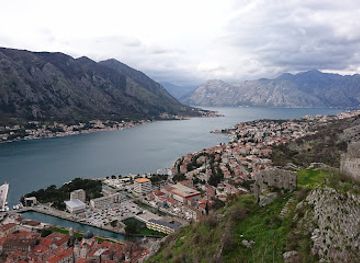
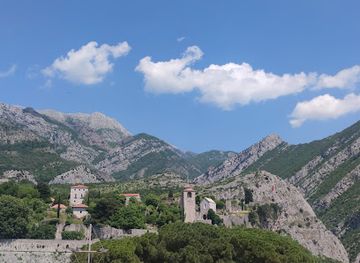
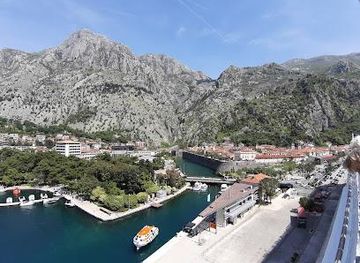
Best landmarks in Brda
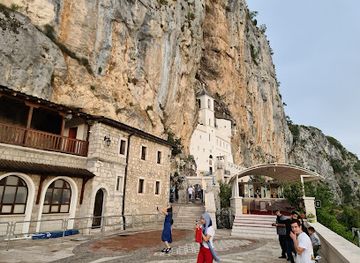
Morača Monastery is one of Brda’s most significant landmarks, standing in a dramatic valley and preserving an important medieval church decorated with celebrated frescoes. In Bjelasica, Biogradsko Lake is both a natural landmark and a symbol of Montenegro’s protected mountain heritage, surrounded by one of Europe’s noteworthy old-growth forest areas. The Komovi massif forms a powerful geographic landmark near Andrijevica, its serrated peaks rising above pastoral valleys and long-distance hiking routes. Around Plav and Gusinje, the Prokletije create a rugged mountain borderland whose limestone walls, high passes and glacial landforms define the horizon. The Lim valley, with its river, bridges, fields and historic settlements, provides the region’s principal linear landscape. Plav’s lakeside setting and Gusinje’s position below the high mountains are also important visual markers, while the Morača and Tara gorges express the geological force that has shaped the interior of Montenegro.
-
Monastery
Ostrog Orthodox Monastery
Discover the spiritual essence of Montenegro at Ostrog Orthodox Monastery, a stunning retreat carved into cliffs with breathtaking views.
-
Historical landmark
Old Town
Explore the historic charm of Old Town Herceg Novi, where ancient architecture meets vibrant culture along the stunning Adriatic coastline.
-
National park
Durmitor National Park
Explore the stunning landscapes, diverse wildlife, and thrilling outdoor activities of Durmitor National Park, Montenegro's natural treasure.
-
Fortress
Fortress Old Bar
Discover the rich history and breathtaking views at Fortress Old Bar, a historic gem in Montenegro that tells the stories of ages past.
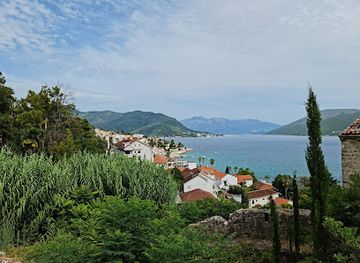
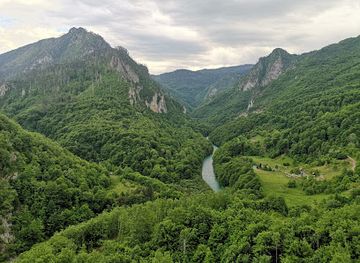
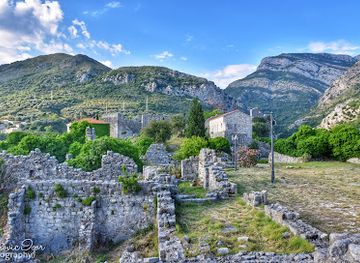
Explore Brda on the map
Plan your trip on one map. See where the top cities, national parks and sights are, and book hotels and experiences in a few clicks.
Best hotels in Brda
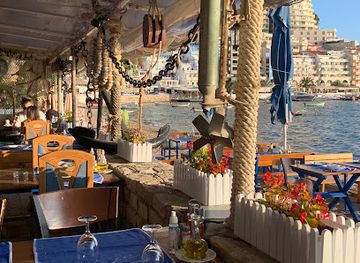
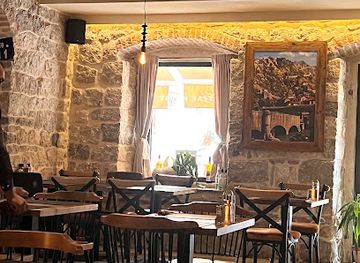
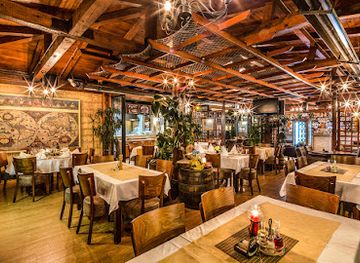
Best restaurants in Brda
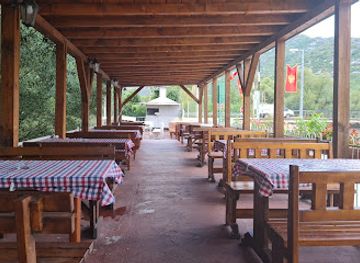
Highland cooking in Brda reflects pastoral farming, forest produce and the cold-weather needs of mountain communities. Menus commonly feature kačamak, a hearty cornmeal and potato dish, cicvara, mountain cheeses, smoked meats, lamb and homemade breads. Trout from clear mountain rivers and lakes appears in restaurants around the northern valleys, while mushrooms, berries, plums and preserved fruit bring seasonal variety. Kolašin has the broadest choice of cafés, hotels and contemporary restaurants, whereas smaller towns and villages tend to centre on traditional restaurants, family-run guesthouses and roadside establishments. In the Plav and Gusinje area, the culinary scene also reflects the region’s multi-ethnic history, with different Ottoman, Balkan and highland influences visible in home cooking. Try local produce at markets or directly through reputable rural accommodation, and expect menus to vary with season and supply rather than follow a standardised tourist format.
-
Restaurant
RESTAURANT PELIKAN
Experience authentic Montenegrin flavors at Restaurant Pelikan in Virpazar – a culinary journey amid breathtaking landscapes.
-
Mediterranean
Tri Ribara
Experience exquisite Mediterranean cuisine at Tri Ribara - where fresh seafood meets stunning Adriatic views in Rafailovići.
-
Steak
Marenda Steak House
Experience the best steaks at Marenda Steak House in Skaljari - where flavor meets quality in every bite.
-
Restaurant
Zeleni Gaj
Experience authentic Montenegrin cuisine at Zeleni Gaj in Budva - where flavor meets tradition in a picturesque setting.
Best bars in Brda
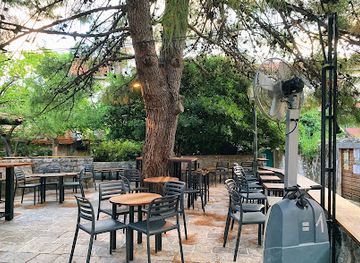
Evening life in Brda is modest and location-dependent. Kolašin has the widest selection of hotel bars, cafés, restaurants and seasonal après-ski venues, with activity increasing during the winter sports season and summer holiday months. Berane provides a more established town-based café and bar scene, while Andrijevica, Plav, Gusinje and Mojkovac are generally quieter, with evenings focused on cafés, restaurants, guesthouses and conversation. Traditional pubs in the British sense are not a defining feature; local hospitality is more often found in cafés, bars and family-run establishments. Occasional live music and seasonal events add variety, but visitors should not expect a substantial nightclub circuit in the rural highlands. In mountain villages, plan evening transport in advance, as services can be limited and walking along unlit roads is unsafe.
-
Cocktail bar
The Nitrox Pub & Eatery
Experience the vibrant nightlife at The Nitrox Pub & Eatery in Kotor, where unique cocktails meet a lively atmosphere.
-
Bar
Casper Bar
Experience the vibrant nightlife at Casper Bar in Budva, Montenegro, where creative cocktails and a lively atmosphere await every visitor.
-
Bar
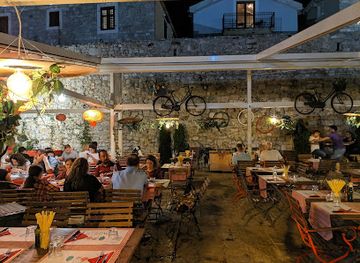
Beer & Bike Club
Immerse yourself in the lively ambiance of Beer & Bike Club, where great drinks and live music unite in beautiful Budva, Montenegro.
-
Restaurant
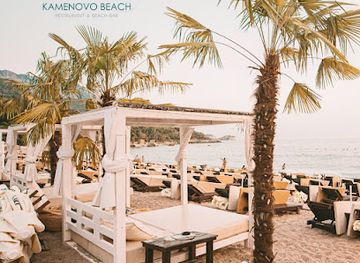
Kamenovo Restaurant & Beach Bar
Discover Kamenovo Restaurant & Beach Bar, where culinary delights meet stunning Adriatic views in the heart of Montenegro.

Best nightclubs in Brda
Evening life in Brda is modest and location-dependent. Kolašin has the widest selection of hotel bars, cafés, restaurants and seasonal après-ski venues, with activity increasing during the winter sports season and summer holiday months. Berane provides a more established town-based café and bar scene, while Andrijevica, Plav, Gusinje and Mojkovac are generally quieter, with evenings focused on cafés, restaurants, guesthouses and conversation. Traditional pubs in the British sense are not a defining feature; local hospitality is more often found in cafés, bars and family-run establishments. Occasional live music and seasonal events add variety, but visitors should not expect a substantial nightclub circuit in the rural highlands. In mountain villages, plan evening transport in advance, as services can be limited and walking along unlit roads is unsafe.
-
Night club
Omnia
Discover the ultimate nightlife experience at Omnia, Budva's premier nightclub, where music, dance, and unforgettable memories await.
-
Disco club
Club Hide Budva
Experience the vibrant nightlife of Budva at Club Hide, where top DJs and electrifying energy create unforgettable nights on the Adriatic coast.
-
Night club
Premium Palazzo night club
Discover the ultimate nightlife experience at Premium Palazzo Night Club in Budva, where music, dance, and celebration come alive.
-
Club
Biro
Experience the vibrant nightlife at Biro, Podgorica’s top dance club, where every night is filled with music, energy, and unforgettable moments.


Best shops in Brda
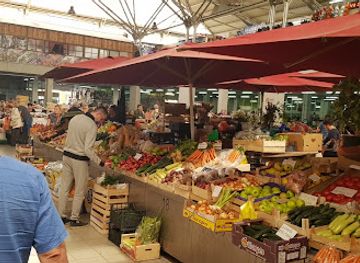
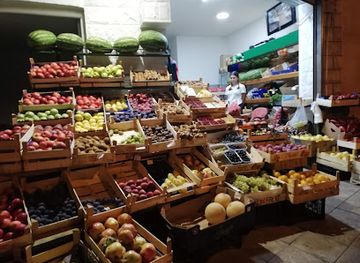
Shopping in Brda is centred on practical town high streets, open markets, small food shops and products sourced from surrounding farms rather than large retail districts. Kolašin and Berane offer the most useful selection of supermarkets, outdoor equipment, cafés and everyday goods, while Mojkovac, Andrijevica, Plav and Gusinje have smaller local centres. Look for mountain cheese, honey, herbal teas, preserves, dried fruit, smoked food and seasonal berries, checking labelling and transport requirements before buying animal products. Rural accommodation may sell homemade produce, although availability is informal and seasonal. Handicrafts, woven items, woollen goods, woodwork and religious souvenirs can sometimes be found near heritage sites or through local producers, but they are not available in every village. Markets are especially useful for seeing the region’s agricultural character, while larger souvenir ranges and specialist outdoor purchases are easier to find in Kolašin or the main towns.
-
Shopping mall
Shopping Centre Kamelija
Explore Shopping Centre Kamelija in Kotor, Montenegro - a top shopping destination with diverse stores, delightful dining, and more.
-
Shopping mall
Mall of Montenegro
Experience shopping bliss at the Mall of Montenegro, where local charm meets international flair in Podgorica's premier retail destination.
-
Supermarket
Mega Market
Discover a vibrant shopping experience at Mega Market in Boreti, Montenegro, offering local flavors and everyday essentials in one convenient location.
-
Coffee store
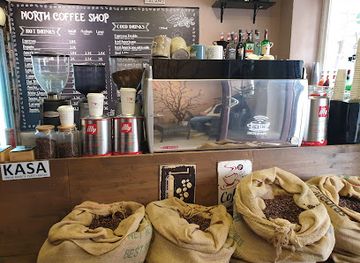
North Coffee Shop
Discover the delightful flavors of Montenegro at North Coffee Shop, a cozy retreat for coffee lovers in Budva's vibrant atmosphere.
Get your free copy of our complete guide to Brda, delivered straight to you.
Everything on this page, from attractions and restaurants to essentials and local phrases, in one PDF you can read offline, print or share.
Already have an account? Sign in
Your Brda guide is ready.
We'll send it to · Not you? Sign out

Getting your guide ready…
We are putting together a fresh copy of the Brda guide. This can take up to a minute.
This can take a few moments. If your browser asks, choose Allow so the download can start. You'll find the guide in your Downloads folder.
Nothing happened? Download it again
Sorry, the guide is taking longer than usual. Please try again in a minute, or get it by email instead.
Brda essentials
Currency and Payment
Safety
Emergency Situations
Do's and Don'ts
Local Tips
From Eve
Local phrases worth knowing
You don't need to get them perfect. A few words go a long way, and locals appreciate the effort.
Basics
| English | Local | Say it |
|---|---|---|
| Hello | Zdravo | [Zdra-vo] |
| Goodbye | Doviđenja | [Dovi-djen-ja] |
| Yes | Da | [Da] |
| No | Ne | [Ne] |
| Please/You're welcome | Molim/ Nema na čemu | [Mo-lim/ Ne-ma na che-mu] |
| Thank you | Hvala | [Hva-la] |
| Excuse me/Sorry | Izvinite | [Iz-vi-ni-te] |
| How are you? | Kako si? | [Ka-ko si?] |
| Fine. And you? | Dobro. A ti? | [Do-bro. A ti?] |
| Do you speak English? | Da li govoriš engleski? | [Da li go-vo-rish en-gles-ki?] |
| I don't understand | Ne razumem | [Ne ra-zu-mem] |
Eating & Drinking
| English | Local | Say it |
|---|---|---|
| I'd like to see the menu, please | Želeo bih da vidim meni, molim | [Zhe-le-o bih da vi-dim me-ni, mo-lim] |
| I don't eat meat | Ne jedem meso | [Ne ye-dem me-so] |
| Cheers! | Živeli! | [Zhi-ve-li!] |
| I would like to pay, please | Želeo bih da platim, molim | [Zhe-le-o bih da pla-tim, mo-lim] |
Emergencies
| English | Local | Say it |
|---|---|---|
| Help! | Pomoć! | [Po-moć!] |
| Go away! | Odlazi! | [Od-la-zi!] |
| Call the Police! | Pozovite policiju! | [Po-zo-vi-te po-li-ci-ju!] |
| Call a doctor! | Pozovite doktora! | [Po-zo-vi-te dok-to-ra!] |
| I'm lost | Izgubio sam se | [Iz-gu-bi-o sam se] |
| I'm ill | Bolestan sam | [Bo-le-stan sam] |
Shopping
| English | Local | Say it |
|---|---|---|
| I'd like to buy... | Želeo bih da kupim... | [Zhe-le-o bih da ku-pim...] |
| I'm just looking | Samo gledam | [Sa-mo gleda-m] |
| How much is it? | Koliko košta? | [Ko-li-ko koshta?] |
| That's too expensive | To je preskupo | [To ye pre-sku-po] |
| Can you lower the price? | Možeš li da spustiš cenu? | [Mo-zheš li da spu-stiš ce-nu?] |
Time & Numbers
| English | Local | Say it |
|---|---|---|
| What time is it? | Koliko je sati? | [Ko-li-ko ye sa-ti?] |
| It's one o'clock | Jedan je sat | [Je-dan ye sat] |
| Half past (10) | Polovinu (10) | [Po-lo-vi-nu (10)] |
| Morning | Jutro | [Ju-tro] |
| Afternoon | Popodne | [Po-pod-ne] |
| Evening | Veče | [Ve-che] |
| Yesterday | Juče | [Yu-che] |
| Today | Danas | [Da-nas] |
| Tomorrow | Sutra | [Su-tra] |
| 1 | Jedan | [Je-dan] |
| 2 | Dva | [Dva] |
| 3 | Tri | [Tri] |
| 4 | Četiri | [Che-ti-ri] |
| 5 | Pet | [Pet] |
| 6 | Šest | [Shest] |
| 7 | Sedam | [Se-dam] |
| 8 | Osam | [O-sam] |
| 9 | Devet | [De-vet] |
| 10 | Deset | [De-set] |
Transport & Directions
| English | Local | Say it |
|---|---|---|
| Where's a/the...? | Gde je...? | [Gde ye...?] |
| What's the address? | Koja je adresa? | [Ko-ja ye a-dre-sa?] |
| Can you show me (on the map)? | Možeš li mi pokazati (na mapi)? | [Mo-zheš li mi po-ka-za-ti (na ma-pi)?] |
| When's the next (bus)? | Kada je sledeći (autobus)? | [Ka-da ye sle-de-ći (au-to-bus)?] |
| A ticket (to ....) | Karta (do ....) | [Kar-ta (do ....)] |
History of Brda
Prehistoric and Illyrian Mountain Settlement
The valleys and uplands of Brda have been occupied since prehistoric times, with archaeological traces indicating communities that used fertile basins, river corridors and seasonal mountain pastures. In antiquity, the wider region was inhabited by Illyrian peoples and later incorporated into the Roman world, although settlement was more dispersed than in the coastal towns. Roman roads and administrative influence connected the interior with the Adriatic hinterland, while the mountains retained their importance as places of refuge, grazing and local exchange. The combination of valley farming and highland movement remained a defining pattern long after Roman authority disappeared.
Medieval Zeta, Raška and Monastic Culture
During the medieval period, the mountainous interior occupied a shifting borderland between political spheres associated with Zeta, Raška and later Serbian dynasties. Churches and monasteries became important centres of worship, literacy and artistic production. Morača Monastery, founded in the thirteenth century in the Morača valley, is the outstanding surviving example connected with this period, particularly for its medieval frescoes and monumental church architecture. Fortified settlements and mountain routes also linked the interior with neighbouring valleys, although political control was often less direct than in the lowlands.
Ottoman Frontier and Highland Communities
From the late medieval and early modern periods, much of the Brda region stood near or within the contested frontier of the Ottoman Empire and the expanding Montenegrin state. Highland communities including the Vasojevići, Kuči, Bratonožići, Moračani and Rovčani developed strong local institutions and defended access through difficult terrain. The region was not culturally uniform: Orthodox communities, Muslim populations and trading settlements coexisted across different valleys. Ottoman administration, migration, clan loyalties and pastoral customs all shaped the social geography that visitors still encounter in the architecture, cemeteries and traditions of the eastern highlands.
Montenegrin Expansion and the Eastern Highlands
During the nineteenth century, the Principality and later Kingdom of Montenegro gradually extended and consolidated its authority across parts of the Brda and adjacent highlands. The process involved warfare, negotiation, changing borders and the integration of communities with distinct historical experiences. Berane, Andrijevica, Plav and neighbouring districts became closely connected with the emerging Montenegrin state, while roads, schools and administrative centres slowly supplemented older local structures. The formal recognition of Montenegro’s enlarged borders after the Congress of Berlin in 1878 profoundly altered political and commercial relations in the region.
Trade, Migration and Modern Towns
The nineteenth and early twentieth centuries saw greater movement through the Lim valley and the mountain passes linking Montenegro with the Sandžak, Kosovo and northern Albania. Market towns such as Berane, Plav and Gusinje served agricultural and pastoral hinterlands, while seasonal work and overseas migration affected many families. Roads and later rail connections near Mojkovac and the Tara valley helped link the interior to Podgorica and the north. These developments encouraged permanent settlement in valley towns while leaving mountain villages dependent on livestock, forestry and seasonal movement.
The World Wars and Yugoslav Transformation
Brda experienced military occupation, resistance and severe disruption during both world wars, reflecting Montenegro’s strategic position between the Adriatic and the Balkan interior. During the Yugoslav period, forestry, mining, hydropower, agriculture and public-sector employment shaped the economy of the northern municipalities. New roads and schools improved access to remote settlements, while migration to larger cities and abroad began to reduce the population of some upland villages. The region’s later tourism development built on its forests, ski slopes, rivers and mountain scenery rather than on dense urban infrastructure.
National Parks and Contemporary Mountain Tourism
Late twentieth- and early twenty-first-century Montenegro placed greater emphasis on conserving highland landscapes and developing nature-based tourism. Biogradska Gora National Park protects an exceptional old-growth forest and glacial lake in the Bjelasica mountains, while Durmitor and Prokletije national parks safeguard other landscapes commonly reached from the broader northern highlands. Skiing, hiking, rafting, fishing and rural accommodation now complement traditional farming and forestry. Tourism remains unevenly distributed, however, and many communities continue to balance seasonal visitor income with depopulation, changing agriculture and the protection of fragile mountain environments.
Brda in Photos
Browse through our photo collection highlighting the charm and character of the destination.
Neighbouring regions of Brda
The closest regions to Brda, if you have time for more than one.
-

-

-

-

-


Swipe for more regions
Explore more
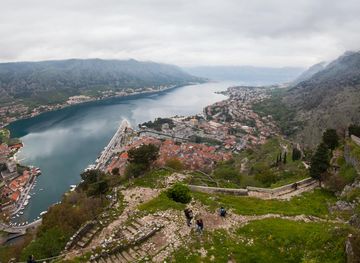
Explore more of Montenegro
Discover Montenegro: A blend of stunning landscapes, rich history, and vibrant culture on the breathtaking Adriatic coast.
Explore Montenegro