

Free Gorongosa National Park Travel Guide & Mobile App
Explore Gorongosa National Park with free travel guides. Discover regional history, expert tips, proposed trips, and audio guides on web or mobile app.


Gorongosa National Park combines recovering wildlife, Rift Valley wetlands and guided safaris in one of Mozambique’s most important conservation landscapes.
Read more about Gorongosa National Park
When is the best time to visit Gorongosa National Park?
Best: May, July–August · 23–25°C| Month | High (°C) | Rainfall (mm) |
|---|---|---|
| January | 30 | 150 |
| February | 30 | 120 |
| March | 29 | 100 |
| April | 28 | 70 |
| May (best) | 25 | 40 |
| June | 23 | 20 |
| July (best) | 23 | 15 |
| August (best) | 25 | 20 |
| September | 29 | 40 |
| October | 31 | 70 |
| November | 32 | 100 |
| December | 31 | 130 |
Getting to and around Gorongosa National Park
How to get there
Transportation
Best attractions in Gorongosa National Park
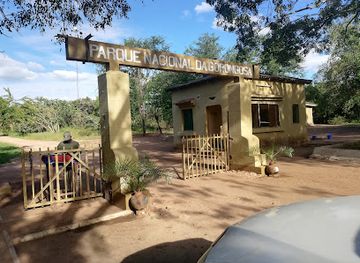
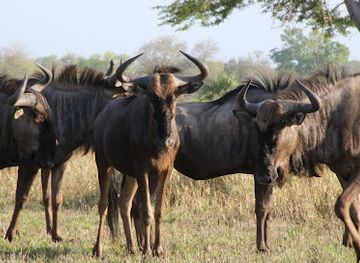
Gorongosa’s principal attraction is guided wildlife viewing across the Urema Valley, where open grasslands, seasonal wetlands and woodland support recovering populations of elephant, buffalo, hippo, lion, wild dog, zebra, waterbuck and other species. Game drives are usually planned around cooler periods of the day, while patient observation can reveal smaller mammals, reptiles and an exceptional range of birds. Around Chitengo, visitor activities may include interpretive walks, birding and conservation presentations, depending on current conditions and programme availability. The park’s appeal extends beyond individual sightings: changing water levels, mixed habitats and the visible work of restoration make the landscape itself a central experience. The wider Gorongosa conservation landscape also includes Mount Gorongosa and its important forests and watersheds, but the mountain is outside the national park and requires separate arrangements. Visitors should expect a remote, ecologically active destination rather than a dense collection of built attractions. Road conditions, rainfall and conservation priorities can affect which areas are accessible, so itineraries are best kept flexible and organised through licensed operators or park accommodation.
-
National park
Gorongosa National Park
Explore the diverse ecosystems and abundant wildlife of Gorongosa National Park, a breathtaking natural sanctuary in Mozambique.
-
National park
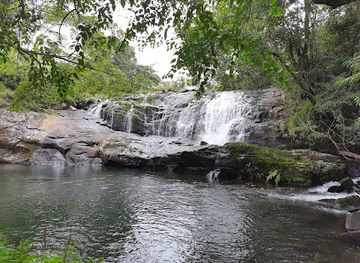
Morombodzi Falls (Gorongosa National Park)
Explore the breathtaking Morombodzi Falls in Gorongosa National Park, a hidden gem rich in biodiversity and natural beauty.
-
Wildlife and safari park
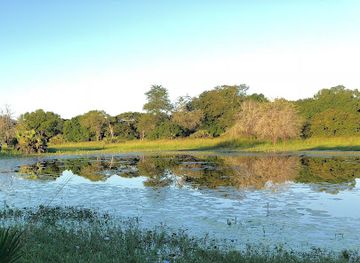
Rio Gorongosa
Discover the breathtaking wildlife and stunning landscapes of Rio Gorongosa, Mozambique's premier nature and safari destination.
Best landmarks in Gorongosa National Park
Lake Urema is Gorongosa’s defining natural landmark, a shallow wetland at the centre of the park whose seasonal expansion shapes wildlife movements and the surrounding floodplain. The lake is part of the greater Rift Valley system and is linked to the Pungwe River drainage, giving the park much of its ecological character. Chitengo is the park’s principal landmark of human activity: its visitor facilities represent both the history of tourism at Gorongosa and the practical base for modern restoration and safari operations. The open Urema floodplain, framed by woodland and distant high ground, is another recognisable landscape rather than a single monument, especially when animals gather around water. Mount Gorongosa, visible in the wider region and important as a forested watershed, is outside the national park and should not be confused with an in-park landmark. Together, these places express Gorongosa’s central themes of water, wildlife, conservation and recovery.
-
National park
Gorongosa National Park
Explore Gorongosa National Park's breathtaking landscapes and diverse wildlife in Mozambique, an unspoiled paradise for nature lovers and adventure seekers.
-
National park
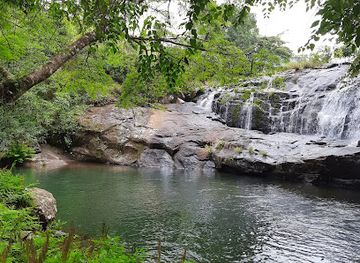
Morombodzi Falls (Gorongosa National Park)
Explore the stunning Morombodzi Falls in Gorongosa National Park, a breathtaking natural wonder with vibrant ecosystems and unforgettable views.
-
 Historical landmark
Buê Maria, Parque Nacional da Gorongosa
Explore Bué Maria in Parque Nacional da Gorongosa, a historical landmark that intertwines Mozambique's rich heritage with stunning natural beauty.
-
Wildlife and safari park
Rio Gorongosa
Explore the breathtaking biodiversity and stunning landscapes of Rio Gorongosa, a premier wildlife and safari park in Mozambique.

Explore Gorongosa National Park on the map
Plan your trip on one map. See where the top cities, national parks and sights are, and book hotels and experiences in a few clicks.
Best hotels in Gorongosa National Park
Best restaurants in Gorongosa National Park
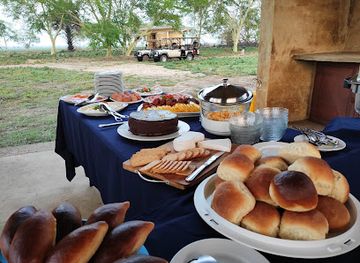
Dining in Gorongosa is centred on lodges, camps and organised safari accommodation rather than a public restaurant scene. Meals are commonly prepared for guests as part of a stay and may draw on Mozambican and broader southern African cooking, with rice, vegetables, grilled meat, poultry, fish where available and tropical fruit appearing more often than elaborate regional specialities. The park’s remote setting means that menus, supplies and meal timings can be more limited than in Beira, so dietary requirements should be communicated before arrival. Breakfast is often arranged around early game drives, while packed meals may be provided for longer excursions. In Sofala Province and along the route to the park, visitors may encounter local dishes influenced by central Mozambique’s coastal and inland food traditions, including seafood near the coast and chilli-based condiments. There is no significant independent dining district inside the park; the emphasis is on practical, sociable meals connected to the safari day.
-
Restaurant
Chikalango Restaurant
Experience the rich flavors of Mozambique at Chikalango Restaurant in Mtindiri - where every meal tells a story.
-
Restaurant
Parque Infantil
Discover family fun at Parque Infantil in Gorongosa - where delicious food meets vibrant play areas for kids!
Best bars in Gorongosa National Park
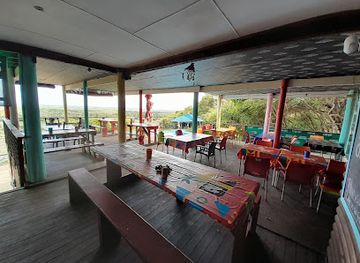
Gorongosa National Park has no conventional nightclub scene. Evening life is usually concentrated at lodge dining areas, camp lounges and outdoor gathering spaces, where guests discuss the day’s sightings over soft drinks, beer, wine or a simple cocktail. Some accommodation may arrange an evening fire or informal wildlife talk when conditions and park rules permit, but these are operational features rather than guaranteed events. Alcohol should never be taken on walks or used in a way that compromises safety around wildlife. Visitors wanting urban bars, live music or a wider choice of restaurants will find those options in Beira, outside the park. In Gorongosa, the most characteristic night-time experiences are listening to the sounds of the bush, observing the sky away from city lights and keeping to the safety procedures set by guides and accommodation staff.
-
Restaurant
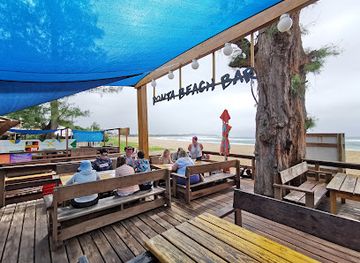
Ponta Beach Bar
Discover Ponta Beach Bar - a tropical paradise where local flavors meet stunning ocean views in Ponta do Ouro.
-
Restaurant
Captain Gus Bar and restaurant
Experience the best of local cuisine and family fun at Captain Gus Bar and Restaurant, where every meal is a celebration.
-
Hotel
Montebelo Gorongosa Lodge & Safari
Discover the perfect blend of luxury and adventure at Montebelo Gorongosa Lodge & Safari, nestled in the stunning Gorongosa National Park.
-
Hotel
Pousada Azul
Pousada Azul: A tranquil hotel in Gorongosa offering comfort, local cuisine, and a gateway to stunning natural beauty.
Best nightclubs in Gorongosa National Park
Gorongosa National Park has no conventional nightclub scene. Evening life is usually concentrated at lodge dining areas, camp lounges and outdoor gathering spaces, where guests discuss the day’s sightings over soft drinks, beer, wine or a simple cocktail. Some accommodation may arrange an evening fire or informal wildlife talk when conditions and park rules permit, but these are operational features rather than guaranteed events. Alcohol should never be taken on walks or used in a way that compromises safety around wildlife. Visitors wanting urban bars, live music or a wider choice of restaurants will find those options in Beira, outside the park. In Gorongosa, the most characteristic night-time experiences are listening to the sounds of the bush, observing the sky away from city lights and keeping to the safety procedures set by guides and accommodation staff.
-
Night club
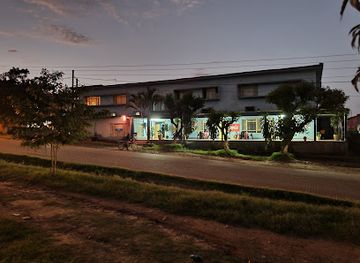
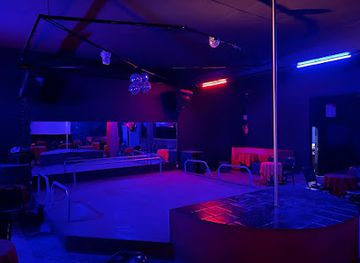
Copa Cabana Night Club
Experience Maputo's vibrant nightlife at Copa Cabana Night Club, where music, dance, and local culture come alive until dawn.
-
Bar
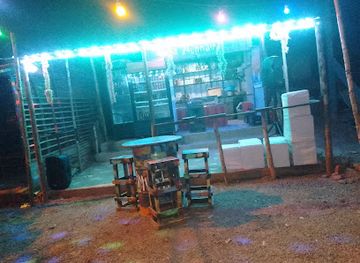
Na Munhava
Discover the lively spirit of Gorongosa at Na Munhava, a vibrant bar where local culture and refreshing drinks come together for an unforgettable experience.
Best shops in Gorongosa National Park
Shopping opportunities inside Gorongosa National Park are limited and usually connected with lodge reception areas or conservation-oriented visitor facilities. Practical purchases may include locally made crafts, printed materials, clothing or small souvenirs, though stock varies and should not be assumed. The most appropriate souvenirs are items with clear local provenance and products that support legitimate community enterprises or conservation initiatives; visitors should ask staff about sourcing rather than buying wildlife parts, antiquities or unverified natural materials. Beira offers a broader selection of shops, markets and galleries before or after a park visit, while villages and roadside businesses along the approach may sell local produce and handmade goods when available. Carrying a small amount of meticais is useful for modest purchases, but remote locations may not accept cards. The park is better suited to buying meaningful, lightweight items than to extensive retail shopping.
-
Shopping mall
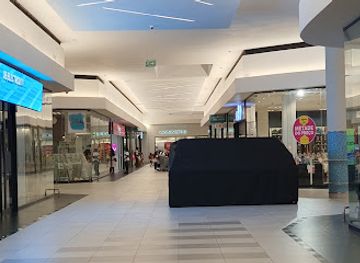
Baía Mall
Discover the vibrant shopping and dining experience at Baía Mall, a premier destination in the heart of Maputo, Mozambique.
-
National park
Gorongosa National Park
Explore Gorongosa National Park in Mozambique, a breathtaking destination rich in wildlife, stunning landscapes, and cultural experiences.
-
Hotel
Montebelo Gorongosa Lodge & Safari
Discover luxury and adventure at Montebelo Gorongosa Lodge & Safari, your gateway to the breathtaking wildlife and landscapes of Gorongosa National Park.
-
Campground
Gorongosa Campsite
Discover the beauty and wildlife of Gorongosa National Park at the serene Gorongosa Campsite, a nature lover's paradise in Mozambique.
Get your free copy of our complete guide to Gorongosa National Park, delivered straight to you.
Everything on this page, from attractions and restaurants to essentials and local phrases, in one PDF you can read offline, print or share.
Already have an account? Sign in
Your Gorongosa National Park guide is ready.
We'll send it to · Not you? Sign out

Getting your guide ready…
We are putting together a fresh copy of the Gorongosa National Park guide. This can take up to a minute.
This can take a few moments. If your browser asks, choose Allow so the download can start. You'll find the guide in your Downloads folder.
Nothing happened? Download it again
Sorry, the guide is taking longer than usual. Please try again in a minute, or get it by email instead.
Gorongosa National Park essentials
Currency and Payment
Safety
Emergency Situations
Do's and Don'ts
Local Tips
From Eve
Local phrases worth knowing
You don't need to get them perfect. A few words go a long way, and locals appreciate the effort.
Basics
| English | Local | Say it |
|---|---|---|
| Hello | Olá | [oh-LAH] |
| Goodbye | Adeus | [ah-DEH-oos] |
| Yes | Sim | [seem] |
| No | Não | [now] |
| Please/You're welcome | Por favor | [poor fah-VOR] |
| Thank you | Obrigado | [oh-bree-GAH-doo] |
| Excuse me/Sorry | Desculpe | [deh-SKOOL-peh] |
| How are you? | Como você está? | [KOH-moo voh-SEH es-TAH] |
| Fine. And you? | Estou bem. E você? | [es-TOH bem. eh voh-SEH] |
| Do you speak English? | Você fala inglês? | [voh-SEH FAH-lah een-GLEZ] |
| I don't understand | Não entendo | [now en-TEN-doo] |
Eating & Drinking
| English | Local | Say it |
|---|---|---|
| I'd like to see the menu, please | Gostaria de ver o menu, por favor | [goh-stah-REE-ah jeh vehr oo meh-NOO, poor fah-VOR] |
| I don't eat meat | Não como carne | [now KOH-mo CAR-nee] |
| Cheers! | Saúde! | [sah-OO-deh] |
| I would like to pay, please | Gostaria de pagar, por favor | [goh-stah-REE-ah jeh pah-GAR, poor fah-VOR] |
Emergencies
| English | Local | Say it |
|---|---|---|
| Help! | Ajuda! | [ah-JOO-dah] |
| Go away! | Vá embora! | [vah em-BOH-rah] |
| Call the Police! | Chame a polícia! | [SHAH-meh ah poh-LEE-syah] |
| Call a doctor! | Chame um médico! | [SHAH-meh oom MEH-dee-ko] |
| I'm lost | Estou perdido | [es-TOH pehr-DEE-doo] |
| I'm ill | Estou doente | [es-TOH do-EHN-teh] |
Shopping
| English | Local | Say it |
|---|---|---|
| I'd like to buy... | Gostaria de comprar... | [goh-stah-REE-ah jeh kom-PRAHR] |
| I'm just looking | Estou apenas olhando | [es-TOH ah-PEH-nas oh-LYAN-doo] |
| How much is it? | Quanto custa? | [KWAN-toh KOOS-tah] |
| That's too expensive | Isso é muito caro | [EE-soh eh MOY-too KAH-roh] |
| Can you lower the price? | Você pode baixar o preço? | [voh-SEH POH-jee bye-SHAHR oo PREH-soh] |
Time & Numbers
| English | Local | Say it |
|---|---|---|
| What time is it? | Que horas são? | [keh OR-as sah-OH] |
| It's one o'clock | É uma hora | [eh OO-mah OR-ah] |
| Half past (10) | Dez e meia | [dez ee MAY-ah] |
| Morning | Manhã | [mahn-YAH] |
| Afternoon | Tarde | [TAR-deh] |
| Evening | Noite | [NOY-teh] |
| Yesterday | Ontem | [ON-tem] |
| Today | Hoje | [OH-zhee] |
| Tomorrow | Amanhã | [ah-mahn-YAH] |
| 1 | Um | [oom] |
| 2 | Dois | [doyz] |
| 3 | Três | [trehz] |
| 4 | Quatro | [KWAH-tro] |
| 5 | Cinco | [SEEN-co] |
| 6 | Seis | [says] |
| 7 | Sete | [SEH-teh] |
| 8 | Oito | [OY-toh] |
| 9 | Nove | [NOH-veh] |
| 10 | Dez | [dez] |
Transport & Directions
| English | Local | Say it |
|---|---|---|
| Where's a/the...? | Onde fica um/a...? | [ON-deh FEE-kah oom/ah] |
| What's the address? | Qual é o endereço? | [KWAHL eh oo in-deh-REH-soo] |
| Can you show me (on the map)? | Você pode me mostrar (no mapa)? | [voh-SEH POH-jee meh mohs-TRAR (no MAH-pah)] |
| When's the next (bus)? | Quando é o próximo (ônibus)? | [KWAN-doo eh oo PROH-see-moo (OH-nee-boos)] |
| A ticket (to ....) | Um bilhete (para....) | [oom bee-LYEH-tchee (PAH-rah)] |
History of Gorongosa National Park
Early Human Use and the Rift Valley Landscape
The Gorongosa region has long been shaped by human movement, hunting, fishing and seasonal use of the Urema Valley and surrounding woodlands. Its position between the Zambezi basin and the coastal districts of central Mozambique made it part of wider networks of exchange and migration. Archaeological evidence in the broader region reflects a long history of settled farming communities and ironworking, while the valley’s wetlands continued to provide important resources for people living around the park.
The Creation of a Protected Area
A protected hunting reserve was established at Gorongosa in the early twentieth century, during the Portuguese colonial period. Protection was initially linked largely to regulating game and supporting controlled hunting, but the area’s ecological importance gradually received greater recognition. Gorongosa National Park was formally created in 1960. Its location around Lake Urema and its mixture of floodplain, woodland and plateau habitats helped make it one of the most prominent wildlife areas in colonial-era Mozambique.
A Celebrated Wildlife Park in the Mid-Twentieth Century
By the 1960s and 1970s, Gorongosa had developed an international reputation for abundant wildlife and large concentrations of animals on its plains. Tourism infrastructure at Chitengo supported guided visits, while roads and air access connected the park with the country’s wider travel network. Elephants, buffalo, hippos, predators and numerous antelope species were central to its identity. This period established the park’s enduring reputation, even though the political and social conditions surrounding it were deeply unequal.
Civil War and Ecological Collapse
Mozambique’s civil war, which lasted from 1977 to 1992, devastated Gorongosa. The park became entangled in the conflict, and wildlife was killed for meat and ivory, while infrastructure and management systems broke down. Populations of large mammals fell dramatically, and many local people experienced displacement, insecurity and economic hardship. The damage was not simply an environmental episode: it reflected the war’s wider effects on communities, public institutions and rural livelihoods across central Mozambique.
Peace, Rehabilitation and New Conservation Partnerships
After the peace agreement, efforts to rebuild Gorongosa developed gradually. A major partnership between the Mozambican Government and the Carr Foundation, later the Gorongosa Restoration Project, began in the mid-2000s. Work has included habitat management, ranger support, wildlife monitoring, infrastructure rehabilitation and the reintroduction or protection of important species. The recovery has been substantial, but it remains an ongoing process rather than a completed return to the park’s former condition.
Community Development and Landscape Conservation
Modern Gorongosa conservation increasingly recognises that the park’s future depends on the welfare of people living around it. Programmes have addressed education, health, agriculture, livelihoods and conservation-compatible enterprise, while the wider landscape includes work connected with Mount Gorongosa and its watersheds. These initiatives reflect a shift from protecting animals in isolation towards managing ecological and social relationships across a larger region. Their results are important to the park’s long-term resilience and public legitimacy.
Gorongosa National Park in Photos
Browse through our photo collection highlighting the charm and character of the destination.
Neighbouring regions of Gorongosa National Park
The closest regions to Gorongosa National Park, if you have time for more than one.
-

-

-

-

-


Swipe for more regions
Explore more

Explore more of Mozambique
Discover Mozambique: Pristine beaches, rich cultural heritage, and vibrant wildlife await in this stunning African destination.
Explore Mozambique