

Free Tete Province Travel Guide & Mobile App
Explore Tete Province with free travel guides. Discover regional history, expert tips, proposed trips, and audio guides on web or mobile app.


Explore Mozambique’s Zambezi valley through Tete’s history, Cahora Bassa’s vast reservoir, wildlife areas and distinctive inland culture.
Read more about Tete Province
When is the best time to visit Tete Province?
Best: June–August · 24–26°C| Month | High (°C) | Rainfall (mm) |
|---|---|---|
| January | 31 | 150 |
| February | 31 | 120 |
| March | 30 | 100 |
| April | 29 | 70 |
| May | 26 | 40 |
| June (best) | 25 | 20 |
| July (best) | 24 | 20 |
| August (best) | 26 | 30 |
| September | 28 | 50 |
| October | 30 | 80 |
| November | 31 | 110 |
| December | 32 | 130 |
Getting to and around Tete Province
How to get there
Transportation
Best attractions in Tete Province
Tete Province's attractions are spread across a large Zambezi landscape rather than concentrated in a single resort centre. Tete city offers a compact introduction to the province through its old fortifications, cathedral, riverfront setting, markets and bridge views. Around the capital, visitors can explore the contrast between historic river commerce, modern urban growth and the industrial activity associated with nearby Moatize. The largest regional excursion is Cahora Bassa, where the dam, Songo and the vast reservoir create opportunities for scenic drives, fishing, boating and birdwatching when arranged with suitable local operators. Mágoè National Park, on the southern side of the reservoir, provides a protected dry-woodland setting with wildlife and birdlife, although facilities and access are more limited than in Mozambique's established safari destinations. Remote Zumbo offers a different experience near the Zambezi's junction with the Luangwa, but reaching it requires careful planning. Across the province, the strongest experiences combine landscape, engineering, river culture and history rather than a dense collection of formal visitor attractions.
-
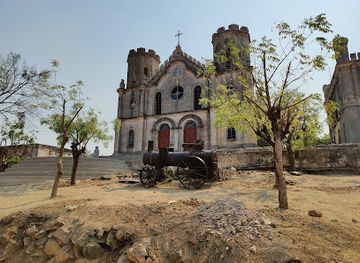
Church
Boroma Church
Experience the rich cultural heritage and serenity of Boroma Church in Tete, Mozambique – a must-visit for every traveler.
-
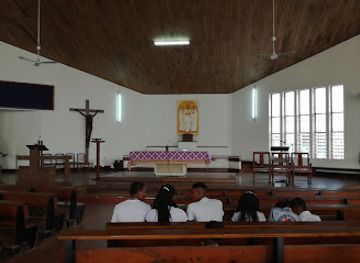
Catholic church
Catedral Sao Joao Baptista
Experience the beauty and tranquility of Catedral Sao Joao Baptista, a historic Catholic church in Tete, Mozambique, rich in art and spiritual significance.
Best landmarks in Tete Province
The Fortaleza de São Tiago in Tete is the province's most important surviving colonial-era landmark, recalling the town's role as a Portuguese strategic and trading base on the Zambezi. Tete Cathedral, associated with the historic Portuguese presence, adds a religious and architectural dimension to the old urban landscape. The Samora Machel Bridge is a defining modern landmark: spanning the Zambezi near Tete, it embodies the province's continuing importance as a transport crossing between central Mozambique and the interior. Cahora Bassa Dam is the region's most imposing engineering landmark, holding back a vast reservoir and linking Tete to one of southern Africa's major hydroelectric projects. Songo's planned setting and infrastructure form part of the same twentieth-century transformation. In the far west, the meeting of the Zambezi and Luangwa near Zumbo is a geographical landmark rather than a monumental structure, significant for its remote borderland position and the way two major rivers shape the surrounding landscape.
-
 Historical landmark
Zona Rural
Explore Zona Rural, a historical landmark in Tete, Mozambique, where rich heritage meets natural beauty, offering an authentic travel experience.
Explore Tete Province on the map
Plan your trip on one map. See where the top cities, national parks and sights are, and book hotels and experiences in a few clicks.
Best hotels in Tete Province
Best restaurants in Tete Province
Dining in Tete Province is centred on Mozambican staples served in informal cafés, hotel restaurants, local eateries and roadside establishments. Rice, maize-based foods, beans, grilled chicken, beef and seasonal vegetables are common, often accompanied by piri-piri or other chilli sauces. Fish from the Zambezi and Cahora Bassa area may appear on menus, although availability depends on location, season and local supply. Tete city has the broadest choice, including Portuguese-influenced dishes, bakery products and meals suited to business and cross-border travellers, while smaller towns offer simpler cooking and fewer dependable options. Markets are useful for fruit and basic provisions, but visitors should choose cooked food carefully and carry supplies for long journeys. Around the reservoir, meals may need to be arranged in advance. Local beer, soft drinks and bottled water are more widely available than specialist wines or imported products, particularly outside the provincial capital.
-
Restaurant
Mario’s Restaurante Bar
Experience authentic Mozambican cuisine at Mario’s Restaurante Bar in Tete – where flavor meets tradition in a vibrant atmosphere.
-
Grill
Restaurante Café Del Rio
Discover the vibrant flavors of Mozambique at Restaurante Café Del Rio, where every meal is an unforgettable experience.
-
Restaurant
Restaurante Sete Estrelas
Experience authentic Mozambican cuisine at Restaurante Sete Estrelas in Tete – where every dish tells a story.
-
Restaurant
Maria Café
Experience the vibrant flavors of Tete at Maria Café – where local ingredients meet culinary creativity.


Best bars in Tete Province
Evening life in Tete Province is modest and concentrated mainly in Tete city, where hotel lounges, cafés, informal bars and restaurants provide places to meet after work or travel. Music and socialising are common features of urban evenings, but the province does not have a large, internationally oriented nightclub circuit. Moatize and other major settlements have local bars and food venues, while communities around Cahora Bassa generally offer a quieter atmosphere shaped by fishing, work schedules and limited infrastructure. In rural districts, plan to finish journeys before dark and do not expect late-opening entertainment, reliable transport or extensive choice. Some hotels may have the most consistent evening facilities for visitors, but opening arrangements can change. Drinking is not necessary to engage with local culture; conversation, food and music are more representative of the region's ordinary evening life.
-
Hotel
VIP Executive Tete
Discover the elegance of VIP Executive Tete, where luxury meets comfort in the heart of Tete, Mozambique.
-
Restaurant
Mario’s Restaurante Bar
Discover the flavors of Mozambique at Mario’s Restaurante Bar, where culinary excellence meets a warm, welcoming atmosphere in Tete.
-
Grill
Restaurante Café Del Rio
Discover Café Del Rio in Tete, where grilled flavors and vibrant drinks meet in a welcoming atmosphere, perfect for every occasion.
-
Restaurant
Habeas Copos
Discover the flavors of Mozambique at Habeas Copos, a delightful restaurant in Tete offering local and international cuisine in a warm atmosphere.


Best nightclubs in Tete Province
Evening life in Tete Province is modest and concentrated mainly in Tete city, where hotel lounges, cafés, informal bars and restaurants provide places to meet after work or travel. Music and socialising are common features of urban evenings, but the province does not have a large, internationally oriented nightclub circuit. Moatize and other major settlements have local bars and food venues, while communities around Cahora Bassa generally offer a quieter atmosphere shaped by fishing, work schedules and limited infrastructure. In rural districts, plan to finish journeys before dark and do not expect late-opening entertainment, reliable transport or extensive choice. Some hotels may have the most consistent evening facilities for visitors, but opening arrangements can change. Drinking is not necessary to engage with local culture; conversation, food and music are more representative of the region's ordinary evening life.
-
Night club
RAFTSTONE
Discover the vibrant nightlife at Raftstone, Tete's premier night club, where music, dance, and a lively atmosphere await.
-
Night club
Bamboo bar
Discover the vibrant nightlife of Tete at Bamboo Bar, where great music and drinks create unforgettable memories.
-
Night club
Francisco minhanga
Discover the vibrant nightlife at Francisco Minhanga, Tete's premier night club, where music, dance, and culture collide for an unforgettable experience.
-
Night club
Unique
Immerse yourself in the vibrant nightlife of Tete at Unique Night Club, where music, dance, and local culture create unforgettable experiences.

Best shops in Tete Province
Shopping in Tete Province is practical, local and strongly connected to markets rather than large-scale retail. Tete city has the widest choice of supermarkets, pharmacies, clothing shops, mobile-phone outlets and small businesses serving residents and travellers. Open markets are useful for fruit, vegetables, household goods and inexpensive clothing, while informal stalls may sell locally made baskets, carved objects and other craft items; quality and provenance vary, so buy respectfully and avoid purchasing anything that appears archaeological or made from protected wildlife materials. Moatize has additional everyday shopping linked to its expanding population and mining economy, but neither town is a major luxury-shopping destination. Visitors travelling to Cahora Bassa or remote districts should purchase food, water, fuel-related essentials and cash before departure. Regional gifts are more likely to be practical crafts, woven items, spices or packaged Mozambican products than a single signature souvenir.
-
Shopping mall
Maputo Shopping Centre
Explore Maputo Shopping Centre, where culture meets commerce in a vibrant atmosphere perfect for every tourist's shopping adventure.
-
Shopping mall
Baía Mall
Experience the vibrant shopping scene at Baía Mall in Maputo: a perfect blend of local culture, diverse dining, and trendy retail.
-
Shopping mall
Marés Shopping
Explore Marés Shopping Mall: A vibrant shopping destination in Maputo offering diverse shops, dining, and entertainment for everyone.
-
Supermarket
Central Market
Discover the Central Market in Maputo - a vibrant hub of local culture, flavors, and unique treasures that define Mozambican life.


Get your free copy of our complete guide to Tete Province, delivered straight to you.
Everything on this page, from attractions and restaurants to essentials and local phrases, in one PDF you can read offline, print or share.
Already have an account? Sign in
Your Tete Province guide is ready.
We'll send it to · Not you? Sign out

Getting your guide ready…
We are putting together a fresh copy of the Tete Province guide. This can take up to a minute.
This can take a few moments. If your browser asks, choose Allow so the download can start. You'll find the guide in your Downloads folder.
Nothing happened? Download it again
Sorry, the guide is taking longer than usual. Please try again in a minute, or get it by email instead.
Tete Province essentials
Currency and Payment
Safety
Emergency Situations
Do's and Don'ts
Local Tips
From Eve
Local phrases worth knowing
You don't need to get them perfect. A few words go a long way, and locals appreciate the effort.
Basics
| English | Local | Say it |
|---|---|---|
| Hello | Olá | [oh-lah] |
| Goodbye | Adeus | [ah-deh-oos] |
| Yes | Sim | [seem] |
| No | Não | [now] |
| Please/You're welcome | Por favor | [poor fah-vor] |
| Thank you | Obrigado | [oh-bree-gah-doo] |
| Excuse me/Sorry | Desculpe | [des-kool-pay] |
| How are you? | Como você está? | [koh-moh voh-seh es-tah] |
| Fine. And you? | Estou bem. E você? | [es-toh eng. eh voh-seh] |
| Do you speak English? | Você fala inglês? | [voh-seh fah-lah een-glez] |
| I don't understand | Eu não entendo | [ay-ooh now en-ten-doo] |
Eating & Drinking
| English | Local | Say it |
|---|---|---|
| I'd like to see the menu, please | Gostaria de ver o menu, por favor | [goh-stah-ree-ah jeh vehr oo meh-noo, poor fah-vor] |
| I don't eat meat | Eu não como carne | [ay-ooh now koh-moo kar-nee] |
| Cheers! | Saúde! | [sah-oo-deh] |
| I would like to pay, please | Gostaria de pagar, por favor | [goh-stah-ree-ah jeh pah-gar, poor fah-vor] |
Emergencies
| English | Local | Say it |
|---|---|---|
| Help! | Ajuda! | [ah-zhoo-dah] |
| Go away! | Vá embora! | [vah em-boh-rah] |
| Call the Police! | Chame a polícia! | [shah-mee ah poh-lee-syah] |
| Call a doctor! | Chame um médico! | [shah-mee oom meh-dee-koh] |
| I'm lost | Estou perdido | [es-toh pehr-jee-doo] |
| I'm ill | Estou doente | [es-toh do-ehn-chee] |
Shopping
| English | Local | Say it |
|---|---|---|
| I'd like to buy... | Gostaria de comprar... | [goh-stah-ree-ah jeh kom-prahr] |
| I'm just looking | Estou apenas olhando | [es-toh ah-peh-nas oh-lhan-doo] |
| How much is it? | Quanto custa? | [kwan-toh koos-tah] |
| That's too expensive | Isso é muito caro | [ee-soh eh mwee-toh kah-roo] |
| Can you lower the price? | Você pode baixar o preço? | [voh-seh poh-jee bye-shar oo pray-soo] |
Time & Numbers
| English | Local | Say it |
|---|---|---|
| What time is it? | Que horas são? | [keh oh-rahz sow] |
| It's one o'clock | É uma hora | [eh oo-mah oh-rah] |
| Half past (10) | Dez e meia | [dez eh may-ah] |
| Morning | Manhã | [mahn-yah] |
| Afternoon | Tarde | [tar-deh] |
| Evening | Noite | [noy-teh] |
| Yesterday | Ontem | [on-tem] |
| Today | Hoje | [oh-zhee] |
| Tomorrow | Amanhã | [ah-mahn-yah] |
| 1 | Um | [oom] |
| 2 | Dois | [doyz] |
| 3 | Três | [trez] |
| 4 | Quatro | [kwah-tro] |
| 5 | Cinco | [seen-koh] |
| 6 | Seis | [sayz] |
| 7 | Sete | [seh-chee] |
| 8 | Oito | [oy-toh] |
| 9 | Nove | [noh-vee] |
| 10 | Dez | [dez] |
Transport & Directions
| English | Local | Say it |
|---|---|---|
| Where's a/the...? | Onde está um/a...? | [on-deh es-tah oom/ah] |
| What's the address? | Qual é o endereço? | [kwahl eh oo en-deh-reh-soo] |
| Can you show me (on the map)? | Você pode me mostrar (no mapa)? | [voh-seh poh-jee mee mos-trar (noh mah-pah)] |
| When's the next (bus)? | Quando é o próximo (ônibus)? | [kwan-doo eh oo proh-see-mo (oh-nee-boos)] |
| A ticket (to ....) | Um bilhete (para ....) | [oom bee-lyeh-chee (pah-rah)] |
History of Tete Province
Early Zambezi societies and long-distance exchange
The Zambezi valley has supported farming, fishing, ironworking and river-based exchange for centuries. Communities in the wider region were connected to inland and Indian Ocean trading networks through movements of goods, people and ideas. The valley's ecology encouraged settlement near water and fertile floodplains, while the surrounding plateaux and woodland supported hunting and seasonal agriculture. Archaeological evidence in the broader Zambezi region points to long occupation before European intervention, although many local historical traditions remain preserved through oral transmission rather than monumental sites.
Portuguese penetration of the Zambezi valley
Portuguese traders and military agents reached the middle Zambezi during the sixteenth century, seeking gold, ivory and control of routes into the interior. Tete became one of their principal bases and developed as a strategic river settlement. Portuguese influence was never simply administrative: it depended on alliances, coercion, African intermediaries and control of commerce. The fortifications and religious buildings associated with Tete recall this period, when the town formed part of a chain of Portuguese positions along the Zambezi rather than an isolated colonial outpost.
Prazos and nineteenth-century power
For much of the early modern period, Portuguese authority in the Zambezi valley was exercised through prazo estates, large concessions often controlled by Afro-Portuguese families and armed retainers. These estates combined agriculture, trade and political power, but their influence fluctuated and depended heavily on local alliances. In the nineteenth century, changing commercial patterns, warfare and the expansion of European colonial control altered the balance of power. Tete and the surrounding valley consequently became sites of negotiation between local rulers, concession holders and the increasingly interventionist Portuguese state.
Colonial administration and river transport
During the late nineteenth and twentieth centuries, Portugal tightened territorial administration in Tete and linked the province more closely to colonial transport and commercial systems. River navigation, roads and trading posts supported the movement of agricultural products and imported goods, while missions and administrative settlements extended state and religious institutions into rural areas. Colonial development remained uneven, and the benefits of infrastructure were distributed unequally. The resulting pattern of towns, roads and river crossings still influences travel and settlement across the province.
The independence struggle and civil war
The liberation war against Portuguese rule reached central Mozambique in the 1960s and early 1970s, contributing to the end of colonial rule in 1975. After independence, Mozambique endured a prolonged civil war in which transport routes and rural communities across the centre of the country were affected. Tete's strategic position, remote districts and major infrastructure gave it particular importance, while insecurity disrupted movement and economic life. The post-war period brought reconstruction, renewed road connections and gradual expansion of tourism and commercial activity.
Cahora Bassa and the transformation of the Zambezi
Construction of Cahora Bassa Dam began under Portuguese rule in the late 1960s and was completed after independence. The project created one of Africa's largest artificial lakes and a major hydroelectric system, radically changing the river landscape and establishing Songo as an important planned settlement. The dam also displaced communities and altered fisheries, transport and local economies around the reservoir. Today, Cahora Bassa remains both an engineering landmark and a reminder that large infrastructure projects reshape human as well as physical geography.
Coal, infrastructure and contemporary Tete
The Moatize coalfield brought renewed international attention and substantial investment to Tete Province during the late twentieth and early twenty-first centuries. Mining stimulated roads, rail improvements, housing and service-sector growth, while also creating environmental pressures and requiring the relocation of some communities. Coal prices and changing global energy priorities have made the sector economically volatile. Tete's present-day identity therefore reflects a combination of mining, agriculture, cross-border commerce, hydroelectric power and the continuing importance of the Zambezi.
Tete Province in Photos
Browse through our photo collection highlighting the charm and character of the destination.
Neighbouring regions of Tete Province
The closest regions to Tete Province, if you have time for more than one.
-

-

-

-

-


Swipe for more regions
Explore more

Explore more of Mozambique
Discover Mozambique: Pristine beaches, rich cultural heritage, and vibrant wildlife await in this stunning African destination.
Explore Mozambique