

Free Gooi Travel Guide & Mobile App
Explore Gooi with free travel guides. Discover regional history, expert tips, proposed trips, and audio guides on web or mobile app.


Explore Gooi in the Netherlands for heathlands, forest cycling, Dudok architecture, media culture, art villages and Naarden’s historic fortress.
Read more about Gooi
When is the best time to visit Gooi?
Best: June–August · 21–23°C| Month | High (°C) | Rainfall (mm) |
|---|---|---|
| January | 6 | 63 |
| February | 7 | 46 |
| March | 11 | 51 |
| April | 15 | 46 |
| May | 19 | 52 |
| June (best) | 21 | 68 |
| July (best) | 23 | 78 |
| August (best) | 23 | 73 |
| September | 20 | 71 |
| October | 16 | 72 |
| November | 11 | 70 |
| December | 7 | 72 |
Getting to and around Gooi
How to get there
Transportation
Top city travel guides in Gooi
The cities of Gooi, and the easiest places to base yourself.

Swipe for more cities
Best attractions in Gooi
The Gooi’s attractions combine accessible nature with a concentration of architecture, art and media heritage. The Goois Nature Reserve is the region’s principal outdoor asset, with heath, woodland, sandy tracks and viewpoints suited to walking and cycling. In Hilversum, the Netherlands Institute for Sound and Vision explores the country’s broadcasting and audiovisual history, while the town’s modernist architecture offers a rewarding urban counterpart to its green surroundings. Naarden Vesting provides an atmospheric excursion through bastions, gates, moats and historic streets. Laren’s Singer Laren brings together Dutch and international art, a sculpture garden and a strong connection with the village’s artistic past. Blaricum is better suited to unhurried village exploration, galleries and nearby country paths, while Huizen adds traces of the Gooi’s former fishing and trading character. Across the region, prehistoric burial mounds, estate landscapes, village commons and marked nature routes reveal how settlement and environment have developed together. Families may find the media and museum attractions most accessible, whereas walkers, cyclists and architecture enthusiasts will find the greatest variety outdoors and in Hilversum’s residential districts.
-
Tourist attraction
Castle De Haar
Discover the majestic Castle De Haar: an exquisite blend of history, architecture, and lush gardens, perfect for tourists seeking a fairy-tale experience.
-
Castle
Muiderslot
Discover the enchanting Muiderslot Castle, a historic gem with stunning architecture and rich cultural heritage in the heart of the Netherlands.
-
Tourist attraction
Singer Laren
Discover the artistic allure of Singer Laren, a cultural hub blending art, nature, and community in the heart of Laren, Netherlands.
-
Castle
Soestdijk Palace
Explore the grandeur of Soestdijk Palace, a historic royal residence in Baarn, surrounded by exquisite gardens and rich Dutch heritage.


Best landmarks in Gooi
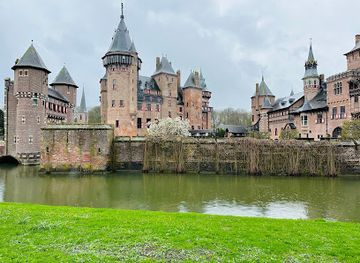
Naarden Vesting is the Gooi’s most immediately recognisable historic landmark: a star-shaped fortified town whose bastions, moats and gates demonstrate the precision of Dutch military planning. In Hilversum, Dudok’s Town Hall is a major landmark of twentieth-century architecture, distinguished by its brick geometry, tower and carefully integrated gardens. The Netherlands Institute for Sound and Vision is another notable building, its colourful, translucent façade expressing the region’s connection with broadcasting and audiovisual culture. The Sint-Vituskerk, with its prominent tower, forms an important element of Hilversum’s skyline and religious heritage. Laren’s village centre and Brink retain the spatial character of an older settlement, while Blaricum’s lanes and traditional buildings preserve a more rural architectural impression. Beyond the towns, the open heathlands and wooded ridges of the Goois Nature Reserve function as geographical landmarks, marking the elevated sandy landscape that distinguishes the Gooi from the low-lying polders around it. Prehistoric burial mounds within the wider nature landscape add archaeological depth to these otherwise deceptively quiet surroundings.
-
Castle
Muiderslot
Explore the enchanting Muiderslot Castle, a historical gem in the Netherlands, offering fascinating exhibits and picturesque gardens for all ages.
-
Restaurant
Foodhall MOUT
Discover the vibrant flavors of Hilversum at Foodhall MOUT, where culinary delights and a lively atmosphere unite for an unforgettable dining experience.
-
Art museum
Singer Laren
Explore the artistic treasures of Singer Laren, an art museum that combines culture, nature, and culinary delights in one enchanting destination.
-
Castle
Castle Groeneveld
Explore Castle Groeneveld, a historic castle in Baarn with beautiful gardens and scenic hiking trails, perfect for a peaceful escape into Dutch heritage.


Explore Gooi on the map
Plan your trip on one map. See where the top cities, national parks and sights are, and book hotels and experiences in a few clicks.
Best hotels in Gooi
Best restaurants in Gooi
Dining in the Gooi reflects its affluent residential towns, traditional villages and proximity to the wider food culture of the Netherlands rather than a single sharply defined regional cuisine. Hilversum, Laren and Bussum offer the broadest choice of cafés, contemporary restaurants and informal international dining, while Naarden and Blaricum have restaurants and pubs suited to visitors exploring historic centres or cycling routes. Menus commonly draw on Dutch staples such as seasonal vegetables, bread, cheese, fish and meat, alongside modern European cooking. In Huizen, the former fishing identity provides a useful context for seafood, although the town’s present-day dining is varied rather than exclusively maritime. Café terraces and village eateries are practical stops during a day outdoors, and farmers’ or local-produce markets can be a good way to find bread, cheese, fruit and regional delicacies when operating. Reservations are sensible for popular restaurants at weekends, while opening patterns in smaller villages can be more limited than in Hilversum.
-
Restaurant
Foodhall MOUT
Discover diverse culinary experiences at Foodhall MOUT in Hilversum—where every meal becomes a celebration.
-
Restaurant
Café Restaurant de Eendracht Blaricum
Discover Café Restaurant de Eendracht Blaricum: where traditional Dutch flavors meet modern culinary delights in a picturesque setting.
-
Restaurant
Restaurant Eemlust
Experience exquisite dining at Restaurant Eemlust in Baarn - where local ingredients meet culinary creativity in an inviting atmosphere.
-
Restaurant
Café Moeke
Discover the warmth of Dutch hospitality at Café Moeke in Hilversum – where delicious food meets cozy ambiance.


Best bars in Gooi
Evening life in the Gooi is concentrated in Hilversum, Bussum and the larger village centres rather than spread across a single nightlife district. Hilversum has the widest selection of pubs, cafés, restaurants, live-music settings and late-evening venues, reflecting its student, media and professional population. Bussum offers a compact centre with bars and restaurants, while Laren and Blaricum favour stylish cafés, wine bars, dining rooms and traditional brown cafés over a large club scene. Naarden’s historic setting is more suited to an evening meal or drink in an atmospheric inn than to late-night entertainment. Visitors can also find Dutch beer and contemporary craft offerings, but nightlife is generally relaxed and locally oriented. Check current arrangements before planning a late night, since venues outside Hilversum may close earlier and public transport becomes less frequent in rural areas.
-
Bar
Foodhall MOUT
Discover the vibrant culinary scene at Foodhall MOUT in Hilversum, where flavors meet community in a delightful dining experience.
-
Bar
Café Moeke Spijkstra
Discover the charm of Café Moeke Spijkstra in Blaricum, where delightful cuisine meets a cozy atmosphere, perfect for every traveler.
-
Bar
Brasserie Meddens
Experience the flavors of Hilversum at Brasserie Meddens, where seafood meets casual dining in a vibrant atmosphere.
-
Restaurant
't Bonte Paard
Discover the charm of 't Bonte Paard, a delightful café and restaurant in Laren, offering exquisite Dutch cuisine and a welcoming atmosphere.


Best nightclubs in Gooi
Evening life in the Gooi is concentrated in Hilversum, Bussum and the larger village centres rather than spread across a single nightlife district. Hilversum has the widest selection of pubs, cafés, restaurants, live-music settings and late-evening venues, reflecting its student, media and professional population. Bussum offers a compact centre with bars and restaurants, while Laren and Blaricum favour stylish cafés, wine bars, dining rooms and traditional brown cafés over a large club scene. Naarden’s historic setting is more suited to an evening meal or drink in an atmospheric inn than to late-night entertainment. Visitors can also find Dutch beer and contemporary craft offerings, but nightlife is generally relaxed and locally oriented. Check current arrangements before planning a late night, since venues outside Hilversum may close earlier and public transport becomes less frequent in rural areas.
-
Pub
NANNES
Discover the charm of Nannes, a cozy gastropub in Hilversum offering delicious food and a vibrant atmosphere for travelers.
-
Bar
SHOTS Hilversum
Discover the lively nightlife at SHOTS Hilversum, a vibrant bar offering an extensive drink menu and a perfect atmosphere for socializing.
-
Wedding venue
The Spot | Trouwlocatie & Zaalverhuur
Discover The Spot in Bussum, a vibrant wedding venue and multifunctional space for dining, nightlife, and unforgettable events.
-
Disco club
Night Bar G-spot
Discover the vibrant nightlife at Night Bar G-spot in Hilversum, where dance, music, and fun await in a lively disco atmosphere.


Best shops in Gooi
Shopping in the Gooi is centred on the town centres rather than on a single regional retail quarter. Hilversum provides the broadest everyday choice, with high-street shops, department-style retailers, cafés and independent businesses around its central streets. Bussum has a useful local shopping centre atmosphere, while Laren and Blaricum are known for smaller-scale boutiques, galleries, interiors shops, antiques and design-led retail that reflects their prosperous village character. Naarden’s fortress streets offer specialist shops, galleries and places selling gifts connected with art, heritage and local tourism, although stock and opening patterns vary. Food halls are not a defining regional tradition, but cheese, Dutch confectionery, bakery goods and locally sourced produce can often be found in delicatessens, markets and independent food shops. Outdoor markets take place according to local schedules, so check dates before making a special journey. The most appropriate souvenirs are often art prints, design objects, books, Dutch food products or small crafts rather than mass-produced regional merchandise.
-
Shopping mall
Almere Centrum
Explore Almere Centrum, the ultimate shopping destination in Almere with diverse shops, dining options, and vibrant entertainment.
-
Shopping mall
Hilvertshof
Explore the vibrant Hilvertshof shopping mall in Hilversum, featuring fashion, dining, and entertainment for all ages.
-
Clothing store
Primark
Discover fashionable yet affordable clothing at Primark Hilversum, a shopper's paradise in the heart of the Netherlands.
-
Kitchen supply store
Kookwinkel Oldenhof
Explore Kookwinkel Oldenhof in Hilversum for a unique selection of kitchen supplies and appliances that delight culinary enthusiasts.


Get your free copy of our complete guide to Gooi, delivered straight to you.
Everything on this page, from attractions and restaurants to essentials and local phrases, in one PDF you can read offline, print or share.
Already have an account? Sign in
Your Gooi guide is ready.
We'll send it to · Not you? Sign out

Getting your guide ready…
We are putting together a fresh copy of the Gooi guide. This can take up to a minute.
This can take a few moments. If your browser asks, choose Allow so the download can start. You'll find the guide in your Downloads folder.
Nothing happened? Download it again
Sorry, the guide is taking longer than usual. Please try again in a minute, or get it by email instead.
Gooi essentials
Currency and Payment
Safety
Emergency Situations
Do's and Don'ts
Local Tips
From Eve
Local phrases worth knowing
You don't need to get them perfect. A few words go a long way, and locals appreciate the effort.
Basics
| English | Local | Say it |
|---|---|---|
| Hello | Hallo | [Hah-loh] |
| Goodbye | Tot ziens | [Tot zeens] |
| Yes | Ja | [Yah] |
| No | Nee | [Nay] |
| Please/You're welcome | Alsjeblieft | [Al-she-bleeft] |
| Thank you | Dank je | [Dahnk yuh] |
| Excuse me/Sorry | Sorry | [Sor-ree] |
| How are you? | Hoe gaat het? | [Hoo ghaht het] |
| Fine. And you? | Goed. En jij? | [Hoot. En yay?] |
| Do you speak English? | Spreek je Engels? | [Sprayk yuh Eng-els] |
| I don't understand | Ik begrijp het niet | [Ik beh-grijp het neet] |
Eating & Drinking
| English | Local | Say it |
|---|---|---|
| I'd like to see the menu, please | Ik zou graag de menukaart zien, alsjeblieft | [Ik zouw grahkh de meh-nu-kaart zeen, al-she-bleeft] |
| I don't eat meat | Ik eet geen vlees | [Ik eet khayn vlays] |
| Cheers! | Proost! | [Prohst] |
| I would like to pay, please | Ik zou graag willen betalen, alsjeblieft | [Ik zouw grahkh willen beh-tah-len, al-she-bleeft] |
Emergencies
| English | Local | Say it |
|---|---|---|
| Help! | Help! | [Help] |
| Go away! | Ga weg! | [Gah vek] |
| Call the Police! | Bel de politie! | [Bel de po-lee-tsee] |
| Call a doctor! | Bel een dokter! | [Bel een dok-ter] |
| I'm lost | Ik ben verdwaald | [Ik ben fer-dwaald] |
| I'm ill | Ik ben ziek | [Ik ben zeek] |
Shopping
| English | Local | Say it |
|---|---|---|
| I'd like to buy... | Ik zou graag ... willen kopen | [Ik zouw grahkh ... willen koh-pen] |
| I'm just looking | Ik kijk gewoon rond | [Ik kike ghe-woon rond] |
| How much is it? | Hoeveel kost het? | [Hoo-vayl kost het] |
| That's too expensive | Dat is te duur | [Dat is tuh duur] |
| Can you lower the price? | Kunt u de prijs verlagen? | [Kunt u de prys ver-lah-ghen] |
Time & Numbers
| English | Local | Say it |
|---|---|---|
| What time is it? | Hoe laat is het? | [Hoo laht is het] |
| It's one o'clock | Het is één uur | [Het is een oor] |
| Half past (10) | Half tien | [Half teen] |
| Morning | Ochtend | [Okh-tend] |
| Afternoon | Middag | [Mih-dahg] |
| Evening | Avond | [Ah-vond] |
| Yesterday | Gisteren | [Khis-te-ren] |
| Today | Vandaag | [Vahn-dahkh] |
| Tomorrow | Morgen | [Mor-ghen] |
| 1 | 1 | [Een] |
| 2 | 2 | [Twee] |
| 3 | 3 | [Drie] |
| 4 | 4 | [Vier] |
| 5 | 5 | [Vijf] |
| 6 | 6 | [Zes] |
| 7 | 7 | [Zeven] |
| 8 | 8 | [Acht] |
| 9 | 9 | [Negen] |
| 10 | 10 | [Tien] |
Transport & Directions
| English | Local | Say it |
|---|---|---|
| Where's a/the...? | Waar is een/de...? | [Var is een/de...?] |
| What's the address? | Wat is het adres? | [Vaht is het ah-dres?] |
| Can you show me (on the map)? | Kun je me (op de kaart) laten zien? | [Kun yuh meh (op de kaart) lah-ten zeen?] |
| When's the next (bus)? | Wanneer komt de volgende (bus)? | [Vah-neer komt de vol-ghen-de (bus)?] |
| A ticket (to ....) | Een kaartje (naar ....) | [Een kar-tje (naahr ....)] |
History of Gooi
Prehistoric burial mounds and the sandy ridge
The Gooi’s elevated sandy ground attracted settlement from prehistoric times, when communities used the ridge above the wetter surrounding lowlands. Burial mounds, or tumuli, survive in and around the region’s nature areas and provide evidence of funerary practices extending back thousands of years. The contrast between dry heath and forest on the ridge and the damp meadows beyond it has shaped human use of the landscape for centuries. Later settlement patterns, including shared commons and village fields, developed partly from these underlying environmental differences.
Medieval villages and the Gooi commons
During the Middle Ages, settlements such as Hilversum, Laren, Blaricum and Huizen grew within a landscape of arable plots, pasture and woodland. Communities made collective use of the meenten, or common lands, while farms were concentrated in village centres and along older routes. Naarden developed as a fortified settlement on the western edge of the region, benefiting from its strategic position between the Vecht area and the routes towards the eastern Netherlands. The traditional village structure remains visible in lanes, greens, farm buildings and irregular street plans.
Naarden’s fortifications and the Dutch Republic
Naarden was repeatedly shaped by military strategy. Its position made it part of the defensive system protecting the approaches to Holland, and the town was rebuilt with the distinctive bastions, moats and geometric form associated with Dutch fortress design. The surviving Naarden Vesting reflects successive improvements, particularly during the seventeenth century and later adjustments to changing artillery. The fortifications are not merely decorative remains: they show how water management, urban planning and military engineering operated together in the Dutch Republic.
Agriculture, textile work and village economies
Before the arrival of modern commuter infrastructure, Gooi communities combined small-scale agriculture, sheep grazing, woodland use and local crafts. Hilversum developed a notable textile industry, including wool and weaving, while other villages retained farming and trading functions. The region’s heaths were maintained partly through grazing and the cutting of sods used to enrich arable soils. Industrialisation changed these practices, but the open heath, village commons and surviving farm landscapes still reveal the long relationship between Gooi prosperity and its sandy environment.
Railways, artists and the rise of the villa landscape
Rail connections in the nineteenth century linked the Gooi more closely with Amsterdam and other Dutch cities. Improved access encouraged urban residents, artists and affluent families to settle in or visit the region, attracted by its healthier reputation, open landscapes and relatively accessible villages. Laren and Blaricum became particularly associated with painters and writers, while villas and landscaped estates spread around several settlements. This period helped create the Gooi’s enduring combination of rural imagery, cultural activity and prosperous residential districts.
Modernist architecture and Hilversum’s civic identity
Hilversum’s strongest architectural transformation took place in the twentieth century under the influence of Willem Marinus Dudok, who served as municipal architect and later city architect. His Town Hall, schools and other public buildings used clear geometric forms, carefully composed brickwork and landscaped settings. The town also contains work associated with the Amsterdam School and Nieuwe Bouwen. Together these buildings made Hilversum an important destination for visitors interested in modern Dutch architecture and demonstrate how municipal planning shaped a rapidly expanding regional centre.
Broadcasting and the national media landscape
From the early twentieth century onwards, Hilversum became the Netherlands’ principal broadcasting centre. Radio studios, television production and related technical and creative industries created a distinctive modern identity that complemented, rather than replaced, the region’s older village culture. The Dutch Media Park and the Netherlands Institute for Sound and Vision reflect this continuing role. Broadcasting also influenced the national profile of Hilversum, making the town familiar far beyond the Gooi and bringing successive generations of journalists, performers, engineers and production workers to the region.
Gooi in Photos
Browse through our photo collection highlighting the charm and character of the destination.
Neighbouring regions of Gooi
The closest regions to Gooi, if you have time for more than one.
-

-
-

-

-


Swipe for more regions
Explore more

Explore more of Netherlands
Discover the Netherlands: A blend of historic charm, artistic treasures, and scenic landscapes, perfect for an enriching travel experience.
Explore Netherlands