

Free Flevoland Travel Guide & Mobile App
Explore Flevoland with free travel guides. Discover regional history, expert tips, proposed trips, and audio guides on web or mobile app.


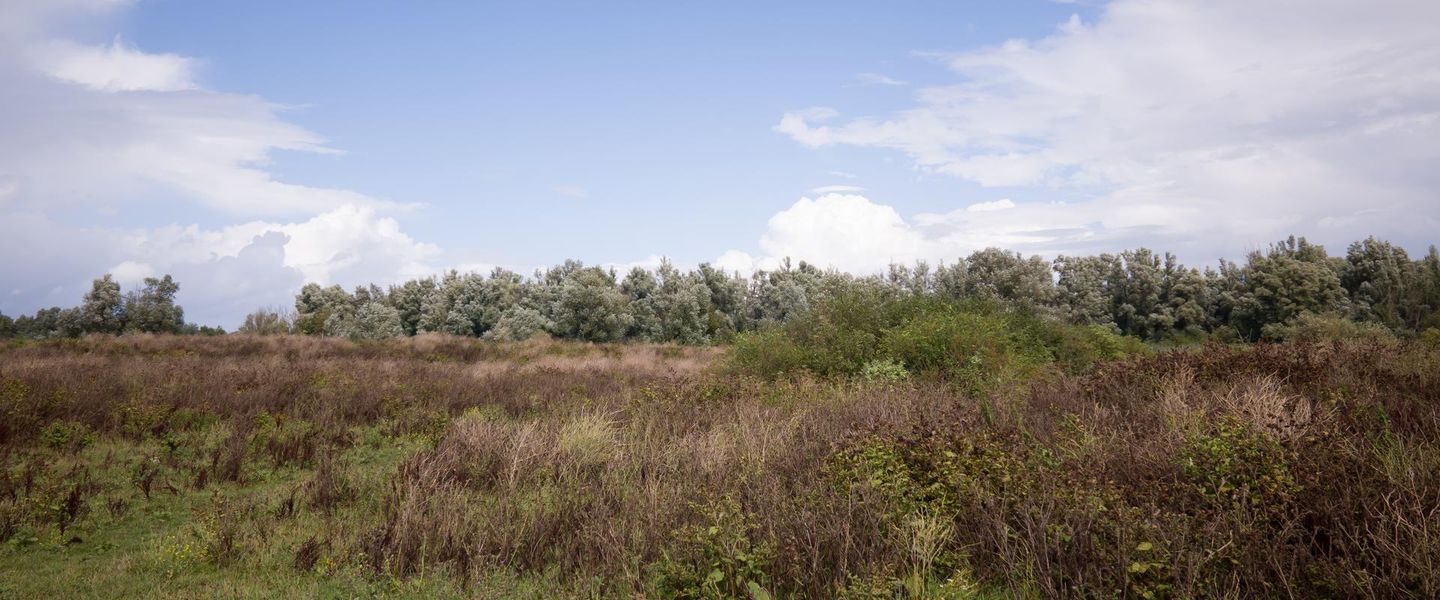


Explore Flevoland’s reclaimed landscapes, wetlands, modern cities, tulip fields, maritime heritage and cycle-friendly shores in the Netherlands.
Read more about Flevoland
When is the best time to visit Flevoland?
Best: June–August · 20–22°C| Month | High (°C) | Rainfall (mm) |
|---|---|---|
| January | 5 | 55 |
| February | 5 | 45 |
| March | 9 | 50 |
| April | 14 | 40 |
| May | 18 | 55 |
| June (best) | 20 | 70 |
| July (best) | 22 | 75 |
| August (best) | 21 | 70 |
| September | 18 | 65 |
| October | 14 | 60 |
| November | 9 | 65 |
| December | 6 | 70 |
Getting to and around Flevoland
How to get there
Transportation
Top city travel guides in Flevoland
The cities of Flevoland, and the easiest places to base yourself.
-

-

-

-

-


Swipe for more cities
Destinations in Flevoland
Resorts, valleys and scenic spots worth a trip of their own.
-
-

-

-

-


Swipe for more destinations
Best attractions in Flevoland
Flevoland’s attractions are inseparable from the story of how the province was made. In Lelystad, Nieuw Land Museum interprets the Zuiderzee Works, reclamation and the lives of people who settled the polders, while Batavialand explores maritime history and shipbuilding traditions associated with the former inland sea. Schokland offers a different kind of historical experience, combining archaeological remains, a former church and museum buildings with an open landscape that was once surrounded by water. The Oostvaardersplassen is the province’s best-known nature area, with wetlands, reedbeds, birdwatching points and walking routes, although access arrangements can vary by season and location. Natuurpark Lelystad provides encounters with European wildlife in a managed setting, and Horsterwold near Zeewolde offers forest walks, cycling and quiet water edges. In spring, the Noordoostpolder’s tulip fields and horticultural landscape create a seasonal attraction best explored from designated routes. Almere adds modern architecture, waterfront recreation and urban parks, while the lakes around the province support sailing, canoeing, angling and beaches suited to warmer weather.
-
Concert hall
The Concertgebouw
Experience the enchanting acoustics and stunning architecture of The Concertgebouw, Amsterdam's premier concert hall for unforgettable musical performances.
-
Tourist attraction
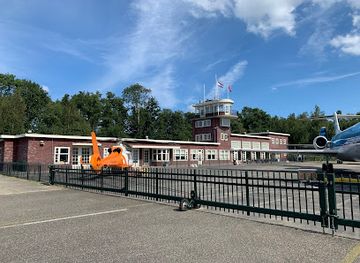
Luchtvaartmuseum Aviodrome
Explore the skies at Luchtvaartmuseum Aviodrome, a fascinating aviation museum in Lelystad, showcasing historic aircraft and interactive exhibits.
-
Science museum
Micropia
Explore Micropia in Amsterdam, the world's first museum dedicated to microorganisms, and uncover the hidden wonders of the microbial world.
-
 Cannabis store
Abraxas
Discover Abraxas in Amsterdam: where exceptional coffee meets the vibrant cannabis culture, perfect for tourists and locals alike.

Best landmarks in Flevoland
Schokland is Flevoland’s most important historic landmark: once an island in the Zuiderzee, it now stands amid reclaimed fields, with its church, museum, burial grounds and archaeological traces marking a community shaped by erosion and flooding. The former island of Urk, with its historic streets, harbour and elevated waterfront setting, preserves a contrasting maritime landscape that predates the province itself. The Afsluitdijk lies outside Flevoland, but the provincial dykes and the Oostvaardersdijk reveal the same national engineering tradition that made the land possible; they are working flood defences rather than ordinary scenic roads, so visitors should use designated access points. In Lelystad, the replica ship and maritime installations associated with Batavialand provide a visual link to Dutch navigation and the Zuiderzee past. The modern skyline and planned public spaces of Almere form another kind of landmark, expressing the city’s late twentieth-century origins. Across the province, straight drainage canals, tree-lined polder roads, pumping infrastructure and broad engineered horizons collectively form Flevoland’s defining geographical monument.
-
Tourist attraction
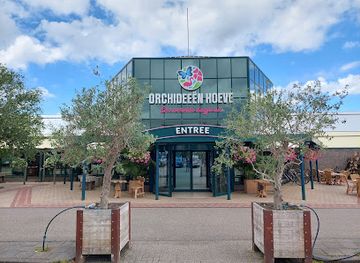
Pantropica (voorheen de Orchideeën Hoeve)
Explore Pantropica in Luttelgeest, a stunning blend of botanical gardens and animal park, perfect for nature lovers and families alike.
-
Zoo
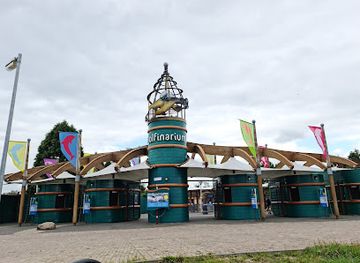
Dolfinarium
Experience the magic of marine life at Dolfinarium, where captivating dolphin shows and engaging exhibits await in the heart of Harderwijk.
-
History museum
Nationaal Militair Museum
Explore the vast military history of the Netherlands at the Nationaal Militair Museum, a must-visit for history buffs and families in Soest.
-
Museum
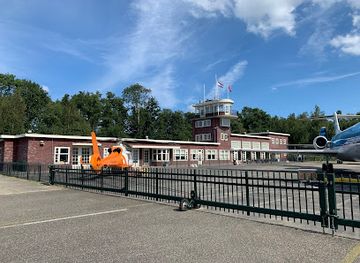
Luchtvaartmuseum Aviodrome
Explore the skies at Luchtvaartmuseum Aviodrome, where aviation history comes alive through interactive exhibits and thrilling attractions.

Explore Flevoland on the map
Plan your trip on one map. See where the top cities, national parks and sights are, and book hotels and experiences in a few clicks.
Best hotels in Flevoland
Best restaurants in Flevoland
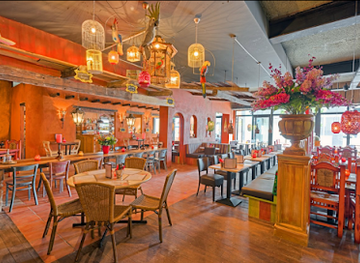
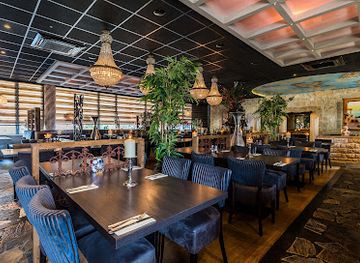
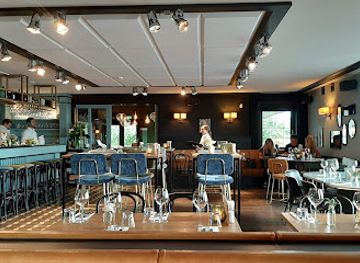
Dining in Flevoland reflects both its planned agricultural landscape and its older maritime connections. Restaurants and cafés in Almere and Lelystad offer contemporary Dutch cooking alongside international food, while market towns and villages tend towards cafés, bakeries, family restaurants and traditional pubs. The province’s fertile polder soils support potatoes, vegetables, fruit, flowers and arable crops, and farm shops or seasonal producers provide opportunities to buy local goods directly. Around Urk, fish remains an important part of the area’s culinary identity, with seafood available through fish shops and restaurants, though the broader Dutch tradition of fried fish and herring is national rather than exclusive to Flevoland. In the Noordoostpolder, orchards and farms contribute fruit, juices and other seasonal produce. Visitors will also find Dutch staples such as bread, cheese, pancakes and pastries, as well as modern menus using regional ingredients. Dining options become less frequent in remote rural areas, so cyclists and drivers should check where cafés or shops are located before setting out.
-
Cookies
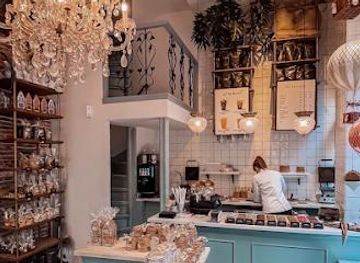
van Wonderen Stroopwafels
Amsterdam's go-to for fresh, customizable stroopwafels on bustling Kalverstraat—family-crafted since 1907, with colorful toppings that blend Dutch tradition and modern indulgence.
-
Mexican
Rosita's Mexicaans Restaurant.
Experience authentic Mexican cuisine in Almere at Rosita's Mexicaans Restaurant – where flavor meets tradition!
-
Greek
Pallas Athene
Experience authentic Greek cuisine at Pallas Athene in Almere—where every meal is a journey through Mediterranean flavors.
-
Restaurant
Loetje Almere Noorderplassen
Experience culinary delights at Loetje Almere Noorderplassen with stunning lakeside views and exceptional service.
Best bars in Flevoland
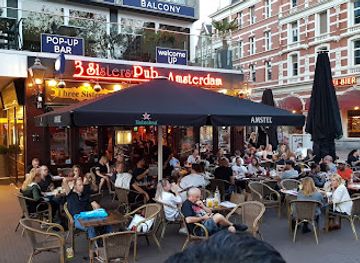
Flevoland’s evening life is concentrated in Almere, Lelystad and the larger towns rather than spread evenly across the countryside. Almere has the province’s broadest choice of bars, cafés, restaurants and live entertainment, particularly around the city centre and waterfront, while Lelystad offers a smaller scene shaped by restaurants, traditional pubs, cultural venues and occasional live music. The provincial nightlife is generally more relaxed than that of nearby Amsterdam, with evenings often beginning over dinner or drinks rather than in large clubs. In smaller towns and villages, historic-style pubs, cafés and community venues are more typical than dedicated nightclubs. Urk has restaurants and cafés, but visitors should be aware that local religious traditions influence the rhythm of the week and the character of public life. Breweries, terraces and lakeside venues may be particularly appealing in warmer months, while opening patterns and programming can change, so current arrangements should be checked locally.
-
Bar
Xtracold Icebar Amsterdam
Experience the thrill of sipping cocktails in an ice bar at Xtracold Icebar Amsterdam, a unique attraction in the heart of the city.
-
Bar
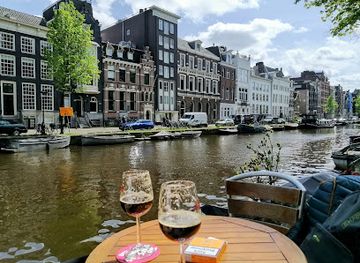
Proeflokaal Arendsnest
Discover the best of Dutch beer culture at Proeflokaal Arendsnest, where local brews and warm hospitality meet along the iconic canals of Amsterdam.
-
Bar
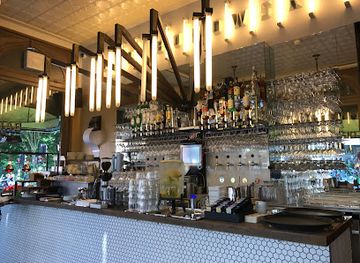
Bar Bukowski
Discover Bar Bukowski: A vibrant bar and brunch spot in Amsterdam-Oost, perfect for cocktails, delicious brunch, and a lively atmosphere.
-
Bar
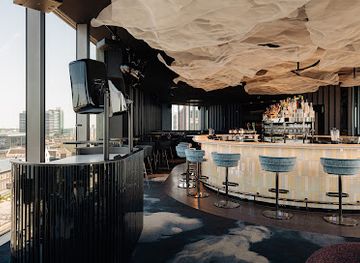
LuminAir
Experience LuminAir, where luxury meets breathtaking views and innovative cocktails in the heart of Amsterdam.
Best nightclubs in Flevoland
Flevoland’s evening life is concentrated in Almere, Lelystad and the larger towns rather than spread evenly across the countryside. Almere has the province’s broadest choice of bars, cafés, restaurants and live entertainment, particularly around the city centre and waterfront, while Lelystad offers a smaller scene shaped by restaurants, traditional pubs, cultural venues and occasional live music. The provincial nightlife is generally more relaxed than that of nearby Amsterdam, with evenings often beginning over dinner or drinks rather than in large clubs. In smaller towns and villages, historic-style pubs, cafés and community venues are more typical than dedicated nightclubs. Urk has restaurants and cafés, but visitors should be aware that local religious traditions influence the rhythm of the week and the character of public life. Breweries, terraces and lakeside venues may be particularly appealing in warmer months, while opening patterns and programming can change, so current arrangements should be checked locally.
-
Night club
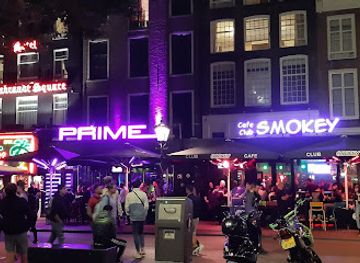
Club Prime
Unleash your night at Club Prime, Amsterdam's vibrant night club with electrifying music, exquisite cocktails, and unforgettable experiences.
-
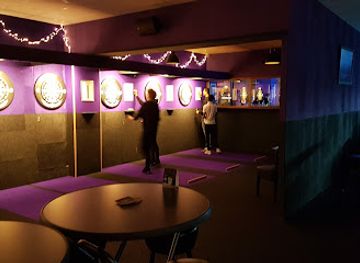
Pool hall
The Wizards
Experience the vibrant atmosphere of The Wizards in Lelystad, where billiards meets socializing in a cozy lounge and bar setting.
-
Disco club
Club Organza
Discover the pulsating energy of Club Organza, Breukelen's top disco club, where unforgettable nights unfold in vibrant surroundings.
-
Disco club
Night Bar G-spot
Discover the vibrant nightlife at G-Spot Night Bar in Hilversum, where music meets energy for an unforgettable night out.


Best shops in Flevoland
Shopping in Flevoland is centred on the modern retail areas of Almere and Lelystad, where visitors find mainstream shops, department-style retail, cafés and independent businesses alongside everyday services. Almere’s city centre has the larger urban selection, while Lelystad combines central shopping with access to museums and waterfront areas. Emmeloord is the practical retail hub of Noordoostpolder, serving surrounding villages with shops, markets and food businesses. For more regional purchases, look to farm shops, orchard outlets and seasonal producers for fruit, juices, vegetables, flowers and other polder goods. The Noordoostpolder’s spring tulip landscape also supports flower-related retail, although visitors should buy from established outlets rather than taking flowers from fields. Urk is a good place to look for fish products and maritime-themed items, while museums and heritage sites may sell books, maps and locally relevant crafts. Flevoland is not primarily a traditional craft-shopping destination, but its strongest souvenirs are connected to reclaimed-land history, Dutch water management, horticulture and the former Zuiderzee.
-
Outlet mall
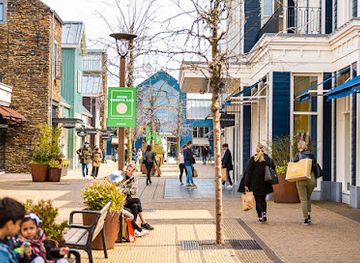
Batavia Stad Fashion Outlet
Discover unbeatable deals on international fashion brands at Batavia Stad Fashion Outlet in Lelystad, the ultimate shopping destination for savvy travelers.
-
Shopping mall
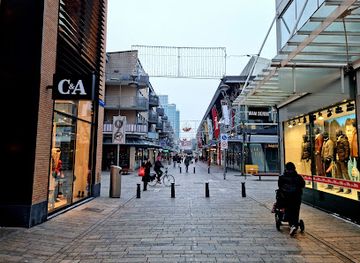
Almere Centrum
Explore Almere Centrum, a bustling shopping mall in Almere, Netherlands, featuring diverse stores, dining options, and vibrant local culture.
-
Clothing store
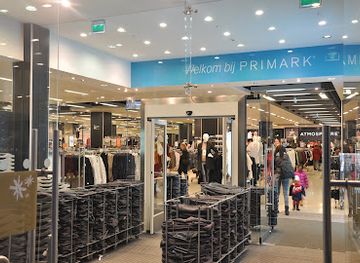
Primark
Explore Primark in Almere for budget-friendly fashion and stylish finds in a lively shopping atmosphere.
-
Store
Winkelcentrum 't Lelycentre
Discover a diverse shopping experience at Winkelcentrum 't Lelycentre in Lelystad, where modern retail meets a vibrant atmosphere.
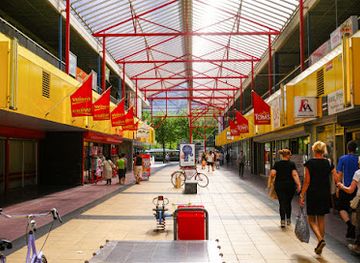
Get your free copy of our complete guide to Flevoland, delivered straight to you.
Everything on this page, from attractions and restaurants to essentials and local phrases, in one PDF you can read offline, print or share.
Already have an account? Sign in
Your Flevoland guide is ready.
We'll send it to · Not you? Sign out

Getting your guide ready…
We are putting together a fresh copy of the Flevoland guide. This can take up to a minute.
This can take a few moments. If your browser asks, choose Allow so the download can start. You'll find the guide in your Downloads folder.
Nothing happened? Download it again
Sorry, the guide is taking longer than usual. Please try again in a minute, or get it by email instead.
Flevoland essentials
Currency and Payment
Safety
Emergency Situations
Do's and Don'ts
Local Tips
From Eve
Local phrases worth knowing
You don't need to get them perfect. A few words go a long way, and locals appreciate the effort.
Basics
| English | Local | Say it |
|---|---|---|
| Hello | Hallo | [HAH-loh] |
| Goodbye | Tot ziens | [Tot ZEENS] |
| Yes | Ja | [YAH] |
| No | Nee | [NAY] |
| Please/You’re welcome | Alstublieft | [AL-stu-BLIEFT] |
| Thank you | Dank u | [DANK oo] |
| Excuse me/Sorry | Sorry | [SOR-ee] |
| How are you? | Hoe gaat het? | [HOO ghaht het] |
| Fine. And you? | Goed. En jij? | [GHOOT. En YAY?] |
| Do you speak English? | Spreekt u Engels? | [SPREEKT oo ENG-els] |
| I don't understand | Ik begrijp het niet | [Ik be-GRIJP het neet] |
Eating & Drinking
| English | Local | Say it |
|---|---|---|
| I'd like to see the menu, please | Ik wil graag de menukaart zien, alstublieft | [Ik vil GRAHGH de MEN-u-kart zeen, AL-stu-BLIEFT] |
| I don't eat meat | Ik eet geen vlees | [Ik AYT ghen VLES] |
| Cheers! | Proost! | [PROHST] |
| I would like to pay, please | Ik wil graag betalen, alstublieft | [Ik vil GRAHGH be-TA-len, AL-stu-BLIEFT] |
Emergencies
| English | Local | Say it |
|---|---|---|
| Help! | Help! | [HELP] |
| Go away! | Ga weg! | [GA vek!] |
| Call the Police! | Bel de politie! | [BEL de po-LI-tsee] |
| Call a doctor! | Bel een dokter! | [BEL een DOK-ter] |
| I'm lost | Ik ben verdwaald | [Ik ben fer-DAHLDT] |
| I'm ill | Ik ben ziek | [Ik ben ZEEK] |
Shopping
| English | Local | Say it |
|---|---|---|
| I'd like to buy... | Ik wil ... kopen | [Ik vil ... KOH-pen] |
| I'm just looking | Ik kijk alleen maar | [Ik KAIK a-LAY-en mar] |
| How much is it? | Hoeveel kost het? | [HOO-veel kost het] |
| That's too expensive | Dat is te duur | [DAT is te DURE] |
| Can you lower the price? | Kunt u de prijs verlagen? | [KUNT oo de PRICE fer-LAH-ghen] |
Time & Numbers
| English | Local | Say it |
|---|---|---|
| What time is it? | Hoe laat is het? | [HOO laat is het] |
| It's one o'clock | Het is één uur | [Het is EEN oor] |
| Half past (10) | Half (10) | [Half (10)] |
| Morning | Ochtend | [OKH-tend] |
| Afternoon | Middag | [MID-dahg] |
| Evening | Avond | [AH-vond] |
| Yesterday | Gisteren | [GHEES-ter-en] |
| Today | Vandaag | [VAN-dahg] |
| Tomorrow | Morgen | [MOR-ghen] |
| 1 | 1 | [1] |
| 2 | 2 | [2] |
| 3 | 3 | [3] |
| 4 | 4 | [4] |
| 5 | 5 | [5] |
| 6 | 6 | [6] |
| 7 | 7 | [7] |
| 8 | 8 | [8] |
| 9 | 9 | [9] |
| 10 | 10 | [10] |
Transport & Directions
| English | Local | Say it |
|---|---|---|
| Where's a/the...? | Waar is een/de...? | [VAHR is een/de...?] |
| What's the address? | Wat is het adres? | [VAT is het a-DRES?] |
| Can you show me (on the map)? | Kunt u het me laten zien (op de kaart)? | [KUNT oo het me LAH-ten zeen (op de KAART)?] |
| When's the next (bus)? | Wanneer komt de volgende (bus)? | [VAN-neer komt de VOL-gen-de (BUS)?] |
| A ticket (to ....) | Een kaartje (naar ...) | [Een KAART-je (naar ...)] |
History of Flevoland
The Zuiderzee and Medieval Settlement
Before Flevoland existed, much of the province lay beneath the Zuiderzee, a shallow and frequently stormy inlet of the North Sea. Medieval communities occupied islands, shorelines and peatlands around this waterway, adapting to fishing, shipping and agriculture. Schokland developed as an inhabited island, while Urk became a prominent fishing settlement on a former island in the Zuiderzee. Storm surges and gradual land loss repeatedly altered the coast. The historic remains of Schokland, including archaeological traces and surviving buildings, provide particularly important evidence of how people lived with changing water levels before modern reclamation.
The Evacuation of Schokland, 1859
In the nineteenth century, continuing erosion, flooding and economic hardship made life on Schokland increasingly difficult. The Dutch government ordered the island’s evacuation in 1859, and most residents were moved to settlements on the mainland. Churches and other structures remained, preserving a physical record of the former community. Schokland later became a powerful symbol of the Netherlands’ long relationship with water and land loss. Its archaeological and cultural significance was recognised internationally when the former island was designated a UNESCO World Heritage Site in 1995, one of the country’s earliest such listings.
The Zuiderzee Works and the Afsluitdijk
The devastating floods of 1916 strengthened support for engineer Cornelis Lely’s plan to close off and partially drain the Zuiderzee. The Zuiderzee Works created the Afsluitdijk, completed in 1932, transforming the saltwater inlet into the freshwater IJsselmeer and making large-scale reclamation possible. Flevoland is the most visible result of this national undertaking. The project reduced flood risk, created agricultural land and reshaped navigation and fisheries. Its consequences were extensive: traditional Zuiderzee communities lost direct access to the sea, while new landscapes and settlements were planned on the emerging polders.
The Noordoostpolder, 1942–1960s
The Noordoostpolder was the first major area of present-day Flevoland to be drained, with land emerging during the Second World War. Its villages, roads, farms and tree belts were laid out according to a carefully planned model intended to support agriculture and create a balanced settlement network. Emmeloord became the central town, surrounded by villages including Marknesse, Nagele and Urk nearby on the former island. The polder’s design reflects twentieth-century ideas about social planning, landscape architecture and efficient farming. It also introduced communities from different parts of the Netherlands to newly created land.
Eastern Flevoland and Lelystad
Eastern Flevoland was drained in the 1950s, and its development included both large agricultural holdings and new urban settlements. Lelystad, named after Cornelis Lely, was founded in the 1960s as the future administrative centre of the province. Its location on reclaimed land made it a practical base for water-management institutions, agriculture and recreation. The planned landscape incorporated broad green spaces, waterways and separated traffic routes. Structures such as the Oostvaardersdijk and the province’s extensive drainage network demonstrate how engineering remained central to the region’s creation long after the first polders had been completed.
Southern Flevoland and the Growth of Almere
Southern Flevoland was drained in 1968, completing the main sequence of reclamation that created the province. Almere was established soon afterwards to absorb population growth from the crowded Randstad, particularly Amsterdam. Rather than developing as a traditional historic town, it expanded through planned neighbourhoods, modern housing and new transport links. Almere’s architecture and urban form have consequently become part of Flevoland’s cultural identity. The city’s growth also illustrates the continuing national importance of the polders, which evolved from experiments in agricultural settlement into major urban and economic areas.
From Agricultural Frontier to Ecological and Cultural Landscape
Flevoland’s later history has involved more than farming and urbanisation. The Oostvaardersplassen emerged unexpectedly in the young polder as wetlands and reedbeds colonised land before full agricultural development, eventually becoming a nationally important nature area. Museums, heritage sites and reconstructed maritime projects have interpreted the history of the Zuiderzee and reclamation, while forests such as Horsterwold have matured on land that did not exist a century ago. Today, conservation, recreation, agriculture, water management and expanding cities all compete and cooperate within a landscape that remains comparatively new.
Flevoland in Photos
Browse through our photo collection highlighting the charm and character of the destination.
Neighbouring regions of Flevoland
The closest regions to Flevoland, if you have time for more than one.
-

-

-

-

-


Swipe for more regions
Explore more

Explore more of Netherlands
Discover the Netherlands: A blend of historic charm, artistic treasures, and scenic landscapes, perfect for an enriching travel experience.
Explore Netherlands