

Free Twente Travel Guide & Mobile App
Explore Twente with free travel guides. Discover regional history, expert tips, proposed trips, and audio guides on web or mobile app.


Discover Twente in the eastern Netherlands for cycling country, textile heritage, historic towns, estates, forests and Saxon-style landscapes.
Read more about Twente
When is the best time to visit Twente?
Best: June–August · 20–23°C| Month | High (°C) | Rainfall (mm) |
|---|---|---|
| January | 5 | 66 |
| February | 6 | 55 |
| March | 10 | 61 |
| April | 13 | 46 |
| May | 18 | 60 |
| June (best) | 20 | 76 |
| July (best) | 23 | 76 |
| August (best) | 22 | 80 |
| September | 18 | 75 |
| October | 14 | 70 |
| November | 9 | 76 |
| December | 6 | 81 |
Getting to and around Twente
How to get there
Transportation
Destinations in Twente
Resorts, valleys and scenic spots worth a trip of their own.

Swipe for more destinations
Best attractions in Twente
Twente's attractions span industrial history, historic estates and carefully managed countryside. In Enschede, the Rijksmuseum Twenthe provides a major art collection, while the former textile landscape and the city's cultural institutions explain the region's economic transformation. Hengelo and Almelo offer further traces of engineering, manufacturing and urban growth. Around Delden, the estate of Twickel combines a historic house, gardens, farmland and woodland, while Singraven near Denekamp adds a manor, parkland and watermill setting. Nature is central to the regional experience: Springendal near Ootmarsum, the Dinkel country around De Lutte, Het Hulsbeek near Oldenzaal, and Buurserzand and Haaksbergerveen near Haaksbergen offer walking and cycling through heath, woodland, wetland and stream valleys. Small museums, galleries and village churches add cultural depth, particularly in Ootmarsum and Oldenzaal. The attraction landscape is less about one monumental sight than about combining distinct places in a day by bicycle or car, moving from town streets and factory history to estate lanes, farms and protected habitats.
-
Tourist attraction
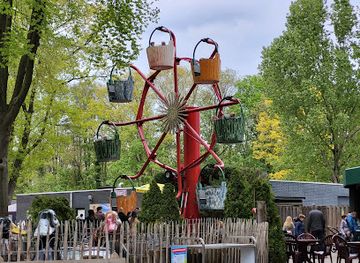
Attractiepark de Waarbeek
Experience family fun and adventure at Attractiepark de Waarbeek, a thrilling amusement park in Hengelo, Netherlands, perfect for all ages.
-
Tourist attraction
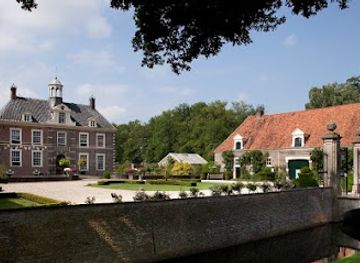
kasteel Warmelo
Discover the charm of Kasteel Warmelo, a historical castle in Diepenheim, surrounded by beautiful gardens and rich cultural heritage.
-
Tourist attraction
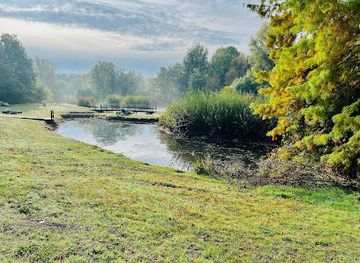
Arboretum Poort Bulten
Explore the stunning Arboretum Poort Bulten, an enchanting park in De Lutte with a diverse collection of global flora and serene walking paths.
-
Tourist attraction
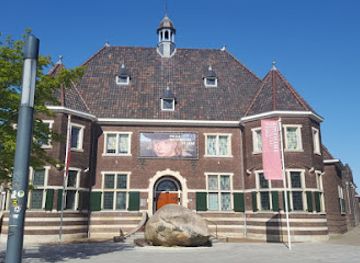
Rijksmuseum Twenthe
Explore the artistic heritage of the Netherlands at Rijksmuseum Twenthe, an exceptional museum offering an inspiring journey through centuries of art.
Best landmarks in Twente
The Basilica of St Plechelmus in Oldenzaal is Twente's most imposing medieval landmark, with a Romanesque core that reflects the town's long ecclesiastical importance. Ootmarsum's historic centre, including the Church of St Simon and St Jude and its surrounding streets, preserves another strong expression of the region's religious and urban past. Twickel near Delden is a defining estate landmark: its house, avenues, gardens, farms and wooded landscape demonstrate how aristocratic landholding shaped the countryside. Singraven near Denekamp is notable for its manor setting and historic watermill on the Dinkel. In Enschede, the Oude Markt and the surrounding churches form the civic heart of the city, while remnants and adapted sites of the former textile industry provide a more modern historical landmark landscape. Natural landmarks are equally important, including the spring-fed streams of Springendal, the Dinkel valley and the heath and peat scenery around Haaksbergen. Together these places convey Twente's unusual combination of medieval Christianity, landed estates, industrial urbanism and managed eastern Dutch countryside.
-
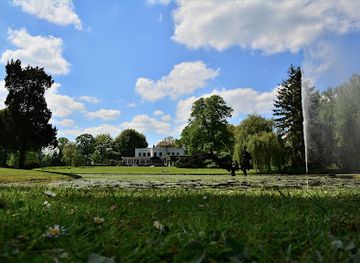
Park
Het Volkspark
Discover the serene beauty of Het Volkspark in Enschede, a perfect blend of nature, family fun, and community events, making it a must-visit destination.
-
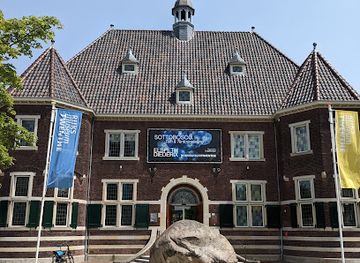
Art museum
Rijksmuseum Twenthe
Explore centuries of artistic heritage at Rijksmuseum Twenthe, a cultural treasure trove in Enschede, Netherlands, for art lovers and tourists alike.
-
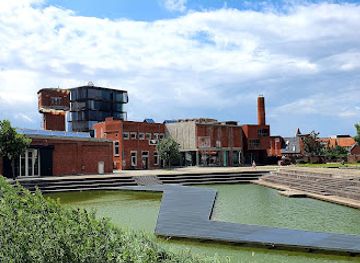
Natural history museum
Museum De Museumfabriek
Explore the rich tapestry of art, heritage, and natural history at Museum De Museumfabriek in Enschede, a must-visit destination for all tourists.
-
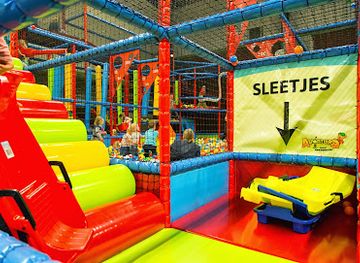
Indoor playground
Avontura Twentehallen
Discover endless fun and excitement at Avontura Twentehallen, Enschede's premier indoor playground for children and families.
Explore Twente on the map
Plan your trip on one map. See where the top cities, national parks and sights are, and book hotels and experiences in a few clicks.
Best hotels in Twente
Best restaurants in Twente
Twente's dining culture combines everyday Dutch cooking with produce from a wooded, agricultural region. Local bakeries are a good place to encounter krentenwegge, a substantial currant loaf associated with eastern Overijssel, while cafés and restaurants commonly serve bread, pastries, seasonal vegetables and familiar Dutch snacks. Farm shops and markets may offer cheese, preserves, meat, fruit and other products from surrounding farms, although their range and schedules vary by town and season. Traditional pubs and rural inns often provide hearty meals, while Enschede, Hengelo and Almelo have the broadest choice of international cuisines, contemporary Dutch cooking and vegetarian options. Around the estates and villages, dining tends to be quieter and more dependent on lunch, dinner and seasonal opening arrangements. Regional and Dutch craft beers are widely available, and some establishments incorporate local produce without claiming a single fixed Twente cuisine. Booking is sensible for popular restaurants in smaller towns, particularly at weekends.
-
Diner
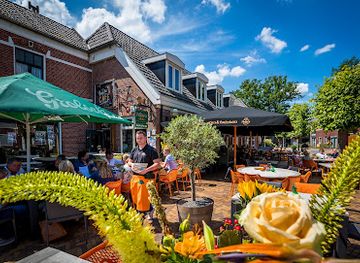
Pelle's Deurningen
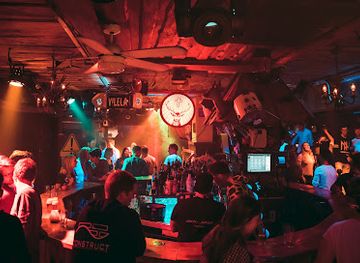
Discover Pelle's Deurningen: A charming diner and event venue serving exquisite local cuisine with a focus on quality steaks and vibrant pub experiences.
-
Steak
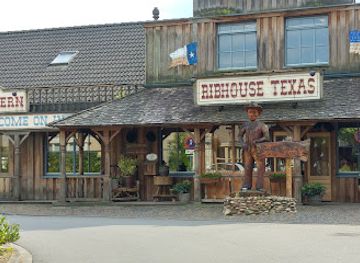
Ribhouse Texas Boekelo
Discover Ribhouse Texas Boekelo - where succulent steaks meet authentic American flavors in an inviting atmosphere.
-
Steak
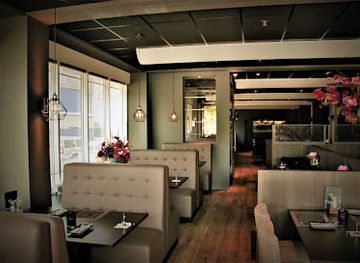
Steakhouse El Gaucho
Discover Steakhouse El Gaucho: A premier destination for steak lovers in Enschede offering exquisite flavors and exceptional dining experiences.
-
Restaurant
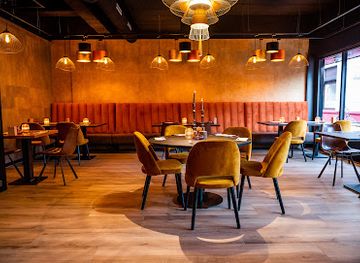
Restaurant Cozy
Discover delectable tapas and crafted cocktails at Restaurant Cozy - your ultimate dining destination in Hengelo.
Best bars in Twente
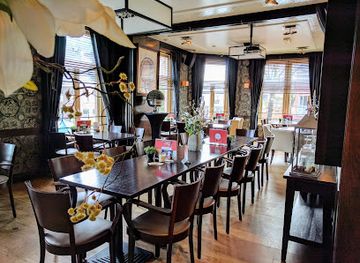
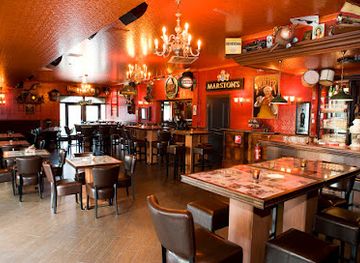
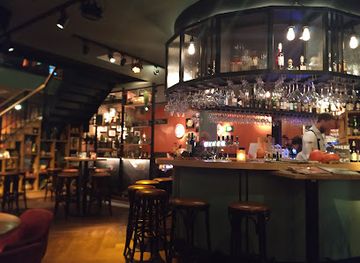
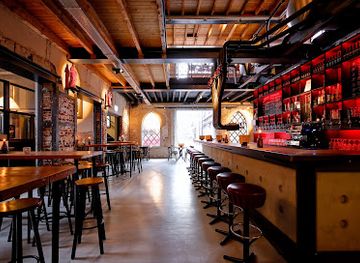
Evening life in Twente is concentrated in Enschede, with additional pubs, cafés and restaurants in Hengelo, Almelo, Oldenzaal and other larger towns. Enschede's student population, the University of Twente and its cultural venues support a broader choice of bars, live music and late-night entertainment than is typical in the countryside. Traditional brown cafés and pubs remain important meeting places across the region, while craft-beer venues, wine bars and modern restaurants provide more contemporary options. Hengelo and Almelo have town-centre nightlife but on a smaller scale, and rural evenings generally centre on a pub, restaurant or local event rather than a club district. Opening arrangements and venue status change, so current listings are useful. Visitors should not assume that alcohol is central to every local social occasion; concerts, theatre, cinema and seasonal community events also shape the evening scene.
-
Restaurant
Grand-Café De Twee Wezen
Experience culinary excellence at Grand-Café De Twee Wezen, where diverse flavors and a warm atmosphere await every visitor.
-
Diner
Pelle's Deurningen
Discover Pelle's Deurningen: A delightful diner, event venue, and pub in the heart of Deurningen, offering exquisite local cuisine and a vibrant atmosphere.
-
Pub
Moeke Enschede
Discover the heart of Enschede at Moeke Enschede, a lively pub offering delightful Dutch cuisine and a welcoming atmosphere for all visitors.
-
Brewpub
Stanislaus Brewskovitch Stadsbrouwerij Menistenkerk Enschede
Discover Enschede's finest brews at Stanislaus Brewskovitch, where craft beer meets a cozy atmosphere in the heart of the city.
Best nightclubs in Twente
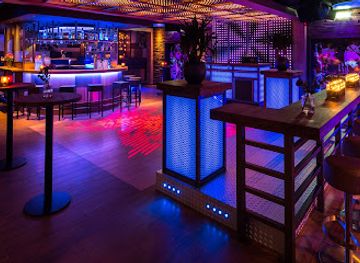
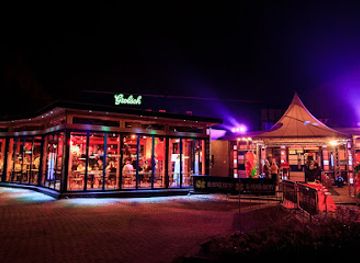
Evening life in Twente is concentrated in Enschede, with additional pubs, cafés and restaurants in Hengelo, Almelo, Oldenzaal and other larger towns. Enschede's student population, the University of Twente and its cultural venues support a broader choice of bars, live music and late-night entertainment than is typical in the countryside. Traditional brown cafés and pubs remain important meeting places across the region, while craft-beer venues, wine bars and modern restaurants provide more contemporary options. Hengelo and Almelo have town-centre nightlife but on a smaller scale, and rural evenings generally centre on a pub, restaurant or local event rather than a club district. Opening arrangements and venue status change, so current listings are useful. Visitors should not assume that alcohol is central to every local social occasion; concerts, theatre, cinema and seasonal community events also shape the evening scene.
-
Disco club
Dieka
Experience the vibrant nightlife of Markelo at Dieka, the premier disco club and event venue for unforgettable celebrations and dance.
-
Disco club
Dancing Bruins
Discover the exhilarating nightlife at Dancing Bruins, a premier disco club in Saasveld with a vibrant atmosphere and diverse crowd.
-
Club
Lucky The Feel Good Provider
Discover Lucky The Feel Good Provider, Rijssen's premier club and event venue, where joy and vibrant nightlife come together for an unforgettable experience.
-
Disco club
Aspen Valley Enschede
Experience the vibrant nightlife at Aspen Valley Enschede, a premier disco club that combines dancing, drinks, and a lively atmosphere in the heart of the city.

Best shops in Twente
Enschede is Twente's principal shopping centre, with a broad city-centre offer of national retailers, independent shops, cafés and markets, as well as a strong cross-border customer base. Hengelo and Almelo provide more compact high streets, while Oldenzaal, Ootmarsum and Delden are better suited to browsing smaller shops, galleries, antiques and local businesses. Ootmarsum is particularly associated with art galleries and a historic-centre shopping experience. Farmers' markets, farm shops and specialist food retailers are useful for regional purchases such as cheese, bread, preserves, sweets and seasonal produce, although market days differ between towns. Craft workshops and galleries may sell ceramics, textiles, jewellery and locally inspired art. Rather than expecting a single official souvenir, look for products connected with Twente's countryside and food culture, or for well-designed objects in former industrial and cultural districts. Retail hours and market schedules vary, especially in smaller settlements, so check locally before making a special journey.
-
Clothing store
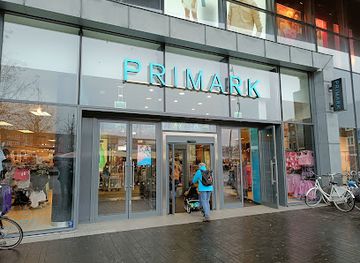
Primark
Discover affordable fashion and trendy styles at Primark in Enschede, a top destination for budget-conscious shoppers seeking variety.
-
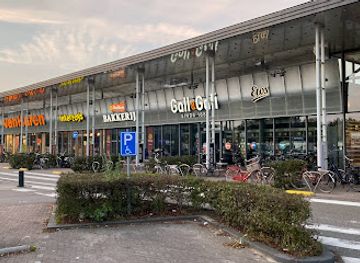
Shopping mall
Miro Center
Explore the Miro Center in Enschede, a premier shopping mall featuring diverse shops, delightful dining, and exciting entertainment for all ages.
-
Shopping mall
Winkelcentrum De Klanderij
Explore Winkelcentrum De Klanderij: Enschede's premier shopping mall with diverse shops, dining, and a vibrant atmosphere.
-
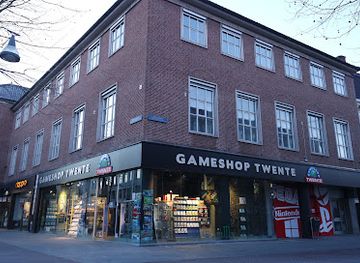
Video game store
Gameshop Twente
Explore Gameshop Twente, Enschede's premier video game store, offering a vast selection of games, consoles, and collectibles for every gamer.
Get your free copy of our complete guide to Twente, delivered straight to you.
Everything on this page, from attractions and restaurants to essentials and local phrases, in one PDF you can read offline, print or share.
Already have an account? Sign in
Your Twente guide is ready.
We'll send it to · Not you? Sign out

Getting your guide ready…
We are putting together a fresh copy of the Twente guide. This can take up to a minute.
This can take a few moments. If your browser asks, choose Allow so the download can start. You'll find the guide in your Downloads folder.
Nothing happened? Download it again
Sorry, the guide is taking longer than usual. Please try again in a minute, or get it by email instead.
Twente essentials
Currency and Payment
Safety
Emergency Situations
Do's and Don'ts
Local Tips
From Eve
Local phrases worth knowing
You don't need to get them perfect. A few words go a long way, and locals appreciate the effort.
Basics
| English | Local | Say it |
|---|---|---|
| Hello | Hallo | [Hah-loh] |
| Goodbye | Tot ziens | [Toht zeens] |
| Yes | Ja | [Yah] |
| No | Nee | [Nay] |
| Please/You're welcome | Alsjeblieft | [Al-she-bleeft] |
| Thank you | Dank je | [Dahnk yuh] |
| Excuse me/Sorry | Sorry | [So-ree] |
| How are you? | Hoe gaat het? | [Hoo khaht het] |
| Fine. And you? | Goed. En jij? | [Ghoot. En yay?] |
| Do you speak English? | Spreek je Engels? | [Sprayk yuh En-guls] |
| I don't understand | Ik begrijp het niet | [Ik buh-graif het neet] |
Eating & Drinking
| English | Local | Say it |
|---|---|---|
| I'd like to see the menu, please | Ik zou graag de menukaart willen zien, alsjeblieft | [Ik zoh graahg de meh-nu-kaart vil-len zeen, al-she-bleeft] |
| I don't eat meat | Ik eet geen vlees | [Ik eet ghen vlaise] |
| Cheers! | Proost! | [Prohst] |
| I would like to pay, please | Ik wil graag betalen, alsjeblieft | [Ik vil graahg be-ta-len, al-she-bleeft] |
Emergencies
| English | Local | Say it |
|---|---|---|
| Help! | Help! | [Help] |
| Go away! | Ga weg! | [Gah vehkh] |
| Call the Police! | Bel de politie! | [Bel de po-li-tsee] |
| Call a doctor! | Bel een dokter! | [Bel een dok-ter] |
| I'm lost | Ik ben verdwaald | [Ik ben fer-dwaald] |
| I'm ill | Ik ben ziek | [Ik ben zeek] |
Shopping
| English | Local | Say it |
|---|---|---|
| I'd like to buy... | Ik zou graag ... willen kopen | [Ik zoh graahg ... vil-len koh-pen] |
| I'm just looking | Ik kijk alleen maar | [Ik kike al-lay mahr] |
| How much is it? | Hoeveel kost het? | [Hoo-vayl kost het] |
| That's too expensive | Dat is te duur | [Daht is tuh dur] |
| Can you lower the price? | Kun je de prijs verlagen? | [Kun yuh de prays ver-lah-ghen] |
Time & Numbers
| English | Local | Say it |
|---|---|---|
| What time is it? | Hoe laat is het? | [Hoo laat is het] |
| It's one o'clock | Het is één uur | [Het is ayn ur] |
| Half past (10) | Half tien | [Half teen] |
| Morning | Ochtend | [Okh-tend] |
| Afternoon | Middag | [Mid-dahg] |
| Evening | Avond | [Ah-vond] |
| Yesterday | Gisteren | [Ghis-ter-en] |
| Today | Vandaag | [Van-dahg] |
| Tomorrow | Morgen | [Mor-ghen] |
| 1 | 1 | [Eyn] |
| 2 | 2 | [Twee] |
| 3 | 3 | [Drie] |
| 4 | 4 | [Vier] |
| 5 | 5 | [Vijf] |
| 6 | 6 | [Zes] |
| 7 | 7 | [Zeven] |
| 8 | 8 | [Acht] |
| 9 | 9 | [Negen] |
| 10 | 10 | [Tien] |
Transport & Directions
| English | Local | Say it |
|---|---|---|
| Where's a/the...? | Waar is een/de...? | [Vahr is eyn/de...?] |
| What's the address? | Wat is het adres? | [Vaht is het ah-dress?] |
| Can you show me (on the map)? | Kun je me (op de kaart) laten zien? | [Kun yuh muh (op de kart) lah-ten zeen?] |
| When's the next (bus)? | Wanneer komt de volgende (bus)? | [Vahn-eer komt de vol-ghen-de (bus)?] |
| A ticket (to ....) | Een kaartje (naar ....) | [Eyn kart-ye (nahr ....)] |
History of Twente
Prehistoric Settlement and Saxon Landscapes
Twente has been shaped by settlement since prehistoric times, with burial mounds, arable fields and traces of early farming surviving in several parts of the region. Its sandy soils, woodland and small-scale fields later supported communities connected with the wider Saxon cultural area of the eastern Netherlands and neighbouring Germany. The landscape of hedgerows, irregular plots and scattered farms is therefore not simply natural scenery; it reflects long-term occupation and agricultural practice. Archaeological remains are often modest in appearance, but they help explain why Twente differs from the polder landscapes of the Dutch west.
Medieval Churches, Estates and the Oversticht
During the Middle Ages, Twente formed part of the Oversticht, the territories administered by the Bishops of Utrecht, and Christianity became a central force in its political and architectural development. Oldenzaal emerged as an important ecclesiastical centre, and the Basilica of St Plechelmus preserves the scale of that medieval role. Noble families, religious foundations and later landed estates acquired influence over farms, woods and waterways. Castles and manor houses such as Twickel and Singraven are later buildings or substantially altered complexes, but their estates preserve the pattern of landholding that developed over centuries.
Towns, Trade and the Rise of Textile Production
From the eighteenth and especially the nineteenth century, Twente changed from a predominantly agricultural region into one of the Netherlands' major textile areas. Enschede, Hengelo and Almelo became centres of spinning, weaving, trade and manufacturing, supported by entrepreneurs, water and later rail connections. Cotton production created employment and urban growth but also severe social inequality, with factory owners commissioning substantial villas while many workers lived in crowded districts. The industry connected Twente to national and international markets and left a durable mark on its architecture, demographics and civic institutions.
Railways, Industrial Towns and Social Change
The arrival and expansion of railway links in the nineteenth century strengthened Twente's industrial economy and improved connections between its towns and the rest of the Netherlands. Hengelo developed an important engineering and manufacturing profile, while Enschede and Almelo expanded as textile centres and transport nodes. Industrial employment encouraged migration into the towns and contributed to the growth of labour organisations, schools, churches and municipal services. Later road building and post-war urban development altered the region again, although former factory sites, workers' housing and industrial buildings still reveal how transport and manufacturing reshaped eastern Overijssel.
War, Occupation and Reconstruction
Twente was occupied by Nazi Germany during the Second World War, and its proximity to the German frontier affected both military control and civilian life. Jewish residents, resistance workers and others faced persecution, deportation or danger, while local communities experienced requisitions, restrictions and wartime disruption. The region's industrial capacity also had strategic importance. After 1945, Twente entered a period of reconstruction and economic adjustment. Remembering the war forms part of the region's modern historical landscape, alongside the later rebuilding of towns and the transformation of former industrial areas.
Textile Decline and Economic Transformation
Twente's textile industry declined sharply during the second half of the twentieth century as international competition and changing production patterns undermined the traditional mills. Closures caused major economic and social disruption, particularly in Enschede, and forced the region to reconsider its identity. Some factories disappeared, while others were adapted for cultural, commercial or educational use. Manufacturing, technology, logistics, healthcare and services became increasingly important. The transition explains the contrast visible today between industrial remnants, new urban development and the region's continuing emphasis on education, research and innovation.
The University of Twente and the Knowledge Economy
The University of Twente, founded in 1961 in Enschede, became a significant influence on the region's modern cultural and economic life. Established as a technical university, it helped strengthen research, engineering, entrepreneurship and links between education and industry. Its campus and surrounding knowledge-oriented businesses added a contemporary dimension to a region long associated with manufacturing. The university does not replace Twente's industrial past; rather, it forms part of the broader shift from textile production towards technology, design and services that has shaped the region since the late twentieth century.
Twente in Photos
Browse through our photo collection highlighting the charm and character of the destination.
Neighbouring regions of Twente
The closest regions to Twente, if you have time for more than one.
-

-

-

-

-


Swipe for more regions
Explore more

Explore more of Netherlands
Discover the Netherlands: A blend of historic charm, artistic treasures, and scenic landscapes, perfect for an enriching travel experience.
Explore Netherlands