

Free Veluwe Travel Guide & Mobile App
Explore Veluwe with free travel guides. Discover regional history, expert tips, proposed trips, and audio guides on web or mobile app.


Explore Veluwe’s forests, heathlands, royal heritage, art museums and cycle trails across one of the Netherlands’ finest inland landscapes.
Read more about Veluwe
When is the best time to visit Veluwe?
Best: June–August · 22–24°C| Month | High (°C) | Rainfall (mm) |
|---|---|---|
| January | 7 | 63 |
| February | 7 | 47 |
| March | 11 | 54 |
| April | 15 | 41 |
| May | 20 | 61 |
| June (best) | 22 | 72 |
| July (best) | 24 | 78 |
| August (best) | 24 | 72 |
| September | 20 | 77 |
| October | 15 | 68 |
| November | 10 | 63 |
| December | 7 | 72 |
Getting to and around Veluwe
How to get there
Transportation
Top city travel guides in Veluwe
The cities of Veluwe, and the easiest places to base yourself.
-

-

-


Swipe for more cities
Destinations in Veluwe
Resorts, valleys and scenic spots worth a trip of their own.
-
-


Swipe for more destinations
Best attractions in Veluwe
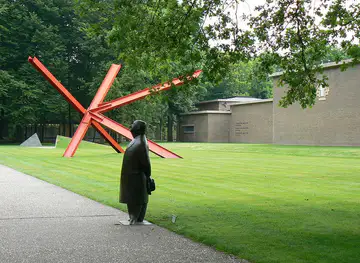
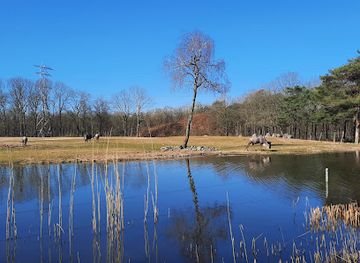
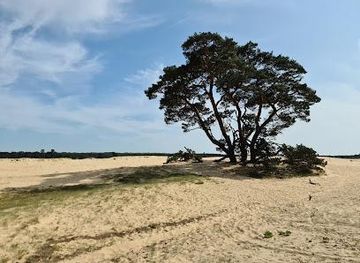
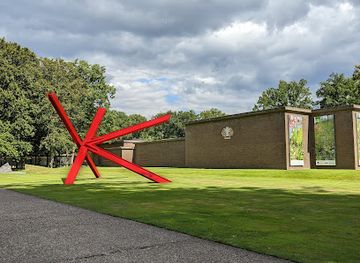
The Veluwe’s attractions are closely connected with its varied landscape. De Hoge Veluwe National Park combines open heath, woodland, drifting sand and wildlife habitats with the Kröller-Müller Museum and its sculpture garden, while Nationaal Park Veluwezoom offers walking routes across wooded hills and the broad heathland around the Posbank. Paleis Het Loo near Apeldoorn provides a different perspective through royal rooms, formal gardens and exhibitions about the Dutch monarchy. Smaller museums and heritage sites in Apeldoorn, Ede, Harderwijk and surrounding villages explore local history, military events, crafts and rural life. Cycling is a major attraction in its own right, with routes linking forest edges, estates, heathland and village cafés. Families may find wildlife parks and educational nature centres around the region, while walkers can choose between short accessible paths and longer routes through more secluded woodland. The northern and western margins add historic towns and lake-country scenery, whereas the central and eastern Veluwe are defined more strongly by forest, heath and sandy tracks.
-
Zoo
Burgers' Zoo
Explore Burgers' Zoo in Arnhem, where diverse wildlife and immersive habitats bring the wonders of nature to life.
-
Zoo
Apenheul
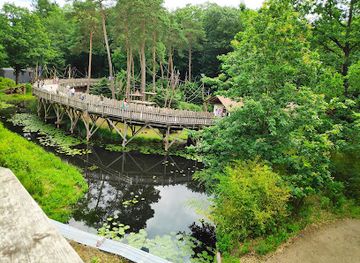
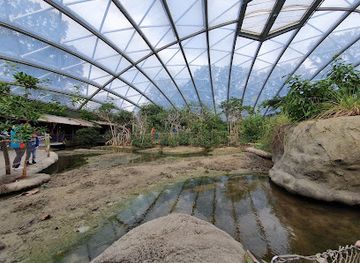
Discover Apenheul, the unique zoo in Apeldoorn where monkeys roam free and unforgettable adventures await for all ages.
-
National park
Het Nationale Park De Hoge Veluwe
Explore Het Nationale Park De Hoge Veluwe: A stunning national park blending natural beauty, diverse wildlife, and world-class art in the Netherlands.
-
Museum
Kröller-Müller Museum
Discover the Kröller-Müller Museum, a unique blend of modern art and nature in the scenic Hoge Veluwe National Park, a true Dutch treasure.
Best landmarks in Veluwe
Paleis Het Loo near Apeldoorn is the Veluwe’s most prominent architectural landmark, recognised for its long association with the House of Orange, formal gardens and carefully ordered avenues. The Posbank monument and viewpoint in Nationaal Park Veluwezoom symbolise the region’s open heathland and elevated sandstone landscape, with broad views across the surrounding countryside. De Hoge Veluwe’s Jachthuis Sint Hubertus, designed by architect H. P. Berlage for the Kröller-Müller family, is an important example of early twentieth-century Dutch estate architecture. Harderwijk’s historic centre preserves sections of its medieval street pattern and defensive heritage, recalling its former importance on the Zuiderzee. Across the countryside, prehistoric burial mounds, old church villages, estate avenues and role-sharing farm landscapes provide less monumental but highly significant landmarks. The combination of royal architecture, modernist design, medieval urban fabric and archaeological traces gives the Veluwe a more layered identity than its forests alone suggest.
-
Zoo
Burgers' Zoo
Experience the wonders of wildlife and nature at Burgers' Zoo, one of the top family-friendly attractions in the Netherlands.
-
Zoo
Apenheul
Explore the wonders of Apenheul, where monkeys roam freely and adventure awaits in a stunning natural setting.
-
National park
Het Nationale Park De Hoge Veluwe
Explore the breathtaking landscapes, rich wildlife, and artistic treasures at Het Nationale Park De Hoge Veluwe, a must-visit national park in the heart of the Netherlands.
-
History museum
Nationaal Militair Museum
Explore military history at the Nationaal Militair Museum in Soest, Netherlands—an engaging journey through time with extensive exhibits and interactive displays.
Explore Veluwe on the map
Plan your trip on one map. See where the top cities, national parks and sights are, and book hotels and experiences in a few clicks.
Best hotels in Veluwe
Best restaurants in Veluwe
Dining in the Veluwe reflects both Gelderland’s agricultural hinterland and the region’s outdoor-tourism economy. Apeldoorn, Harderwijk, Ede and Wageningen offer the broadest choice, from contemporary restaurants and cafés to traditional Dutch cooking, while villages and park-edge settlements are known for relaxed inns, pancake restaurants, tearooms and cafés serving walkers and cyclists. Menus may feature local vegetables, fruit, bread, cheese and seasonal game, although game is not exclusive to the region and availability changes with the season. Around Harderwijk, fish dishes reflect the town’s former Zuiderzee setting, while farm shops and markets provide opportunities to buy Gelderland produce, preserves, honey and regional beers. Expect practical, hearty fare in countryside establishments, with more varied international and modern cooking in the larger towns. Reservations are sensible for well-known restaurants and popular weekend dining, particularly during school holidays.
-
Restaurant
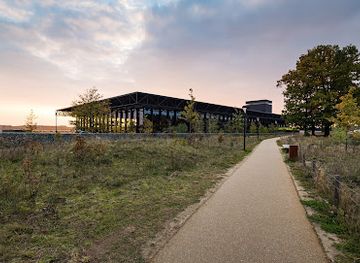
Planken Wambuis
Discover culinary excellence at Planken Wambuis in Ede—where delicious meals meet serene natural beauty.
-
Restaurant
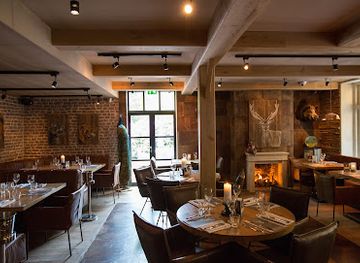
De Waldhoorn
Discover De Waldhoorn in Otterlo: where traditional Dutch flavors meet warm hospitality in a picturesque setting.
-
Restaurant
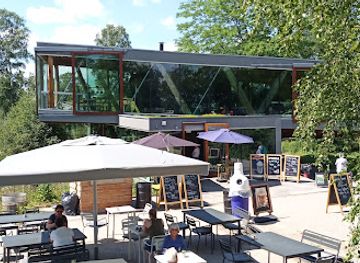
Pavilion De Posbank
Experience exquisite dining at Pavilion De Posbank amidst the breathtaking landscapes of Veluwe National Park.
-
Restaurant
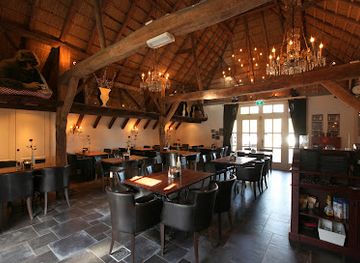
Restaurant Boshuis Drie
Discover delicious Dutch cuisine amidst nature's beauty at Restaurant Boshuis Drie in Ermelo.

Best bars in Veluwe
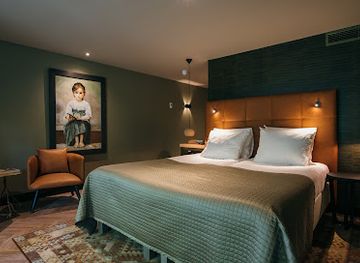
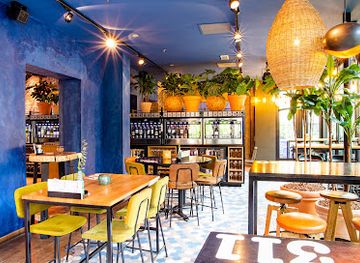
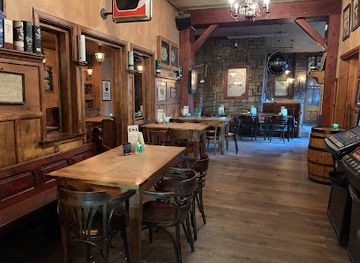
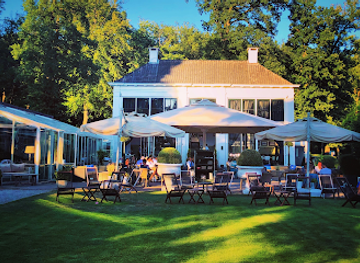
Evening life in the Veluwe is concentrated in its towns rather than spread across the countryside. Apeldoorn has the widest selection of cafés, restaurants, traditional pubs and late-evening venues, while Harderwijk combines historic-centre bars with restaurants and terraces near the former waterfront. Ede and Wageningen have a younger, more varied evening scene connected with their student and cultural communities. In smaller villages, nightlife usually means a local pub, hotel bar, restaurant or seasonal terrace rather than a dedicated nightclub. Some breweries and easy-going drinks venues provide an alternative to conventional bars, and live music or cultural programming may appear in larger towns, but schedules change. Visitors staying in rural accommodation should plan transport home in advance, since late public transport and taxis are more limited away from urban centres.
-
Bar
Van der Valk Hotel Apeldoorn - De Cantharel
Experience elegance and comfort at Van der Valk Hotel Apeldoorn - De Cantharel, where relaxation meets adventure in the heart of nature.
-
Beer hall
't Taphuys Arnhem
Experience the joy of self-poured beers and vibrant social atmosphere at 't Taphuys Arnhem, a must-visit beer hall in the heart of the city.
-
Irish pub
Finnegan's Irish pub
Discover the irresistible charm of Finnegan's Irish Pub in Apeldoorn, where authentic Irish flavors meet a cozy atmosphere.
-
Restaurant
Brasserie Staverden
Discover culinary delights amidst nature's beauty at Brasserie Staverden in Ermelo, a perfect stop for food lovers and nature enthusiasts.
Best nightclubs in Veluwe
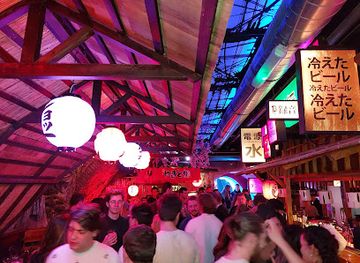
Evening life in the Veluwe is concentrated in its towns rather than spread across the countryside. Apeldoorn has the widest selection of cafés, restaurants, traditional pubs and late-evening venues, while Harderwijk combines historic-centre bars with restaurants and terraces near the former waterfront. Ede and Wageningen have a younger, more varied evening scene connected with their student and cultural communities. In smaller villages, nightlife usually means a local pub, hotel bar, restaurant or seasonal terrace rather than a dedicated nightclub. Some breweries and easy-going drinks venues provide an alternative to conventional bars, and live music or cultural programming may appear in larger towns, but schedules change. Visitors staying in rural accommodation should plan transport home in advance, since late public transport and taxis are more limited away from urban centres.
-
Disco club
Club Organza
Discover the vibrant nightlife of Breukelen at Club Organza, the ultimate disco experience for tourists and locals alike.
-
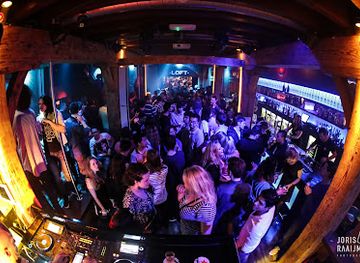
Club
loft Arnhem
Discover the energetic nightlife of Arnhem at Loft Arnhem, a lively club and bar featuring themed nights, great cocktails, and an unforgettable atmosphere.
-
Night club
Club Maggy
Discover the vibrant nightlife at Club Maggy, Utrecht's premier night club on the iconic Oudegracht, where unforgettable experiences await.
-
Night club
Club Poema
Discover the heart of Utrecht's nightlife at Club Poema, where music, dance, and energy collide for an unforgettable experience.

Best shops in Veluwe
Shopping in the Veluwe is centred on the high streets of Apeldoorn, Harderwijk, Ede and Wageningen, where national retailers sit alongside independent clothing shops, bookshops, cafés, galleries and specialist food stores. Smaller towns and villages offer a slower browsing experience, with farm shops, garden centres, antiques, craft outlets and shops aimed at walkers and cyclists. Markets in the larger settlements can be useful for Dutch foods, flowers and everyday produce, while rural producers sell honey, cheese, preserves, fruit, bread and other Gelderland products directly or through local outlets. Around the nature reserves, look for practical outdoor clothing, cycling supplies and locally made gifts rather than extensive luxury retail. Regional souvenirs are often food-based or craft-based: honey, beer, preserves, ceramics, textiles and illustrated material about the Veluwe’s landscapes and wildlife. Opening arrangements vary in villages, so town-centre shopping is generally more dependable outside peak tourist periods.
-
Store
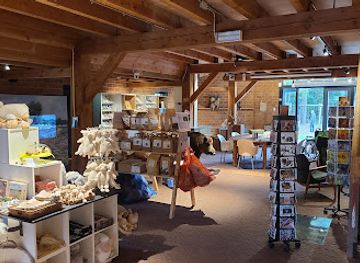
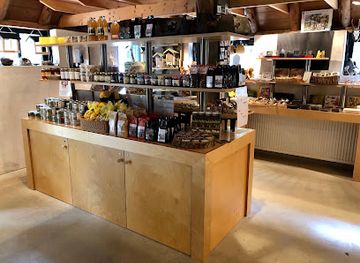
Ermelo sheepfold
Experience the tranquility of nature at Ermelo Sheepfold, a unique blend of culture, recreation, and local traditions in the heart of the Dutch countryside.
-
Museum
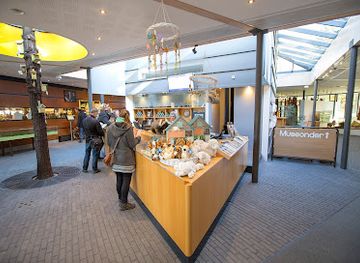
Museonder
Explore the intriguing underground world of Museonder, a museum showcasing the natural history of Hoge Veluwe National Park, perfect for nature lovers and curious minds.
-
Visitor center
Bezoekerscentrum Staverden
Explore Bezoekerscentrum Staverden, a unique visitor center offering history, gardens, and delicious local cuisine in the heart of nature.
-
Store
Holy Cow Netherlands
Explore Holy Cow Netherlands for irresistible chocolates, trendy clothing, and unique gifts in the heart of Deventer.

Get your free copy of our complete guide to Veluwe, delivered straight to you.
Everything on this page, from attractions and restaurants to essentials and local phrases, in one PDF you can read offline, print or share.
Already have an account? Sign in
Your Veluwe guide is ready.
We'll send it to · Not you? Sign out

Getting your guide ready…
We are putting together a fresh copy of the Veluwe guide. This can take up to a minute.
This can take a few moments. If your browser asks, choose Allow so the download can start. You'll find the guide in your Downloads folder.
Nothing happened? Download it again
Sorry, the guide is taking longer than usual. Please try again in a minute, or get it by email instead.
Veluwe essentials
Currency and Payment
Safety
Emergency Situations
Do's and Don'ts
Local Tips
From Eve
Local phrases worth knowing
You don't need to get them perfect. A few words go a long way, and locals appreciate the effort.
Basics
| English | Local | Say it |
|---|---|---|
| Hello | Hallo | [HAH-loh] |
| Goodbye | Tot ziens | [toht zeens] |
| Yes | Ja | [YAH] |
| No | Nee | [NAY] |
| Please/You're welcome | Alstublieft | [AHL-stu-bleeft] |
| Thank you | Dank u | [DANK oo] |
| Excuse me/Sorry | Het spijt me | [het spijt muh] |
| How are you? | Hoe gaat het? | [hoo ghaht het] |
| Fine. And you? | Goed. En met jou? | [hoot. en met yow?] |
| Do you speak English? | Spreekt u Engels? | [spraykt oo ENG-uhls] |
| I don't understand | Ik begrijp het niet | [ik buh-GRYP het neet] |
Eating & Drinking
| English | Local | Say it |
|---|---|---|
| I'd like to see the menu, please | Ik zou graag de menukaart willen zien, alstublieft | [ik zouw grahkh duh MEN-oo-kart VIL-len zeen, AHL-stu-bleeft] |
| I don't eat meat | Ik eet geen vlees | [ik ayt khayn vlayce] |
| Cheers! | Proost! | [prohst] |
| I would like to pay, please | Ik zou graag willen betalen, alstublieft | [ik zouw grahkh VIL-len buh-TAH-len, AHL-stu-bleeft] |
Emergencies
| English | Local | Say it |
|---|---|---|
| Help! | Help! | [Help] |
| Go away! | Ga weg! | [Gah vek] |
| Call the Police! | Bel de politie! | [Bel duh poh-LEE-tsee] |
| Call a doctor! | Bel een dokter! | [Bel ayn DOK-ter] |
| I'm lost | Ik ben verdwaald | [ik ben fer-DWAHLD] |
| I'm ill | Ik ben ziek | [ik ben ZEEK] |
Shopping
| English | Local | Say it |
|---|---|---|
| I'd like to buy... | Ik zou graag ... willen kopen | [ik zouw grahkh ... VIL-len KOH-pen] |
| I'm just looking | Ik kijk alleen | [ik KAIK ah-LAYN] |
| How much is it? | Hoeveel kost het? | [hoo-VAYL kost het] |
| That's too expensive | Dat is te duur | [daht is tuh DUR] |
| Can you lower the price? | Kunt u de prijs verlagen? | [kunt oo duh PRICE fer-LAH-ghen] |
Time & Numbers
| English | Local | Say it |
|---|---|---|
| What time is it? | Hoe laat is het? | [hoo laht is het] |
| It's one o'clock | Het is een uur | [het is ayn ur] |
| Half past (10) | Half tien | [half teen] |
| Morning | Ochtend | [OKH-tent] |
| Afternoon | Middag | [MID-dahkh] |
| Evening | Avond | [AH-vont] |
| Yesterday | Gisteren | [GHIS-teh-ren] |
| Today | Vandaag | [van-DAHGH] |
| Tomorrow | Morgen | [MOR-ghen] |
| 1 | 1 | [een] |
| 2 | 2 | [twee] |
| 3 | 3 | [drie] |
| 4 | 4 | [vier] |
| 5 | 5 | [vijf] |
| 6 | 6 | [zes] |
| 7 | 7 | [zeven] |
| 8 | 8 | [acht] |
| 9 | 9 | [negen] |
| 10 | 10 | [tien] |
Transport & Directions
| English | Local | Say it |
|---|---|---|
| Where's a/the...? | Waar is een/de...? | [vahr is ayn/de...?] |
| What's the address? | Wat is het adres? | [vaht is het ah-DRES] |
| Can you show me (on the map)? | Kunt u me (op de kaart) laten zien? | [kunt oo muh (op duh kart) LAH-ten zeen?] |
| When's the next (bus)? | Wanneer komt de volgende (bus)? | [vahn-EER komt duh VOL-gende (bus)?] |
| A ticket (to ....) | Een ticket (naar ...) | [ayn TICKET (naahr ...)] |
History of Veluwe
Prehistoric burial mounds and early settlement
The sandy ridges of the Veluwe preserve an unusually visible prehistoric landscape. Neolithic and Bronze Age communities used the higher, drier ground for settlement, farming and burial, while numerous tumuli, or burial mounds, remain scattered through woodland and heathland. Later prehistoric peoples continued to manage the landscape through grazing, cultivation and the use of fire. These remains are not isolated curiosities: they demonstrate that the Veluwe has long been a cultural landscape as well as a natural one. Visitors may encounter protected burial mounds beside marked paths, although their archaeological value means they should not be climbed or disturbed.
Medieval villages, commons and woodland
During the medieval period, settlements around the Veluwe developed a distinctive relationship with the sandy uplands. Villages cultivated fields on the more fertile margins, while shared commons supplied grazing, turf and woodland resources. Sheep helped maintain open heath and drifting-sand landscapes by grazing vegetation and carrying nutrients to village fields. Churches, farms and village greens in places such as Garderen, Ermelo and Otterlo retain traces of this long rural history. The contrast between cultivated edges and sparsely settled uplands was reinforced over many centuries and remains fundamental to the Veluwe’s appearance.
Hunting estates and the House of Orange
The Veluwe became an important landscape for aristocratic hunting and estate building, partly because its woods and heath offered extensive game habitat close to the political centres of the Netherlands. Paleis Het Loo, near Apeldoorn, was acquired and developed by William III in the late seventeenth century as a royal residence and hunting base. Its formal gardens, avenues and later palace buildings reflect changing ideas about monarchy, landscape design and public representation. The estate’s history remains one of the clearest ways to understand the connection between the Veluwe, royal patronage and Dutch national identity.
Forestry, paper and rural industry
From the eighteenth and nineteenth centuries, commercial forestry expanded across the Veluwe as landowners planted pine and other trees on poor sandy soils. Watercourses and streams at the region’s southern and eastern margins supported paper mills, particularly around Apeldoorn and Eerbeek, where paper production became an important industry. Woodland, water management and manufacturing therefore developed together rather than separately. The region also gained roads, railways and improved connections with Dutch cities, allowing tourism and commuting to grow while many villages retained their rural character.
Tourism, conservation and the national parks
Improved transport and growing interest in walking, cycling and fresh air turned the Veluwe into a major domestic leisure destination during the late nineteenth and early twentieth centuries. Conservation followed, although it often involved managing a working landscape rather than leaving nature entirely untouched. Nationaal Park Veluwezoom was established in 1930, while De Hoge Veluwe was created from the former country estate of Anton and Helene Kröller-Müller and opened as a national park in 1935. The Kröller-Müller Museum added an important artistic dimension to the region’s appeal.
The Veluwe during the Second World War
The Veluwe and its surrounding towns were affected by German occupation, resistance activity, forced labour and military movements during the Second World War. The region’s woods offered places for hiding and clandestine activity, while its roads and nearby airfields gained strategic importance. In 1944, Allied airborne operations connected with the Battle of Arnhem took place in and around the southern Veluwe and the Rhine corridor, bringing combat and displacement to parts of the area. War cemeteries, memorials and museums across Gelderland preserve this difficult history without reducing the region to a battlefield narrative.
A protected recreation landscape
After 1945, the Veluwe developed into a carefully managed combination of nature conservation, forestry, agriculture, heritage and recreation. Motor roads, cycle paths, visitor centres and holiday accommodation made the region accessible to millions of visitors, while conservation bodies worked to protect heathland, forests, wildlife corridors and archaeological sites. Contemporary management also addresses drought, nitrogen pollution, wildfire risk, habitat fragmentation and pressure from visitors. The modern Veluwe is therefore not untouched wilderness, but a nationally important landscape whose character depends on continuing decisions about ecology, access and land use.
Veluwe in Photos
Browse through our photo collection highlighting the charm and character of the destination.
Neighbouring regions of Veluwe
The closest regions to Veluwe, if you have time for more than one.
-

-
-
-

-


Swipe for more regions

