

Free Touho Travel Guide & Mobile App
Explore Touho with free travel guides. Discover regional history, expert tips, proposed trips, and audio guides on web or mobile app.


Touho offers New Caledonia’s east-coast lagoon, forested mountains, Kanak heritage and slow-paced coastal travel away from the capital.
Read more about Touho
When is the best time to visit Touho?
Best: June–August · 26°C| Month | High (°C) | Rainfall (mm) |
|---|---|---|
| January | 30 | 180 |
| February | 31 | 160 |
| March | 30 | 150 |
| April | 29 | 140 |
| May | 28 | 130 |
| June (best) | 26 | 120 |
| July (best) | 26 | 110 |
| August (best) | 26 | 120 |
| September | 27 | 130 |
| October | 28 | 140 |
| November | 29 | 150 |
| December | 30 | 170 |
Getting to and around Touho
How to get there
Transportation
Best landmarks in Touho
Touho’s most significant landmarks are geographical and cultural rather than monumental. The east-coast lagoon and its reef-fringed seascape form the commune’s defining natural landmark, linking coastal settlements with the wider marine environment of New Caledonia. The main coastal road is another important feature: its views across the water and towards steep, forested slopes express the unusual closeness of mountain and lagoon on Grande Terre. Local churches and village buildings provide reminders of the nineteenth- and twentieth-century transformation of the east coast, when missionary activity and colonial administration became established alongside Kanak customary life. River mouths, mangrove margins and cultivated coastal plains are also valuable landscape markers, revealing how water, gardening and settlement shape the region. Rather than a single celebrated monument, Touho is understood through this combination of lagoon, forest, road, church and community landscape. Access to particular sites may depend on customary or private permission, and visitors should not assume that an attractive beach, riverbank or village area is publicly accessible.
-
Aquarium
Lagoon Aquarium
Explore the Lagoon Aquarium: An immersive journey through New Caledonia's vibrant marine life and ecosystems.
-
City park
Place des Cocotiers
Discover the lush beauty and cultural charm of Place des Cocotiers, Nouméa's beloved city park and a must-visit tourist attraction.
-
Cultural center
Tjibaou Cultural Centre
Explore the Tjibaou Cultural Centre, an architectural marvel celebrating Kanak heritage through art, exhibitions, and performances in New Caledonia.
-
Tourist attraction
Amédée Lighthouse
Discover the stunning Amédée Lighthouse in New Caledonia, an iconic attraction boasting breathtaking views, rich history, and vibrant marine life.


Explore Touho on the map
Plan your trip on one map. See where the top cities, national parks and sights are, and book hotels and experiences in a few clicks.
Best hotels in Touho
Best restaurants in Touho
Dining in Touho is modest and locally oriented, with fewer formal restaurants than in Nouméa or the larger towns of Grande Terre. Visitors may encounter simple eateries, accommodation-based meals, takeaway food and roadside stalls selling seasonal produce, depending on the day and local availability. Fish and other seafood are natural parts of the east-coast food culture, while tropical fruit, root vegetables and garden produce reflect the region’s climate and household cultivation. Bougna, a Kanak dish traditionally prepared with meat or seafood, root vegetables and coconut milk, is an important cultural food across New Caledonia, but it is not an everyday restaurant item and should be ordered or arranged in advance where available. Bring supplies for self-catering, particularly outside business hours, and ask before photographing or purchasing food at community events. Larger meals and a broader choice of cafés are more likely in neighbouring service centres such as Poindimié, outside Touho.
-
Restaurant
Marmite et Tire-Bouchon
Experience exquisite dining at Marmite et Tire-Bouchon in Nouméa – where local flavors meet culinary excellence.
-
Restaurant
Le Roof
Discover culinary excellence at Le Roof in Nouméa—where exquisite flavors meet breathtaking ocean views.
-
 Hotel
Hôtel Restaurant Hibiscus Koné
Discover comfort and tranquility at Hôtel Restaurant Hibiscus Koné - your ideal getaway in New Caledonia with family-friendly amenities and wellness options.
-
Restaurant
La Table des Gourmets
Discover exquisite cuisine at La Table des Gourmets in Nouméa, where local flavors meet international flair in an unforgettable dining experience.


Best bars in Touho
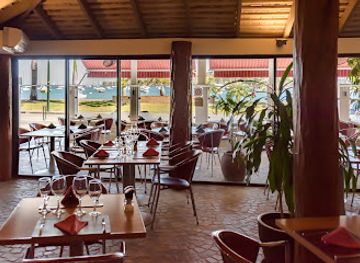
Touho does not have a major nightclub scene. Evening life is more likely to centre on accommodation, family gatherings, community occasions and the occasional simple bar or licensed eatery than on late-night entertainment. Visitors should not expect a concentrated nightlife district, regular club programme or extensive choice of cocktail venues. The most appropriate way to enjoy an evening is often a locally arranged meal, quiet conversation or an early walk in a safe, familiar area, taking care not to disturb nearby homes. Poindimié, outside Touho to the south, offers a broader selection of services, but even there nightlife remains small-scale compared with Nouméa. Check arrangements in advance because rural businesses may have limited or changing opening patterns.
-
Bar
MV Lounge
Discover the lively atmosphere of MV Lounge in Nouméa, offering refreshing drinks and a vibrant social scene by the bay.
-
Restaurant
L'Alizee Snack and Bar
Discover the perfect blend of local cuisine and stunning beach views at L'Alizee Snack and Bar in New Caledonia.
-
Restaurant
Stonegrill Steakhouse Koné
Discover a unique dining experience at Stonegrill Steakhouse Koné in New Caledonia, where you can grill your own steak in a beautiful setting.
-
Bar
LA GUINCHE
Discover La Guinché, a vibrant bar and restaurant in Nouméa, offering stunning ocean views, delicious cuisine, and an unforgettable nightlife experience.



Best nightclubs in Touho
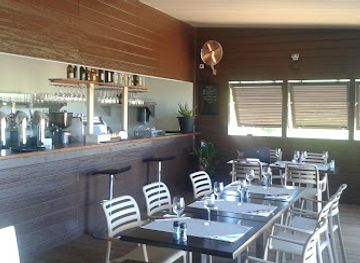
Touho does not have a major nightclub scene. Evening life is more likely to centre on accommodation, family gatherings, community occasions and the occasional simple bar or licensed eatery than on late-night entertainment. Visitors should not expect a concentrated nightlife district, regular club programme or extensive choice of cocktail venues. The most appropriate way to enjoy an evening is often a locally arranged meal, quiet conversation or an early walk in a safe, familiar area, taking care not to disturb nearby homes. Poindimié, outside Touho to the south, offers a broader selection of services, but even there nightlife remains small-scale compared with Nouméa. Check arrangements in advance because rural businesses may have limited or changing opening patterns.
-
Bar
MV Lounge
Discover the vibrant MV Lounge in Nouméa, where exquisite cocktails meet an electrifying nightlife experience in the heart of New Caledonia.
-
Bar
L'Etrave
Discover L'Etrave, the ultimate coastal bar in Nouméa offering stunning ocean views, refreshing cocktails, and a vibrant atmosphere perfect for tourists.
-
Lounge
Hibiscus Lounge Aircalin
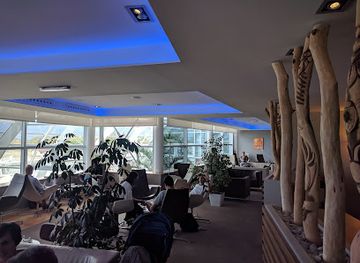
Discover the tropical charm of Hibiscus Lounge Aircalin, a perfect relaxation spot at La Tontouta International Airport in New Caledonia.
-
Bar
Public House Noumea
Discover the lively nightlife of Nouméa at Public House, your go-to bar for cocktails, music, and unforgettable moments in New Caledonia.

Best shops in Touho
Shopping in Touho is limited and practical, with small local businesses, occasional roadside stalls and produce sold by households or community growers. Depending on the season, visitors may find tropical fruit, vegetables and other locally grown food, but availability is informal rather than guaranteed. Carry cash in CFP francs and ask politely about prices, payment and permission before photographing stalls or vendors. Souvenirs are more easily found in larger towns and visitor centres elsewhere in New Caledonia, where Kanak arts and crafts may include woven items, carvings and locally produced goods; buy from reputable sellers and avoid products made from protected wildlife or collected natural materials. Self-catering visitors should purchase most provisions before reaching Touho, while those seeking galleries, a broader high-street selection or regular markets will need to travel to a larger neighbouring centre such as Poindimié, outside the commune.
-
Organic shop
La Boutique Partagée
Discover the best of organic living at La Boutique Partagée, Nouméa's premier destination for fresh, local, and sustainable products.
-
Supermarket
Poindimie Discount
Explore the vibrant flavors of New Caledonia at Poindimie Discount, your local supermarket for fresh produce and unique local goods.
-
Shopping mall
Alimentation Le Djebel
Discover a vibrant blend of local flavors and stylish finds at Alimentation Le Djebel in Nessadiou, New Caledonia.
-
Gift basket store
Les Arts du Pacifique - Anse Vata
Discover the vibrant spirit of New Caledonia at Les Arts du Pacifique, your go-to destination for unique handicrafts and local artistry.


Get your free copy of our complete guide to Touho, delivered straight to you.
Everything on this page, from attractions and restaurants to essentials and local phrases, in one PDF you can read offline, print or share.
Already have an account? Sign in
Your Touho guide is ready.
We'll send it to · Not you? Sign out

Getting your guide ready…
We are putting together a fresh copy of the Touho guide. This can take up to a minute.
This can take a few moments. If your browser asks, choose Allow so the download can start. You'll find the guide in your Downloads folder.
Nothing happened? Download it again
Sorry, the guide is taking longer than usual. Please try again in a minute, or get it by email instead.
Touho essentials
Currency and Payment
Safety
Emergency Situations
Do's and Don'ts
Local Tips
From Eve
Local phrases worth knowing
You don't need to get them perfect. A few words go a long way, and locals appreciate the effort.
Basics
| English | Local | Say it |
|---|---|---|
| Hello | Bula | [boo-lah] |
| Goodbye | Naka | [nah-kah] |
| Yes | Oui | [wee] |
| No | Non | [noh] |
| Please/You're welcome | S'il vous plaît | [seel voo pleh] |
| Thank you | Merci | [mehr-see] |
| Excuse me/Sorry | Pardon | [par-dohn] |
| How are you? | Comment ça va? | [koh-mohn sah vah] |
| Fine. And you? | Bien. Et vous? | [byehn. eh voo] |
| Do you speak English? | Parlez-vous anglais? | [par-lay voo ahn-glay] |
| I don't understand | Je ne comprends pas | [zhuh nuh kohm-prahn pah] |
Eating & Drinking
| English | Local | Say it |
|---|---|---|
| I'd like to see the menu, please | Je voudrais voir le menu, s'il vous plaît | [zhuh voo-dray vwar luh meh-nu, seel voo pleh] |
| I don't eat meat | Je ne mange pas de viande | [zhuh nuh mahnj pah duh vyahnd] |
| Cheers! | Santé! | [sahn-tay] |
| I would like to pay, please | Je voudrais payer, s'il vous plaît | [zhuh voo-dray pay-ay, seel voo pleh] |
Emergencies
| English | Local | Say it |
|---|---|---|
| Help! | Au secours! | [oh suh-koor] |
| Go away! | Allez-vous-en! | [ah-lay voo-zahn] |
| Call the Police! | Appelez la police! | [ah-peh-lay lah poh-lees] |
| Call a doctor! | Appelez un médecin! | [ah-peh-lay uhn may-deh-sin] |
| I'm lost | Je suis perdu | [zhuh swee pair-doo] |
| I'm ill | Je suis malade | [zhuh swee mah-lahd] |
Shopping
| English | Local | Say it |
|---|---|---|
| I'd like to buy... | Je voudrais acheter... | [zhuh voo-dray ah-sheh-tay] |
| I'm just looking | Je regarde juste | [zhuh ruh-gard zhoost] |
| How much is it? | C'est combien? | [seh kohm-byen] |
| That's too expensive | C'est trop cher | [seh troh shair] |
| Can you lower the price? | Pouvez-vous baisser le prix? | [poo-vay voo beh-say luh pree] |
Time & Numbers
| English | Local | Say it |
|---|---|---|
| What time is it? | Quelle heure est-il? | [kel uhr eh-teel] |
| It's one o'clock | Il est une heure | [eel eh ewn uhr] |
| Half past (10) | Dix heures et demie | [dees uhr eh duh-mee] |
| Morning | Matin | [mah-tan] |
| Afternoon | Après-midi | [ah-preh-mee-dee] |
| Evening | Soir | [swahr] |
| Yesterday | Hier | [ee-ehr] |
| Today | Aujourd'hui | [oh-zhoor-dwee] |
| Tomorrow | Demain | [duh-mahn] |
| 1 | Un | [uhn] |
| 2 | Deux | [duh] |
| 3 | Trois | [trwah] |
| 4 | Quatre | [ka-truh] |
| 5 | Cinq | [sank] |
| 6 | Six | [sees] |
| 7 | Sept | [seht] |
| 8 | Huit | [weet] |
| 9 | Neuf | [nuhf] |
| 10 | Dix | [dees] |
Transport & Directions
| English | Local | Say it |
|---|---|---|
| Where's a/the...? | Où est un/une...? | [oo eh uhn/ewn] |
| What's the address? | Quelle est l'adresse? | [kel eh l'ah-dress] |
| Can you show me (on the map)? | Pouvez-vous me montrer (sur la carte)? | [poo-vay voo muh mohn-tray (sur lah kart)] |
| When's the next (bus)? | Quand est le prochain (autobus)? | [kahn eh luh pro-shen (oh-toh-boos)] |
| A ticket (to ....) | Un billet (pour ....) | [uhn bee-yay (poor ....)] |
History of Touho
Lapita Settlement and Austronesian Voyaging
New Caledonia was settled by seafaring communities connected to the wider Lapita cultural network of the western Pacific more than 3,000 years ago. Archaeological evidence across Grande Terre records early communities using distinctive decorated ceramics, cultivating crops and travelling between islands and coastal environments. Although the surviving evidence is uneven from one locality to another, Touho’s coast belongs to this long history of lagoon use, horticulture and maritime movement. The region’s modern Kanak communities descend from later Pacific populations shaped by these migrations and by many centuries of local development.
Kanak Customary Society Before European Rule
Before sustained European intervention, the east coast was organised through Kanak clans, customary relationships, horticultural production and exchanges linking inland valleys with the sea. Land was not simply a commercial commodity: rights, responsibilities and identity were tied to particular places and social relationships. Languages and traditions varied across Grande Terre, and local communities maintained their own histories and networks. In Touho, the continuing importance of customary authority and community obligations reflects this deeper past, even though contemporary life also includes French administration, Christianity, wage employment and modern transport.
European Contact and the Colonial Transformation
European navigators reached New Caledonia in the eighteenth century, but sustained colonial transformation began during the nineteenth century after France took possession of the archipelago in 1853. Missionaries, traders, administrators and settlers gradually changed coastal life, while introduced diseases, labour demands and the loss of land placed severe pressure on Kanak communities. Catholic and Protestant missions became influential in many parts of the east coast, and churches remain visible markers of the social changes that followed. The colonial system imposed new boundaries and institutions over existing customary territories.
Nickel, Roads and the East-Coast Economy
The discovery and exploitation of nickel reshaped New Caledonia from the late nineteenth century onwards. Mining was concentrated in particular upland districts rather than Touho itself, but its effects reached the whole territory through roads, labour migration, administration and economic dependence on the mining sector. Better links along Grande Terre connected east-coast communities with market towns and ports, while many rural households continued to combine wage work, gardening, fishing and customary activities. The contrast between forested customary land, coastal settlements and mineral-bearing highlands remains central to New Caledonia’s geography.
The Kanak Cultural and Political Renaissance
During the twentieth century, Kanak cultural and political movements increasingly challenged colonial inequalities and demanded recognition of indigenous identity, land rights and political representation. The tensions of the 1980s affected communities throughout New Caledonia, including the east coast, and prompted national negotiations. The Matignon Agreements of 1988 and the Nouméa Accord of 1998 established a framework of gradual devolution, economic rebalancing and recognition of Kanak identity. Their legacy is visible in contemporary institutions, customary discussions and the continuing political importance of provincial government.
Contemporary Touho and Provincial Development
Modern Touho combines customary life, public services, tourism on a small scale, agriculture, fishing and links to the wider economy of New Caledonia. Investment in roads, schools, communications and provincial services has improved access, while the commune remains less urbanised than the south-western part of Grande Terre. Tourism is generally based on landscape and cultural respect rather than large resorts. Touho’s present character therefore reflects several continuing influences: Kanak customary authority, French administrative structures, the economic reach of nickel and the environmental value of the east-coast lagoon and forests.
Touho in Photos
Browse through our photo collection highlighting the charm and character of the destination.
Neighbouring regions of Touho
The closest regions to Touho, if you have time for more than one.
-
-

-

-

-


Swipe for more regions
Explore more
Explore more of New Caledonia
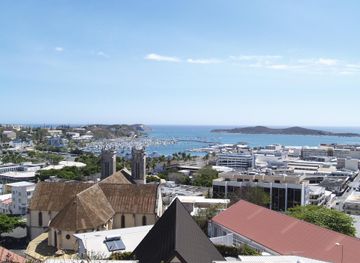
Discover New Caledonia, a captivating blend of French elegance and Pacific beauty, offering pristine beaches, vibrant culture, and unparalleled natural wonders.
Explore New Caledonia