

Free Capital District Travel Guide & Mobile App
Explore Capital District with free travel guides. Discover regional history, expert tips, proposed trips, and audio guides on web or mobile app.


Explore New York’s Capital District for Albany’s grand civic landmarks, Troy’s historic streets, Saratoga Springs culture and Hudson Valley landscapes.
Read more about Capital District
When is the best time to visit Capital District?
Best: June, August–September · 23–28°C| Month | High (°C) | Rainfall (mm) |
|---|---|---|
| January | 1 | 60 |
| February | 4 | 55 |
| March | 10 | 70 |
| April | 15 | 80 |
| May | 21 | 90 |
| June (best) | 26 | 95 |
| July | 29 | 100 |
| August (best) | 28 | 100 |
| September (best) | 23 | 90 |
| October | 16 | 80 |
| November | 9 | 70 |
| December | 4 | 65 |
Getting to and around Capital District
How to get there
Transportation
Top city travel guides in Capital District
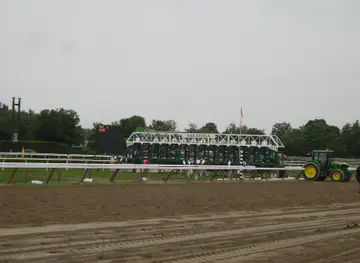
The cities of Capital District, and the easiest places to base yourself.
-

-
-


Swipe for more cities
Destinations in Capital District
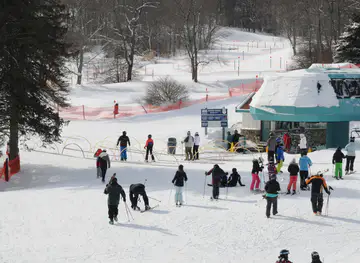
Resorts, valleys and scenic spots worth a trip of their own.
-

-
-

-


Swipe for more destinations
Best attractions in Capital District
The Capital District’s attractions combine government, industrial, military, cultural and outdoor experiences across four counties. Albany rewards visitors with the New York State Museum, the New York State Capitol, the Empire State Plaza’s public art and memorials, historic houses and institutions connected with the city’s colonial and political past. Troy’s nineteenth-century centre and riverfront reveal the wealth created by manufacturing, while Schenectady offers the Museum of Innovation and Science, historic neighbourhoods and reminders of its engineering and railway heritage. Saratoga Springs brings together mineral-spring history, Saratoga Spa State Park, performing arts and thoroughbred racing. The Saratoga National Historical Park, in the northern part of the region, interprets the 1777 campaign through landscapes, trails and historic sites. Riverfront parks, canals, rail trails, wooded preserves and rural roads provide opportunities for walking, cycling, boating and seasonal wildlife observation. The attraction landscape is therefore less about one single sight than about the contrast between formal civic spaces, historic urban districts, large cultural institutions and accessible countryside.
-
Tourist attraction
Howe Caverns
Experience the breathtaking beauty of Howe Caverns, a natural wonder featuring stunning limestone formations and an underground river in New York.
-
Museum
New York State Museum
Explore the rich tapestry of New York's history, art, and science at the New York State Museum, a must-visit cultural treasure in Albany.
-
Tourist attraction
Far Shot Albany
Discover the excitement of axe throwing at Far Shot Albany, where fun meets skill in a vibrant downtown setting.
-
State park
Thacher State Park
Discover the natural beauty and outdoor adventures at Thacher State Park, a stunning state park near Albany, New York, perfect for hiking and relaxation.



Best landmarks in Capital District
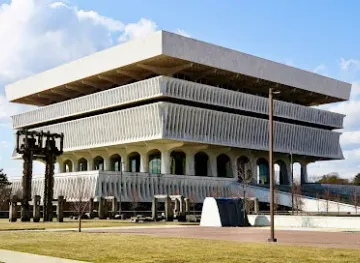
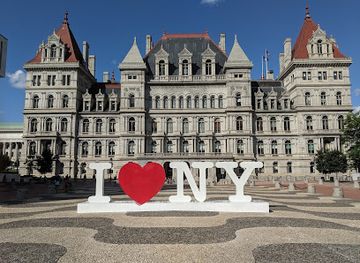
The New York State Capitol is the Capital District’s defining civic landmark, an imposing nineteenth-century building in Albany whose architecture reflects several design phases and the ambitions of state government. Nearby, the Empire State Plaza forms a contrasting modernist ensemble of monumental offices, reflecting pools, public art and memorials. Albany’s Schuyler Mansion preserves the scale and setting of an eighteenth-century colonial residence associated with Philip Schuyler and the revolutionary era. Across the Hudson, Troy’s downtown streets are notable for their nineteenth-century commercial buildings and cast-iron architecture, while the city’s historic churches and riverfront reinforce its industrial identity. Schenectady’s Stockade district contains some of the oldest surviving residential buildings in the region and illustrates the city’s early Dutch and colonial development. Saratoga Springs is marked by grand resort architecture, the broad landscapes of Saratoga Spa State Park and the historic Saratoga Race Course. The Saratoga National Historical Park adds a rural landmark landscape of fields, roads and monuments associated with the decisive 1777 campaign.
-
Museum
New York State Museum
Experience the rich history, art, and culture of New York at the New York State Museum, a captivating destination for tourists of all ages.
-
Park
Washington Park
Explore Washington Park, Albany's serene urban oasis, featuring lush gardens, serene lakes, and vibrant community events amidst historical charm.
-
Performing arts theater
Palace Theatre
Experience the rich cultural tapestry of Albany at the historic Palace Theatre, where captivating performances meet stunning architectural beauty.
-
Historical landmark
New York State Capitol
Explore the New York State Capitol, an architectural gem showcasing rich history and stunning art in the heart of Albany, New York.


Explore Capital District on the map
Plan your trip on one map. See where the top cities, national parks and sights are, and book hotels and experiences in a few clicks.
Best hotels in Capital District
Best restaurants in Capital District
Dining in the Capital District reflects the agricultural landscape of eastern Upstate New York and the layered history of its cities. Albany, Troy, Schenectady and Saratoga Springs offer independent cafés, bakeries, Italian-American restaurants, contemporary kitchens, breweries and long-established diners, while rural areas add farm-focused restaurants, roadside produce stands and country inns. Farmers’ markets are useful places to find seasonal vegetables, apples, maple products, local cheeses, baked goods and prepared foods. Saratoga Springs has a particularly broad restaurant scene linked to tourism, the arts and racing, whereas Troy’s centre is known for cafés, casual dining and market-day activity. Regional menus often draw on familiar American and New York traditions rather than one exclusive local cuisine, with seasonal produce and craft drinks providing the clearest sense of place. Visitors should remember that restaurant prices normally exclude sales tax and that tipping for table service is customary.
-
Steak
The Log Jam Restaurant
Experience delectable steaks and fresh seafood at The Log Jam Restaurant in Lake George – where every meal is a celebration of flavor!
-
Restaurant
Delmonico's Italian Steakhouse
Experience the finest blend of Italian cuisine and classic steakhouse flavors at Delmonico's Italian Steakhouse in Albany.
-
American
Iron Gate Cafe
Discover delightful American cuisine at Iron Gate Cafe in Albany – perfect for breakfast, brunch, or lunch with friends.
-
Grill
City Line Bar and Grill
Experience Albany's vibrant dining scene at City Line Bar and Grill, where American flavors meet a lively atmosphere.


Best bars in Capital District
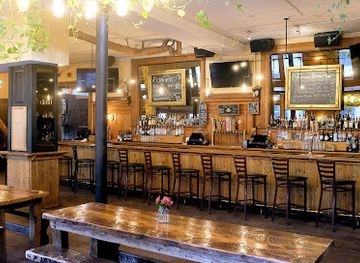
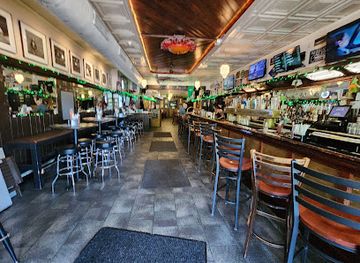
Evening life varies sharply between the Capital District’s cities. Albany has the broadest concentration of bars, restaurants with late evening service, live music and theatre-related venues, with activity centred around downtown and nearby neighbourhoods. Troy combines historic bars, breweries, casual restaurants and occasional live performances in its compact centre, while Schenectady’s nightlife is more closely tied to restaurants, performing arts and neighbourhood establishments. Saratoga Springs has the region’s most visitor-oriented evening scene, including pubs, cocktail bars, live music and venues serving crowds drawn by racing, festivals and the arts. Outside these centres, evenings usually revolve around local pubs, dining rooms, breweries and community events rather than nightclubs. Opening arrangements and entertainment programmes change frequently, so visitors should check current information and plan transport carefully if staying outside an urban centre.
-
Grill
City Line Bar and Grill
Discover the vibrant atmosphere and delicious American cuisine at City Line Bar and Grill, the perfect dining spot in Albany, NY.
-
Restaurant
The City Beer Hall
Discover Albany's craft beer culture at The City Beer Hall, where delicious food meets a vast selection of local brews in a vibrant atmosphere.
-
American
Lake George Beach Club
Dine with a view at Lake George Beach Club, featuring American cuisine and vibrant atmosphere in the heart of Lake George.
-
Irish pub
McGeary's
Discover the heart of Albany at McGeary's Irish Pub, where authentic cuisine meets a vibrant atmosphere for a memorable dining experience.


Best nightclubs in Capital District
-
American
Wunderbar Bistro
Discover the delightful flavors of American cuisine at Wunderbar Bistro, Hudson's top spot for burgers, wings, and more in a cozy atmosphere.
-
Bar
Harvey's Restaurant and Bar
Discover the lively charm of Harvey's Restaurant and Bar, where Irish hospitality meets local flavor in the heart of Saratoga Springs.
-
Performing arts theater
Colony
Discover Colony in Woodstock - a dynamic venue blending performing arts, great food, and a vibrant social scene in the heart of New York.
-
Gay bar
Waterworks Pub
Experience the vibrant nightlife at Waterworks Pub, Albany's premier gay bar and dance club, where fun and inclusivity meet.


Best shops in Capital District
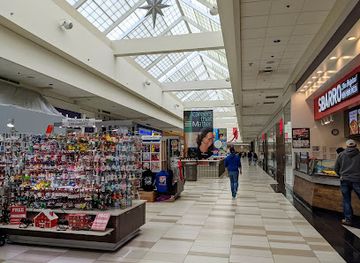
Shopping in the Capital District is strongest in its historic urban centres, where independent shops, cafés, galleries, bookshops and specialist food retailers occupy older commercial streets. Albany offers the widest range of everyday retail alongside museum shops and stores selling New York-themed gifts, while Troy is particularly suited to browsing small businesses, antiques, design goods and market produce. Schenectady’s central districts contain local retailers and food businesses, although the shopping experience is more neighbourhood-based than that of a major metropolitan centre. Saratoga Springs has a more visitor-focused selection of boutiques, galleries, equestrian-related goods, regional food products and independent fashion shops. Farmers’ markets and farm stands provide seasonal fruit, vegetables, maple products, baked goods and locally made provisions; their schedules vary during the year. Craft beverages, artwork and books are practical souvenirs, while visitors should distinguish genuinely regional products from generic New York State merchandise.
-
Shopping mall
Crossgates Mall
Discover the ultimate shopping and entertainment experience at Crossgates Mall, Albany's premier destination with diverse shops, dining, and recreation.
-
Shopping mall
Colonie Center
Explore Colonie Center, Albany's premier shopping mall, featuring a diverse range of shops, dining, and entertainment for all ages.
-
Shopping mall
Stuyvesant Plaza
Experience the charm of Stuyvesant Plaza, Albany's premier shopping destination with a unique mix of shops and dining options.
-
Shopping mall
Westgate Plaza
Explore Westgate Plaza in Albany for an unforgettable shopping experience filled with diverse stores and delicious dining options.
Get your free copy of our complete guide to Capital District, delivered straight to you.
Everything on this page, from attractions and restaurants to essentials and local phrases, in one PDF you can read offline, print or share.
Already have an account? Sign in
Your Capital District guide is ready.
We'll send it to · Not you? Sign out

Getting your guide ready…
We are putting together a fresh copy of the Capital District guide. This can take up to a minute.
This can take a few moments. If your browser asks, choose Allow so the download can start. You'll find the guide in your Downloads folder.
Nothing happened? Download it again
Sorry, the guide is taking longer than usual. Please try again in a minute, or get it by email instead.
Capital District essentials
Currency and Payment
Safety
Emergency Situations
Do's and Don'ts
Local Tips
From Eve
Local phrases worth knowing
You don't need to get them perfect. A few words go a long way, and locals appreciate the effort.
Basics
| English | Local | Say it |
|---|---|---|
| Hello | Hey | [Hey] |
| Goodbye | See ya | [See ya] |
| Yes | Yeah | [Yeah] |
| No | Nah | [Nah] |
| Please/You're welcome | No problem | [No prob-lem] |
| Thank you | Thanks | [Thanks] |
| Excuse me/Sorry | Sorry | [Sorry] |
| How are you? | How you doin'? | [How you doin'?] |
| Fine. And you? | Good. You? | [Good. You?] |
| Do you speak English? | You speak English? | [You speak English?] |
| I don't understand | I don't get it | [I don't get it] |
Eating & Drinking
| English | Local | Say it |
|---|---|---|
| I'd like to see the menu, please | Can I see the menu? | [Can I see the menu?] |
| I don't eat meat | I'm vegetarian | [I'm ve-ge-ta-ri-an] |
| Cheers! | Cheers! | [Cheers!] |
| I would like to pay, please | Can I get the check? | [Can I get the check?] |
Emergencies
| English | Local | Say it |
|---|---|---|
| Help! | Help! | [Help!] |
| Go away! | Leave me alone! | [Leave me a-lone!] |
| Call the Police! | Call the cops! | [Call the cops!] |
| Call a doctor! | Get a doctor! | [Get a doc-tor!] |
| I'm lost | I'm lost | [I'm lost] |
| I'm ill | I'm sick | [I'm sick] |
Shopping
| English | Local | Say it |
|---|---|---|
| I'd like to buy... | I wanna buy... | [I wanna buy...] |
| I'm just looking | Just browsing | [Just browsing] |
| How much is it? | How much? | [How much?] |
| That's too expensive | That's pricey | [That's pricey] |
| Can you lower the price? | Can you drop the price? | [Can you drop the price?] |
Time & Numbers
| English | Local | Say it |
|---|---|---|
| What time is it? | What time is it? | [What time is it?] |
| It's one o'clock | It's one | [It's one] |
| Half past (10) | Half past ten | [Half past ten] |
| Morning | Morning | [Morning] |
| Afternoon | Afternoon | [Afternoon] |
| Evening | Evening | [Evening] |
| Yesterday | Yesterday | [Yesterday] |
| Today | Today | [Today] |
| Tomorrow | Tomorrow | [Tomorrow] |
| 1 | One | [One] |
| 2 | Two | [Two] |
| 3 | Three | [Three] |
| 4 | Four | [Four] |
| 5 | Five | [Five] |
| 6 | Six | [Six] |
| 7 | Seven | [Seven] |
| 8 | Eight | [Eight] |
| 9 | Nine | [Nine] |
| 10 | Ten | [Ten] |
Transport & Directions
| English | Local | Say it |
|---|---|---|
| Where's a/the...? | Where's the...? | [Where's the...?] |
| What's the address? | What's the address? | [What's the address?] |
| Can you show me (on the map)? | Can you show me on the map? | [Can you show me on the map?] |
| When's the next (bus)? | When's the next bus? | [When's the next bus?] |
| A ticket (to ....) | A ticket to... | [A ticket to...] |
History of Capital District
Indigenous Trade and the Hudson–Mohawk Corridor
Long before European settlement, the Hudson and Mohawk river valleys were important travel and trading routes for Indigenous peoples, including the Haudenosaunee, or Iroquois Confederacy, whose western nations occupied much of present-day New York. The Mohawk River provided a natural route between the interior and the Hudson, helping make the area strategically significant. Indigenous place names and continuing Native presence remain part of the region’s historical context, although colonial development profoundly altered land ownership, communities and political power.
Dutch Albany and Colonial Competition
Dutch traders established Fort Nassau on the Hudson in the early seventeenth century, followed by Fort Orange and the settlement that developed into Beverwyck and later Albany. The river port became a centre for the fur trade and for exchange with Indigenous communities. English control of New Netherland from 1664 brought new political arrangements, but Albany retained its role as a northern gateway. The city’s colonial street pattern and surviving historic houses reflect this early period, although much of the original settlement has been transformed by later expansion.
The Revolutionary Era and Fort Ticonderoga Routes
The Capital District stood at the centre of military movement during the American Revolution because the Hudson–Mohawk corridor connected New England, the Great Lakes and the northern frontier. The 1777 Saratoga campaign unfolded north of Albany in present-day Saratoga County, where American victories helped persuade France to support the revolutionary cause. Albany and surrounding settlements served as supply, transport and political centres, while Schenectady and the Mohawk valley remained exposed to frontier warfare. Historic houses, cemeteries and battle-related sites preserve aspects of this turbulent era.
Albany Becomes New York’s Capital
Albany was selected as New York’s permanent capital in 1797, a decision that gave the city lasting political importance. State government stimulated construction, professional activity and population growth, while the Erie Canal, completed in 1825, strengthened Albany’s connection with the Great Lakes and the interior. The canal and Hudson helped consolidate the region as a transport and commercial hub. Government buildings, nineteenth-century neighbourhoods and the continuing presence of the state legislature all stem from this transformation.
Canals, Industry and Urban Expansion
The nineteenth century brought rapid industrial development along the region’s waterways. Troy became famous for iron production, textiles and stove manufacturing, while Schenectady grew through locomotive production and later electrical engineering. The Erie Canal and connected transport routes supported trade, and railways further integrated the Capital District into national markets. Immigrants and migrants supplied labour and created enduring communities. Troy’s commercial architecture, Schenectady’s industrial heritage and Albany’s waterfront history are visible legacies of this era.
Saratoga Springs and the Resort Economy
Saratoga Springs developed around mineral springs that attracted visitors during the nineteenth century, when fashionable resorts, hotels and social institutions made the town one of the northeastern United States’ best-known spa destinations. Thoroughbred racing, established in 1863, added another enduring economic and cultural influence. The city’s parks, grand hotels, Victorian and neoclassical buildings, and the Saratoga Race Course all reflect the transition from a health resort to a diversified visitor economy centred on heritage, the arts, recreation and racing.
Modern Government, Science and Culture
Twentieth-century changes reshaped the Capital District while preserving its role as a regional centre. New York State government expanded, especially around Albany’s Empire State Plaza, a large modernist complex developed in the mid-twentieth century. Schenectady’s General Electric laboratories contributed to the history of electrical engineering and scientific research, while colleges and cultural institutions broadened the region’s intellectual life. Today, the Capital District combines public administration, education, technology, healthcare, historic tourism and rural production rather than relying on the industrial economy that once dominated its river cities.
Capital District in Photos
Browse through our photo collection highlighting the charm and character of the destination.
Neighbouring regions of Capital District
The closest regions to Capital District, if you have time for more than one.
-
-
-

-

-


Swipe for more regions
Explore more

Explore more of New York
Discover the electrifying energy, iconic landmarks, and diverse cultural experiences of New York City, the ultimate urban playground for travelers from around the world.
Explore New York