

Leon Volcano Boarding Travel Guide - Free Web & App
Your ultimate guide to Leon Volcano Boarding. Discover top landmarks, proposed trips, and local tips. Free on the web or via the Evendo companion app.


Leon Volcano Boarding in Nicaragua combines Cerro Negro’s black volcanic slopes, guided descents, crater views, colonial León and Pacific landscapes.
A Volcanic Adventure near León
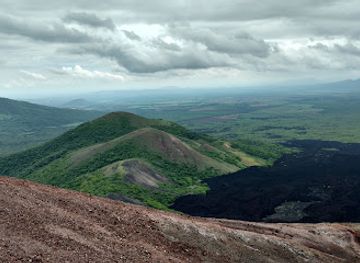
Leon Volcano Boarding refers to the guided adventure centred on Cerro Negro, an active cinder-cone volcano in western Nicaragua, roughly 25 kilometres north-east of the colonial city of León. The approach crosses dry tropical countryside before reaching a stark landscape of black ash, fractured lava and sparse vegetation. Cerro Negro is not a conventional ski mountain: visitors climb the broad volcanic flank on foot, usually carrying a specially designed board, then descend a loose ash slope under instruction from a guide. Conditions are exposed, hot and highly dependent on weather and the volcano’s surface.Read more about Leon Volcano Boarding
Cerro Negro and the Wider Landscape
León as the Cultural Base
When is the best time to visit Leon Volcano Boarding?
Best: January, July–August · 30°C| Month | High (°C) | Rainfall (mm) |
|---|---|---|
| January (best) | 30 | 4 |
| February | 31 | 4 |
| March | 31 | 3 |
| April | 32 | 3 |
| May | 31 | 2 |
| June | 30 | 2 |
| July (best) | 30 | 1 |
| August (best) | 30 | 1 |
| September | 31 | 2 |
| October | 31 | 2 |
| November | 31 | 3 |
| December | 31 | 3 |
Getting to and around Leon Volcano Boarding
How to get there
Transportation
Best attractions in Leon Volcano Boarding
The principal attraction is Cerro Negro itself, where a guided climb across black scoria leads to broad views over Nicaragua’s volcanic Pacific plain and, subject to visibility, neighbouring cones and distant coastal landscapes. The volcano-boarding descent is the defining experience, but the geological setting is equally important: ash fields, lava textures and the stark contrast between young volcanic ground and surrounding farmland make the site a memorable natural classroom. Most excursions begin and end in León, whose historic centre adds a substantial cultural dimension without being part of the volcano. Visitors can explore the city’s cathedral, colonial churches, murals, museums and lively public spaces before or after travelling into the countryside. Depending on the itinerary and current access, regional tours may also connect Cerro Negro with other volcanic or rural attractions, but these should be treated as separate excursions rather than assumed inclusions in every volcano-boarding trip.
-
Hiking area
Cerro Negro
Explore the breathtaking Cerro Negro, Nicaragua's iconic volcano, perfect for hiking and thrilling volcano boarding adventures amidst stunning landscapes.
Explore Leon Volcano Boarding on the map
Plan your trip on one map. See where the top attractions, landmarks, restaurants and hotels are, and book hotels and experiences in a few clicks.
Best hotels in Leon Volcano Boarding
Get your free copy of our complete guide to Leon Volcano Boarding, delivered straight to you.
Everything on this page, from attractions and restaurants to essentials and local phrases, in one PDF you can read offline, print or share.
Already have an account? Sign in
Your Leon Volcano Boarding guide is ready.
We'll send it to · Not you? Sign out

Getting your guide ready…
We are putting together a fresh copy of the Leon Volcano Boarding guide. This can take up to a minute.
This can take a few moments. If your browser asks, choose Allow so the download can start. You'll find the guide in your Downloads folder.
Nothing happened? Download it again
Sorry, the guide is taking longer than usual. Please try again in a minute, or get it by email instead.
Leon Volcano Boarding essentials
Currency and Payment
Safety
Emergency Situations
Do's and Don'ts
Local Tips
From Eve
Local phrases worth knowing
You don't need to get them perfect. A few words go a long way, and locals appreciate the effort.
Basics
| English | Local | Say it |
|---|---|---|
| Hello | Hola | [oh-lah] |
| Goodbye | Adiós | [ah-dee-ohs] |
| Yes | Sí | [see] |
| No | No | [noh] |
| Please/You're welcome | Por favor/De nada | [por fah-vor/de nah-dah] |
| Thank you | Gracias | [grah-see-ahs] |
| Excuse me/Sorry | Perdón/Lo siento | [pair-dohn/loh see-ehn-toh] |
| How are you? | ¿Cómo estás? | [koh-moh ehs-tahs] |
| Fine. And you? | Bien. ¿Y tú? | [bee-ehn. ee too] |
| Do you speak English? | ¿Hablas inglés? | [ah-blahs een-glehs] |
| I don't understand | No entiendo | [noh ehn-tee-ehn-doh] |
Eating & Drinking
| English | Local | Say it |
|---|---|---|
| I'd like to see the menu, please | Me gustaría ver el menú, por favor | [may goo-stah-ree-ah behr el meh-noo, poor fah-vor] |
| I don't eat meat | No como carne | [noh koh-moh kahr-neh] |
| Cheers! | ¡Salud! | [sah-lood] |
| I would like to pay, please | Me gustaría pagar, por favor | [may goo-stah-ree-ah pah-gahr, poor fah-vor] |
Emergencies
| English | Local | Say it |
|---|---|---|
| Help! | ¡Ayuda! | [ah-yoo-dah] |
| Go away! | ¡Vete! | [veh-teh] |
| Call the Police! | ¡Llama a la policía! | [yah-mah ah lah poh-lee-see-ah] |
| Call a doctor! | ¡Llama a un doctor! | [yah-mah ah oon dohk-tohr] |
| I'm lost | Estoy perdido/a | [ehs-toy pair-dee-doh/ah] |
| I'm ill | Estoy enfermo/a | [ehs-toy ehn-fehr-moh/ah] |
Shopping
| English | Local | Say it |
|---|---|---|
| I'd like to buy... | Me gustaría comprar... | [may goo-stah-ree-ah kohm-prahr...] |
| I'm just looking | Solo estoy mirando | [soh-loh ehs-toy meer-ahn-doh] |
| How much is it? | ¿Cuánto cuesta? | [kwan-toh kwehs-tah] |
| That's too expensive | Eso es muy caro | [eh-soh ehs mwee kah-roh] |
| Can you lower the price? | ¿Puedes bajar el precio? | [pweh-dehs bah-har el preh-see-oh] |
Time & Numbers
| English | Local | Say it |
|---|---|---|
| What time is it? | ¿Qué hora es? | [keh oh-rah ehs] |
| It's one o'clock | Es la una | [ehs lah oo-nah] |
| Half past (10) | Y media (10) | [ee meh-dee-ah (dee-ehs)] |
| Morning | Mañana | [mah-nyah-nah] |
| Afternoon | Tarde | [tahr-deh] |
| Evening | Noche | [noh-cheh] |
| Yesterday | Ayer | [ah-yehr] |
| Today | Hoy | [oy] |
| Tomorrow | Mañana | [mah-nyah-nah] |
| 1 | Uno | [oo-noh] |
| 2 | Dos | [dohs] |
| 3 | Tres | [trehs] |
| 4 | Cuatro | [kwah-troh] |
| 5 | Cinco | [seen-koh] |
| 6 | Seis | [says] |
| 7 | Siete | [syeh-teh] |
| 8 | Ocho | [oh-choh] |
| 9 | Nueve | [nweh-veh] |
| 10 | Diez | [dyehs] |
Transport & Directions
| English | Local | Say it |
|---|---|---|
| Where's a/the...? | ¿Dónde está el/la...? | [dohn-deh ehs-tah el/lah] |
| What's the address? | ¿Cuál es la dirección? | [kwal ehs lah dee-rehk-syohn] |
| Can you show me (on the map)? | ¿Puedes mostrarme (en el mapa)? | [pweh-dehs mohs-trar-meh (ehn el mah-pah)] |
| When's the next (bus)? | ¿Cuándo es el próximo (autobús)? | [kwan-doh ehs el proh-ksee-moh (ow-toh-boos)] |
| A ticket (to ....) | Un boleto (a ....) | [oon boh-leh-toh (ah ....)] |
History of Leon Volcano Boarding
A Young Volcanic Cone
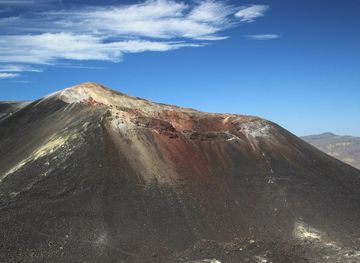
Cerro Negro is a relatively young cinder cone in Nicaragua’s active Maribios volcanic range. It first emerged in 1850, when an eruption built a dark cone above the surrounding Pacific lowlands. Subsequent eruptions added lava and ash, reshaping the crater and slopes that visitors see today. Unlike older, heavily vegetated volcanoes, its recent formation is particularly legible in the bare scoria and black lava fields. The volcano’s changing surface is therefore part of a continuing geological process rather than simply a historic backdrop to the boarding activity.
Eruptions and Local Landscapes
Cerro Negro has erupted repeatedly since its formation, including significant activity during the twentieth century. Ash and lava from these episodes affected nearby rural land and contributed to the wider volcanic character of western Nicaragua. Communities around León have long lived with the opportunities and risks of fertile volcanic soils, while the cone itself remains an active geological feature rather than a dormant monument. Visitors should treat current access and activity conditions as changeable, following local guidance instead of assuming that every part of the volcano is open.
León’s Colonial and Revolutionary Heritage
The volcano is most commonly reached from León, a city whose history gives the excursion an important cultural setting. León was founded during the Spanish colonial period and became a major centre of religion, education and political life. Its cathedral, churches and historic streets reflect colonial and later republican development, while murals and public monuments recall Nicaragua’s revolutionary history. The relationship between city and volcano is practical as well as cultural: León supplies the accommodation, food, transport links and guiding services used by most visitors to Cerro Negro.
From Eruption Site to Adventure Destination
Volcano boarding developed in Nicaragua in the early twenty-first century as guides began adapting boards and protective equipment for controlled descents over Cerro Negro’s loose ash. The activity transformed a geological excursion into a participatory adventure while keeping the volcano itself at the centre of the experience. Its growth has brought income to guides and transport providers in León, but it also makes responsible visitor management important. Staying with authorised guides, avoiding unnecessary disturbance to the cone and carrying waste away help protect a landscape that remains both active and fragile.
Leon Volcano Boarding in Photos
Browse through our photo collection highlighting the charm and character of the destination.
Neighbouring destination travel guides
The closest destinations to Leon Volcano Boarding, if you have time for more than one.
-

-

-

-

-


Swipe for more destinations
Explore more
Explore more of Leonese Plains
Discover the Leonese Plains of Nicaragua: A blend of scenic landscapes, rich cultural heritage, and outdoor adventures, perfect for nature lovers and history enthusiasts.
Explore Leonese Plains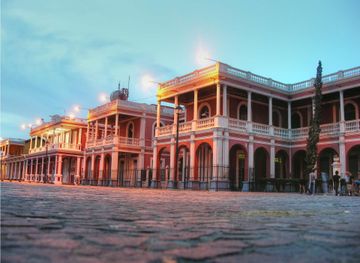
Explore more of Nicaragua
Discover Nicaragua: Explore breathtaking lakes, active volcanoes, colonial cities, and pristine beaches in a country rich with culture and adventure.
Explore Nicaragua