

Free San Juan del Sur Travel Guide & Mobile App
Plan your San Juan del Sur trip with Evendo. Get free guides to top attractions, restaurants, hotels, and bars. Web access or download the mobile app.


San Juan del Sur, Nicaragua, pairs Pacific beaches with fishing-town character, sunset viewpoints, surf culture, seafood, and easy access to regional nature.
A Pacific Town with a Working Harbour
San Juan del Sur curves around a sheltered bay on Nicaragua’s south-western Pacific coast, where fishing boats, surfboards and brightly painted pangas share the water. The town is compact enough to explore on foot, with a waterfront promenade, a central beach and streets lined with cafés, small hotels, seafood restaurants and independent businesses. Its setting is the defining feature: steep green hills fall towards the bay, while the Pacific horizon changes colour from hazy blue by day to copper and rose at sunset.Read more about San Juan del Sur
Beaches, Hills and Open Horizons
From Transit Port to Leisure Base
When is the best time to visit San Juan del Sur?
Best: January–March · 32–33°C| Month | High (°C) | Rainfall (mm) |
|---|---|---|
| January (best) | 32 | 4 |
| February (best) | 32 | 4 |
| March (best) | 33 | 3 |
| April | 33 | 3 |
| May | 33 | 2 |
| June | 33 | 2 |
| July | 33 | 2 |
| August | 34 | 3 |
| September | 34 | 3 |
| October | 34 | 4 |
| November | 34 | 4 |
| December | 34 | 5 |
Getting to and around San Juan del Sur
How to get there
Transportation
Best attractions in San Juan del Sur
San Juan del Sur’s principal attraction is its broad crescent-shaped bay, where the town beach, waterfront promenade and working harbour create an easy introduction to Pacific coastal life. The Christ of the Mercy statue rises above the southern headland, offering a sweeping view over the town and ocean. In the centre, the modest white church, local market and streets behind the beach reveal a quieter side of the settlement, while the harbour is a departure point for boat outings and fishing trips. Beyond the bay, nearby Playa Maderas is known for surf and a more rugged setting, while Playa Marsella and Playa Hermosa offer alternative stretches of coast; these are outside the central town and require road transport. The surrounding hills are also important to the experience, with viewpoints, tropical vegetation and changing light across the Pacific. Wildlife and nature excursions can extend towards coastal reserves and rural landscapes in the wider Rivas region.
-
Tourist attraction
Cristo de La Misericordia
Discover breathtaking views and spiritual tranquility at Cristo de La Misericordia, a must-visit landmark in San Juan del Sur, Nicaragua.
17 min walk · 1.4 km from city centre
-
Beach
Playa Maderas
Experience the enchanting Playa Maderas, a stunning beach in Nicaragua known for its surf culture, vibrant sunsets, and lush landscapes.
18 min drive · 5.9 km from city centre
-
Beach
Playa San Juan del Sur
Discover the vibrant charm of San Juan del Sur, Nicaragua - a beach paradise with stunning sunsets, thrilling water sports, and a lively local culture.
8 min walk · 0.7 km from city centre
-
Boat tour agency
Nica Sail & Surf The Catamaran
Experience the beauty of Nicaragua's coastline with unforgettable catamaran tours at Nica Sail & Surf in San Juan del Sur.
3 min walk · 0.2 km from city centre


Best landmarks in San Juan del Sur
The most recognisable landmark in San Juan del Sur is the Christ of the Mercy statue, a large contemporary religious monument positioned high on the southern headland and associated with expansive views across the bay. In the town centre, the white Iglesia San Juan del Sur provides a modest architectural focal point near the main streets and waterfront. The bay itself is a historical landmark of geography: its sheltered anchorage helped make the settlement a Pacific port during nineteenth-century trans-isthmian travel. The former port character is still legible in the relationship between the beach, harbour and commercial streets, although much of the present town has developed through tourism rather than monumental architecture. Hillside viewpoints and the curving shoreline complete the town’s visual identity, linking its religious, maritime and coastal symbols in a compact setting.
-
Tourist attraction
Cristo de La Misericordia
Explore the breathtaking vistas and spiritual serenity at Cristo de La Misericordia, a must-visit landmark in San Juan del Sur, Nicaragua.
17 min walk · 1.4 km from city centre
-
Park
Malecón de San Juan del Sur
Discover the beauty and vibrant culture of San Juan del Sur at the scenic Malecón, a waterfront paradise perfect for relaxation and adventure.
5 min walk · 0.4 km from city centre
-
Hostel
Selina Maderas
Discover the perfect blend of adventure and relaxation at Selina Maderas, a vibrant hostel and coworking space in San Juan del Sur, Nicaragua.
16 min drive · 5.2 km from city centre
-
 Hotel
Villas de Palermo Hotel and Resort
Experience the serene beauty of San Juan del Sur at Villas de Palermo Hotel and Resort, where luxury meets authentic Nicaraguan hospitality.
6 min drive · 2.1 km from city centre


Explore San Juan del Sur on the map
Plan your San Juan del Sur trip on one map. See where the top attractions, landmarks, restaurants, bars and hotels are, find what's near where you're staying, and book hotels and experiences in a few clicks.
Best hotels in San Juan del Sur
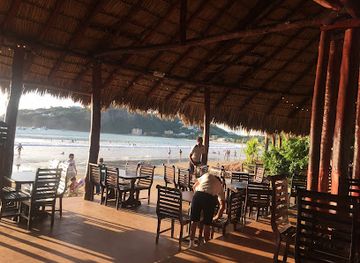
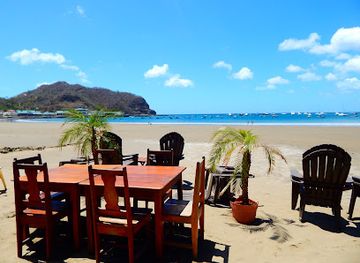
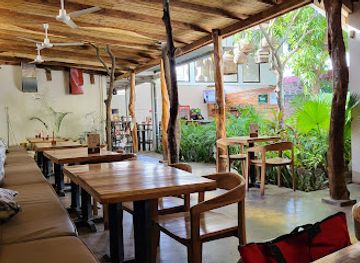
Best restaurants in San Juan del Sur
San Juan del Sur’s food scene reflects its Pacific setting and the mixture of long-established local life with international visitors. Fresh fish, shrimp and other seafood appear in restaurants along and behind the waterfront, while local cooking commonly features rice, beans, plantains, tortillas and grilled meats. Nicaraguan staples such as gallo pinto, nacatamales and soups provide a contrast to the salads, burgers, pizzas and vegetarian dishes found in businesses serving travellers and the surfing community. Small cafés, juice counters and casual eateries are useful for breakfast and daytime meals, while the central streets offer more varied evening dining than the beach itself. Local markets and neighbourhood shops provide fruit, snacks and basic provisions, and roadside food stalls may offer simple grilled or fried dishes. Menus, opening patterns and payment methods can vary by season, so the town rewards flexibility rather than a fixed dining itinerary.
-
Restaurant
Restaurante El Timón
Experience authentic Nicaraguan cuisine at Restaurante El Timón in San Juan del Sur – where fresh ingredients meet warm hospitality.
1 min walk · 0.1 km from city centre
-
Restaurant
Iguana Bar
Experience vibrant flavors and stunning views at Iguana Bar in San Juan del Sur - your ultimate tropical getaway.
1 min walk · 0.1 km from city centre
-
Restaurant
Dale Pues
Experience the flavors of Nicaragua at Dale Pues – where delicious cuisine meets vibrant atmosphere in San Juan del Sur.
3 min walk · 0.2 km from city centre
-
Restaurant
Tuani's
Experience vibrant nightlife and exquisite dining at Tuani's in San Juan del Sur, where every meal is a celebration.
6 min walk · 0.5 km from city centre

Best bars in San Juan del Sur
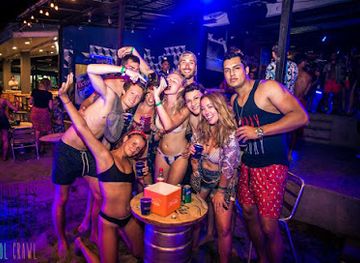
Evenings in San Juan del Sur centre around the waterfront and the streets close to the main beach, where informal bars, cafés and restaurants create a social atmosphere after sunset. The town is known for a lively weekend and holiday scene, with music, dancing and gatherings that can continue late, while other evenings are quieter and better suited to a drink overlooking the bay. Surf-oriented businesses and casual bars attract an international crowd, but local Nicaraguan music and conversation remain part of the atmosphere. Nightlife is concentrated and walkable in the centre, although roads towards hillside accommodation and outlying beaches become dark and quiet. Visitors should use established taxis after late nights, keep belongings close in crowded venues and check current local conditions rather than assuming every venue operates year-round.
-
Bar
Iguana Bar
Discover Iguana Bar in San Juan del Sur, where vibrant nightlife meets delicious cuisine and stunning ocean views for an unforgettable experience.
1 min walk · 0.1 km from city centre
-
Bar
Dale Pues
Discover the vibrant atmosphere and delicious offerings at Dale Pues, your go-to bar and restaurant in San Juan del Sur.
3 min walk · 0.2 km from city centre
-
Bar
Tuani's
Discover the essence of San Juan del Sur's nightlife at Tuani's, where exceptional drinks, live music, and a welcoming atmosphere await.
6 min walk · 0.5 km from city centre
-
Restaurant
Simon Says
Experience the vibrant flavors of vegan cuisine and refreshing cocktails at Simon Says in San Juan del Sur.
2 min walk · 0.1 km from city centre


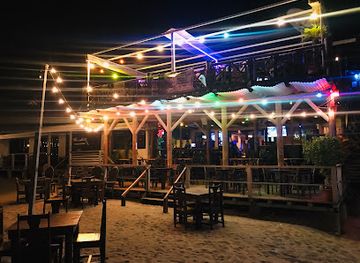
Best nightclubs in San Juan del Sur
Evenings in San Juan del Sur centre around the waterfront and the streets close to the main beach, where informal bars, cafés and restaurants create a social atmosphere after sunset. The town is known for a lively weekend and holiday scene, with music, dancing and gatherings that can continue late, while other evenings are quieter and better suited to a drink overlooking the bay. Surf-oriented businesses and casual bars attract an international crowd, but local Nicaraguan music and conversation remain part of the atmosphere. Nightlife is concentrated and walkable in the centre, although roads towards hillside accommodation and outlying beaches become dark and quiet. Visitors should use established taxis after late nights, keep belongings close in crowded venues and check current local conditions rather than assuming every venue operates year-round.
-
Bar
Iguana Bar
Discover the vibrant nightlife and delicious cuisine at Iguana Bar, a must-visit destination in San Juan del Sur, Nicaragua.
1 min walk · 0.1 km from city centre
-
Night club
Tuani's
Dive into the nightlife at Tuani's, a lively club in San Juan del Sur featuring live music, delicious food, and a vibrant atmosphere for all.
6 min walk · 0.5 km from city centre
-
Bar
Arribas Bar
Experience the vibrant nightlife and stunning views at Arribas Bar in San Juan del Sur, where every night is a celebration of life.
2 min walk · 0.2 km from city centre
-
Bar
Republika
Discover the lively atmosphere of Republika, a top bar and restaurant in San Juan del Sur, serving exquisite food and cocktails in a vibrant setting.
2 min walk · 0.1 km from city centre

Best shops in San Juan del Sur
Shopping in San Juan del Sur is concentrated around the central streets, the waterfront and the local market rather than a large enclosed retail district. Market stalls and small shops sell fruit, drinks, everyday provisions and practical beach goods, while independent businesses offer clothing, swimwear, surf equipment, jewellery, artwork and souvenirs aimed at both residents and visitors. Nicaraguan ceramics, hammocks, woven items, carved crafts and packaged coffee or cacao can make more meaningful purchases than generic beach merchandise, although provenance and quality vary between sellers. Small galleries and artisan-oriented shops appear among cafés and accommodation businesses, giving the centre a mixed, informal retail character. Bargaining may be appropriate in some market settings but not in established shops; ask politely and carry córdobas for modest purchases, as smaller retailers may not process cards.
-
Convenience store
Super Express - San Juan del Sur
Discover Super Express, your ultimate convenience store in San Juan del Sur, offering essential shopping for every traveler’s needs.
1 min walk · 0.1 km from city centre
-
Supermarket
Ocean Market San Juan del Sur
Discover fresh local produce and international treats at Ocean Market San Juan del Sur, your one-stop supermarket for culinary delights.
3 min walk · 0.2 km from city centre
-
Clothing store
We Stay Lost
Discover unique clothing and souvenirs at We Stay Lost in San Juan del Sur, where local culture meets vibrant fashion to enhance your travel experience.
2 min walk · 0.1 km from city centre
-
Clothing store
Auric Surf
Discover the essence of the surf lifestyle at Auric Surf, your go-to destination for stylish beachwear and quality surf gear in San Juan del Sur.
2 min walk · 0.1 km from city centre


Get your free copy of our complete guide to San Juan del Sur, delivered straight to you.
Everything on this page, from attractions and restaurants to essentials and local phrases, in one PDF you can read offline, print or share.
Already have an account? Sign in
Your San Juan del Sur guide is ready.
We'll send it to · Not you? Sign out

Getting your guide ready…
We are putting together a fresh copy of the San Juan del Sur guide. This can take up to a minute.
This can take a few moments. If your browser asks, choose Allow so the download can start. You'll find the guide in your Downloads folder.
Nothing happened? Download it again
Sorry, the guide is taking longer than usual. Please try again in a minute, or get it by email instead.
San Juan del Sur essentials
Currency and Payment
Safety
Emergency Situations
Do's and Don'ts
Local Tips
From Eve
Local phrases worth knowing
You don't need to get them perfect. A few words go a long way, and locals appreciate the effort.
Basics
| English | Local | Say it |
|---|---|---|
| Hello | Hola | [oh-lah] |
| Goodbye | Adiós | [ah-dee-ohs] |
| Yes | Sí | [see] |
| No | No | [noh] |
| Please/You're welcome | Por favor/De nada | [por fah-vor/deh nah-dah] |
| Thank you | Gracias | [grah-see-ahs] |
| Excuse me/Sorry | Disculpe/Perdón | [dees-kool-peh/pehr-dohn] |
| How are you? | ¿Cómo estás? | [koh-moh ehs-tahs] |
| Fine. And you? | Bien. ¿Y tú? | [byen. ee too] |
| Do you speak English? | ¿Hablas inglés? | [ah-blahs een-glehs] |
| I don't understand | No entiendo | [noh ehn-tee-ehn-doh] |
Eating & Drinking
| English | Local | Say it |
|---|---|---|
| I'd like to see the menu, please | Me gustaría ver el menú, por favor | [meh goo-stah-ree-ah vehr ehl meh-noo, por fah-vor] |
| I don't eat meat | No como carne | [noh koh-moh kahr-neh] |
| Cheers! | ¡Salud! | [sah-loohd] |
| I would like to pay, please | Quisiera pagar, por favor | [kee-see-eh-rah pah-gahr, por fah-vor] |
Emergencies
| English | Local | Say it |
|---|---|---|
| Help! | ¡Ayuda! | [ah-yoo-dah] |
| Go away! | ¡Vete! | [veh-teh] |
| Call the Police! | ¡Llama a la policía! | [yah-mah ah lah poh-lee-see-ah] |
| Call a doctor! | ¡Llama a un doctor! | [yah-mah ah oon dohk-tohr] |
| I'm lost | Estoy perdido/a | [ehs-toy pehr-dee-doh/ah] |
| I'm ill | Estoy enfermo/a | [ehs-toy ehn-fehr-moh/ah] |
Shopping
| English | Local | Say it |
|---|---|---|
| I'd like to buy... | Me gustaría comprar... | [meh goo-stah-ree-ah kohm-prahr] |
| I'm just looking | Sólo estoy mirando | [soh-loh ehs-toy mee-rahn-doh] |
| How much is it? | ¿Cuánto cuesta? | [kwahn-toh kwehs-tah] |
| That's too expensive | Eso es muy caro | [eh-soh ehs mwee kah-roh] |
| Can you lower the price? | ¿Puedes rebajar el precio? | [pweh-dehs reh-bah-hahr ehl pree-eh-soh] |
Time & Numbers
| English | Local | Say it |
|---|---|---|
| What time is it? | ¿Qué hora es? | [keh oh-rah ehs] |
| It's one o'clock | Es la una | [ehs lah oo-nah] |
| Half past (10) | Media (10) | [meh-dee-ah (dies)] |
| Morning | Mañana | [mah-nyah-nah] |
| Afternoon | Tarde | [tahr-deh] |
| Evening | Noche | [noh-cheh] |
| Yesterday | Ayer | [ah-yehr] |
| Today | Hoy | [oh-ee] |
| Tomorrow | Mañana | [mah-nyah-nah] |
| 1 | Uno | [oo-noh] |
| 2 | Dos | [dohs] |
| 3 | Tres | [trehs] |
| 4 | Cuatro | [kwah-troh] |
| 5 | Cinco | [seen-koh] |
| 6 | Seis | [sehs] |
| 7 | Siete | [syeh-teh] |
| 8 | Ocho | [oh-choh] |
| 9 | Nueve | [nweh-veh] |
| 10 | Diez | [dyes] |
Transport & Directions
| English | Local | Say it |
|---|---|---|
| Where's a/the...? | ¿Dónde está...? | [dohn-deh ehs-tah] |
| What's the address? | ¿Cuál es la dirección? | [kwahl ehs lah dee-rehk-syohn] |
| Can you show me (on the map)? | ¿Puedes mostrarme (en el mapa)? | [pweh-dehs mohs-trahr-meh (ehn ehl mah-pah)] |
| When's the next (bus)? | ¿Cuándo es el próximo (autobús)? | [kwan-doh ehs ehl proh-ksee-moh (ow-toh-boos)] |
| A ticket (to ....) | Un boleto (a ...) | [oon boh-leh-toh (ah ...)] |
History of San Juan del Sur
Indigenous Pacific Communities
Before Spanish colonisation, the Pacific slopes and coastal region around present-day San Juan del Sur were occupied by Indigenous communities, including peoples associated with the Nicarao and Chorotega cultural spheres. Communities used the coast, estuaries and fertile inland areas for fishing, agriculture and exchange, linking marine resources with settlements across the isthmus. The bay’s sheltered form made it a useful stopping point long before the modern town developed. Indigenous languages, names and cultural traditions were later reshaped by colonial rule, disease and forced labour, yet the region’s agricultural and maritime foundations continued to influence its economy.
Spanish Arrival and Colonial Coastal Life
Spanish expeditions reached Nicaragua’s Pacific coast in the early sixteenth century, and the bay became known as San Juan del Sur, distinguishing it from other places named for Saint John. Colonial power was organised from inland centres such as Granada and León, while the southern Pacific coast remained comparatively dispersed, with small settlements, farms and maritime activity rather than a major colonial capital. Spanish rule introduced new religious institutions, landholding patterns, livestock and crops, while Indigenous communities endured profound demographic and social disruption. The bay’s value lay chiefly in its anchorage and its position within regional coastal movement.
A Nineteenth-Century Transit Port
San Juan del Sur gained international importance in the mid-nineteenth century during the era of trans-isthmian travel. Passengers and goods moving between the eastern United States and California could cross Nicaragua by river, lake and overland route, with San Juan del Sur serving as the Pacific port for the western leg. The Accessory Transit Company operated this connection during the 1850s, bringing steamships, merchants and international attention to the settlement. The route declined after political upheaval in Nicaragua and the development of more efficient alternatives, but it left the town with a history far greater than its present population might suggest.
War, State Formation and Economic Change
The wider region was affected by Nicaragua’s nineteenth-century struggles over political power, foreign influence and national consolidation. San Juan del Sur’s harbour made it strategically relevant, while commercial links connected the town with wider Pacific trade. As trans-isthmian traffic diminished, fishing, agriculture and regional commerce became more important to local livelihoods. During the twentieth century, Nicaragua’s political conflicts and periods of revolution affected the country’s economy and mobility, although San Juan del Sur remained a small coastal settlement rather than a major urban centre. Its built environment consequently retained a modest scale, with later tourism layered over older maritime activity.
Tourism and the Contemporary Town
From the late twentieth century onwards, improved roads, international travel and growing interest in Pacific beaches brought San Juan del Sur into Nicaragua’s tourism economy. Surfing, sailing, sport fishing, coastal excursions and seasonal events helped transform the waterfront while preserving the town’s role as a fishing harbour. New restaurants, guesthouses and holiday accommodation appeared alongside long-established local businesses. The result is a town shaped by both residents and international visitors: tourism is highly visible around the central beach, while fishing, small-scale commerce and nearby rural life remain important parts of its identity.
San Juan del Sur in Photos
Browse through our photo collection highlighting the charm and character of the destination.
Cities near San Juan del Sur
The closest cities to San Juan del Sur, if you have time for more than one stop.
-
-

-

-

-


Swipe for more cities
Explore more
Explore more of Nicaragua
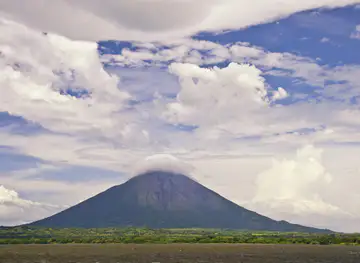
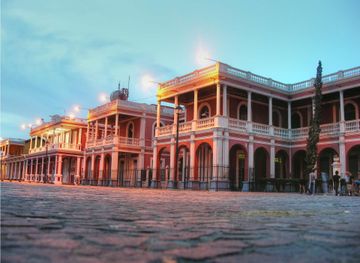
Discover Nicaragua: Explore breathtaking lakes, active volcanoes, colonial cities, and pristine beaches in a country rich with culture and adventure.
Explore Nicaragua