
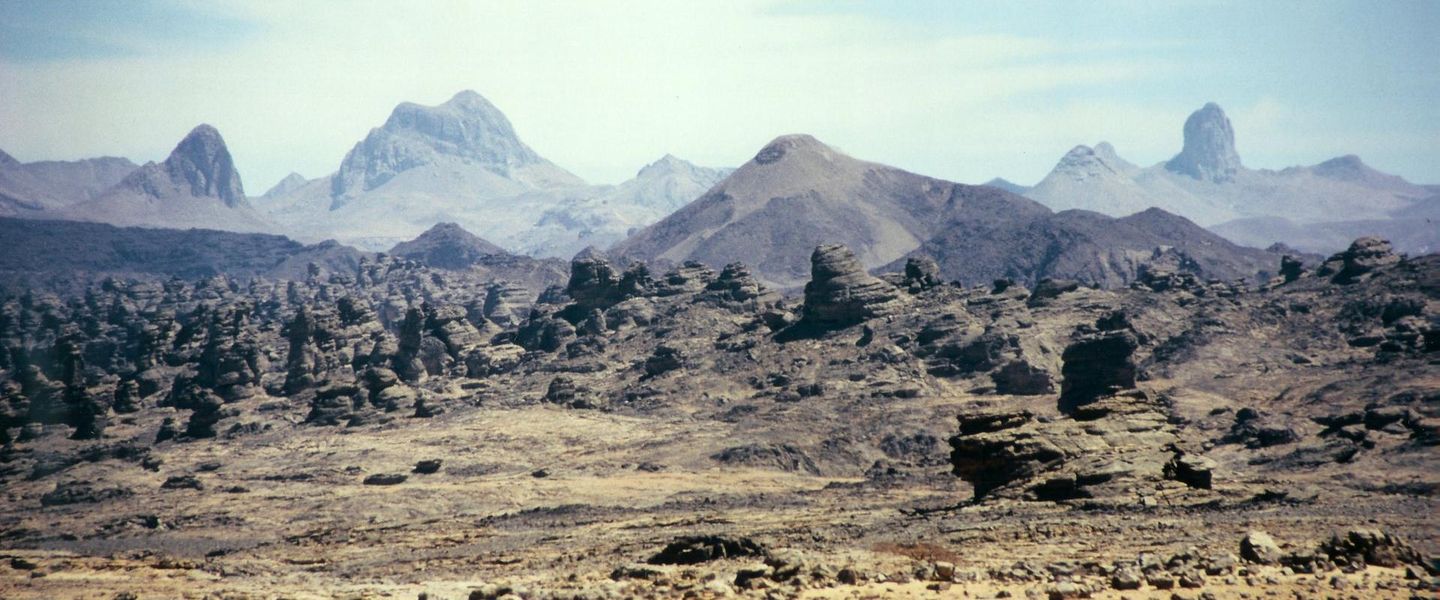
Kawar, Niger Travel Guide
Discover Kawar, Niger's hidden oasis of history and culture, where ancient traditions meet breathtaking desert landscapes and warm Tuareg hospitality.
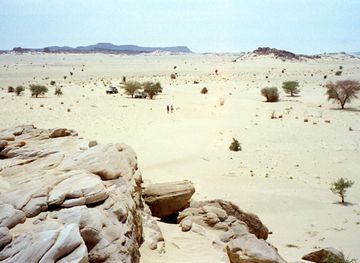
Kawar, located in the northern part of Niger, is a hidden gem waiting to be explored. This ancient oasis is rich in history and culture, offering a unique experience for those willing to venture off the beaten path. The landscape is dominated by spectacular sand dunes and palm groves, creating a serene and picturesque setting. Kawar's history dates back centuries, and it was once a thriving center for trans-Saharan trade. Today, it remains a testament to the resilience and ingenuity of its people. Visitors to Kawar will be enchanted by the traditional mud-brick architecture and the warm hospitality of the local Tuareg community. The oasis is a perfect place to learn about the Tuareg way of life, with opportunities to witness traditional crafts, music, and dance. The local markets are a vibrant hub of activity, where you can find handmade goods and delicious local cuisine. Don't miss the chance to try dates, which are a staple of the region and known for their exceptional quality. For those with a sense of adventure, Kawar offers plenty of outdoor activities. The surrounding dunes are ideal for camel trekking and sandboarding, providing a thrilling way to explore the stunning desert landscape. As night falls, the clear skies offer an unparalleled opportunity for stargazing, with the Milky Way stretching out in all its glory. Kawar is a destination that promises both tranquility and excitement, making it a memorable stop on any journey through Niger.

Know before you go
Hi, I'm Eve. Here are a few practical things to know before exploring Kawar.
- Visit in the cooler months (October to March) to avoid the extreme heat of the desert.
- Bring cash, as there are limited banking facilities and ATMs in the area.
- Respect local customs and dress modestly, particularly when visiting villages and markets.
- Hire a local guide to get the most out of your visit and to navigate the desert terrain safely.
- Stay hydrated and carry plenty of water, especially if you plan on doing outdoor activities.
Explore Kawar: Things to Do, Places to Eat, Hotels & More
Handpicked recommendations for top attractions, local dining, accommodations, and more

Top Attractions & Sightseeing in Kawar


Best landmarks in Kawar
Top-rated picks
Best Landmarks

Great Mosque of Niamey
Explore the stunning Great Mosque of Niamey, a magnificent architectural landmark that reflects Niger's rich Islamic heritage and vibrant culture.

Boubou Hama National Museum
Explore the cultural treasures of Niger at Boubou Hama National Museum, where history meets art in a vibrant celebration of local traditions.

W National Park Benin
Explore the breathtaking landscapes and rich biodiversity of W National Park, a premier destination for wildlife enthusiasts and eco-tourists in Benin.

Mosquée Cité Caisse
Discover the architectural beauty and spiritual tranquility of Mosquée Cité Caisse, a key cultural landmark in Niamey, Niger.

Best restaurants in Kawar
Top-rated picks
Best Restaurants

Amandine
Experience the best of Nigerien cuisine at Amandine in Niamey – where every dish tells a story.

La Cabane
Discover La Cabane in Niamey - where authentic Nigerien flavors meet modern culinary artistry in a welcoming ambiance.

Rawda
Experience the best of Nigerien cuisine at Rawda - where local flavors meet international flair in a welcoming atmosphere.

Côté Jardin
Discover Côté Jardin in Niamey – where local flavors meet international cuisine in a serene garden setting.

Best bars in Kawar
Top-rated picks
Best Bars

Le Patio Club
Experience the vibrant nightlife of Niamey at Le Patio Club, where drinks, games, and camaraderie await every visitor.

New York Restaurant and Bar
Experience the vibrant flavors of Niamey at New York Restaurant and Bar, a culinary hotspot blending local and international delights.

Cap Banga
Experience the vibrant flavors of Niger at Cap Banga, a top restaurant and bar in Niamey, perfect for food lovers and social seekers alike.

Le Classico Café
Discover the vibrant flavors of Niger at Le Classico Café in Niamey, where local cuisine meets a welcoming atmosphere.

Best nightclubs in Kawar
Top-rated picks
Best Nightclubs

Sky Lounge
Experience the vibrant nightlife of Niamey at Sky Lounge, where stunning views and refreshing drinks create an unforgettable atmosphere.

Club Mooky
Discover the vibrant nightlife of Niamey at Club Mooky, where local culture meets a lively atmosphere and refreshing drinks.

LEVEL CLUB & LOUNGE
Discover the vibrant nightlife of Niamey at LEVEL CLUB & LOUNGE, where music meets culture and unforgettable memories await.

The on1e club
Discover the nightlife of Niamey at The on1e Club, where music, dance, and vibrant culture come alive until dawn.

Best shops in Kawar
Top-rated picks
Best Shops

Grand Market Niamey
Discover the heart of Niamey at Grand Market, where local culture, vibrant flavors, and traditional crafts come together in a unique shopping experience.

Rive Droite
Explore the lively Rive Droite Market in Niamey for authentic crafts, delicious street food, and a cultural experience like no other.

KENZOLY
Explore KENZOLY in Niamey for a unique blend of traditional and contemporary fashion that showcases the beauty of Niger's culture.

Pharmacie Kalley Est
Discover Pharmacie Kalley Est in Niamey, your reliable pharmacy for health essentials and expert advice during your travels.

Explore Kawar on the Map
A handpicked selection of must-see spots in Kawar, mapped for you.
Kawar Essentials
-
Kawar is located in the northeastern part of Niger, within the Sahara Desert. The nearest major city with an airport is Agadez, which is approximately 450 kilometers to the southwest. From Agadez, you can hire a 4x4 vehicle or join a guided tour to Kawar. It's important to note that the journey can be challenging due to the desert terrain, so it's advisable to travel with experienced drivers or tour operators.
-
Transportation within Kawar is primarily done via 4x4 vehicles due to the desert environment. There are no public transportation options available, so renting a vehicle or arranging transportation through local tour operators is necessary. It's also possible to use camels for short-distance travel, which offers a unique and traditional way to explore the area.
-
The official currency of Niger is the West African CFA Franc (XOF). Credit cards are rarely accepted in Kawar, so it is essential to carry sufficient cash. ATMs are not available in Kawar, so make sure to withdraw enough money in Agadez or another major city before traveling. It's also advisable to have small denominations of cash for easier transactions.
-
Kawar is generally safe for tourists, but it is essential to take standard precautions. Avoid traveling alone, especially at night, and always stay with your group or guide. Be aware of your surroundings and keep valuables secure. While there are no specific high-crime areas targeting tourists, the remote and challenging environment necessitates extra caution.
-
In case of emergency, having a satellite phone is highly recommended due to the remote location and lack of cell service. The nearest medical facilities are in Agadez, so carrying a well-stocked first aid kit is necessary. For serious medical emergencies, evacuation to a major city may be required. It's crucial to have travel insurance that covers medical emergencies and evacuation.
-
Fashion: Do dress modestly, with lightweight, long-sleeved clothing to protect against the sun and sand. Avoid wearing revealing clothing. Religion: Do respect local customs and traditions. Be mindful of prayer times and avoid entering mosques unless invited. Public Transport: Do plan your transportation in advance, as there is no public transport. Don't rely on finding transportation on the spot. Greetings: Do greet people with a friendly 'salaam alaikum' and a handshake. Eating & Drinking: Do try local foods, but make sure they are prepared hygienically. Don't refuse hospitality, as it is considered impolite.
-
To experience Kawar like a local, engage with the Tuareg people who inhabit the region. Participate in a traditional tea ceremony and learn about their customs and way of life. Visit the oasis towns of Bilma and Dirkou, which are known for their salt mines and date palms. Exploring the desert landscapes and ancient caravan routes can provide a deeper understanding of the area's history and culture.
When is the best time to visit Kawar?
Useful Local Phrases for Kawar
You don't need to speak the language perfectly. Even learning a few simple words can make conversations warmer—and locals usually appreciate the effort.
— Eve

Here are the phrases I use most often in Kawar. Try a few—you'll be surprised how far they go! 😊
❤️
-
- HelloSannu
[sah-noo] - GoodbyeKwaheri
[kwah-heh-ree] - YesEh
[eh] - NoA'a
[ah-ah] - Please/You're welcomeDon Allah
[dawn ah-lah] - Thank youNa gode
[nah goh-deh] - Excuse me/SorryYi hakuri
[yee hah-koo-ree] - How are you?Lafiya lau?
[lah-fee-yah lau] - Fine. And you?Lafiya, kai fa?
[lah-fee-yah, kai fah] - Do you speak English?Kana jin Ingilishi?
[kah-nah jeen in-glee-shee] - I don't understandBan gane ba
[bahn gah-neh bah]
- HelloSannu
-
- I'd like to see the menu, pleaseZan so in gani menu, don Allah
[zahn soh in gah-nee meh-noo, dawn ah-lah] - I don't eat meatBan ci nama
[bahn chee nah-mah] - Cheers!Lafiya!
[lah-fee-yah] - I would like to pay, pleaseZan so in biya, don Allah
[zahn soh in bee-yah, dawn ah-lah]
- I'd like to see the menu, pleaseZan so in gani menu, don Allah
-
- Help!Taimako!
[tie-mah-koh] - Go away!Tafi!
[tah-fee] - Call the Police!Kira 'yan sanda!
[kee-rah yan sahn-dah] - Call a doctor!Kira likita!
[kee-rah lee-kee-tah] - I'm lostNa bata hanya
[nah bah-tah hahn-yah] - I'm illIna da ciwo
[ee-nah dah chee-woh]
- Help!Taimako!
-
- I'd like to buy...Zan so in sayi...
[zahn soh in sah-yee] - I'm just lookingIna kallon ne
[ee-nah kah-lon neh] - How much is it?Nawa ne?
[nah-wah neh] - That's too expensiveWannan ya yi tsada
[wah-nahn yah yee tsah-dah] - Can you lower the price?Za ka iya rage farashi?
[zah kah ee-yah rah-geh fah-rah-shee]
- I'd like to buy...Zan so in sayi...
-
- What time is it?Wane lokaci ne?
[wah-neh loh-kah-chee neh] - It's one o'clockKarfe daya
[kahr-feh dah-yah] - Half past (10)Rabi bayan (10)
[rah-bee bah-yahn] - MorningSafiya
[sah-fee-yah] - AfternoonYammaci
[yah-mah-chee] - EveningYamma
[yah-mah] - YesterdayJiya
[jee-yah] - TodayYau
[yow] - TomorrowGobe
[goh-beh] - 1Daya
[dah-yah] - 2Biyu
[bee-yoo] - 3Uku
[oo-koo] - 4Hudu
[hoo-doo] - 5Biyar
[bee-yahr] - 6Shida
[shee-dah] - 7Bakwai
[bah-kwah-ee] - 8Takwas
[tah-kwah-s] - 9Tara
[tah-rah] - 10Goma
[goh-mah]
- What time is it?Wane lokaci ne?
-
- Where's a/the...?Ina ...?
[ee-nah ...?] - What's the address?Menene adireshin?
[meh-neh-neh ah-dee-reh-sheen] - Can you show me (on the map)?Za ka iya nuna mini (akan taswira)?
[zah kah ee-yah noo-nah mee-nee (ah-kahn tahs-weera)] - When's the next (bus)?Yaushe ne na gaba (bas)?
[yow-sheh neh nah gah-bah (bahs)] - A ticket (to ....)Tikit (zuwa ....)
[tee-keet (zoo-wah ....)]
- Where's a/the...?Ina ...?
History of Kawar
-
Kawar was an essential part of the trans-Saharan trade routes that connected North Africa with the sub-Saharan regions. The area was a hub for caravans transporting salt, gold, and other valuable goods. This trade network facilitated cultural exchanges and the spread of ideas, making Kawar a melting pot of diverse influences.
-
During the 9th and 10th centuries, Kawar became a part of the Kanem Empire, which was one of the most powerful states in Africa at the time. The Kanem Empire controlled much of the trade in the region, and Kawar's strategic location made it a key asset. The region prospered under Kanem's rule, experiencing economic growth and increased political stability.
-
By the 11th century, Islam had spread throughout the region, and Kawar was no exception. The introduction of Islam brought new architectural styles, educational institutions, and cultural practices to Kawar. The region became known for its Islamic scholars and as a center for learning and religious instruction.
-
The salt pans of Bilma, located in the Kawar region, have been a critical economic resource for centuries. Salt extracted from these pans was a highly prized commodity and was often referred to as 'white gold.' The salt trade significantly contributed to the wealth and development of Kawar, attracting traders and settlers to the area.
-
In the late 19th and early 20th centuries, Kawar, along with the rest of Niger, came under French colonial rule. The French established military posts and administrative centers in the region, which led to significant changes in the local governance and economy. The colonial period also saw the introduction of new technologies and infrastructure, albeit often at the expense of local traditions and autonomy.
-
Following Niger's independence from France in 1960, Kawar experienced a period of transition. The new government focused on modernizing the region while trying to preserve its cultural heritage. Efforts were made to improve infrastructure, education, and healthcare, although challenges such as economic instability and political unrest occasionally hindered progress.
Neighbouring Regions of Kawar
The closest regions to Kawar, if you have time for more than one.



Your all‑in‑one travel companion app
Explore expert travel guides, compare and book tours, experiences, hotels, and more—all from the palm of your hand. Download now for seamless trip planning wherever your wanderlust takes you.


Explore More of Niger

Looking beyond Kawar? Discover Niger for broader travel guides, local hot-spots, and regional highlights.
Explore NigerKawar in Photos
Browse through our photo collection highlighting the charm and character of the destination.


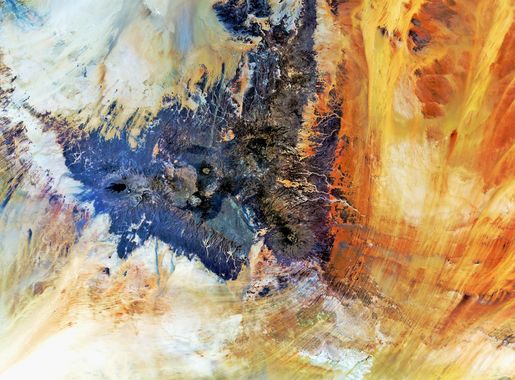


The Mystical Oasis of Kawar
Kawar, located in the northern part of Niger, is a hidden gem waiting to be explored. This ancient oasis is rich in history and culture, offering a unique experience for those willing to venture off the beaten path. The landscape is dominated by spectacular sand dunes and palm groves, creating a serene and picturesque setting. Kawar's history dates back centuries, and it was once a thriving center for trans-Saharan trade. Today, it remains a testament to the resilience and ingenuity of its people. Visitors to Kawar will be enchanted by the traditional mud-brick architecture and the warm hospitality of the local Tuareg community. The oasis is a perfect place to learn about the Tuareg way of life, with opportunities to witness traditional crafts, music, and dance. The local markets are a vibrant hub of activity, where you can find handmade goods and delicious local cuisine. Don't miss the chance to try dates, which are a staple of the region and known for their exceptional quality. For those with a sense of adventure, Kawar offers plenty of outdoor activities. The surrounding dunes are ideal for camel trekking and sandboarding, providing a thrilling way to explore the stunning desert landscape. As night falls, the clear skies offer an unparalleled opportunity for stargazing, with the Milky Way stretching out in all its glory. Kawar is a destination that promises both tranquility and excitement, making it a memorable stop on any journey through Niger.